Multi-SKU families
Small tabletop forms can share a coherent design language across a program.

FENN develops coordinated ceramic table accessories for retail, hospitality, gifting, and private-label programs. Spoon rests, condiment pieces, napkin rings, small holders, and related forms can be planned as a consistent multi-SKU family with aligned scale, color, branding, performance requirements, production feasibility, and packaging.
Discuss Your Table Accessories Project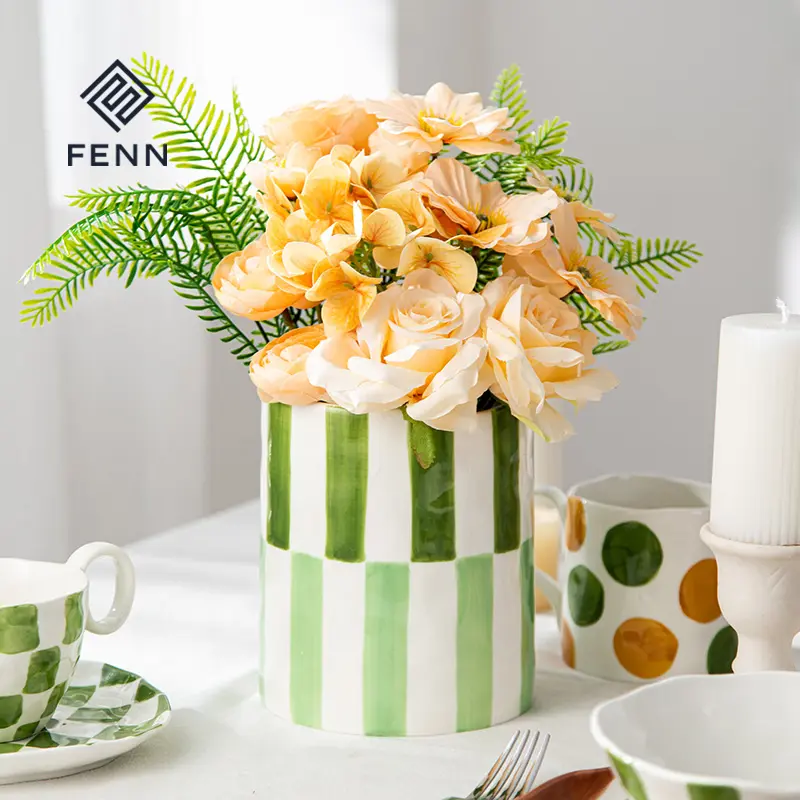
The project is defined as a manufacturing program, not as unverified stock or immediate availability.
Small tabletop forms can share a coherent design language across a program.
Dimensions, proportion and interaction with other pieces are reviewed together.
Color, glaze, texture and decoration references can be coordinated across forms.
Retail grouping, inner protection and export-carton efficiency are considered around the assortment.
A complete brief makes feasibility, sampling, quotation, packaging, and schedule discussions more useful.
Each buyer concern is connected to a practical production or quality-control consideration.
| Buyer concern | Manufacturing or QC implication |
|---|---|
| Cross-SKU scale | A shared dimension logic helps small pieces feel intentional beside the core dinnerware. |
| Color matching | Different forms and firing loads can affect appearance, so an agreed tolerance range is important. |
| Small-part handling | Thin sections, projections and compact pieces need practical forming, finishing and packing decisions. |
| Set coordination | Contact points, fit and visual hierarchy should be checked with the intended companion pieces. |
| Pack efficiency | Assortment count, dividers and retail presentation affect carton size and breakage protection. |
Options are evaluated against form, material, decoration, packaging, expected volume, and production feasibility.
Coordinated original forms
Shared palette and glaze system
Pattern, relief, decal and logo treatments
Multi-SKU retail or gifting assortments
Compact protective packaging and presentation
Minimum quantities and timing depend on the chosen shape, material, decoration, tooling, packaging, SKU count, and production complexity.
Share the use case, market, expected quantity range, dimensions or capacity, references or artwork, packaging, destination, and timing.
Review form, material, finish, decoration, tooling, performance requirements, packing, and production complexity.
Translate the selected route into physical samples and recorded specifications.
Agree dimensions, appearance, fit, function, branding, and relevant performance criteria.
Plan materials, tooling, decoration, sequence, quantity, and packaging around the approved specification.
Review production against the agreed specification, visual references, dimensions, and relevant quality requirements.
Confirm approved packing, carton identification, destination requirements, and shipping preparation.
Table-accessory quality control should be defined item by item while preserving collection consistency. Dimensional fit, glaze and color range, decoration placement, contact surfaces, small-part durability and pack-out should be assessed against approved references.
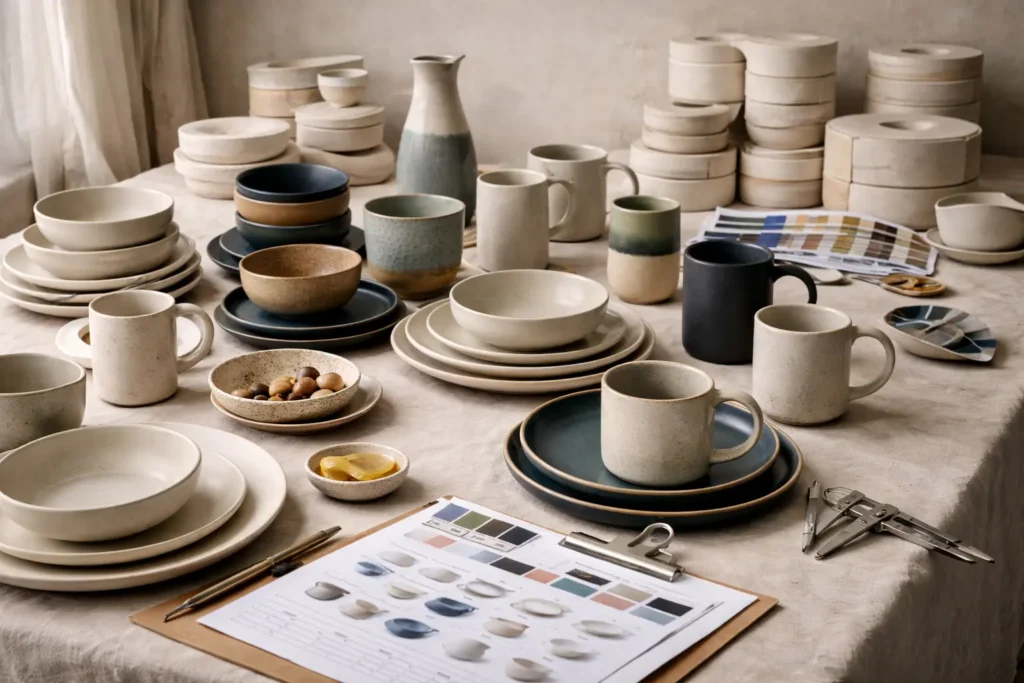
Projects may include spoon rests, condiment pieces, napkin rings, small holders and other tabletop forms. Feasibility is reviewed from the intended use, dimensions, body, finish and expected volume.
Yes. A common palette, glaze, pattern, edge treatment and proportion system can connect multiple SKUs while each form remains functional for its use.
The project should define an approved color or glaze range, because shape, thickness, kiln position and surface orientation can influence appearance. Production review then works against those references.
Yes. Set composition, retail presentation, dividers and outer packaging can be reviewed together. The final structure depends on the number, size and vulnerability of the pieces.
The number of forms, tooling, glaze and decoration changes, packaging and production complexity all matter. Share the SKU plan and expected volume so a workable route can be assessed.
Yes. Provide physical samples, color references, drawings or clear photography so scale, finish, decoration and contact relationships can be evaluated during development.
Include the use case, target market, expected quantity, dimensions or capacity, references or artwork, performance requirements, packaging, destination, and desired timing.
Discuss Your Table Accessories Project