
Short Answer
For dinnerware brands, glaze finish is not only a style choice. Matte glaze dinnerware can look premium, but it needs careful cutlery-mark and cleaning tests. Glossy glaze ceramic is usually easier to clean. Speckled and colored glaze dinnerware can work well if color range, food-contact safety, and care instructions are approved before bulk production.
When buyers ask me which finish is “best,” I usually smile. Best for what? A hotel buffet, a gift set, and a supermarket dinner set do not need the same surface.
In my factory experience, many finish problems start because the buyer approves the look but not the use condition. The sample looks beautiful in a photo. Then customers complain about fork marks, stains, color differences, or unclear care instructions.
So my simple advice is this: choose the finish with your sales channel, customer habit, and care claim in mind. Then ask your supplier to prove the finish under real use, not only under nice studio light.
Definition Box: What Glaze Finish Means
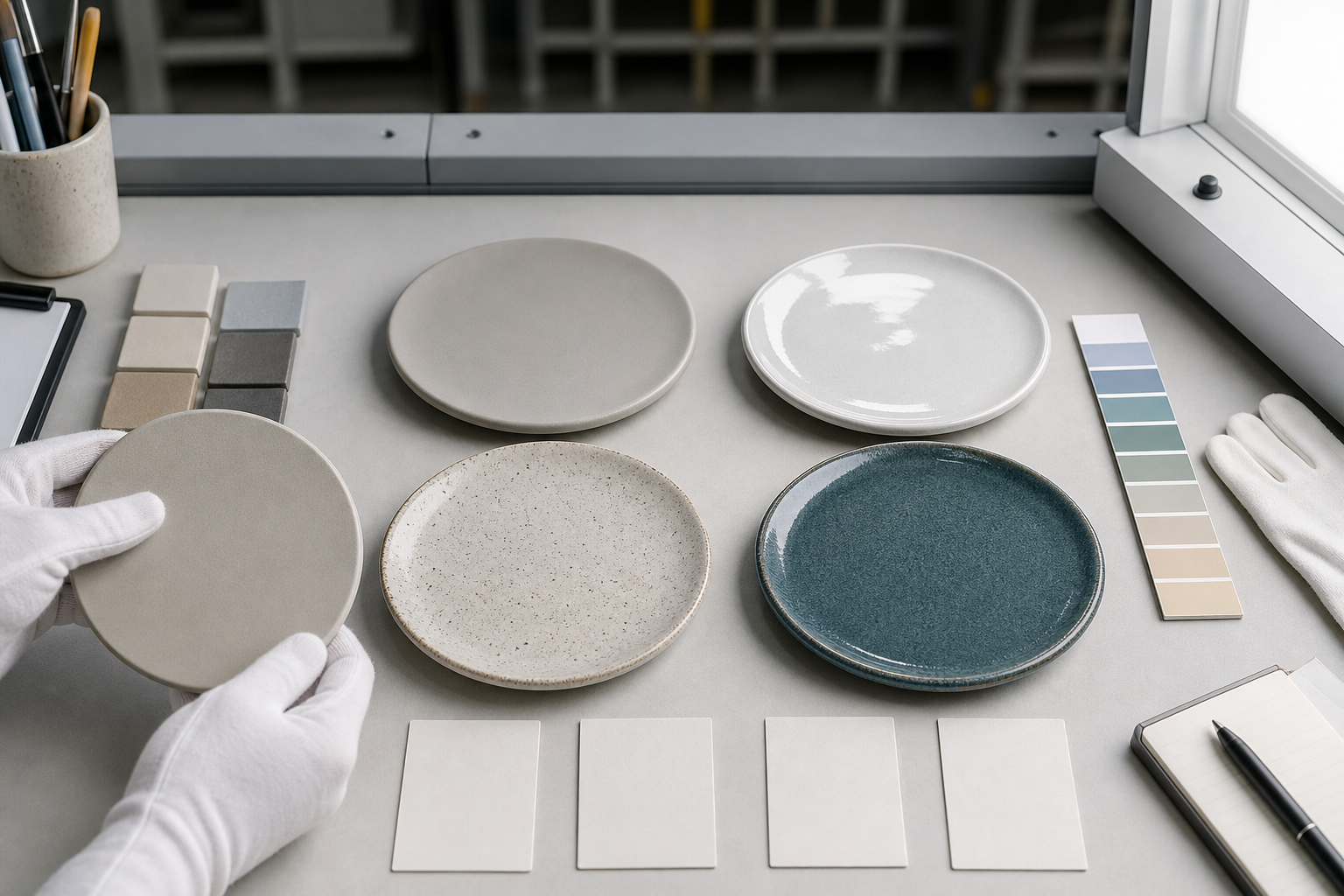
A ceramic glaze finish is the final fired surface on the dinnerware. It affects shine, touch, color depth, cleaning, mark visibility, inspection criteria, and customer perception.
For B2B sourcing, judge the finish by three things: brand fit, daily use, and repeatability.
Finish Tradeoff Map for Dinnerware Buyers
Use this table before asking for samples.
| Finish Type | Best Fit | Main Buyer Risk | Supplier Evidence to Request |
|---|---|---|---|
| Glossy glaze | Daily-use sets, classic retail lines, easy-clean products | Scratches or pinholes may show clearly | Surface inspection standard and defect limits |
| Matte glaze | Lifestyle brands, premium casual lines, earthy color stories | Cutlery marks, staining, harder cleaning | Cutlery-mark test, cleaning test, care label wording |
| Speckled glaze | Warm handmade-look lines, stoneware collections, casual dining | Speckle density and black spots may look like defects | Speckle range board, acceptable dot size, photo approval rules |
| Colored glaze | Brand color collections, seasonal lines, giftable sets | Color drift between batches, vivid glaze compliance questions | Master color sample, batch tolerance, food-contact test report |
| Semi-matte or satin glaze | Buyers who want softness with easier cleaning | Confusion between approved sample and bulk shine level | Gloss reference and side-by-side approval |
From a factory point of view, semi-matte is often a practical middle road. It can keep the soft look while reducing some cleaning complaints. But a finish name alone does not tell the full story.
How I Test a Finish Before Bulk Production
When we review samples, I do not only hold the plate and say, “Pretty.” I want the surface to answer practical questions.
First, I check the finish under neutral light. Matte can look smooth in warm light but show uneven patches under a light booth. Glossy glaze can hide color depth in photos but reveal pinholes under angle light. Speckled glaze needs a range because one perfect sample cannot represent the whole order.
Second, I check touch and use. A dinner plate should not feel sandy on the food-contact surface unless the buyer accepts that handmade effect. Stainless cutlery, dark tea, tomato sauce, oil, and repeated washing can tell us more than a product render. For matte glaze dinnerware, I want to see whether gray marks sit on the surface and whether normal cleaning removes them.
Third, I check claim language. If the buyer wants dishwasher safe, microwave safe, or food-contact wording, the supplier should connect that claim to the final material, glaze, decoration, and test report. Official references such as FDA lead guidance and European Commission food contact materials are useful background, but the buyer still needs product-specific evidence.
The Care and Complaint Risk Tool
This tool helps buyers decide what to approve, what to adjust, and what to explain on the care label.
| What You See in Testing | Usually Acceptable? | Buyer Action |
|---|---|---|
| Light utensil marks on matte glaze that clean off | Often acceptable if customers are informed | Add care wording and approve a cleaning standard |
| Deep dark marks that remain after cleaning | Risky for retail and DTC brands | Adjust glaze finish or choose semi-matte/glossy |
| Slight speckle density change across pieces | Acceptable if range is approved | Create a visual range board for QC |
| Large black spots on food-contact surface | Usually a defect unless part of approved design | Define maximum spot size and reject rules |
| Colored glaze shifts slightly between firing batches | Normal within a controlled range | Keep master sample and batch tolerance |
| Bright decoration near the rim or food-contact area | Needs compliance attention | Request food-contact testing and decoration placement review |
The best decision is not always “avoid risk.” Sometimes the finish is worth the extra control because it gives the brand a clear look. But the control must be written down before production.
Why Matte Glaze Dinnerware Gets More Complaints
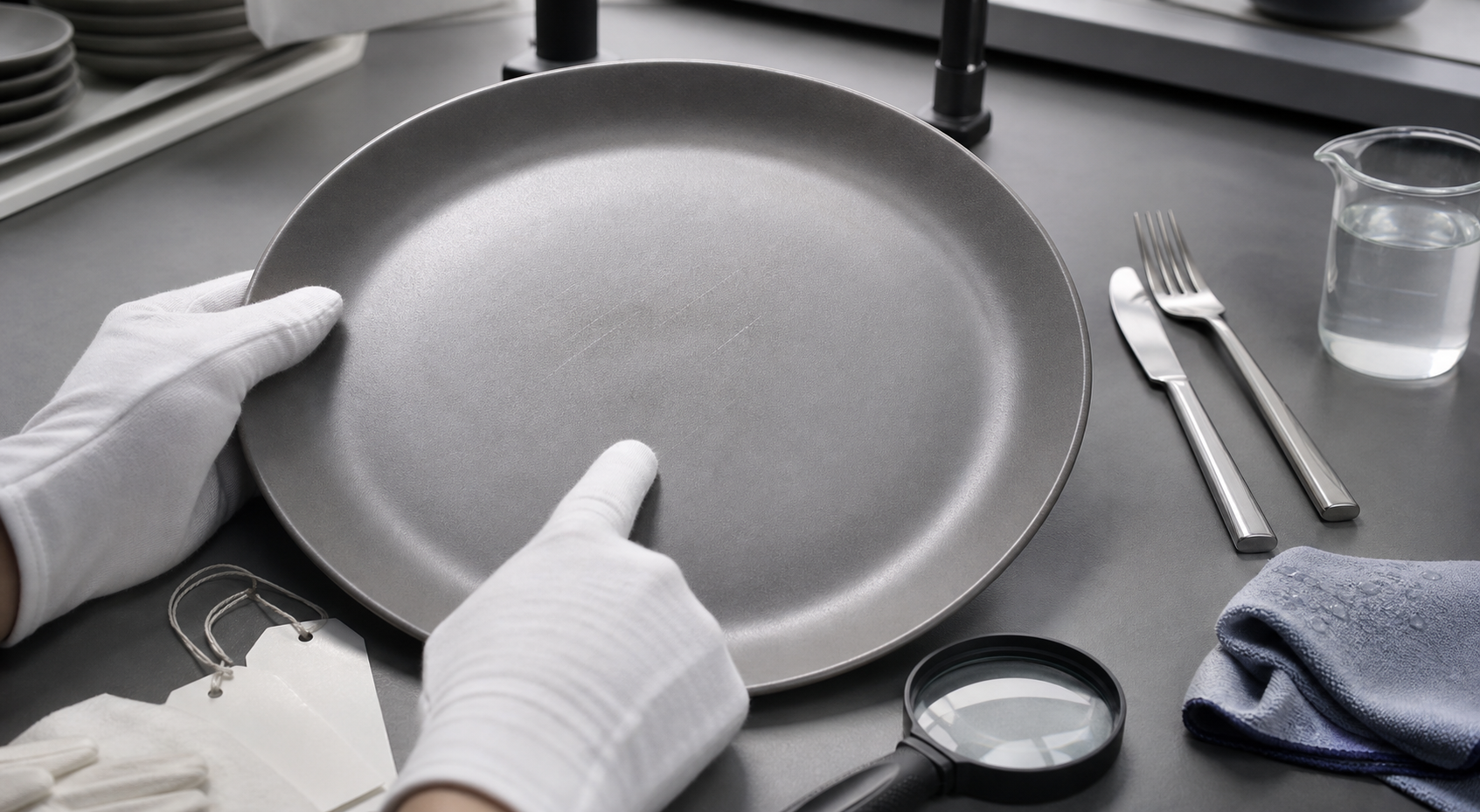
Matte finish has a small surface texture. That texture gives the soft, quiet look many brands want. It can also hold metal residue from knives and forks more easily than a smooth glossy glaze.
Here is the important point: a cutlery mark is not always a scratch into the ceramic body. Many times, it is metal transfer on the glaze surface. But customers do not care about the technical difference if the plate looks dirty. Test with stainless forks and knives, clean the plate, then inspect again. If the mark stays, I would adjust the glaze or choose a satin finish.
Colored and Speckled Glazes Need a Range, Not One Sample
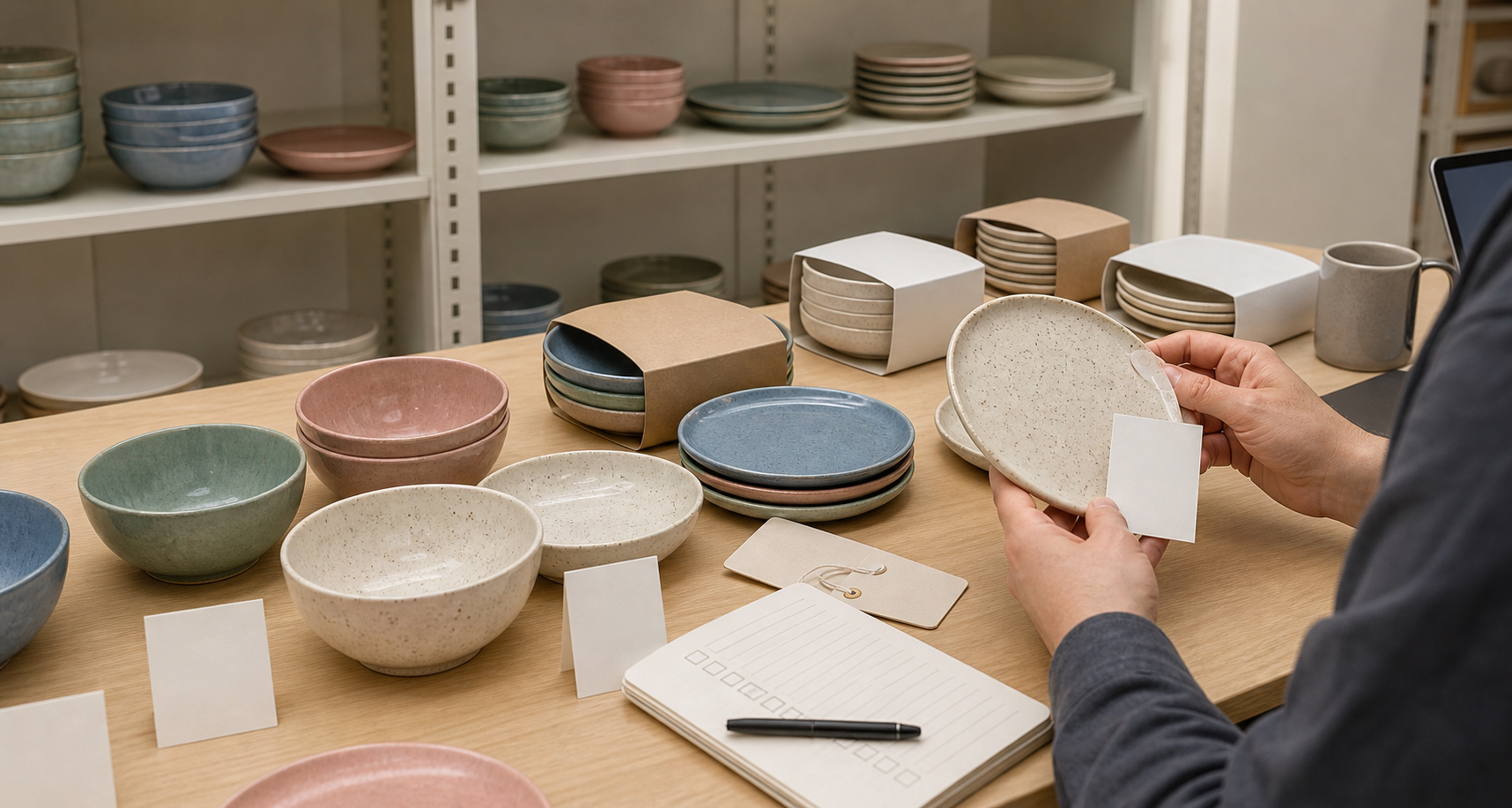
Colored glaze dinnerware is emotional, but ceramic color depends on glaze formula, body color, firing temperature, glaze thickness, and kiln position. Speckled dinnerware has another issue: buyers may love natural dots, but consumers may read heavy speckles, iron spots, or dark particles as dirt or defects.
A speckled dinnerware manufacturer should not only send one hero sample. I prefer a small approved range: light, middle, and heavy speckle examples. For colored glaze, keep one approved master sample in the factory and one with the buyer, so repeat orders can be judged against the same standard.
Food-Contact and Safety Checks Still Matter
Most finish discussions are about look and cleaning, but safety should not be forgotten. Bright colors, special effects, decals, metallic decoration, and rim decoration deserve extra review.
For ceramic dinnerware sold into regulated markets, buyers should ask for food-contact documentation for the actual product, not only a general material statement. For lead and cadmium release, ISO 6486 lead and cadmium release testing is often mentioned as a technical reference. Some buyers also ask about ASTM ceramic tableware testing standards for durability-related evaluation. The exact requirement depends on market, retailer, product design, and use claim, so I suggest checking with your compliance team.
My rule is simple: if the finish touches food, lips, or regular washing, treat it as part of product safety and daily performance.
My Advice as a Manufacturer
If your brand is new, do not start with the most difficult finish in five colors. Start with one or two finishes that match your story and can be repeated well.
If you love matte, test cleaning early. If you love speckles, approve the visual range. If you love deep colored glaze, keep master samples and review food-contact needs. If you need the lowest complaint risk, do not ignore glossy or satin glaze just because they look less dramatic in a mood board.
FENN Home can help review finish choices, sample standards, food-contact documents, and care label wording before you move into bulk production. If you are comparing matte, glossy, speckled, or colored glaze options now, send your target market, product shape, and finish references. I can help you turn the look into a practical ceramic dinnerware specification.
Questions Buyers Often Ask
Is matte glaze dinnerware less durable than glossy glaze?
Not always. The body, glaze fit, firing, and surface formula matter. Matte glaze often shows cutlery marks more easily, so it needs careful use testing.
Is glossy glaze ceramic always easier to clean?
Usually, yes. Still, buyers should check pinholes, scratches, dishwasher wear, and decoration method before making care claims.
Are speckles defects in ceramic dinnerware?
No, if they are part of the approved design and stay within the agreed range. They become a problem when size, density, or placement falls outside the standard.
Can colored glaze dinnerware be food safe?
Yes, when the glaze and decoration are properly designed and tested for the target market. Buyers should request product-specific food-contact documentation.
What is the safest finish for a first private-label launch?
For many first launches, I like glossy or satin finishes on stable shapes, with one controlled color story. This keeps the line attractive while reducing cleaning, color, and complaint risk.
Conclusion
Matte glaze dinnerware, glossy glaze ceramic, speckled dinnerware, and colored glaze dinnerware can all work well for B2B brands. The right choice depends on use, channel, care claims, and how well the supplier controls the surface in real production.
Do not approve a finish only by photo. Approve it by sample, test, range, and care wording. That is how a beautiful dinnerware line becomes a product customers can use with confidence.
Need help choosing a ceramic glaze finish?
Send FENN Home your target market, shape, finish references, and care claims. Kitty can help turn your glaze idea into a practical sample and QC standard.