
Short Answer
Good dinnerware care instructions should match the real product, not a generic icon sheet. Before you print a microwave dishwasher safe label, check the clay body, glaze, decoration, metallic trim, thermal shock risk, dishwasher wear, food-contact documents, and retailer rules. Clear care wording protects buyers, customers, and the brand after shipment.
When a buyer asks me for a ceramic care guide, I first ask one simple question: “What proof supports each sentence?”
It sounds strict, but it saves trouble. A beautiful mug can still need careful microwave wording. A matte plate may need cleaning advice. A metallic rim may need a clear “not for microwave” warning. Good instructions are not decoration on the box. They are part of the product specification.
Copy-Ready Care Instruction Template
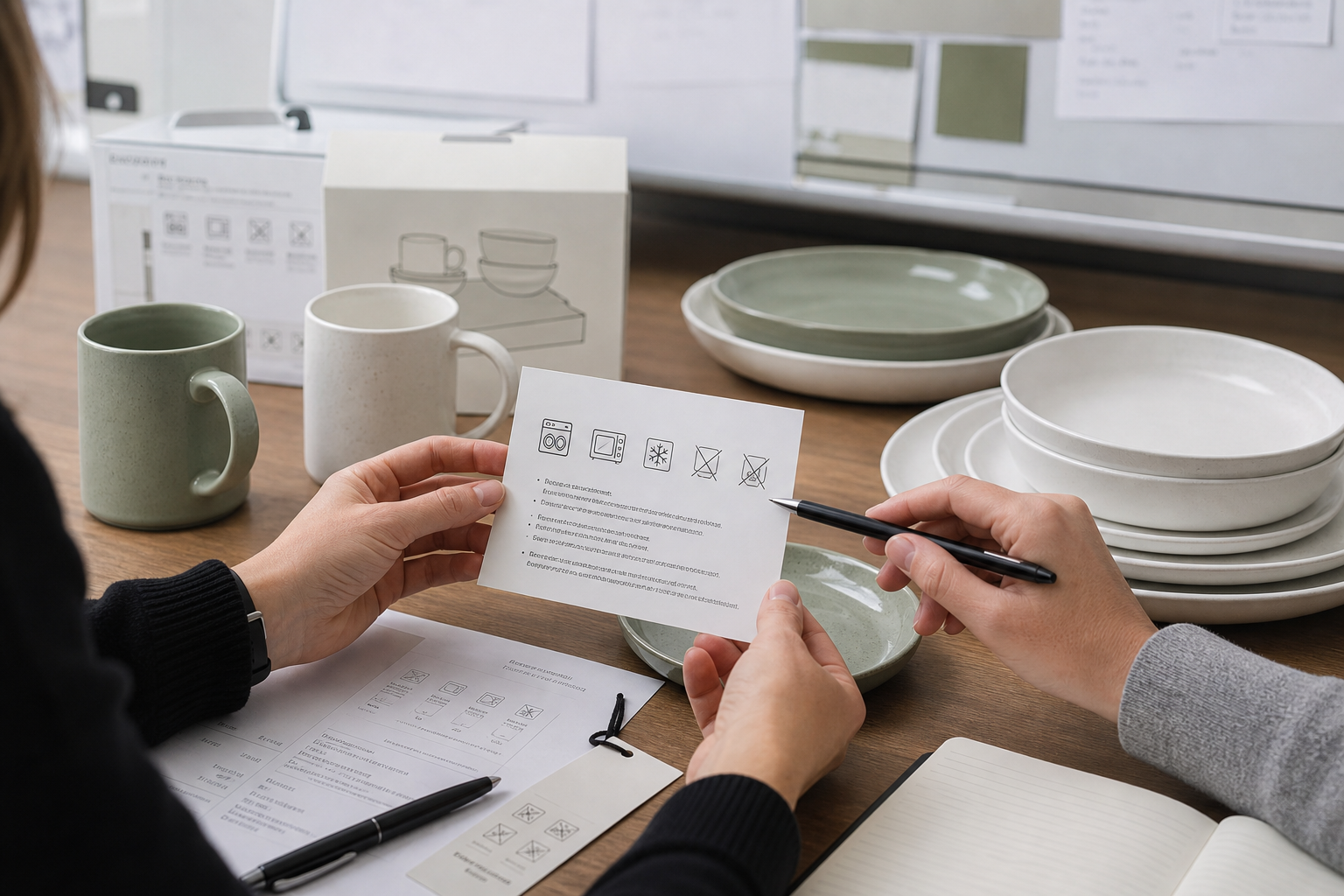
Use this template as a starting point, then adjust it to your tested product.
| Label Field | Buyer Draft Wording | What Must Support It |
|---|---|---|
| Food use | “Suitable for food contact.” | Food-contact review or test report for the product and selling market. |
| Dishwasher | “Dishwasher safe. Avoid abrasive cleaners.” | Dishwasher performance check for glaze, decoration, and marking. |
| Microwave | “Microwave safe unless product includes metallic decoration.” | Product design review and microwave-use evidence. |
| Oven | “Not intended for oven use unless separately tested.” | Thermal shock or oven-use validation if making an oven claim. |
| Temperature change | “Avoid sudden temperature change.” | Ceramic thermal shock risk review. |
| Decoration | “Metallic decoration: do not use in microwave.” | Decoration method and placement review. |
| Cleaning | “Clean promptly after strong tea, coffee, or colored sauces.” | Glaze finish and stain or mark testing. |
| Damage warning | “Do not use if chipped or cracked.” | Basic consumer safety wording and brand risk control. |
My advice is to keep wording short and honest. If the supplier cannot show why a claim is true, do not print it yet.
Why Care Labels Matter in B2B Dinnerware
Care labels are small, but they carry big promises. Customers use them when they decide how to wash, heat, clean, and store the product. Retailers may also review them before approving packaging.
In real ceramic production, several choices affect care wording:
- Clay body maturity and water absorption.
- Glaze fit and surface hardness.
- Matte, glossy, speckled, or colored finish.
- Decal, hand painting, rim band, or metallic trim.
- Plate thickness and thermal shock behavior.
- Food-contact testing for the selling market.
- Packaging format and insert space.
Generic wording can create two problems. First, it may promise more than the product can support. Second, it may fail to warn customers about a real limit, such as metallic decoration in a microwave.
Claims That Need Proof
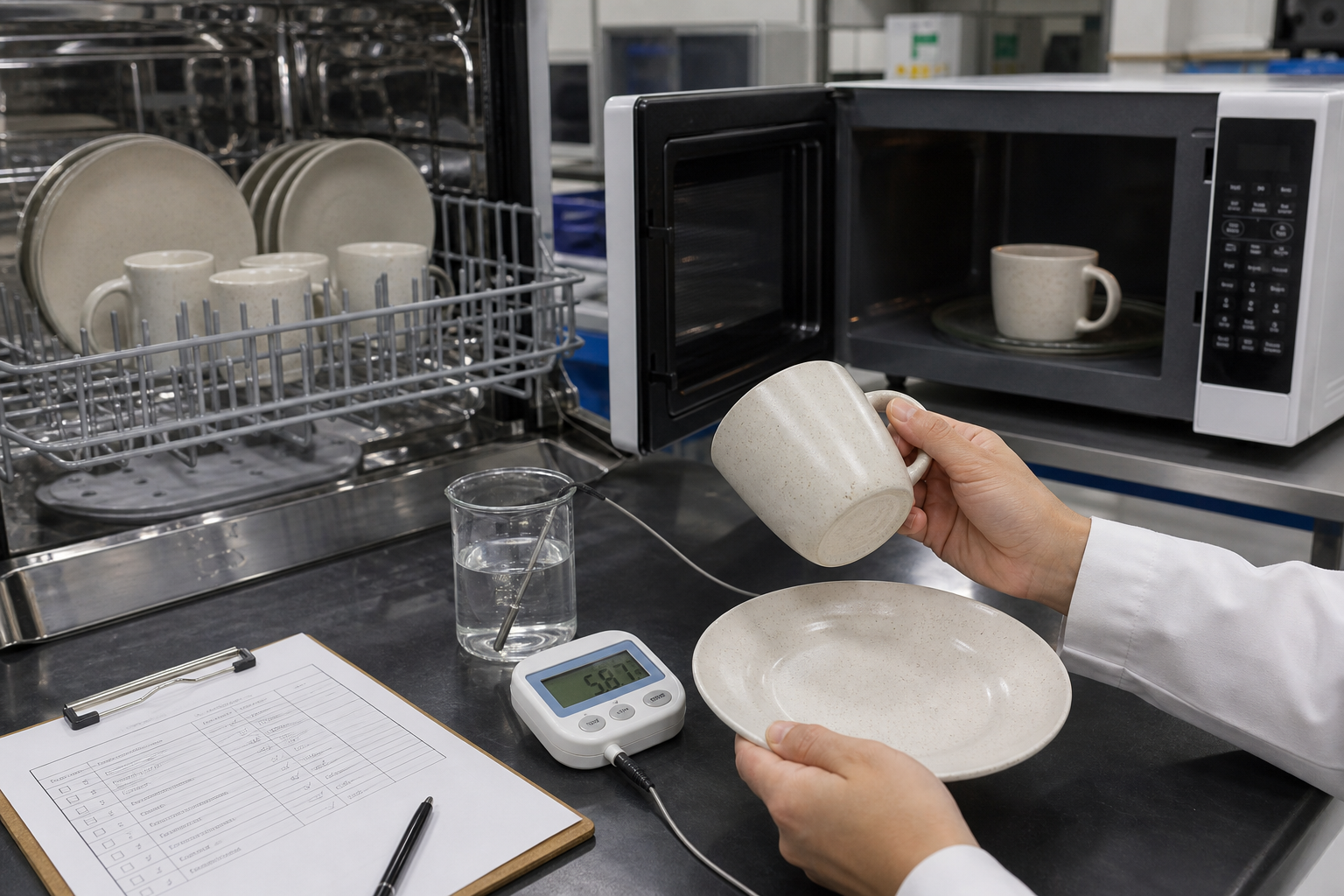
I treat every care claim as a small contract with the customer.
Dishwasher safe
Dishwasher safe does not only mean the plate survives one wash. Buyers should check whether the glaze dulls, decals lift, metallic trim changes, matte surfaces show marks, or speckles trap stains after repeated washing.
A professional supplier answer should include the item, finish, decoration, washing condition, and visual result. “Yes, dishwasher safe” is not enough.
Microwave safe
A microwave claim needs extra care when the product has metallic gold, platinum, luster, reactive effects, unusual decoration, or very high water absorption. For a microwave dishwasher safe label, separate the two claims. A product can be dishwasher safe but not microwave safe.
If the product includes metallic decoration, I prefer clear wording such as “Not for microwave use.” Do not hide this in tiny text.
Food-contact safe
Food-contact wording should connect to the real product and market. Official sources such as FDA lead guidance and European Commission food contact materials are useful starting points for buyer teams, especially when products use glaze, color, or decoration.
If you mention lead, cadmium, or food-contact compliance, make sure the report scope matches the body, glaze, decoration, item type, and destination market. ISO 6486-1 is often used as a technical reference for lead and cadmium release from ceramicware, but the buyer should confirm the exact requirement with the lab, importer, or retailer.
Oven safe
Most dinnerware should not automatically be called oven safe. Oven use can create thermal shock risk, especially when a cold item enters a hot oven or a hot item touches a cold surface. If oven use is not part of the tested product plan, avoid the claim.
Eco or non-toxic claims
Words like “eco,” “non-toxic,” or “chemical free” can be risky if they are vague. For US marketing claims, FTC advertising substantiation is a useful high-level reminder: claims should be backed by evidence. In simple terms, say what you can prove and avoid what you cannot define.
The Buyer Approval Workflow I Prefer
Here is the simple workflow I use before a buyer prints packaging.
1. List every use claim: dishwasher, microwave, oven, food contact, freezer, stain resistance, scratch resistance.
2. Match each claim to product evidence.
3. Review decoration and rim areas.
4. Write short care wording in plain language.
5. Place the wording on the box, insert, product page, and retailer file.
6. Check that all versions say the same thing.
7. Save the final artwork with the approved sample and test records.
This workflow is not fancy. It is just organized. Many problems happen because the box says one thing, the website says another thing, and the supplier file says something else.
Where Care Instructions Should Appear
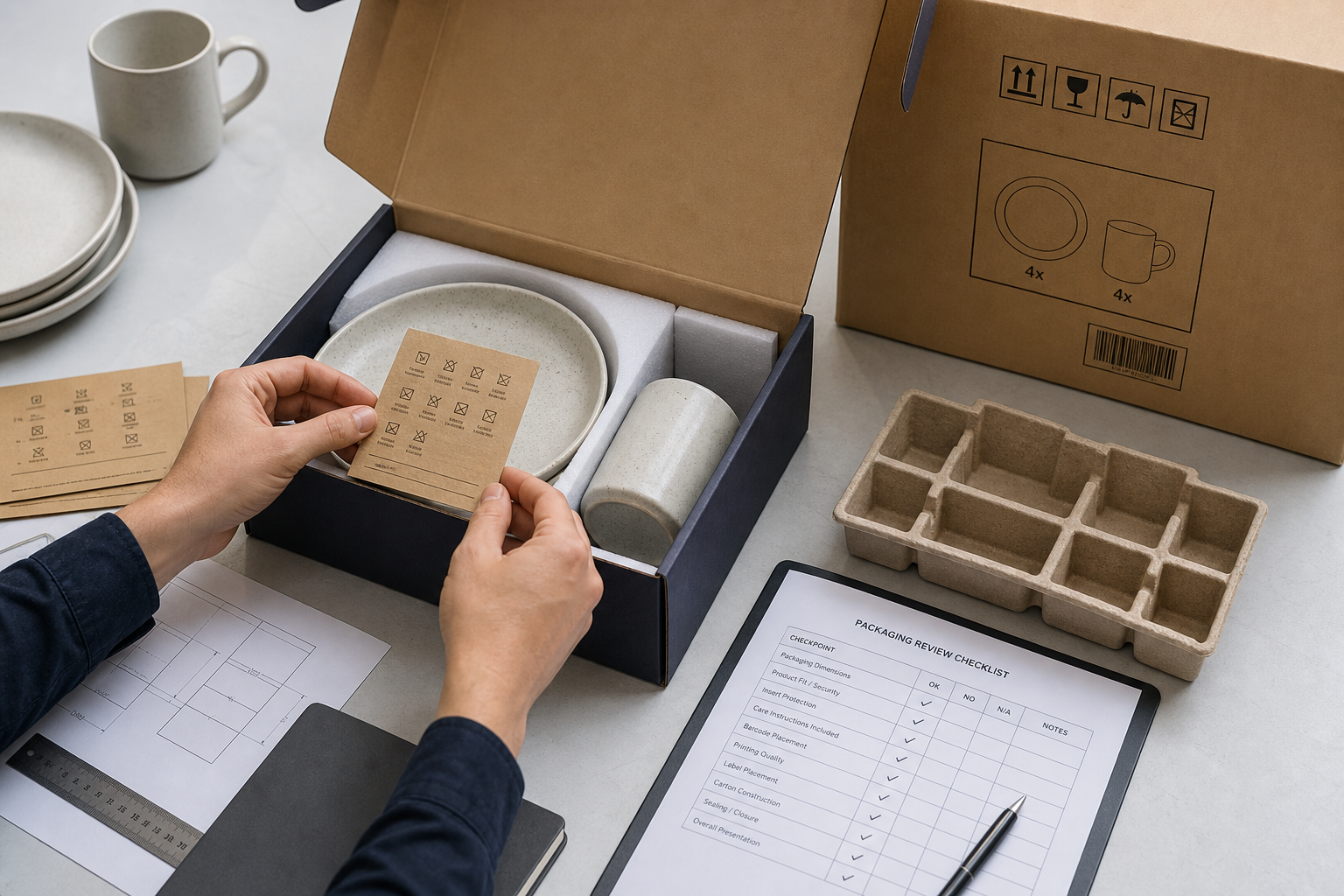
For private label dinnerware packaging, I like care information in three places.
| Placement | Best Use | Practical Tip |
|---|---|---|
| Outer box | Key claim icons and urgent warnings | Keep it short and visible for retail review. |
| Packaging insert | Full ceramic care guide | Use simple bullets customers can keep. |
| Product page | Full claim explanation and FAQ | Match the same wording used on the package. |
| Retailer compliance file | Evidence and reports | Keep test reports, sample photos, and artwork version together. |
If the product is a boxed set, the insert is often the best place for full care wording. If it is open stock, the product sticker, hang tag, or product page may carry more weight.
Common Wording Mistakes I See
The first mistake is using all icons and no words. Icons help, but many customers still need plain language.
The second mistake is making one label for every collection. A plain white porcelain plate, a matte stoneware bowl, and a gold-rimmed mug may need different instructions.
The third mistake is promising oven safety because the ceramic was fired at high temperature. Firing temperature is not the same as safe consumer oven use.
The fourth mistake is hiding limits. If a metallic mug is not microwave safe, say it clearly.
The fifth mistake is forgetting customer complaints. If matte plates may show cutlery marks more easily, add cleaning guidance instead of waiting for reviews to explain the issue for you.
My Advice as a Manufacturer
My advice is to write care instructions after product review, not after packaging design is almost finished.
At FENN, I prefer to review the approved sample, glaze finish, decoration location, test report plan, and packaging artwork together. This helps us catch small conflicts early. For example, a buyer may choose a metallic rim for a holiday gift set, while the artwork template still says “microwave safe.” That is easy to fix before printing and painful to fix after cartons arrive.
A good supplier should help you connect wording to evidence. They should also tell you when a claim is not suitable. In my factory experience, the most professional answer is sometimes, “Please do not print that claim for this design.”
Questions Buyers Often Ask
Can I use the same ceramic care guide for a whole dinnerware collection?
Sometimes, but only if the body, glaze, decoration, and use claims are the same. If one item has metallic trim or a special finish, give it separate wording.
What should a microwave dishwasher safe label include?
State each claim separately. For example, “Dishwasher safe” and “Microwave safe” should be supported by the product design and checks. If metallic decoration is present, add a clear microwave warning.
Should care instructions mention lead and cadmium?
Only use claim wording you can support. For compliance-sensitive markets, keep food-contact and lead/cadmium reports in your buyer file and avoid vague wording such as “100% safe” or “toxin free.”
Do matte ceramic plates need special care wording?
Often, yes. Matte glazes can show cutlery marks or stains more easily than glossy surfaces. Test cleaning behavior and add simple care advice if needed.
Can a supplier write the label for me?
A supplier can help draft wording, but the brand or importer should still review the target market, retailer rules, claims, and evidence before printing.
Conclusion
Dinnerware care instructions should be clear, short, and supported by the product. Before printing a ceramic care guide, check the body, glaze, decoration, dishwasher claim, microwave claim, food-contact documents, and customer-use risks.
If you are preparing private label dinnerware packaging, send FENN your approved sample, decoration artwork, target market, and planned care wording. I can help review whether the instructions match the actual ceramic product before you print the box.
Need help checking your care wording before printing?
Send FENN your approved sample, decoration artwork, target market, and planned care wording. We can help review whether the instructions match the actual ceramic product before you print the box.