
Short Answer
Ceramic mug capacity can mean water filled to the rim, volume at an agreed use level, or space for a finished drink. Those are different numbers. Before approving mugs or bowls, ask your supplier to name the fill level, unit, and measurement method. Then check several finished samples and try the actual drink or meal you plan to serve.
I like to settle one small question before we discuss a bigger mug: bigger for what? A cup that holds enough plain coffee may feel crowded once milk is added. A bowl can hold the stated amount of water and still leave too little room to stir noodles.
That is why I would rather review a filled sample than argue over a catalog number. Here is how I separate the claims.
Myth 1: Ceramic Mug Capacity Is One Fixed Number
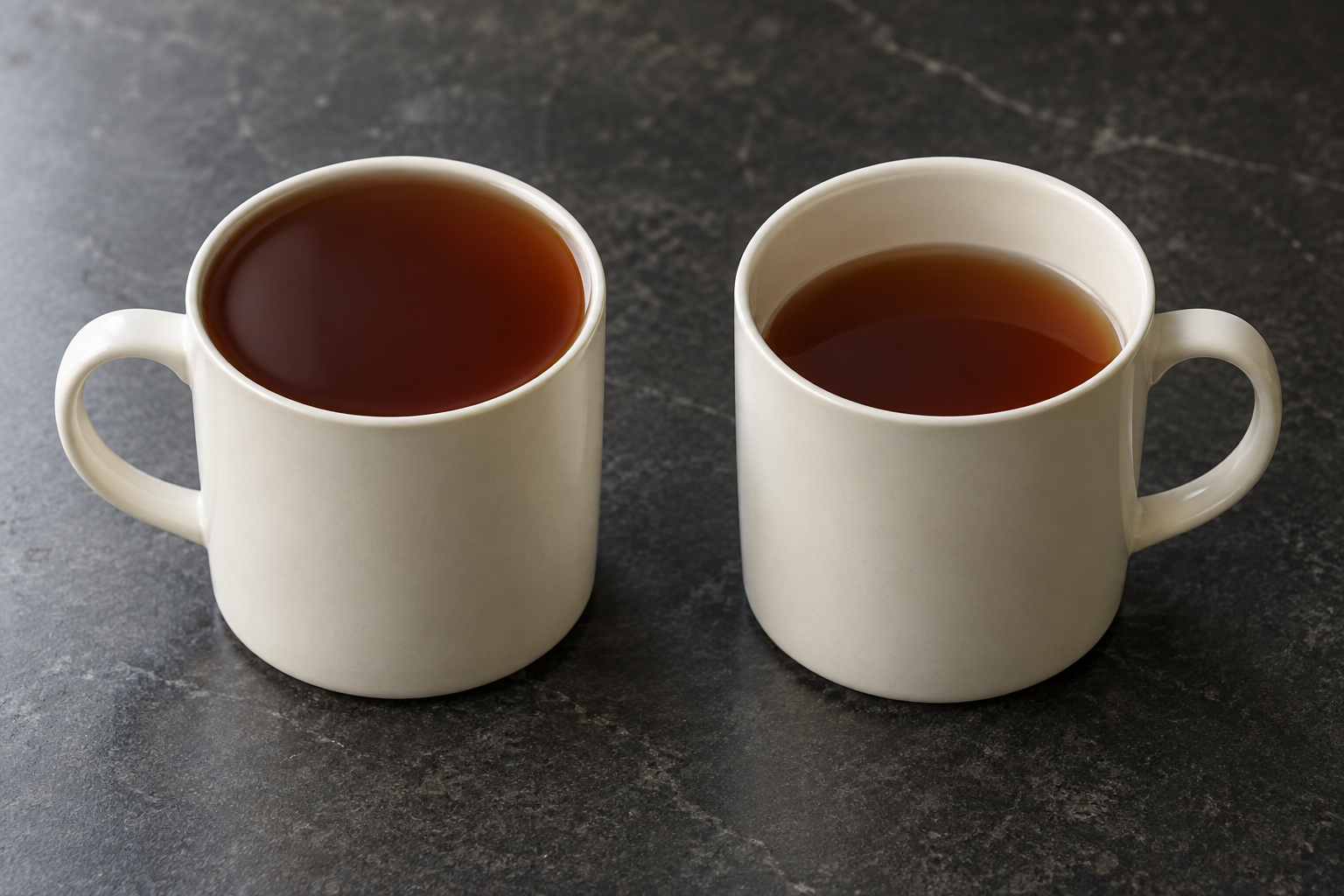
The inside space is physical. The point where you stop filling it is a choice.
Brimful capacity means volume up to an agreed rim endpoint. Usable mug volume means volume at a defined lower fill level for the intended use. Serving volume means the actual drink or food portion. A portion may leave extra space for foam, toppings, or movement.
I use this table to decide which number belongs in the conversation:
| Capacity term | What it answers | What a useful supplier answer includes | What it does not prove |
|---|---|---|---|
| Brimful capacity | How much liquid fits up to the rim endpoint? | Finished sample ID, liquid, endpoint, and measured result | Comfortable carrying or room for additions |
| Usable capacity | How much fits at our chosen working level? | A repeatable level, such as a stated distance below the rim, plus measured volume | Suitability for every drink or meal |
| Serving volume | Does our portion work in this vessel? | Recipe or portion, additions, and a practical service trial | The bowl’s total internal volume |
For an uneven handmade-look rim, “to the top” needs extra care. Agree whether the reference is the lowest rim point before overflow or another defined endpoint. A photo can explain the choice, but the written method must let another person repeat it.
My first judgment is simple: if two people cannot identify the same stopping point, the capacity claim is not ready for approval.
Myth 2: Leave the Same Percentage Empty in Every Shape
I would not apply one fixed percentage to every mug and bowl. The free space needed depends on the opening, side profile, contents, and handling.
Think of a flared bowl. A small increase in liquid height near its wide opening can add quite a lot of volume. A narrow cup behaves differently. “Ten millimeters below the rim” defines a level; it does not mean the same number of milliliters across a range.
Consider this illustrative example, not a FENN product specification:
A sample holds 360 mL at the agreed brimful endpoint. At the buyer’s chosen use level, it holds 300 mL. The difference is 60 mL. That does not establish a rule that every mug needs 60 mL of free space.
Now suppose the cafe wants 300 mL of liquid plus foam. The sample’s 300 mL working volume is already occupied before the foam is added. I would review the finished drink in that shape before accepting the design.
The useful supplier response is a filled-sample comparison using your drink specification. “We always call this size 12 ounces” does not answer the service question.
Myth 3: A Bowl That Holds Water Will Hold the Same Meal Portion
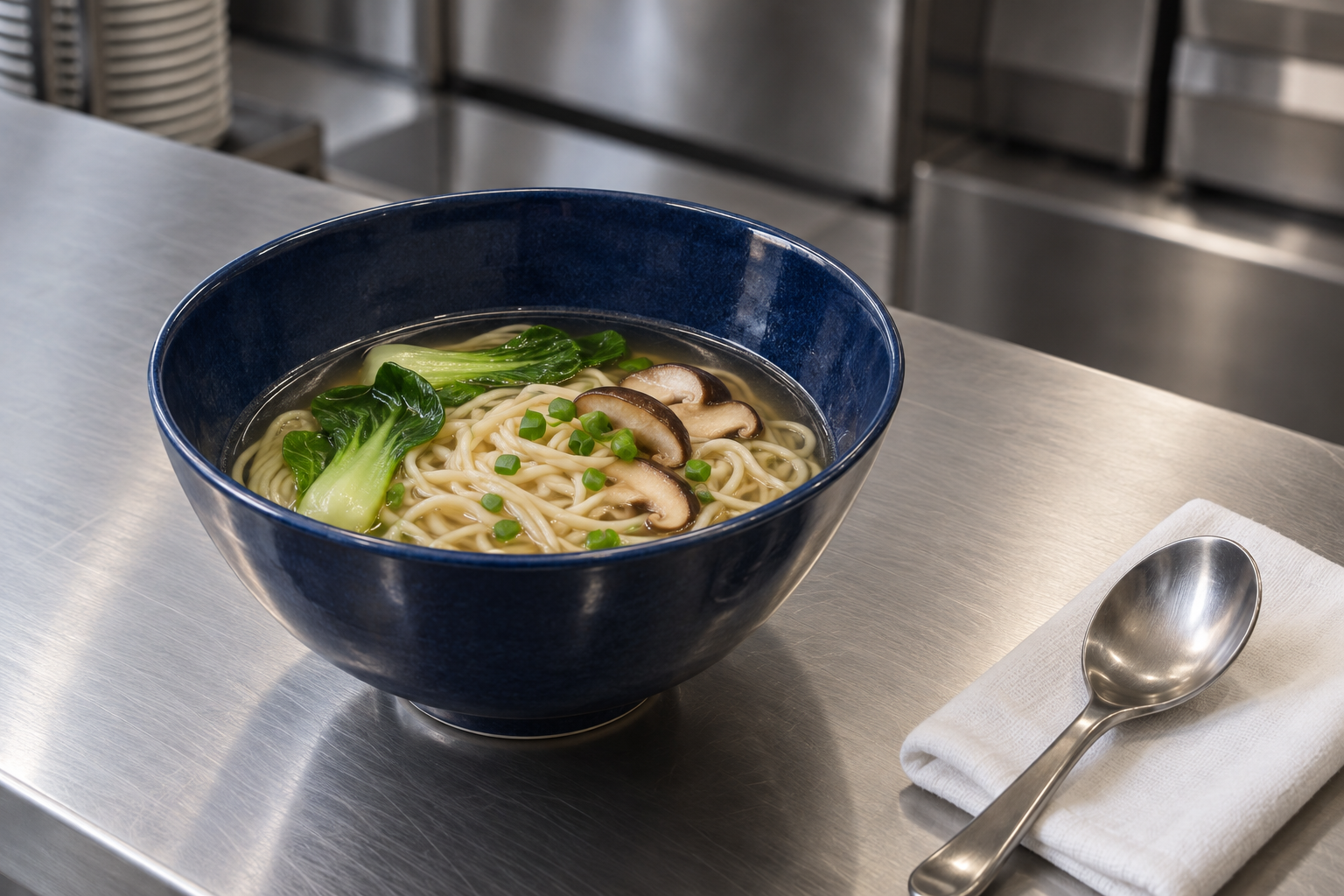
For bowl capacity measurement, water is useful because it settles into the cavity. Food behaves differently. Rice leaves gaps, noodles rise above the broth, and a garnish can take up the space a server needs to carry the bowl.
I prefer two separate checks: a liquid-capacity record for the product specification, and an actual portion trial for menu approval. Keep the food weight, recipe, and presentation consistent during that trial.
For example, a fictional noodle brand might need space for broth, noodles, vegetables, and a spoon. A supplier’s water figure alone cannot tell the buyer whether the finished bowl looks generous or cramped.
Try the normal portion at the service counter. Put in the spoon and lift the bowl as staff would. Check whether the rim stays clear enough for handling and whether eating pushes food over the edge. Use room-temperature contents for the initial handling trial.
A professional review records the portion and the result. A beautiful food photo with an unknown quantity is inspiration, not a repeatable approval condition.
Myth 4: An Ounce Is an Ounce
For cup volume, write fluid ounces, not simply “oz.” An ounce of weight is a different measure. Also name the fluid-ounce system.
The NIST volume conversion factors distinguish U.S. and Imperial fluid ounces. One U.S. fl oz is about 29.57 mL; one Imperial fl oz is about 28.41 mL. Therefore, 12 U.S. fl oz is about 355 mL, while 12 Imperial fl oz is about 341 mL.
That difference can create a needless disagreement before anyone has poured water.
I prefer mL as the shared reference in the supplier record, with any customer-facing conversion clearly named. Convert the same capacity basis: do not pair a brimful mL figure with a usable fl oz figure.
For the fictional sample above, clear wording would be: “Approx. 360 mL brimful; approx. 300 mL at the illustrated use level.” Those figures would need support from the actual approved product. “Approximate” is not a way to hide an undefined method.
Myth 5: The Mold Drawing Settles the Final Volume
From a factory point of view, the drawing is the starting point. The finished internal cavity is what holds the drink.
Clay changes during drying and firing. Digitalfire’s explanation of firing shrinkage describes how the body becomes denser as it fires. The response depends on the body and firing conditions; a single shrinkage allowance does not fit every ceramic product.
Forming thickness and the finished inside profile also matter. Two mugs can share similar outside dimensions while having different internal space. A thicker base or wall leaves less room inside when the outside envelope is held constant.
I ask for results from several finished, glazed pieces made through the intended process. Record individual results and the agreed range, rather than sending only the nicest sample or an average. Confirm the sampling plan with the supplier according to the order risk; there is no universal capacity tolerance I would apply to all ceramic dinnerware.
If the requirement changes from brimful to usable capacity, reopen the approval discussion. That is a change in what you are asking the product to do.
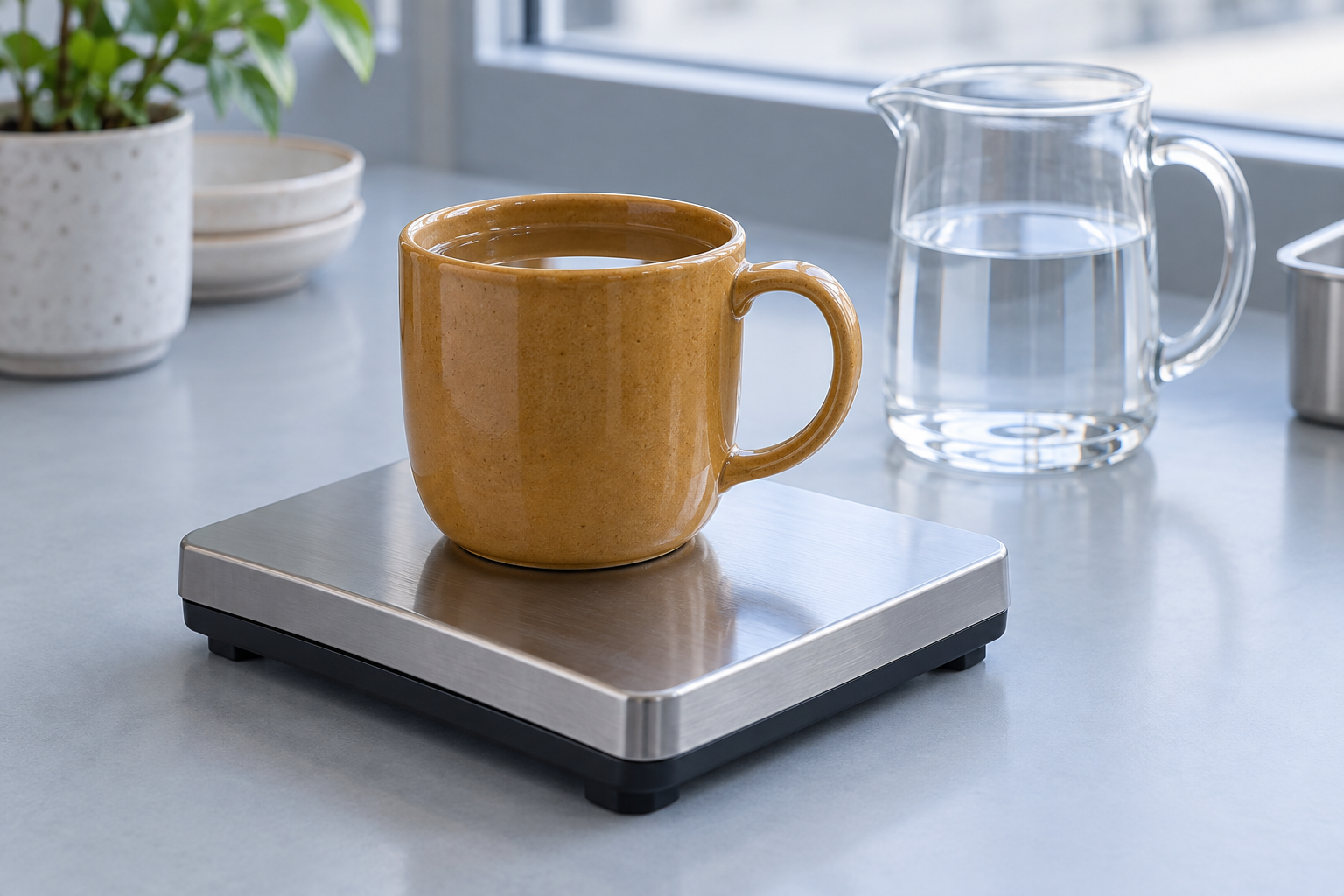
Once the terms are clear, keep the measuring method modest and repeatable.
Use a level surface, room-temperature water, and the same defined fill endpoint. A suitable graduated vessel can measure the water. Another practical approach is to weigh the water added to a dry mug on a checked scale, keeping the outside dry and excluding the mug’s own weight.
For a rough sample comparison, one gram of water is approximately one milliliter. That shortcut is not an exact calibration method. For tighter work, volume depends on water density at the measured temperature and on the measuring system. NIST’s description of gravimetric volume measurement explains the mass-and-density principle; it is not a ceramic mug acceptance standard.
Repeat the same sample first. If the readings vary noticeably, fix the setup before deciding that the factory has a volume problem. Then compare the agreed set of samples.
My release rule has three parts: the method repeats, the sampled pieces meet the agreed criteria, and the real portion works. If any part fails, hold the capacity wording and resolve that part before release. Keep the approved reference sample, method, results, and listing wording together for repeat orders.
My Advice as a Manufacturer
I would start with the drink or meal you want to sell, then choose the shape and capacity wording around it. Starting with a familiar catalog size can send the project in the wrong direction.
Ask your supplier to show where the liquid stops. Ask your service team to show where the finished portion stops. Put those two answers beside each other. Often, that small review explains a disagreement much faster than another drawing.
Questions Buyers Often Ask
Should we publish brimful or usable capacity?
Use the figure that helps the customer understand the product, and label its basis clearly. If both are useful, publish both with a simple explanation. Keep the figures tied to approved sample evidence and check the requirements of your sales channel.
Can we calculate capacity from outside diameter and height?
Not reliably for a finished ceramic mug or bowl. Walls, base thickness, curves, and taper affect the inside space. A design calculation can guide development, but I would measure finished samples before approving the claim.
Does a lower usable volume mean the supplier’s claim is false?
Not by itself. A brimful claim and a working fill are different conditions. First compare the unit, endpoint, method, and sample version. If the claim still does not match, ask for a documented correction.
Must every color have a separate capacity claim?
Not automatically. Confirm whether the variants share the same finished shape and process, and check representative pieces. If a variant changes the cavity or measured range enough to affect the claim, update its record instead of copying the old value.
Conclusion
Ceramic mug capacity becomes useful when the number tells a buyer what was measured. Define the endpoint, name the unit, check finished pieces, and try the real portion. For bowls, keep the liquid measurement and food-serving trial separate. That gives purchasing, the factory, and the content team one clear basis for approval.
You can also explore the FENN Resources for related dinnerware development guidance.