
Short Answer
A strong ceramic dinnerware sample brief should explain the target user, sales channel, shape, clay body, glaze, size, weight, logo, packaging, compliance market, order quantity, price band, and reference samples. The clearer your ceramic dinnerware sample brief is, the faster a supplier can judge feasibility, quote correctly, and make samples that are close to your real production goal.
When a buyer sends me only a pretty photo and says, “Can you make this?”, I can start a conversation, but I cannot make a reliable sample plan yet. In ceramic production, one missing detail can change the mold, glaze, packaging, testing, and cost.
Best Criteria for a Good Sample Brief
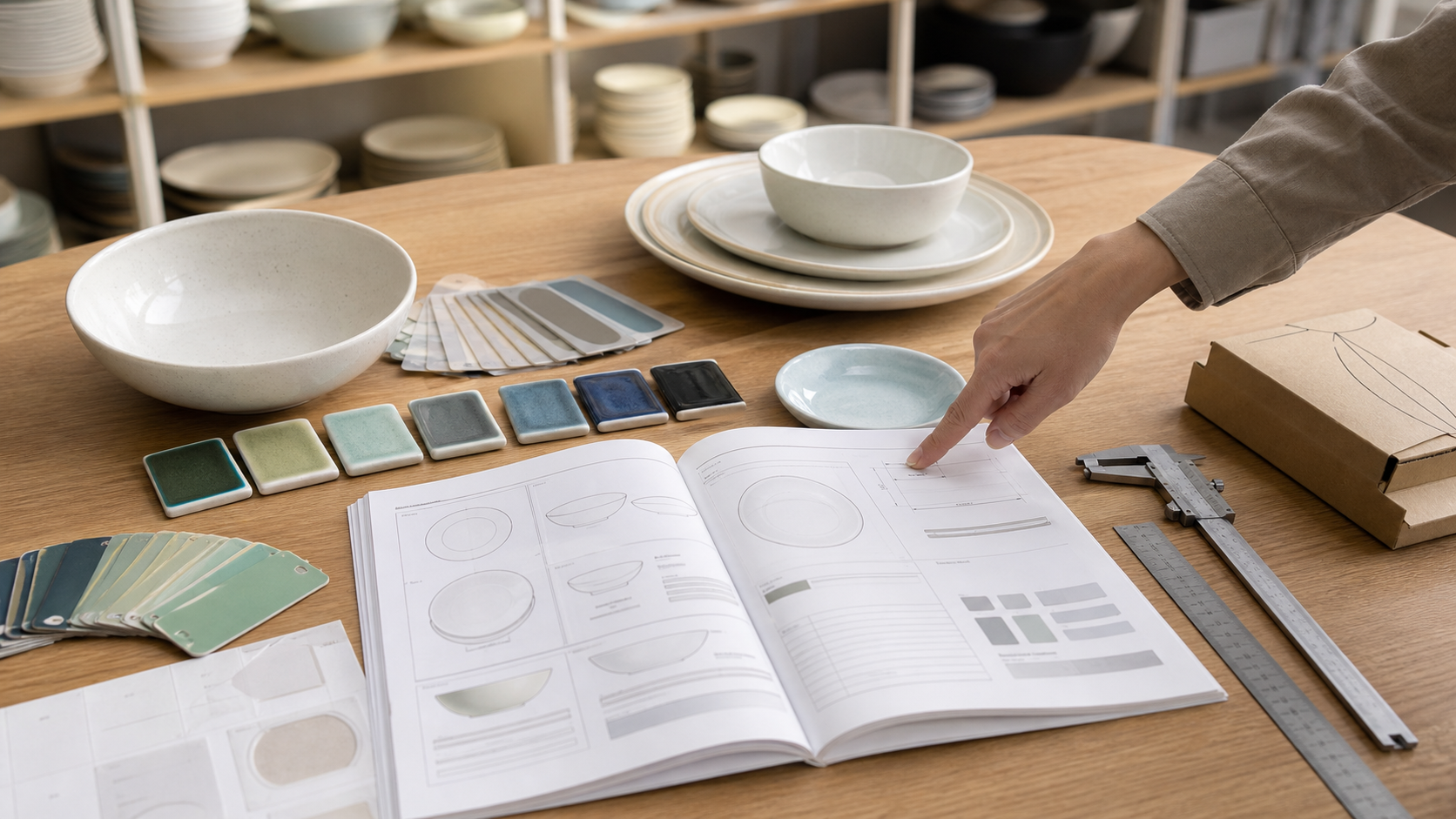
From a factory point of view, a good brief answers three questions: what should the sample look and feel like, what must it prove before bulk production, and what limits must the supplier respect for price, MOQ, timing, compliance, and packaging.
Ceramic Dinnerware Sample Brief Template
You can copy this structure before asking for custom dinnerware sampling.
| Brief Item | What To Include | Why It Matters in Ceramic Production |
|---|---|---|
| Target user and channel | Retail, hospitality, supermarket, ecommerce, gift, or private label brand | Sets expectations for weight, durability, packaging, and price |
| Product type | Plate, bowl, mug, cup, saucer, serving piece, or full set | Each shape has different shrinkage, stacking, and packaging needs |
| Size and weight target | Diameter, height, capacity, rim style, foot ring, target weight | Controls mold choice, user feel, carton weight, and freight cost |
| Clay body | Stoneware, porcelain, bone china style, or supplier recommendation | Affects color, strength, firing temperature, water absorption, and price |
| Glaze and finish | Glossy, matte, reactive, speckled, colored, white, rim effect | Drives color tolerance, cutlery marking risk, and sample repeats |
| Decoration and logo | Decal, pad print, underglaze, bottom mark, rim line, no logo | Decoration method can affect firing, compliance, and MOQ |
| Reference samples | Photos, physical sample, Pantone direction, competitor inspiration | Helps the supplier understand the look, but should not replace specs |
| Compliance market | US, EU, UK, Australia, retailer standard, food-contact needs | Guides test report planning and material choices |
| Packaging | Open stock, boxed set, gift box, mailer, export carton, pallet needs | Ceramic breakage control starts before production |
| Order plan | Trial quantity, target MOQ, launch assortment, reorder expectation | Helps the supplier choose existing shapes or new mold route |
| Price band | Target FOB range or retail price position | Prevents beautiful samples that cannot meet your cost target |
| Timeline | Needed sample date, approval date, shipment target | Helps plan mold, glaze, testing, packaging, and peak-season capacity |
Why Vague Briefs Waste Sampling Time
I have seen this many times: the first sample looks nice, but the buyer says it is too heavy, too small, too expensive, too rough, or not suitable for the target market. Often the first brief did not say what the sample had to prove.
For example, “matte white stoneware plate” is not enough. A factory still needs to know the diameter, rim style, weight target, color warmth, dishwasher expectation, packaging format, and price level.
Ceramic sampling is slower than paper mockups because clay shrinks, glaze moves, and firing changes color. A sample is a production test, not only a visual model.
Translate Visual References Into Factory Language
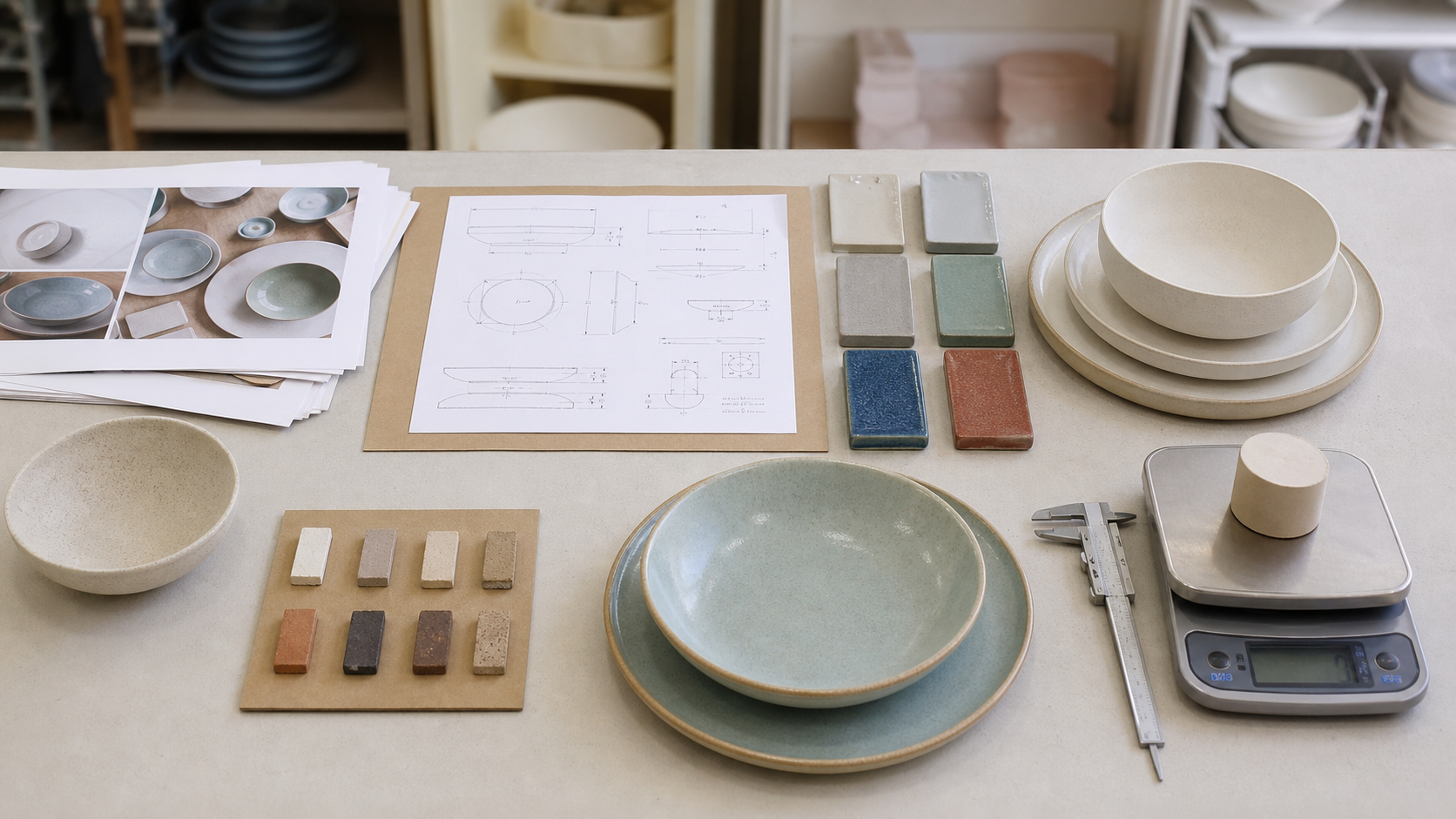
Reference photos are useful, but they can also mislead. A photo does not show the exact clay body, glaze recipe, rim thickness, foot ring, or real weight.
When you send references, add notes like this:
- “I like the soft rounded rim, but the plate can be slightly heavier if it improves strength.”
- “I like this speckled glaze, but the color range must stay close enough for a four-piece set.”
- “This is for ecommerce shipping, so packaging protection is more important than a very thin gift box.”
This tells the ceramic dinnerware supplier what is important and what can be adjusted.
Glaze, Color, and Finish Need Clear Rules
For glossy white porcelain, buyers should define the white tone and transparency feeling. For matte glaze, buyers should ask about cutlery marking and cleaning tests. For reactive glaze, buyers must accept some natural variation, but they should still define the acceptable color range, rim flow, speckles, and set matching.
My practical advice is to ask for a master sample and a small approved range, not just one perfect photo. Bulk production needs a realistic standard.
Do Not Forget Packaging in the Sample Brief
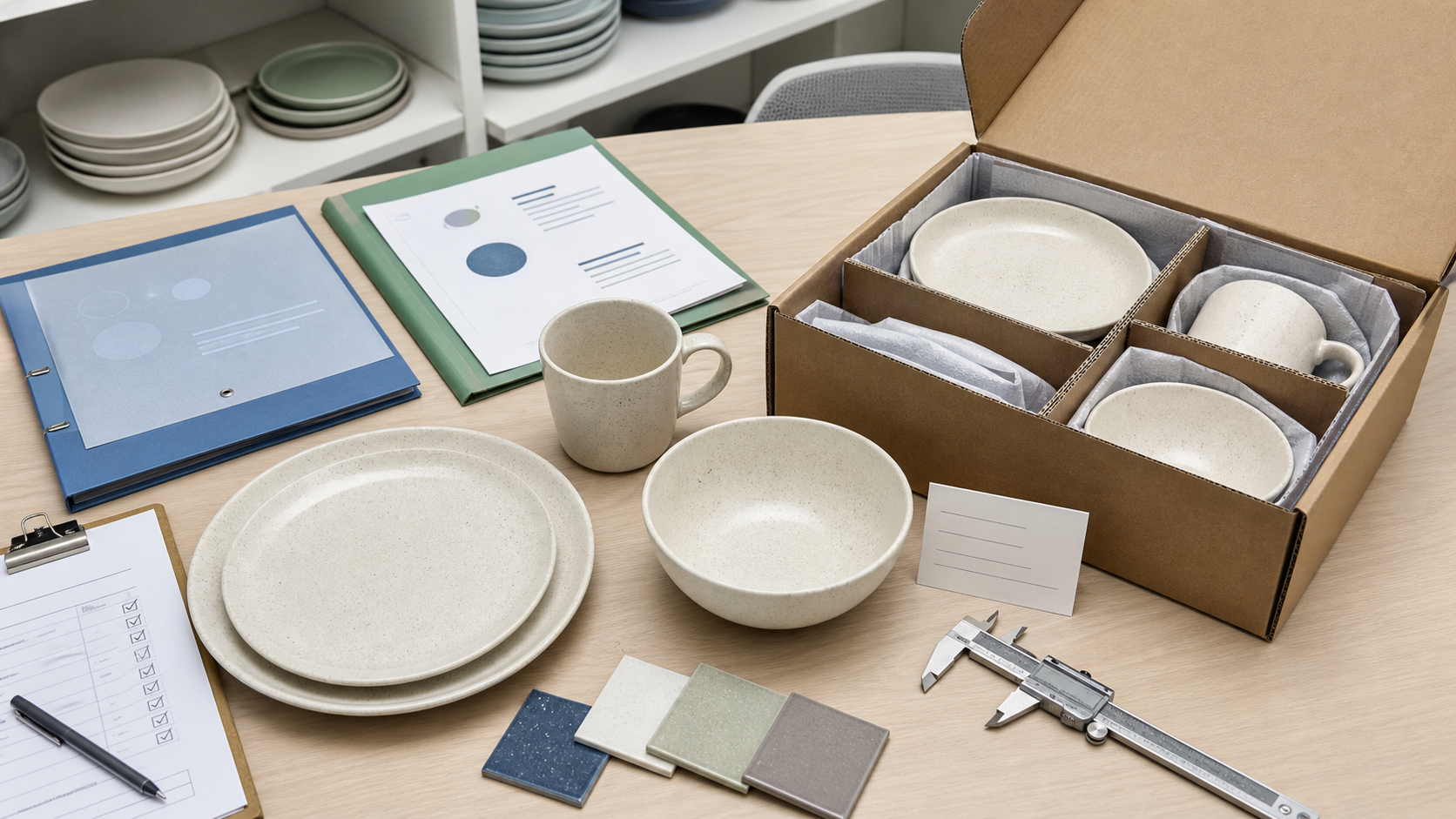
Many buyers brief the product but forget packaging until late. For ceramic dinnerware, that is risky.
The product shape affects the packaging structure. A wide flat plate, deep bowl, mug handle, or mixed set needs different protection. A shelf gift box is not the same as ecommerce mailer protection.
If the product will travel internationally, mention whether you need drop-test thinking or transport-test discussion. ASTM D4169 distribution testing is one useful reference buyers may discuss with packaging or testing partners.
Compliance and Care Claims Should Start Early
If you sell ceramic dinnerware in the United States, ask how the supplier supports FDA guidance on lead in foodwares and related food-contact documentation. If you sell in Europe, ask about European Commission food contact materials requirements for ceramic articles. If lead and cadmium release testing is needed, buyers and testing partners may discuss ISO 6486 ceramicware testing at a high level.
I prefer to discuss compliance market before sampling, not after. Decoration on food-contact surfaces, metallic effects, bright colors, rims, and children’s items may need more careful review.
Supplier Questions That Improve the Brief
A good supplier should not only say yes. A good supplier should ask smart questions.
| Supplier Question | Why It Is a Good Sign |
|---|---|
| “What market will this product enter?” | They are thinking about compliance and care claims |
| “Is the reference only for look, or must dimensions match?” | They know visual inspiration and production specs are different |
| “Can we use an existing mold to control cost and MOQ?” | They are trying to reduce sampling risk |
| “What color variation can you accept?” | They understand glaze production reality |
| “How will this be packed and shipped?” | They know ceramic breakage is part of product development |
If a supplier never asks these questions and only replies with a price, be careful.
Common Mistakes I See in OEM Ceramic Product Briefs
The first mistake is sending too many inspiration photos with no priority. The second is hiding the price band, which may lead to a sample that is too costly for the channel. The third is treating glaze as exact paint, when ceramic color is made through material, heat, and firing conditions. The fourth is leaving packaging until the end. The fifth is giving vague sample feedback instead of naming the issue: size, weight, color, rim, handle, logo, or packaging.
My Advice as a Manufacturer
My simple advice is to brief the supplier like you are preparing for production, not only for a pretty sample. Sampling should answer real questions: Can this shape fire well? Can this glaze be repeated? Can the logo survive the process? Can the packaging protect the set?
At FENN, I like to start with a practical OEM ceramic product brief before we quote deeply. It helps us suggest existing molds, glaze trials, decoration methods, compliance documents, MOQ logic, sample timing, and packaging structure with fewer surprises.
Questions Buyers Often Ask
Do I need exact technical drawings?
Not always. If you use existing shapes, clear size ranges and reference samples may be enough. If you need a unique silhouette or exact dimensions, drawings or a physical sample help a lot.
What should I approve before bulk production?
Approve the product sample, glaze range, logo position, packaging structure, compliance plan, and written QC standard. The approved sample should become the control reference for production.
Conclusion
A ceramic dinnerware sample brief is how buyers turn a product idea into a sample the factory can make, test, quote, pack, and repeat. A clear ceramic dinnerware sample brief saves time because it helps the supplier see the real project, not only the surface look.
If you are preparing a private label or OEM dinnerware project, send FENN your references, target market, size range, glaze idea, packaging need, quantity, and price direction. I can help review the brief and point out what needs to be clarified before sampling starts.