Short Answer
Use existing private label ceramic shapes when speed, lower MOQ, and cost control matter most. Invest in custom dinnerware molds when your brand needs a unique silhouette, exact dimensions, protected design language, or a shape that existing factory molds cannot support. Before you decide, ask the supplier to explain tooling cost, sample timing, shrinkage risk, mold ownership, and how bulk production will be controlled.
When a buyer asks me, “Kitty, do we need a new mold?”, I ask one question first: what problem must the new shape solve? If the answer is only “I want it to look different,” there may be cheaper ways. If the bowl must nest with packaging, match a hotel specification, hold a fixed volume, or create a signature profile, dinnerware mold development may be worth discussing.
Best Criteria for the Mold Decision
From a factory point of view, a new ceramic mold is worth it only when the commercial value is bigger than the added cost, time, and production risk. A professional supplier should compare shape uniqueness, launch timing, MOQ, tooling budget, tolerance needs, packing method, and repeat-order plan before saying yes.
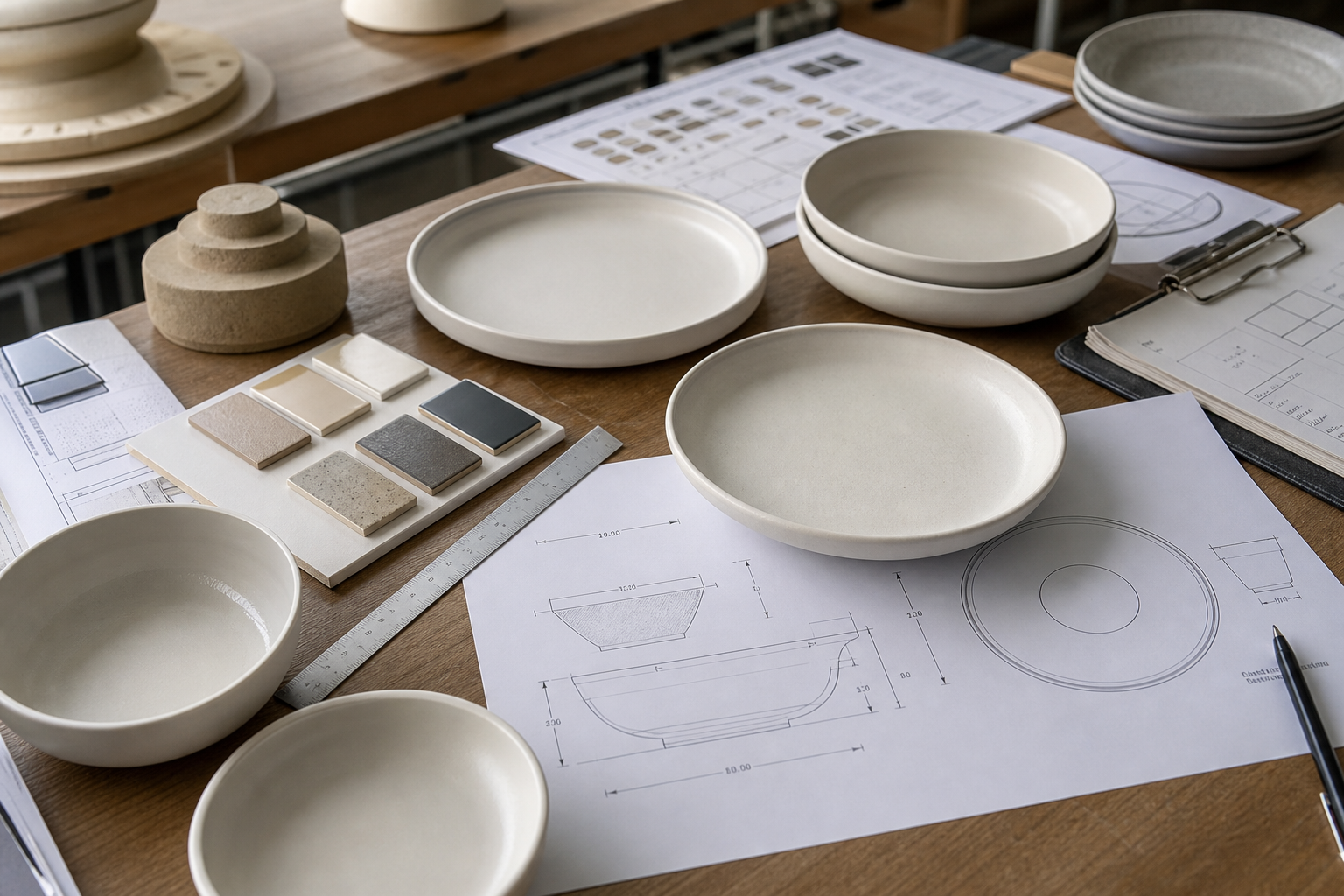
Existing Shape vs New Mold: Quick Decision Table
| Buyer Situation | Existing Factory Shape Usually Fits | New Custom Mold May Be Better |
|---|---|---|
| First private-label launch | Yes, especially for testing the market | Only if the shape is core to the brand |
| Tight launch timing | Yes, because sample and production steps are shorter | Risky unless tooling is already planned |
| Limited MOQ or budget | Yes, because tooling and trial cost stay lower | Usually harder unless the order value supports it |
| Exact size, capacity, or stacking need | Maybe, if the supplier has a close mold | Yes, if the dimensions must be controlled |
| Signature rim, handle, foot ring, or profile | Maybe, with glaze or decoration changes | Yes, if the shape itself carries the design |
| Retailer or hospitality specification | Maybe, if tolerance is flexible | Often yes, especially for capacity and stackability |
| Long-term product family | Good for early testing | Stronger if you need repeatable brand architecture |
This table is not a rule book. It is a starting point.
When Existing Private Label Ceramic Shapes Work Well
Existing molds are often the best route for a first order, a seasonal line, a test market, or a brand that wants to spend more energy on glaze, decoration, packaging, and assortment planning.
In real ceramic production, the shape is only one part of the final look. A simple coupe plate can feel different with a soft matte glaze, speckled body, colored rim, bottom logo, or giftable box. For many buyers, this is enough differentiation without paying custom ceramic mold cost.
A good supplier should still give clear shape information: diameter, height, capacity, weight range, foot ring style, stackability, material body, and real production photos. If an existing shape is close to your design goal, and the rest can be handled by glaze, color, decoration, or packaging, sample it before opening a new mold.
When Custom Dinnerware Molds Are Worth It
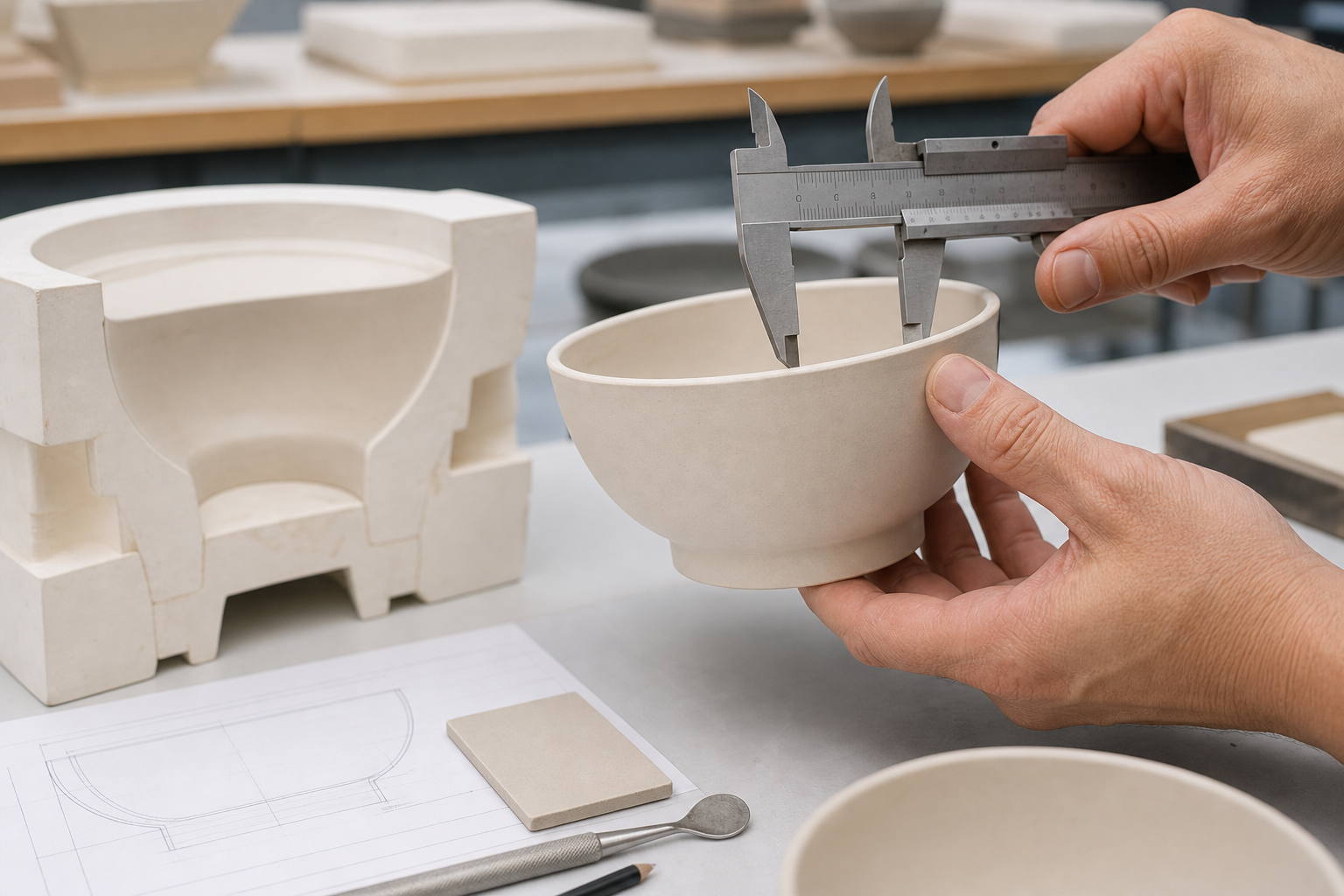
A new mold starts to make sense when the shape itself affects brand value or product function. A restaurant group may need bowls with stable stacking height. A retail brand may want a recognizable rim profile across plates and bowls. A coffee brand may need a mug handle that feels comfortable for the target user.
In these cases, using an existing shape may create hidden costs later. The carton may be too large, the set may not stack well, or the product may look too similar to other brands on the shelf.
Before dinnerware mold development begins, I check these points:
- Is the design technically stable after ceramic shrinkage?
- Is the rim strong enough for daily use?
- Will the foot ring support firing and stacking?
- Can the piece be packed safely for export?
- Will the order quantity support the tooling work?
If these answers are weak, a pretty drawing can become a slow project.
What Drives Custom Ceramic Mold Cost
Custom ceramic mold cost is not only the mold itself. The full cost can include drawing adjustment, prototype work, master mold, working molds, sampling, correction, extra firing trials, packaging adjustment, and sometimes new inspection rules.
Wide flat plates, very thin rims, sharp corners, deep bowls, special handles, and unusual foot rings can add difficulty. Ceramic is not plastic or metal. Clay shrinks during drying and firing. Even a small profile change can affect warping, stacking, glaze thickness, and carton fit.
I always tell buyers: do not judge mold cost without also looking at mold risk. A cheap mold that creates low production yield is not cheap in the end.
Mold Ownership and Design Protection
Mold ownership should be clear before you pay tooling fees. Ask whether the mold is exclusive, shared, stored under your project name, or only used for your order while cooperation continues.
For design protection, buyers can learn the basics from WIPO industrial design guidance or the USPTO design patent overview if the market is the United States. I am not a lawyer, but from a manufacturing side, I do suggest keeping written drawings, approval records, tooling invoices, and mold-use agreements organized.
If your brand shape is important, do not leave this part as a friendly verbal promise.
Tooling Readiness Checklist
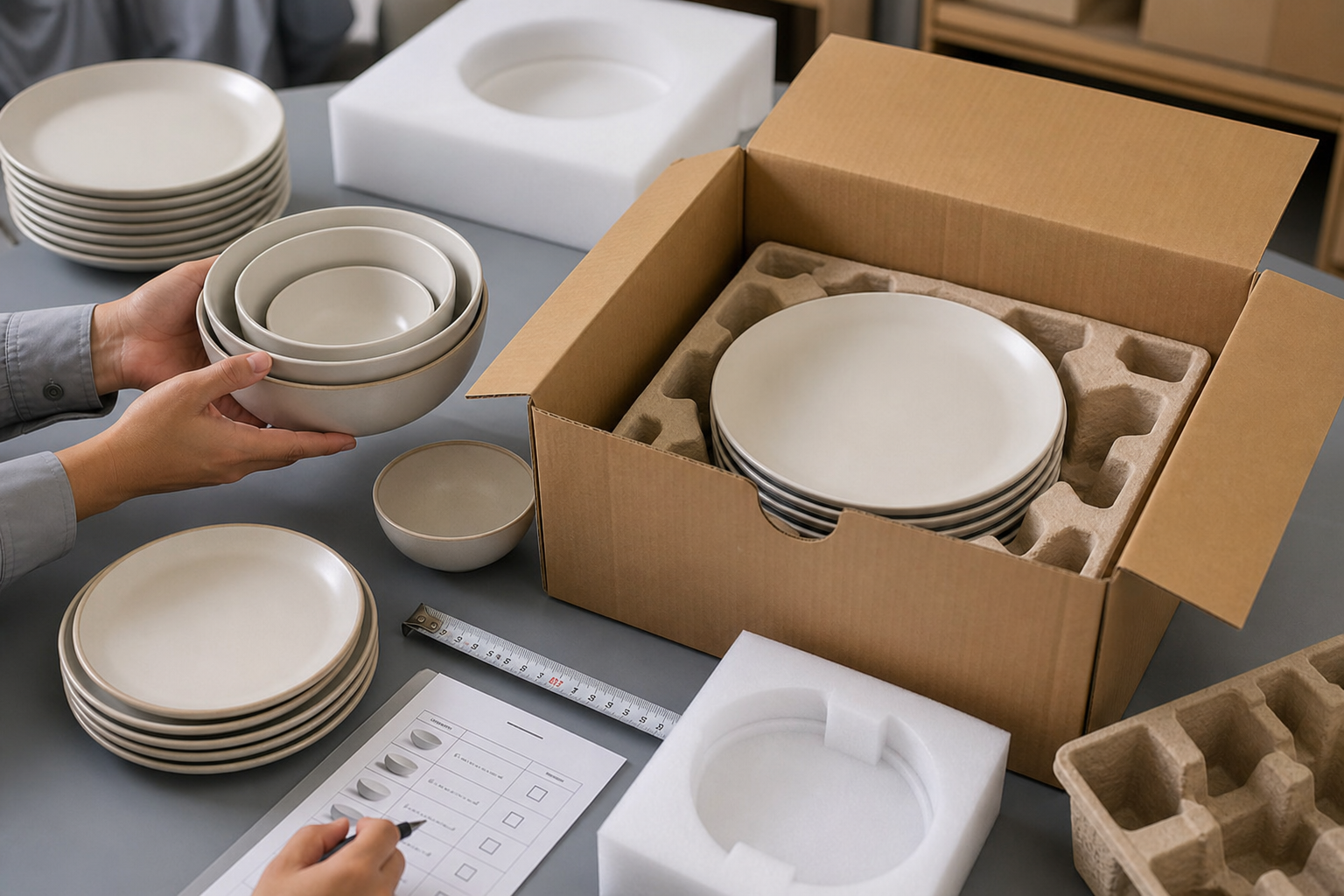
Before approving new dinnerware mold development, use this checklist with your supplier.
| Checkpoint | What To Ask | Professional Answer Should Include |
|---|---|---|
| Shape purpose | Why can existing molds not work? | A clear function or brand reason, not only vague uniqueness |
| Drawing and size | What dimensions and tolerances are agreed? | Diameter, height, capacity, weight target, foot ring, and shrinkage notes |
| Ceramic risk | What may warp, crack, chip, or glaze poorly? | Practical comments on rim, wall thickness, firing support, and glaze behavior |
| Sample plan | How many rounds may be needed? | Shape sample first, then glaze/decoration sample if needed |
| Cost scope | What is included in tooling cost? | Drawing, master mold, working molds, sample pieces, and correction limits |
| Ownership | Who can use the mold? | Written exclusivity or use rules |
How to Keep a Custom Shape Practical
The safest custom shapes usually look simple, but they are carefully proportioned. A small rim change, softer wall curve, better foot ring, or improved stacking angle can create a more ownable product without making production unstable. Do not add complexity where the customer will not notice it.
My Advice as a Manufacturer
My simple advice is to start with the business reason, not the drawing. If you need speed, lower risk, and flexible launch quantity, test existing shapes first. If the shape is part of your brand promise or product function, plan custom dinnerware molds properly and give the factory enough time to prove them.
At FENN, I review the target market, price band, packaging format, sample references, and launch quantity before recommending a mold route. Sometimes I will say, “Use our existing shape and spend your budget on glaze and packaging.” Sometimes I will say, “This shape is important enough. Let us develop it carefully.”
Questions Buyers Often Ask
Can I change only one detail on an existing mold?
Sometimes yes, but it depends on the detail. Changing glaze, color, logo, or decal is easier. Changing rim height, handle shape, foot ring, or capacity may require new tooling because the physical mold controls the ceramic body.
Will a new mold guarantee perfect bulk production?
No. A new mold only creates the shape. Bulk production still depends on clay preparation, drying, firing, glaze behavior, inspection, and packaging. You still need approved master samples, written tolerances, and documented quality control. ISO 9001 quality management is a useful reference point for why records and repeatable processes matter.
Is mold cost refundable?
Usually tooling cost is tied to development work, so buyers should not assume it is refundable. The better question is what the cost includes, who can use the mold, and how long the supplier will keep it.
Conclusion
Custom ceramic mold cost is worth paying when the shape gives your dinnerware line clear commercial value, better function, or stronger brand recognition. Existing shapes are better when you need speed, lower MOQ, and practical market testing. The right decision is not the most custom option. It is the option that helps your product launch well and repeat safely.
If you are deciding between existing private label ceramic shapes and new dinnerware mold development, send FENN your reference photos, target dimensions, launch quantity, packaging idea, and price direction. I can help you judge whether a custom mold is truly needed before you spend the tooling budget.