
Short Answer
For stoneware vs porcelain dinnerware, porcelain is usually better for lighter, refined, higher-density tableware with a clean look. Stoneware is often better for warm, handmade-style, lifestyle dinnerware with richer glaze character. The right ceramic body for dinnerware depends on your sales channel, price point, weight target, glaze style, durability expectation, and food-contact documentation.
When a buyer asks me, “Kitty, should my brand use stoneware or porcelain?”, I do not answer with one material first. I ask where the dinnerware will be sold, who will use it, what feeling the brand wants, and what complaints the buyer most wants to avoid.
Both materials can make good private label ceramic dinnerware. Both can also fail if the body, glaze, shape, firing, and packaging are not matched well.
Best Criteria for Choosing the Ceramic Body
The best ceramic body for dinnerware is the one that fits the product promise and can be produced consistently. A professional stoneware supplier or porcelain dinnerware manufacturer should explain body maturity, rim strength, glaze fit, weight, testing plan, and repeat-order control.
What Stoneware and Porcelain Mean in Real Buying
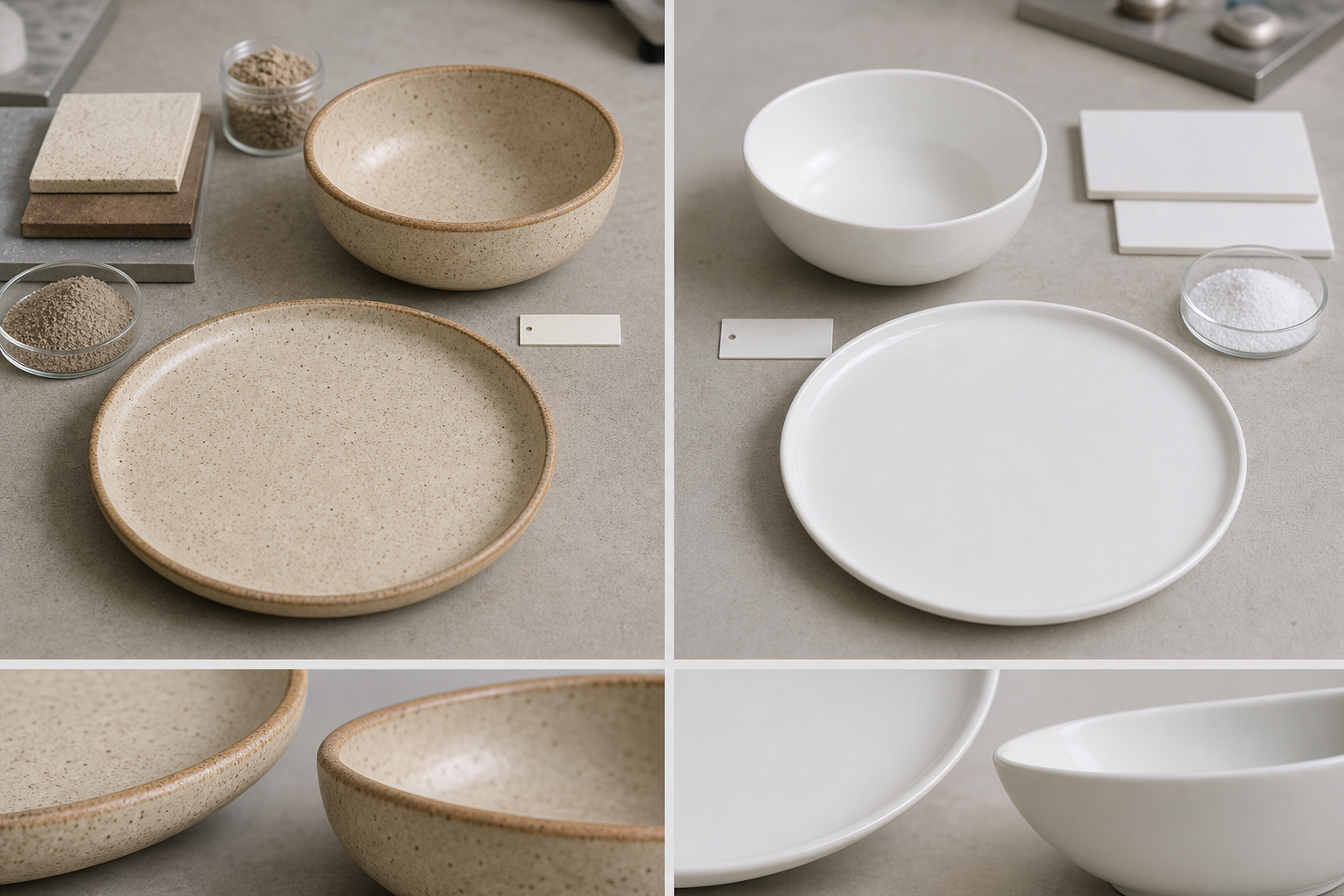
Stoneware usually feels warmer, slightly heavier, and more relaxed. It works well with matte glaze, speckled glaze, reactive glaze, rustic shapes, and casual table settings. Many lifestyle brands choose stoneware because it carries a handmade feeling without needing every piece to look exactly the same.
Porcelain usually feels cleaner, denser, and more refined. It can be thinner and lighter when designed well. It works well for white dinnerware, hotel lines, modern retail sets, and brands that want a crisp surface and more formal feeling.
This does not mean stoneware is always casual or porcelain is always formal. Shape, thickness, glaze, decoration, and finishing can change the final feeling a lot.
Stoneware vs Porcelain Dinnerware Scorecard
Use this scorecard before asking for samples. It helps you decide which material direction deserves the first development round.
| Buyer Need | Stoneware Usually Fits Better When… | Porcelain Usually Fits Better When… | What To Ask |
|---|---|---|---|
| Brand feeling | You want warm, natural, crafted, or earthy tableware | You want clean, bright, refined, or hotel-style tableware | Show real production samples, not only catalog photos |
| Weight target | A heavier hand feel supports the brand story | Lower weight and thinner profiles matter | Ask for weight range by item |
| Glaze style | Reactive, speckled, matte, or deep color variation is important | Solid white, clear glaze, decal, or crisp color control is important | Ask how the glaze behaves on the chosen body |
| Retail channel | Lifestyle, home decor, gift, and casual dining are the focus | Department store, hotel, restaurant, or refined retail is the focus | Ask for channel-matched samples |
| Customer complaints to avoid | You need to explain natural variation clearly | You need stronger consistency across sets | Define QC boundaries before bulk production |
| Compliance plan | Colored or reactive glaze needs careful food-contact review | Decoration and glaze still need food-contact review | Ask for lead/cadmium and market-specific test support |
This table is not a fixed rule. It is a way to start a better supplier conversation.
Choose by Sales Channel, Not Only by Taste
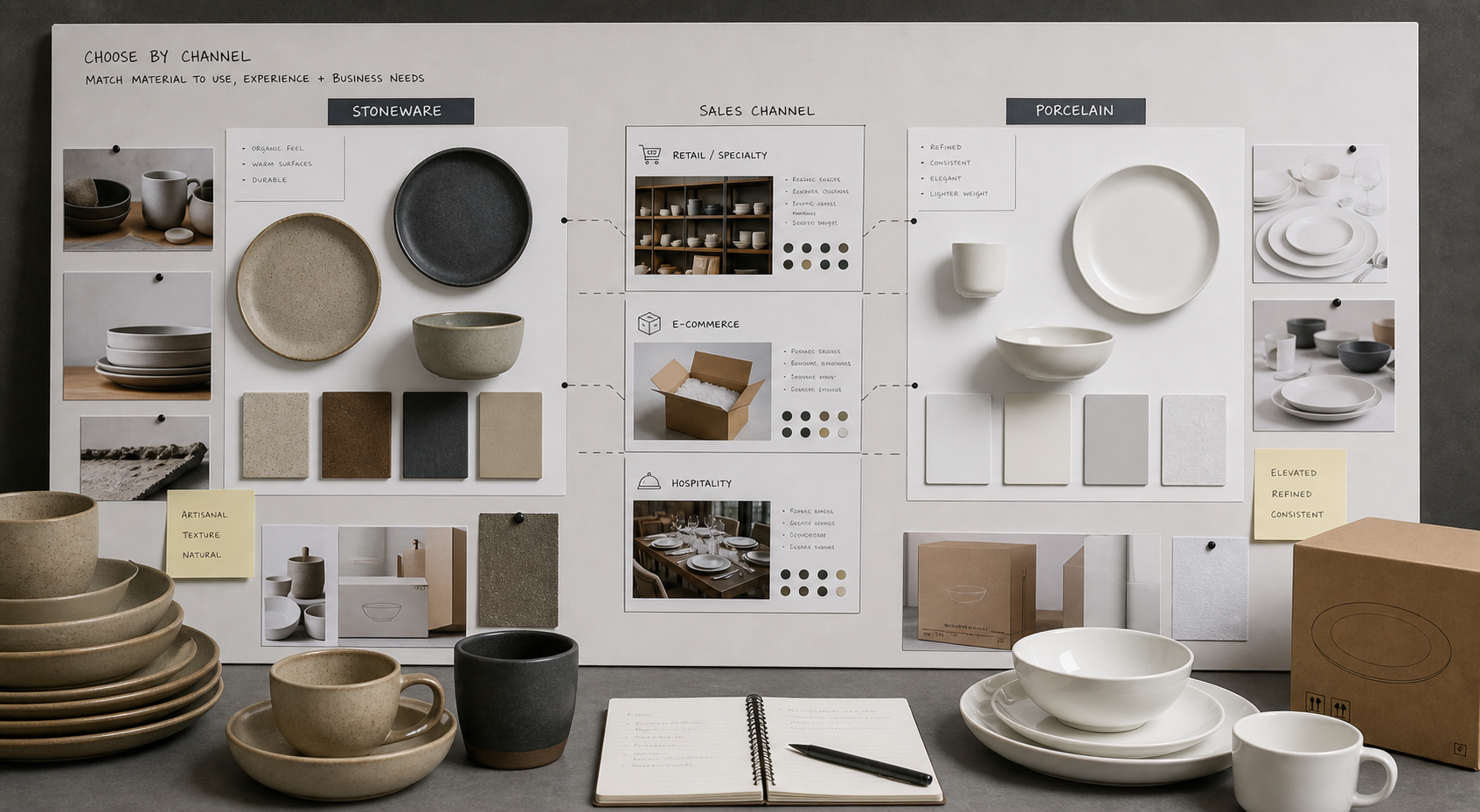
Many buyers start with a mood board. That is useful, but the sales channel should guide the final material choice.
For a home lifestyle brand, stoneware can be very strong. A slightly heavier bowl with a soft speckled glaze may feel honest and comfortable. Consumers often accept small natural differences if the brand story prepares them.
For a hospitality buyer, porcelain may be easier to justify when weight, stacking, replacement, and a clean table setting matter. A hotel does not want every plate to become a design conversation. It wants a line that looks consistent under daily service.
For ecommerce, both materials can work, but packaging and product weight become very important. Heavy stoneware can raise freight cost. Thin porcelain may feel refined, but the rim and foot ring must still survive transport.
This is why I do not separate material choice from packaging, logistics, and customer service.
How Material Choice Changes Glaze and Finish
Stoneware often supports rich surface effects. Speckles, semi-matte finishes, reactive glaze movement, and warmer tones can look natural on stoneware. But buyers must define acceptable variation. If a four-piece set looks like four unrelated colors, the customer may see it as a defect, not beauty.
Porcelain often supports a cleaner glaze result. White porcelain, clear glaze, fine decal, and simple color lines can look sharp. But porcelain still needs good glaze fit, or the product may show crazing or poor surface feel over time.
For matte glaze on either body, ask about cutlery marking and cleaning behavior. A matte surface may look beautiful in a photo but create complaints if dark utensil marks appear too easily.
How to Judge Durability Claims
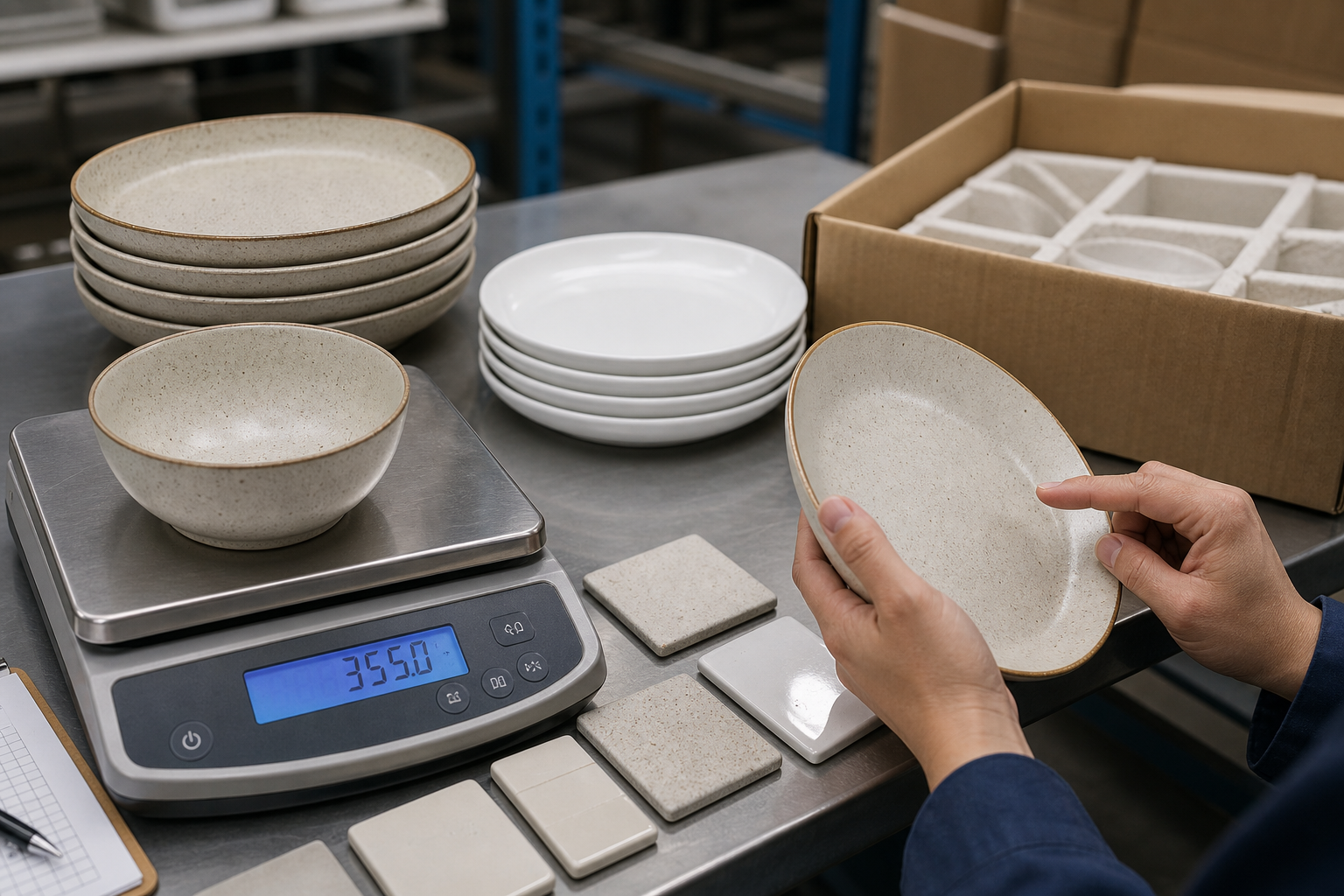
Buyers often ask, “Which one chips less?” I understand the question, but the answer is not only stoneware or porcelain. Chipping depends on body maturity, rim thickness, shape design, firing, glaze fit, edge polishing, packing, and how the product is used.
Ask your supplier for:
- Real production samples in the target shape and body.
- Rim and foot ring details, not only top-view photos.
- Dishwasher, microwave, and food-contact claim support where needed.
- A practical QC standard for chips, warping, pinholes, black spots, and color variation.
- Packaging designed around the actual shape and weight.
Official food-contact references such as FDA guidance on lead in foodwares, European Commission food contact materials, and ISO 6486 ceramicware testing are useful when discussing lead and cadmium release at a high level. The exact testing plan should match your selling market and product decoration.
A Practical Material Selection Workflow
When we help buyers compare stoneware vs porcelain dinnerware, I prefer this order: define the target customer, set the price band, choose the product family, compare real body samples, test glaze on the chosen body, check weight and stacking, review packaging, then approve a master sample with written QC boundaries.
This keeps the material decision connected to the real product, not only to a name.
Common Mistakes I See Buyers Make
The first mistake is choosing stoneware only because it looks popular on social media. The finish may photograph well, but the buyer still needs standards for color range, cutlery marks, and care instructions.
The second mistake is choosing porcelain only because it sounds more premium. If the shape is too thin, the packaging is weak, or the price band is unrealistic, the product may create trouble.
The third mistake is comparing two supplier quotes without matching the body, glaze, size, weight, packing, testing, and inspection level. A lower unit price may simply mean a different product.
My Advice as a Manufacturer
My advice is simple: choose the body after you define the product job. Stoneware is not the “easy” choice, and porcelain is not automatically the “better” choice. They are different tools.
At FENN, I like to prepare side-by-side samples when the buyer is unsure. We compare the hand feel, glaze result, weight, stacking, packaging space, and QC boundaries. This makes the decision calmer.
Questions Buyers Often Ask
Is porcelain always more durable than stoneware?
No. Porcelain can be strong when well fired and well designed, but durability also depends on rim shape, wall thickness, glaze fit, inspection, and usage. Stoneware can also perform well when the body is mature and the shape is practical.
Is stoneware safe for food contact?
Stoneware can be suitable for food contact when the glaze and body are properly made and tested for the target market. Buyers should ask for relevant food-contact documentation, especially for colored glaze, reactive glaze, decorated surfaces, and items used with acidic food.
Which material is better for private label ceramic dinnerware?
For a first private label ceramic dinnerware line, choose the material that supports your brand position and MOQ plan. Stoneware is often strong for lifestyle collections. Porcelain is often strong for refined, lighter, cleaner collections. Samples should confirm the decision.
Conclusion
Stoneware vs porcelain dinnerware is not a simple winner-and-loser choice. Stoneware gives warmth, texture, and glaze character. Porcelain gives refinement, density, and a clean surface direction. The best choice is the one that fits your buyer, channel, price, design, testing needs, and repeat-order plan.
If you are choosing a ceramic body for dinnerware, send FENN your target market, reference photos, price band, preferred weight, glaze direction, and sales channel. I can help you compare stoneware and porcelain before you spend time on the wrong sample route.
Need help choosing stoneware or porcelain for your dinnerware line?
Send FENN your target market, reference photos, price band, preferred weight, glaze direction, and sales channel. I can help you compare stoneware and porcelain before you spend time on the wrong sample route.