Short Answer
Before placing a first ceramic dinnerware order, ask your supplier about material, food-contact testing, MOQ, sample approval, mold ownership, QC standards, packaging, lead time, payment milestones, and repeat-order control. Good answers should include proof: fired samples, test reports, packing details, inspection criteria, and written production records.
When a new buyer asks me for my best first-order advice, I usually say this: do not start with price only. If the supplier cannot explain how the product will be made, tested, packed, inspected, and repeated, the low price may become expensive later.
I have seen buyers lose time because one small question was missed. The sample looked beautiful, but the carton failed. The glaze was approved, but the second order looked different. Nobody discussed who owned the mold.
So I use a simple question bank.
Copy-Ready First-Order Question List
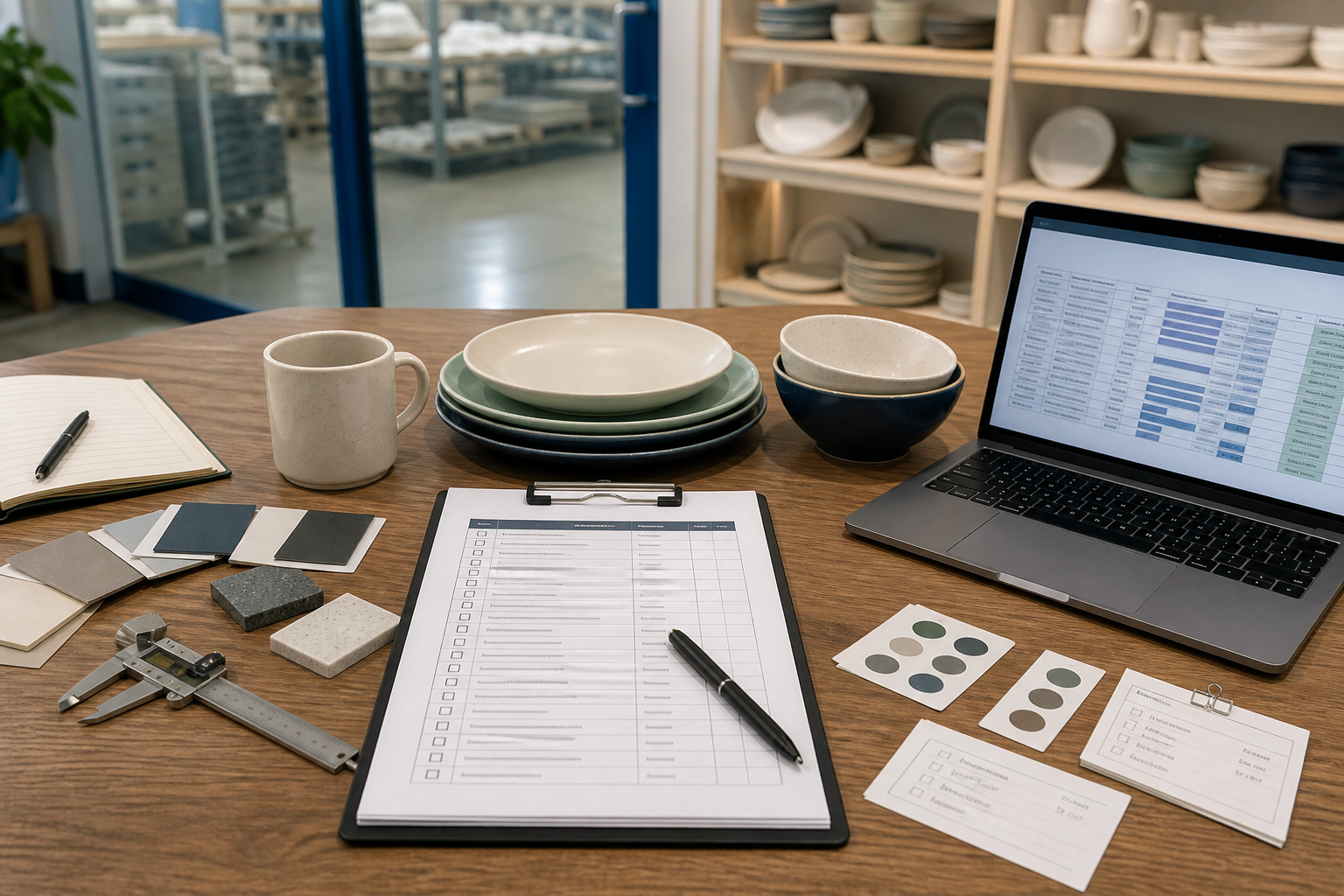
Use this list before you approve a first ceramic dinnerware order. I prefer sending questions by stage, then checking whether answers match the sample, quote, and contract.
| Stage | Questions to Ask | Good Answer Should Include |
|---|---|---|
| Product fit | 1. Which clay body fits my target price and use? | Body choice with weight, firing, and glaze reasons |
| Product fit | 2. Are these existing shapes or new molds? | Shape list, mold condition, tooling need, and mold ownership terms |
| Product fit | 3. What size, weight, and stacking tolerance can you control? | Practical range and check method |
| Surface and decoration | 4. How will this glaze behave in bulk production? | Fired samples, variation range, and kiln-control explanation |
| Surface and decoration | 5. Is the logo, decal, rim color, or hand-painting suitable for my market? | Decoration method, placement, test scope, and risk notes |
| Compliance | 6. Which food-contact tests are needed for my market? | Test plan, report scope, and sample-to-batch link |
| Compliance | 7. Can you share past test reports for similar ceramic dinnerware? | Product type, material, date, lab, and test method |
| Sampling | 8. How many sample rounds should we plan? | Timing, fee, courier, and what each round proves |
| Sampling | 9. What counts as approved: photo, physical sample, or signed master sample? | Approval method and retained sample plan |
| MOQ and price | 10. What drives the MOQ for this order? | Clay, glaze, kiln, decoration, packaging, and SKU setup reasons |
| MOQ and price | 11. What is included in the unit price? | Product, packaging, testing, mold, artwork, inspection, and freight boundaries |
| Production | 12. What is the normal lead time after sample approval? | Calendar, peak-season warning, and buyer approval duties |
| Production | 13. What changes can delay production? | Mold, glaze, packaging artwork, test, and payment risks |
| QC | 14. What defects are critical, major, and minor for this item? | Written defect standard with photos or examples |
| QC | 15. What inspection method will you use before shipment? | In-process checks, final inspection, sampling method, and report format |
| Packaging | 16. How will you protect each piece inside the box? | Inner protection, dividers, carton strength, and pallet plan |
| Packaging | 17. Do we need packaging tests or retailer packing rules? | Test suggestion and clear reason, not only thicker cartons |
| Labeling | 18. Who prepares barcodes, carton marks, care labels, and inserts? | Artwork owner, proof process, and print approval |
| Payment and risk | 19. What are the payment milestones? | Deposit, balance, sample fees, tooling fees, and release points |
| Payment and risk | 20. What happens if bulk goods do not match the approved sample? | Correction process, rework limits, and documentation |
| Repeat orders | 21. How will you keep repeat orders consistent? | Retained samples, glaze records, batch notes, and change-control |
| Repeat orders | 22. Will any material, glaze, mold, or packaging supplier change need approval? | Written change-control rule |
| IP and ownership | 23. Who owns custom molds, artwork, and product drawings? | Written ownership terms and use limits |
| Shipment | 24. What documents will be ready before shipment? | Packing list, invoice, inspection report, test report, and carton details |
| Final check | 25. What do you need from me before you can start safely? | Buyer responsibility list, not a vague “no problem” reply |
How I Judge the Answers
The words I trust most are not “we can do it.” I trust answers that connect the product, sample, and production record.
For lead and cadmium risk, I want the supplier to discuss the glaze, decoration position, food-contact area, and test sample. A general safety promise is not enough. For U.S. projects, I often ask the buyer to review FDA ceramicware lead guidance and make sure the test plan fits the selling market.
If the buyer is planning item-level barcodes or boxed sets, the supplier should understand the GS1 GTIN plan before artwork is printed. A wrong barcode can still stop a retail shipment.
If the project uses a new shape, handle, rim, or surface pattern, I also like a simple ownership discussion. WIPO industrial designs can help buyers understand why appearance and ownership should be discussed before the order.
A Simple Evidence File Before You Pay the Deposit
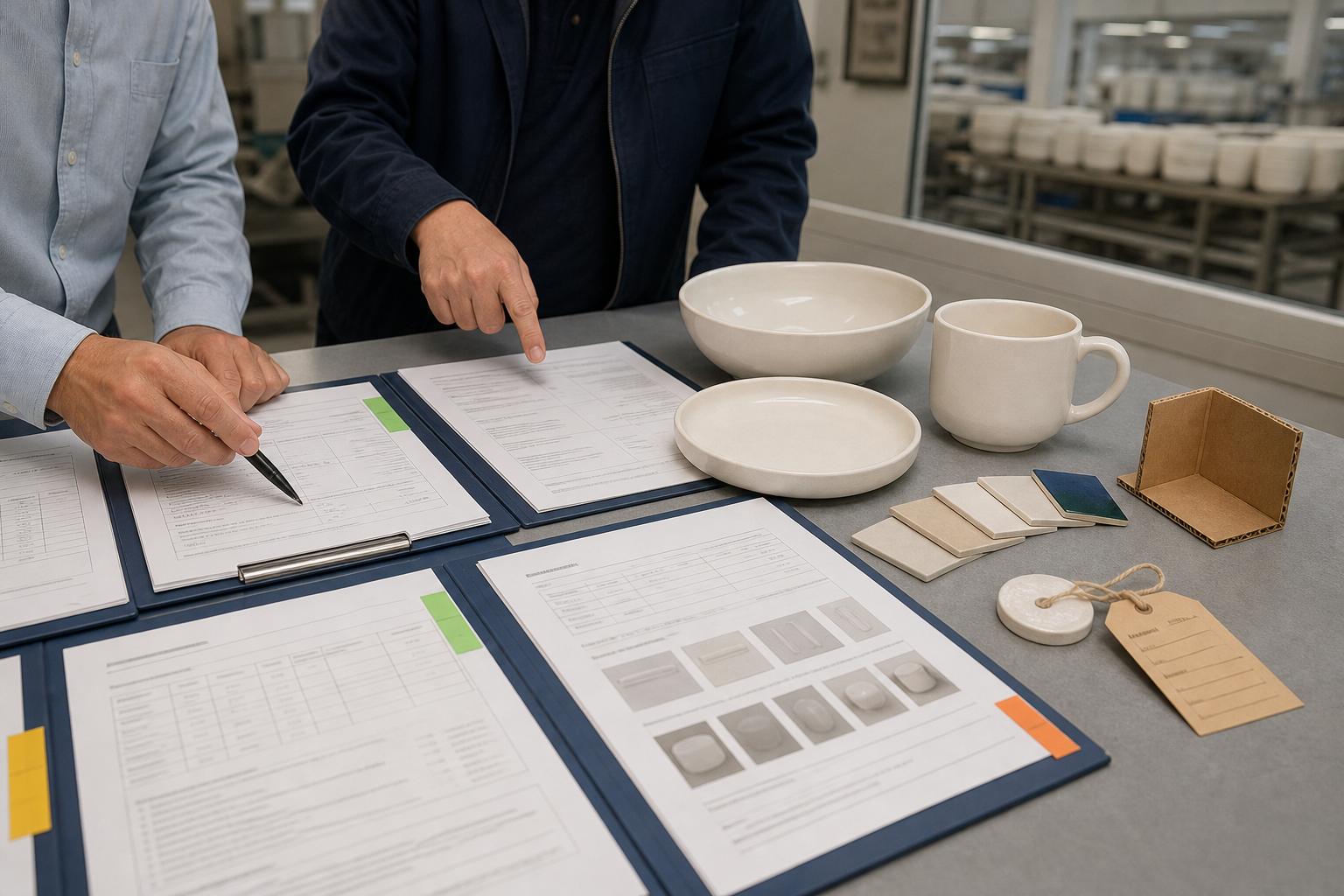
Before a first order, I suggest building a small evidence file. It does not need to be fancy. It only needs to be clear.
| Evidence Item | Why It Matters | What I Would Check |
|---|---|---|
| Approved physical sample | Controls shape, color, weight, and finish | Is it signed, dated, photographed, and kept by both sides? |
| Quote with full scope | Prevents hidden cost arguments | Does it separate product, packaging, mold, test, and freight items? |
| Test report plan | Supports compliance claims | Does the product type, decoration, and market match the test scope? |
| QC defect standard | Reduces emotional arguments later | Are critical, major, and minor defects defined with examples? |
| Packaging mockup | Protects the product in shipping | Are inner packing, carton strength, and pallet method reviewed? |
| Production timeline | Shows who must approve what and when | Are sampling, testing, packaging proof, and peak season included? |
| Repeat-order record | Protects the second order | Are retained samples, glaze records, and change approvals documented? |
From a factory point of view, this file saves both sides. If a problem appears, we can check the record.
What Weak Supplier Answers Sound Like
Weak answers are usually short and comfortable. They may sound friendly, but they do not reduce risk.
“Do not worry, our quality is good” is not a QC system.
“We have certificates” is not enough unless the certificate or report matches the actual ceramic dinnerware, material, decoration, market, and date.
“The carton is strong” is not the same as showing inner protection and carton structure. For fragile ceramic goods, I like to discuss ISTA package testing when the channel or shipment risk makes it useful.
“This is eco-friendly packaging” should also be handled carefully. If the buyer wants to print environmental claims, I suggest checking FTC Green Guides for U.S. marketing language.
Questions to Ask by Email vs Video Call
Some questions work well by email because you need a written answer. Others are better in a video call because you can see how the supplier thinks.
| Better by Email | Better by Video Call |
|---|---|
| Quote scope and payment terms | Sample review and color judgment |
| Test report request | Glaze variation explanation |
| Mold ownership terms | Packaging structure walkthrough |
| Production timeline | QC defect examples |
| Barcode and carton mark responsibility | Factory process and retained sample storage |
My rule is simple: use email for records and video calls for judgment. After the call, send a short summary and ask the supplier to confirm it.
Pre-Order Confirmation Checklist
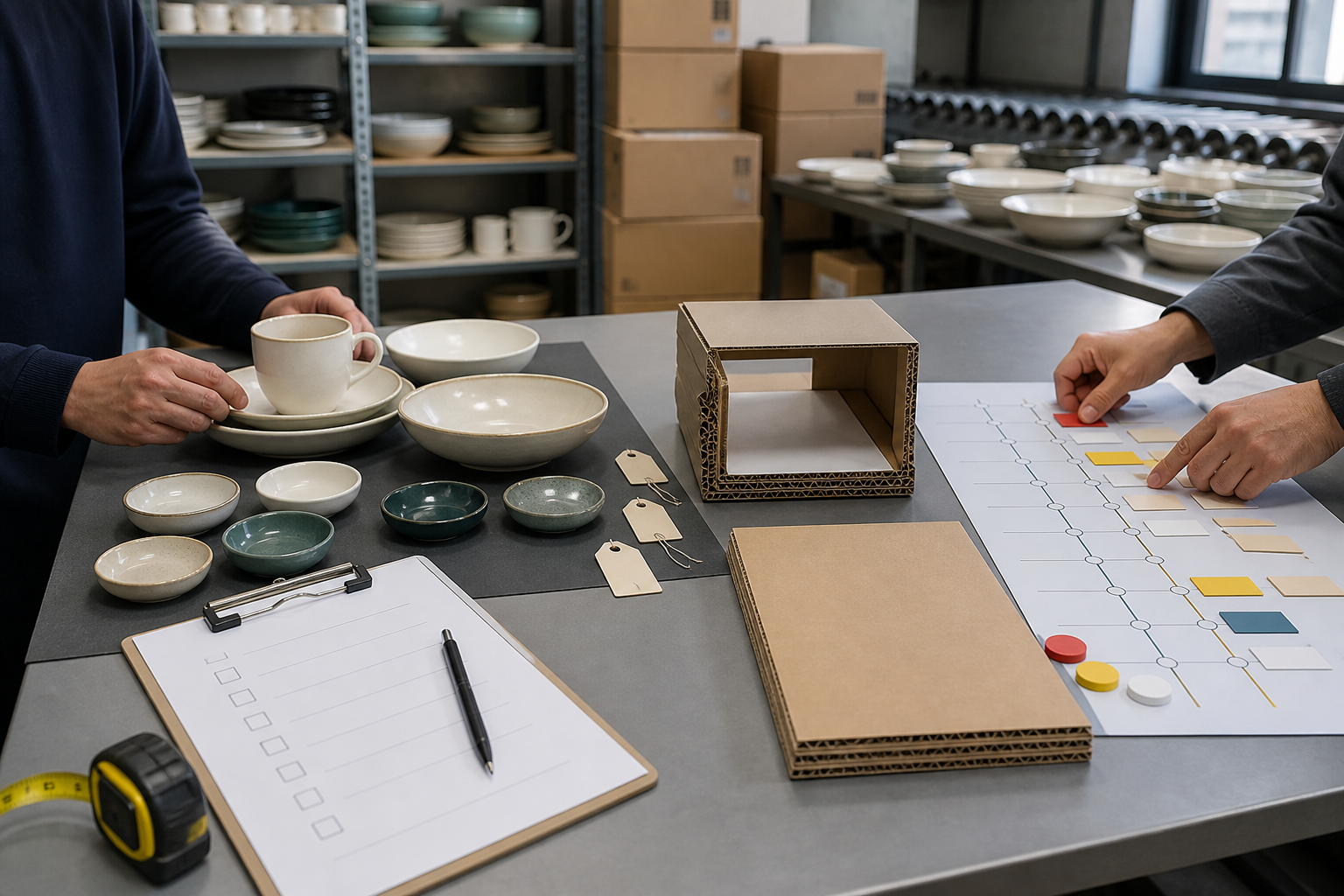
Do not place the order until these points are clear:
- The approved sample is physical, not only a photo.
- Material, glaze, decoration, size, weight, and packing are written in the order file.
- The food-contact test plan matches the selling market.
- The quote explains what is included and what is extra.
- The MOQ is understood by SKU, color, and packaging format.
- Lead time after sample approval is realistic.
- The defect standard is written before production starts.
- The packaging method has been reviewed for real shipment risk.
- Barcode, carton mark, care label, and insert duties are assigned.
- Mold, artwork, and design ownership terms are not left vague.
- The supplier has a repeat-order control method.
- You know who will approve changes before bulk production.
My Advice as a Manufacturer
My advice is to ask fewer vague questions and more proof-based questions.
Instead of asking, “Can you make good quality?” ask, “Can you show the defect standard you will use for this glaze and shape?”
Instead of asking, “Is it safe?” ask, “Which food-contact test report will match this material, decoration, and market?”
Instead of asking, “Can you ship safely?” ask, “Can you show the inner packing, master carton structure, and drop-risk thinking for this set?”
Good suppliers do not mind clear questions. In my experience, professional questions make the project smoother. They also show the supplier that the buyer is serious and organized.
If you are preparing a first ceramic dinnerware order, FENN can help review your supplier questions, sample brief, packaging plan, and compliance document list before bulk production.
Questions Buyers Often Ask
How many questions should I ask a ceramic dinnerware supplier before ordering?
Ask enough questions to cover product, compliance, sampling, MOQ, QC, packaging, lead time, payment, and repeat orders. The exact number matters less than specific, evidence-backed answers.
Should I ask for test reports before or after sampling?
Ask before sampling what tests may be needed, then confirm the report plan after the approved sample is clear. The report should match the real product, decoration, and market.
Is the cheapest ceramic dinnerware supplier always risky?
Not always. But a very low quote needs careful checking. Make sure it includes the same material, glaze, decoration, packing, inspection, and testing scope.
What is the most commonly missed first-order question?
Many buyers forget repeat-order control. They focus on the first shipment, but do not ask how color, shape, packaging, and records will be kept.
Do I need a third-party inspection?
For a first order, a third-party inspection can be useful, especially with a new supplier or high-risk channel. The defect standard must be agreed before inspection.
Conclusion
The best questions for ceramic dinnerware supplier discussions are practical, written, and linked to proof. Ask about the sample, the test report, the carton, the QC standard, the timeline, and the repeat-order record before you pay the deposit. A careful first order gives the whole business a better start.
Need help checking your first dinnerware order?
Send FENN your supplier answers, sample brief, packaging plan, and compliance questions. I can help you review the practical risks before bulk production starts.