Short Answer
To avoid greenwashing in sustainable ceramic dinnerware, do not use broad words like “eco friendly” unless you can prove the exact benefit. A safer claim is specific, limited, and supported by documents: packaging material data, product durability testing, production records, supplier declarations, or market rules such as the FTC Green Guides and EU Green Claims proposal.
When a buyer asks me, “Can we call this ceramic line sustainable?” my first answer is usually, “Maybe, but let us check what you mean.”
I have seen good dinnerware projects become risky because the product was fine, but the claim was too big. Ceramic is durable. It can last many years. Packaging can be reduced. Production can improve. These are good stories. But if the wording is vague, the brand may invite customer complaints, retailer questions, or compliance review.
My simple advice is this: build the claim after the evidence, not before it.
Definition Box: What Greenwashing Means for Dinnerware
Greenwashing means a product, package, or advertisement gives a stronger environmental impression than the brand can support. In ceramic dinnerware, this may happen through words, icons, colors, leaf graphics, hangtags, product pages, or retailer copy.
A claim does not need to be false on purpose to create risk. Sometimes the problem is that the claim is too general. “Sustainable,” “green,” “planet friendly,” and “eco dinnerware” can sound nice, but they may imply many benefits at once.
From a factory point of view, I prefer claims that answer three questions:
- What exact part of the product or packaging is improved?
- Compared with what previous material, design, or process?
- What document or test can prove it?
Myth vs Reality: Common Ceramic Sustainability Claims
| Buyer Claim Idea | Practical Reality | Safer Buyer Action |
|---|---|---|
| “This is sustainable ceramic dinnerware.” | This is too broad unless you define the reason. | Say the specific benefit, such as durable design, reduced packaging weight, or recycled-content packaging. |
| “Ceramic is always eco friendly.” | Ceramic is durable, but firing uses energy and breakage creates waste. | Talk about long product life, repair of packaging design, and lower breakage risk where you have proof. |
| “Our packaging is recyclable.” | Recyclability depends on material, coating, local systems, and market access. | Ask for material specs and qualify the claim by market if needed. |
| “Plastic-free packaging is always better.” | Removing plastic may increase breakage if the new structure is weak. | Test paper-based protection, carton strength, and shipment performance before changing claims. |
| “Lead-free means sustainable.” | Food-contact safety and sustainability are different claim areas. | Keep safety claims separate from environmental claims and support each with proper evidence. |
| “A green seal makes the claim safe.” | A seal can still be misleading if buyers cannot understand what it covers. | Use recognized schemes only when the scope is clear and documented. |
This is why I like to review the claim language early, before packaging artwork is printed.
Check the Claim Before You Write It
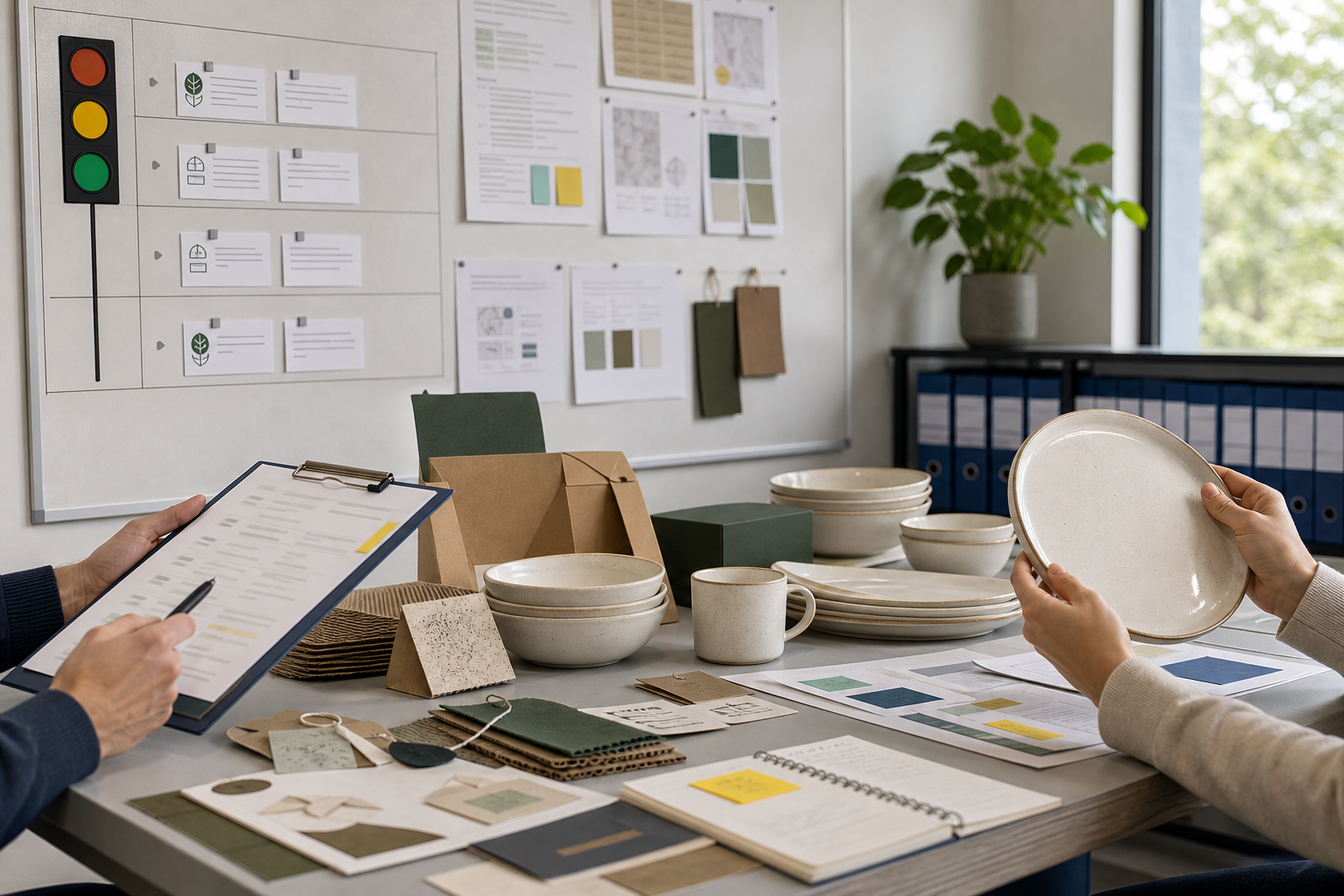
A strong eco friendly ceramic claims review starts with the sentence, not the design. Write the claim in plain words first. Then test it against the evidence.
For example, if a brand wants to say “more responsible packaging,” I would ask:
- Which package part changed: inner divider, gift box, master carton, sleeve, insert, or pallet wrapping?
- What material changed, and what is the new material specification?
- Is the package lighter, smaller, easier to recycle, or better at preventing breakage?
- Is there a shipment test, drop test discussion, or at least a packing review record?
- Does the claim apply to all SKUs or only one set format?
The answer should not be “our supplier said yes.” A professional answer should include a material sheet, packing diagram, sample photo, carton specification, and clear scope.
I also like the wording to be modest. “Uses paper-based inner protection in the boxed set” is much safer than “earth friendly packaging.” “Designed for long daily use with controlled rim strength and replacement planning” is more useful than “sustainable lifestyle tableware.”
Build a Buyer Evidence File
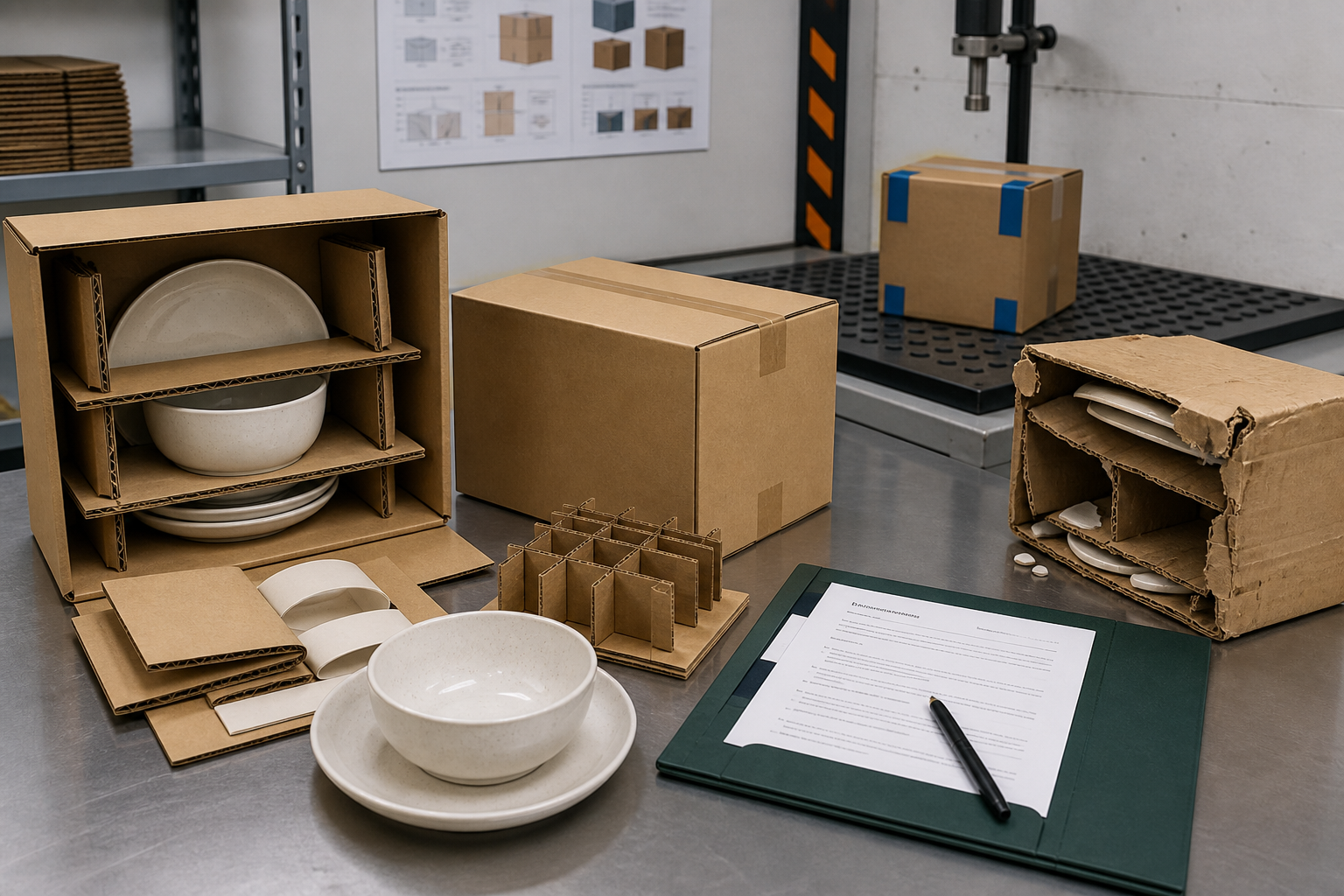
Before I help a buyer approve a tableware sustainability claim, I want a small evidence file. It does not need to be complicated, but it should be organized.
| Evidence Item | What It Supports | What I Would Check |
|---|---|---|
| Packaging material specification | Recycled content, paper-based packaging, coating, or recyclability wording | Does it name the material, percentage, supplier, and package component? |
| Product durability review | Longer use life and fewer replacement complaints | Are rim thickness, glaze fit, dishwasher claim, and chipping risk reviewed? |
| Breakage or packing review | Waste reduction through lower damage risk | Does the packing protect the real plate, bowl, mug, or set format? |
| Production process record | Process improvement claims | Is the record tied to this factory, line, date range, and product type? |
| Food-contact test report | Safety claims, not environmental claims | Does the report match ceramic body, glaze, decoration, and sales market? |
| Claim wording approval | Final packaging, web copy, and retailer copy | Does every claim have a clear scope and no hidden broad promise? |
This table is a good working tool for brands, importers, and private-label teams. If one claim has no evidence line, I would rewrite it or remove it.
Better Sustainability Levers for Ceramic Dinnerware
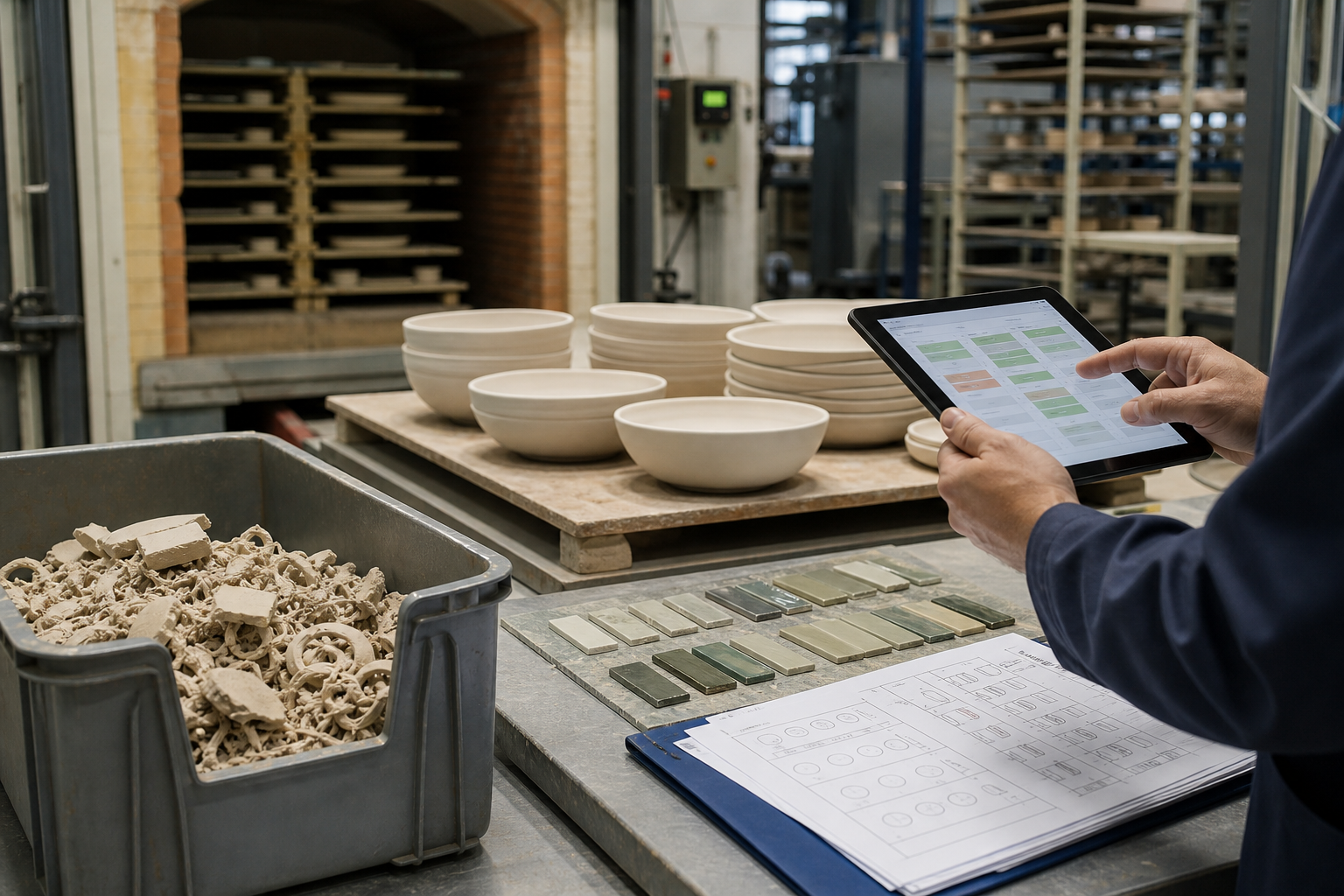
In real ceramic production, sustainability is not only a marketing word. It can connect to design, yield, packaging, durability, and repeat-order planning.
1. Make Products Last Longer
Durability is one of the strongest stories for ceramic dinnerware, but it still needs product control. A long-lasting line needs a mature ceramic body, good glaze fit, practical rim strength, stable foot ring, and packaging that prevents chips before the customer even opens the box.
If a buyer wants to talk about long use life, I ask to see the approved sample, dishwasher or use-test plan if relevant, and the defect standard. A beautiful thin rim may look elegant, but if it chips too easily, the sustainability story becomes weak.
2. Reduce Packaging Without Increasing Breakage
Many buyers want less plastic or less packaging. I understand that. But ceramic is fragile during international shipping. If we remove protection too quickly, breakage can create more waste than the original packaging.
A better plan is to review the full packing system: inner protection, divider design, carton board, carton size, set weight, pallet loading, and retailer handling. The EPA sustainable materials management idea of looking across the material life cycle is useful here. Less material is good only when the product still arrives safely.
3. Avoid Overbuilding the Assortment
Too many SKUs can create dead stock, repeated sample rounds, extra packaging versions, and difficult reorders. A focused first launch is often more responsible than a wide collection with weak sell-through.
For a private-label ceramic line, I prefer core shapes, limited colors, and shared packaging where possible. This also helps MOQ, quality control, and repeat orders.
4. Use Claims That Match the Sales Market
The same package may sell in the United States, Europe, the United Kingdom, Australia, or the Middle East. Environmental claim rules and customer expectations may differ by market. For U.S. wording, I would check the FTC Green Guides. For EU-facing claims, I would watch EU Green Claims proposal updates and related consumer protection rules.
If a buyer sells through retailers, the retailer may also have its own claim policy. For packaging-heavy dinnerware lines, I would also keep European Commission packaging waste policy context in mind before making broad packaging claims. Ask before printing.
Claim Rewrite Examples
Here is a simple way I help buyers turn risky wording into safer copy.
| Risky Claim | Why It Is Risky | Safer Version |
|---|---|---|
| “Eco friendly ceramic dinnerware” | Too broad and hard to prove | “Durable ceramic dinnerware designed for daily use, with paper-based inner packaging for this boxed set” |
| “Zero waste packaging” | Very difficult to prove across production, shipping, and customer disposal | “Right-sized corrugated packaging designed to reduce empty space and protect ceramic pieces during shipment” |
| “100% sustainable glaze” | Glaze claim is unclear and may imply many things | “Glaze selected for food-contact use and repeatable production; environmental claims not made for the glaze” |
| “Plastic-free and safer for the planet” | May imply a broad environmental benefit and safety benefit | “This set uses paper dividers instead of plastic trays; shipment protection must be confirmed by packing review” |
| “Green certified factory” | Scope of the certification may be unclear | “Factory document available on request; buyers should check certificate scope, date, and product relevance” |
Notice the pattern. The safer version is more specific. It says what changed, where it applies, and sometimes what still needs checking.
A Simple Green Claim Traffic Light
Use this quick tool before approving artwork or product-page copy.
| Claim Status | What It Looks Like | Buyer Decision |
|---|---|---|
| Green | Specific, limited, and supported by documents | Keep it, but store the evidence file with the order record. |
| Yellow | Probably true, but scope or wording is unclear | Rewrite the claim and ask for one more document. |
| Red | Broad, emotional, or unsupported | Remove it before packaging or advertising approval. |
My factory habit is to treat packaging copy like a product specification. Once it is printed, changing it costs money and time.
My Advice as a Manufacturer
If you want to build a more responsible ceramic dinnerware line, start with real product decisions, not green words.
Choose a shape that fires well. Avoid fragile design details that create high defect rates. Select a glaze that can be repeated. Plan packaging that protects the set without unnecessary empty space. Keep the first assortment focused. Write care instructions honestly. Archive samples and records for repeat orders.
Then, after these choices are clear, write the claim.
I am not against sustainability language. Buyers and consumers care about it, and they should. I only want the words to match the proof. That protects the customer, the brand, and the factory relationship.
If your team is unsure, send the claim, package artwork, product spec, and evidence file to your supplier before production. A good supplier should not only say “yes.” They should help you find the safer wording.
Questions Buyers Often Ask
Can we call ceramic dinnerware sustainable?
You can only use that kind of wording carefully. It is better to explain the exact benefit: durable design, reduced packaging material, paper-based protection, long-use product planning, or documented process improvement. Broad “sustainable ceramic dinnerware” wording needs strong evidence.
Is plastic-free packaging always better for ceramic products?
No. Plastic-free packaging may be better for some brand goals, but ceramic products still need protection. If paper-based packaging increases breakage, the total waste story becomes weaker. Test or review the packing structure before making the claim.
Are safety claims and sustainability claims the same?
No. Food-contact safety, lead and cadmium compliance, dishwasher use, and microwave use are product safety or performance claims. Sustainability claims need their own evidence. Keep the two topics clear.
What documents should I ask from a ceramic dinnerware supplier?
Ask for packaging material specs, product test reports where relevant, packing diagrams, production or process records for any factory claim, and written confirmation of which SKU or package component the claim covers.
Should we use ISO 14021 for every claim?
ISO 14021 is a useful reference for self-declared environmental claims, but buyers should still follow the rules of the sales market and retailer. I would treat it as one part of the claim review, not the only check.
Conclusion
The safest path for sustainable ceramic dinnerware is simple: make real product and packaging improvements first, then describe them with clear, limited words. Avoid big claims that sound better than the evidence. A practical claim file, careful packaging review, durable product design, and modest wording will help your brand avoid greenwashing risk.
Need help reviewing sustainability wording for a ceramic dinnerware line? Send FENN your claim text, package artwork, product specs, and evidence file. I can help you check whether the wording fits the product before sampling or bulk production.
Need help reviewing sustainability wording?
Send FENN your claim text, package artwork, product specs, and evidence file. I can help you check whether the wording fits the product before sampling or bulk production.