
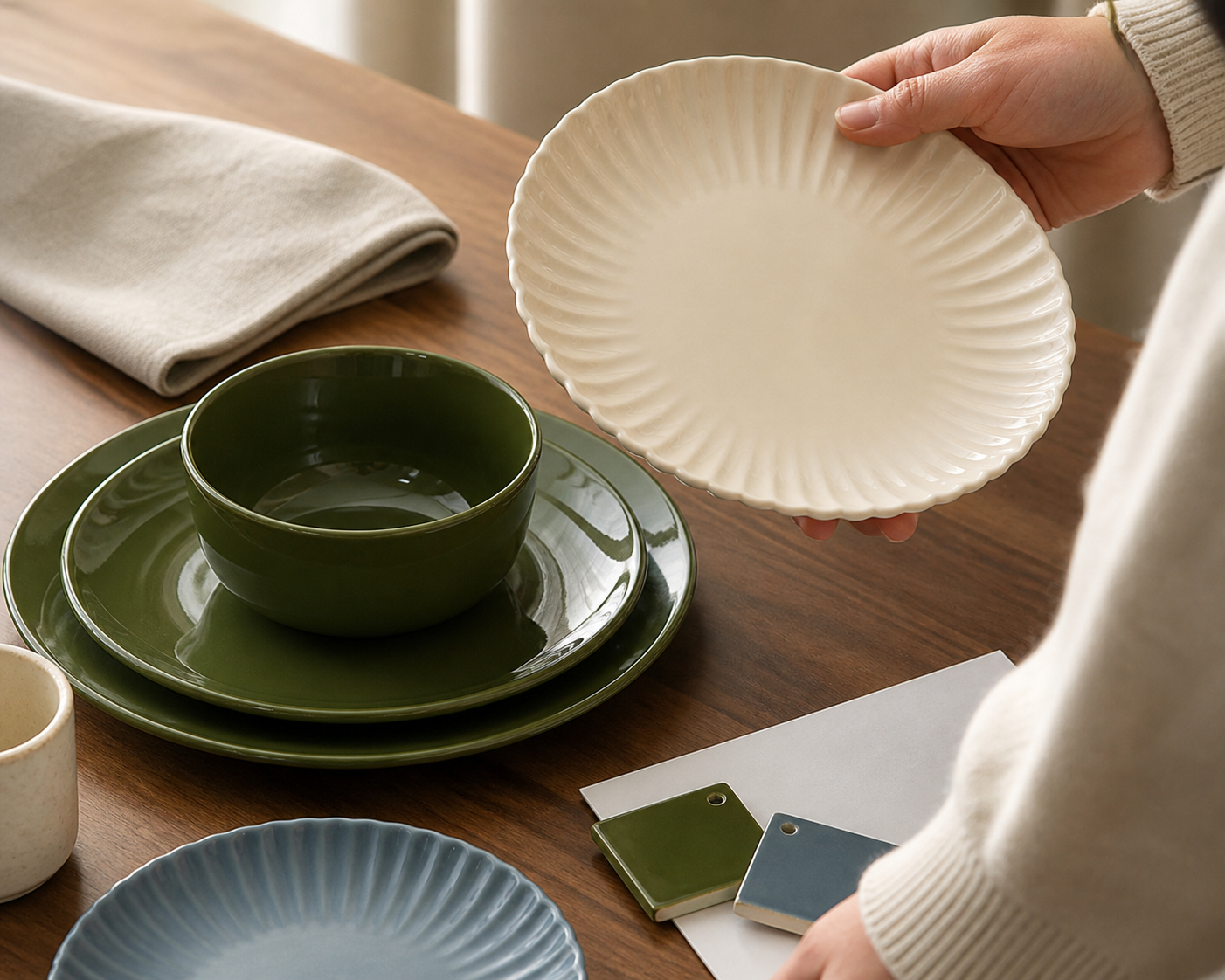
Short Answer
Colored, decorated, and hand-painted ceramics are not automatically unsafe, but they need closer review when color, decal, or metallic decoration touches food or the lip area. My practical rule is simple: do not approve decorated ceramic dinnerware safety by appearance. Ask for current lead and cadmium release testing that matches the real product, glaze, decoration, and selling market.
I have seen buyers fall in love with a bright rim, a hand-painted floral plate, or a vintage-style mug before anyone asks where the decoration sits. I understand why. Color sells, and decoration gives a dinnerware line its feeling.
But from a factory point of view, beautiful decoration still needs a quiet compliance check. A safe commercial decision is not “avoid all color.” It is “know which decoration positions need proof.”
Definition Box: What Lead and Cadmium Risk Means
When buyers talk about lead cadmium ceramic glaze risk, they are usually talking about release, not just content. The key question is whether lead or cadmium can migrate from the glaze or decoration under test conditions. This is why ceramic dinnerware food contact testing matters more than a verbal “safe” claim.
Myth vs Reality for Colored Glaze Dinnerware
| Buyer Myth | Practical Reality | Buyer Action |
|---|---|---|
| All bright colors are dangerous. | Color alone does not prove risk, but vivid glazes and pigments deserve careful documentation. | Ask which glaze or pigment system is used and request matching test reports. |
| Decoration on the outside never matters. | Exterior decoration is usually lower concern, but mug rims, handles, and areas touched by lips or food still matter. | Mark food-contact, rim, and exterior zones on the drawing. |
| Underglaze is always safe and onglaze is always risky. | Process matters, but final product testing is still the proof buyers need. | Ask how the decoration is fired and what test report covers it. |
| A certificate from last year covers this new design. | A report for a similar item may not match the new body, glaze, decal, or shape. | Compare sample description, photos, date, and tested standard. |
| Handmade-looking decoration can follow looser rules. | Handmade style still needs commercial safety evidence when sold as dinnerware. | Define variation limits and compliance requirements before bulk. |
Where I Pay Extra Attention
I do not treat every decoration with the same concern. I first ask where it sits.
If decoration is on the food-contact surface, inside a bowl, inside a mug, or on the eating area of a plate, I want stronger review. If a colored band sits on the lip area, I also pay attention because the user touches it. If the design uses metallic effects or heavy decoration, I would not rely on verbal promises.
Exterior-only decoration can be a lower-risk design route, especially for mugs, bowls, and serving pieces. But “outside” must be real outside. A decal near the rim or a design that wraps over the lip is not the same as a logo on the bottom.
My simple advice is to draw the product zones before sampling: food-contact surface, lip or rim contact area, handle area, exterior-only area, and backstamp or bottom mark. This drawing helps the supplier, lab, and your team speak the same language.
The Decoration Risk Filter I Use With Buyers

| Design Choice | Risk Attention | What I Would Ask Before Approval |
|---|---|---|
| Clear or white food-contact glaze with exterior color | Lower, if documents match | Test report for the food-contact glaze and confirmation that decoration is exterior-only. |
| Interior colored glaze on plates or bowls | Medium to high | Lead and cadmium release report for the exact glaze, body, and product type. |
| Rim band on mugs or cups | High | Report or lab plan that covers lip/rim contact, not only the inside wall. |
| Decal inside a plate or bowl | High | Decoration method, firing process, and test report for the decorated item. |
| Metallic gold, platinum, or luster decoration | High | Food-contact placement review, microwave claim review, and market-specific testing. |
| Hand-painted look for daily dinnerware | Medium to high | Approved pigment route, variation boundary, and production-like test sample. |
| Backstamp or bottom logo only | Usually lower | Confirmation that it does not contact food and does not transfer during use. |
This table is a sourcing filter. It helps buyers decide when a design needs more questions before bulk production.
How To Judge a Supplier Answer
A weak answer sounds like this: “No problem, our ceramic is food safe.”
A stronger answer sounds more specific: “For this mug, the interior glaze is covered by this report. The colored decal is exterior-only and stays below the drinking rim. If you move the decal to the rim, we should retest.”
That second answer tells me the supplier understands the product. It connects design, surface area, test scope, and change control.
When I review a report, I look for four matches:
1. The tested item matches the final item type.
2. The glaze and decoration route match the approved sample.
3. The tested standard or rule matches the selling market.
4. The report date and sample description fit the current order.
If any are missing, I ask before approval.
Why Consumers Worry About Bright Glazes
Buyers often hear customer questions like, “Is this colorful plate safe?” or “Can imported ceramic mugs contain lead?” These questions are signs that consumers want trust.
For a brand, the answer should not be a vague slogan. Your product page, packaging, and customer service team should be able to say that the dinnerware is intended for food use and that relevant documentation has been reviewed. Keep the wording simple and truthful. Do not say “lead free” unless you know what that claim means in your market and have evidence to support it.
Official sources such as FDA lead guidance and European Commission food contact materials are useful starting points for buyer teams. For EU ceramic articles, Directive 84/500/EEC is also an important reference direction. For test-method discussion, ISO 6486-1 is often used as a recognized technical reference for lead and cadmium release from ceramicware.
Safer Design Choices for First Orders
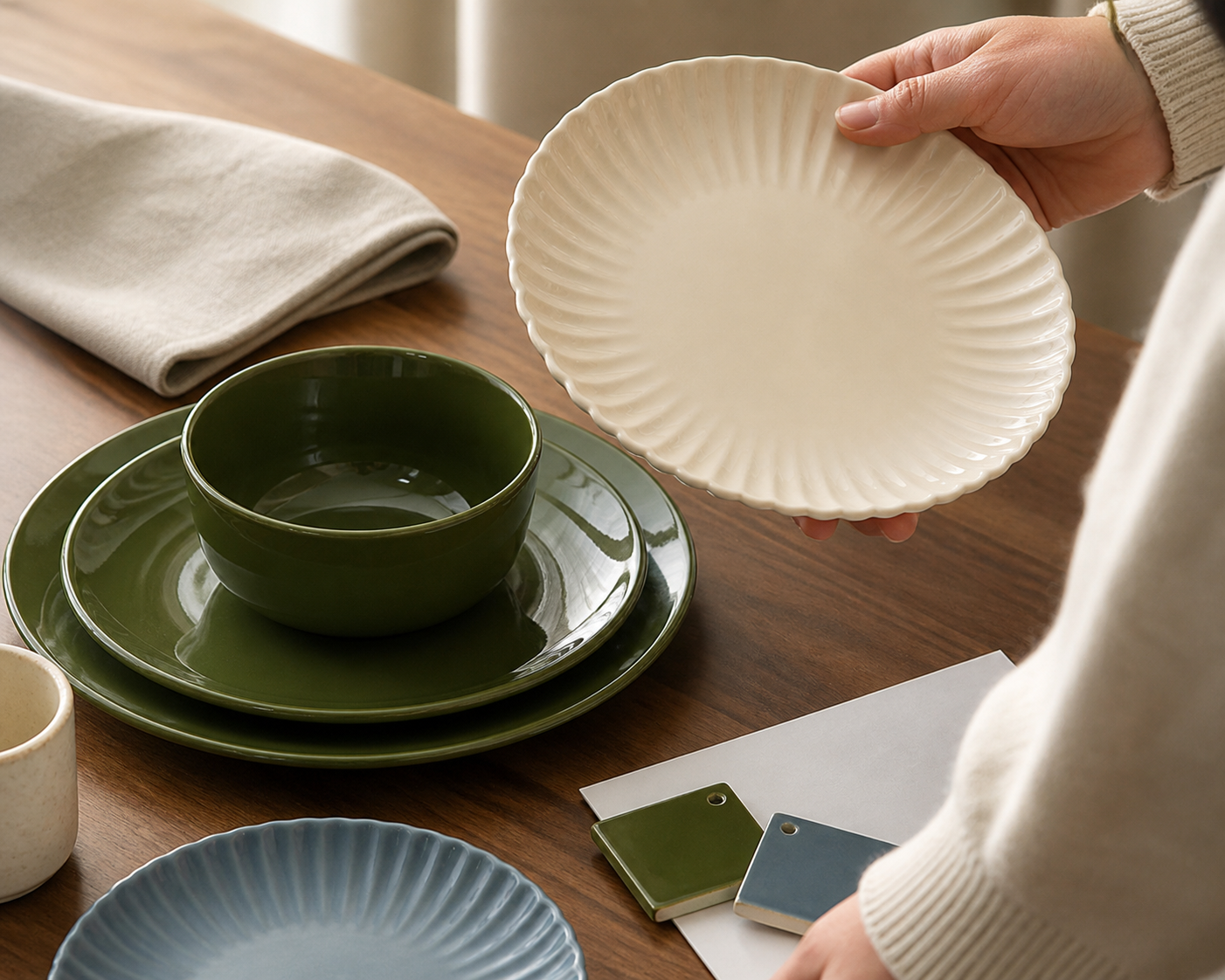
For a first private-label order, I often suggest a conservative decoration plan.
You can use a stable clear or white food-contact glaze, then place stronger color on the exterior wall, handle, foot, or packaging. You can use a colored exterior with a clean drinking rim. You can use small decals away from eating zones. You can build the brand story through shape, glaze texture, carton design, and color palette instead of putting heavy decoration everywhere.
If the brand needs a bold interior color or rim decoration, that can still be possible. Just plan the testing early. The mistake is not choosing color. The mistake is choosing color late, after price, sample approval, and packaging are already locked.
My Advice as a Manufacturer
When a buyer asks me if colored glaze dinnerware is safe, I do not answer with one yes or no. I ask, “Where is the color, what is the product used for, where will it sell, and what evidence do we have?”
In real ceramic production, a small decoration change can change the compliance question. Moving a decal from the outside wall to the inside bottom of a bowl is not just an artwork change. Adding a rim band to a mug is not just a design upgrade. These choices affect what the buyer should verify.
My practical advice is to freeze the decoration map before testing. If artwork changes later, check whether the document still supports the final item. This habit saves time, avoids argument, and protects the brand.
If you are developing decorated ceramic dinnerware, share your target country, product type, glaze color, decoration position, and retailer requirements with FENN. We can help review the risk points before sampling and bulk production.
Questions Buyers Often Ask
Are colored ceramic glazes always more dangerous than white glaze?
No. Colored glazes are not automatically unsafe. The buyer should review the glaze system, product use, decoration placement, and release testing for the actual item.
Is exterior decoration safe for dinnerware?
Exterior-only decoration is often a lower-risk route, but it must stay away from food-contact and lip areas. For mugs and cups, the rim deserves special attention.
Can one test report cover several decorated designs?
Sometimes, but only if the product type, body, glaze, decoration method, and tested surfaces are truly covered.
Should handmade or hand-painted ceramics be tested?
For commercial dinnerware, yes, buyers should plan evidence. Handmade style does not remove food-contact responsibility when the item is sold for eating or drinking.
What should I ask before approving a metallic decoration?
Ask where the metallic decoration sits, whether it touches food or lips, whether the item can be used in a microwave, and what evidence supports the final claim.
Conclusion
Lead cadmium ceramic glaze risk should be handled with calm, specific questions. Do not reject every color, and do not trust every beautiful sample. For decorated ceramic dinnerware safety, map the surface, confirm the market, request matching evidence, and retest when the design changes.
Need help reviewing a decorated dinnerware plan?
Share your target market, product type, glaze color, decoration placement, and retailer requirements with FENN. We can help identify which evidence should be prepared before sampling and bulk production.