
Short Answer
Dinnerware brand education builds trust when it turns verified factory facts into clear answers about choosing, using, and replacing products. Explain what a material or finish means for the customer, show relevant examples, and state the limits. Before publishing care or safety claims, ask the supplier for evidence that covers the actual product and intended market.
When I look at a dinnerware page, I imagine someone holding a bowl in one hand and their phone in the other. They may like the color already. What they need now is a straight answer: will it suit the way I eat, wash, and store things?
That is where factory knowledge becomes useful. I do not need to teach that customer every kiln setting. I need to explain the detail that changes their decision.
My working definition: customer education connects a product fact, its practical meaning, and an action the customer can take.
Myth One: More Factory Detail Always Creates More Trust
A long list of technical terms can make a page harder to understand. “High-fired body” tells a customer little unless you explain the relevant result and have evidence behind it. Firing temperature alone does not establish every performance claim.
I would start with the question, then select the factory fact that answers it. For example, firing shrinkage helps explain why finished dimensions need an agreed tolerance. A shopper usually needs the actual diameter and height, plus a clear measurement method. They do not need the factory’s shrinkage calculation.
Glaze variation needs the same translation. Thickness, shape, and firing conditions can affect the finished look. Show the approved appearance range on the actual product, then explain what may vary. Do not hide cracks or unacceptable surface problems under “every piece is unique.”
A useful supplier answer identifies the SKU, sample version, measurement method, and approved limits. “Our ceramics are handmade, so differences are normal” leaves too much unresolved.
Google’s people-first content guidance encourages useful, reliable information created for readers. For tableware content marketing, I take that as a reason to answer real product questions before adding another paragraph about craftsmanship. It is not a promise of search rankings.
A Dinnerware Brand Education Map for the Customer Journey
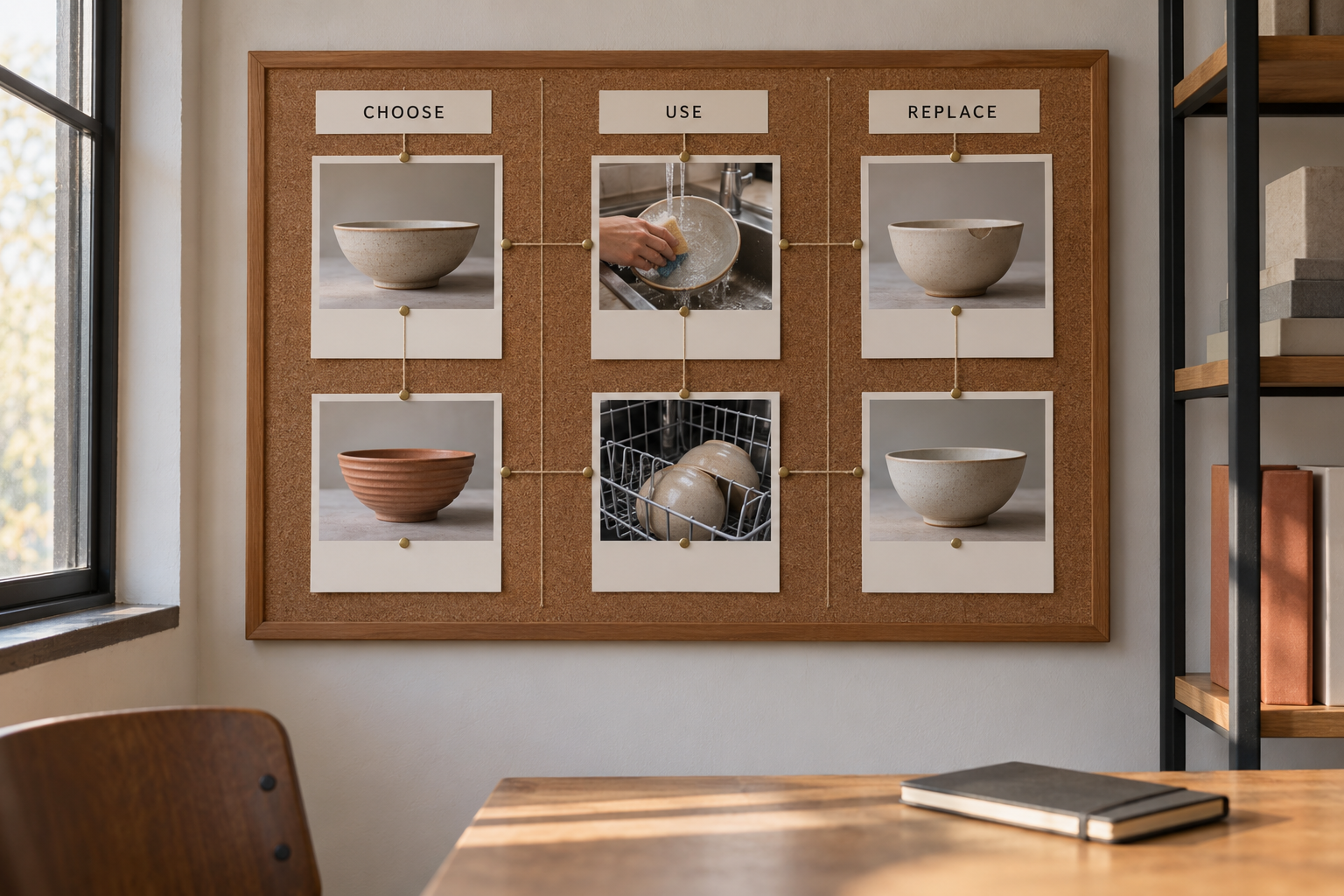
I use this map to decide where each answer belongs. Start with questions your sales and service teams receive. The rows below are planning examples, not findings from a customer survey.
| Customer moment | Question to answer | Factory input to request | Best home for the answer |
|---|---|---|---|
| Comparing materials | What does this material mean for my use? | Confirmed body type, finished weight, and relevant performance evidence | Buying guide, linked from the product page |
| Choosing a shape | Will this bowl fit my meals and cupboard? | Finished dimensions, capacity method, and measured stack height | Product specification panel |
| Choosing a glaze | Will my set look like the photograph? | Representative production samples and approved variation range | Image caption and short finish note |
| Checking intended use | Can I use it as planned? | Product-specific care wording and supporting assessments | Visible care summary with a fuller care page |
| Asking about safety | What supports the food-contact statement? | Relevant reports, product identity, market scope, and technical review | Plain-language FAQ and a contact route |
| Receiving the order | What is included, and what if it arrives damaged? | Exact pack contents, packing version, and agreed service process | Set description, package insert, and delivery help page |
| Replacing one piece | Can I buy this bowl again? | Active SKU, supply plan, and realistic batch-match limits | Replacement page linked from order support |
Give each row an owner and a source record. A marketing colleague can simplify the wording, but the relevant product or quality owner should confirm that the meaning has stayed intact.
My acceptance test is practical: can another team member find the supporting record without calling the person who wrote the page? If not, the content is still too dependent on memory.
Myth Two: One Reassuring Badge Answers Every Safety Question
“Tested” is a beginning, not a complete explanation. Tested for what, on which piece, and under which conditions?
The FDA’s lead in food and foodwares guidance explains that some pottery can release lead into food. A natural-looking glaze or a factory photograph does not answer that concern.
Before writing a product statement, have the responsible technical team check the finished body, glaze, decoration, product identity, intended use, and destination against the evidence. If the report covers a product family, ask how the listed item falls within that scope. A report for another design should not become a universal badge for the whole catalog.
Keep separate questions separate. Evidence about food-contact suitability does not automatically support dishwasher, microwave, oven, or impact-resistance claims. The customer-facing summary should reflect those boundaries without making the reader decode a laboratory report.
I would publish a clear explanation of what the statement covers and how a buyer can request further information. Decide what can be shared after reviewing confidential details. Do not recreate an official seal or imply that a general information link certifies your products.
Myth Three: A Beautiful Picture Can Explain Care by Itself
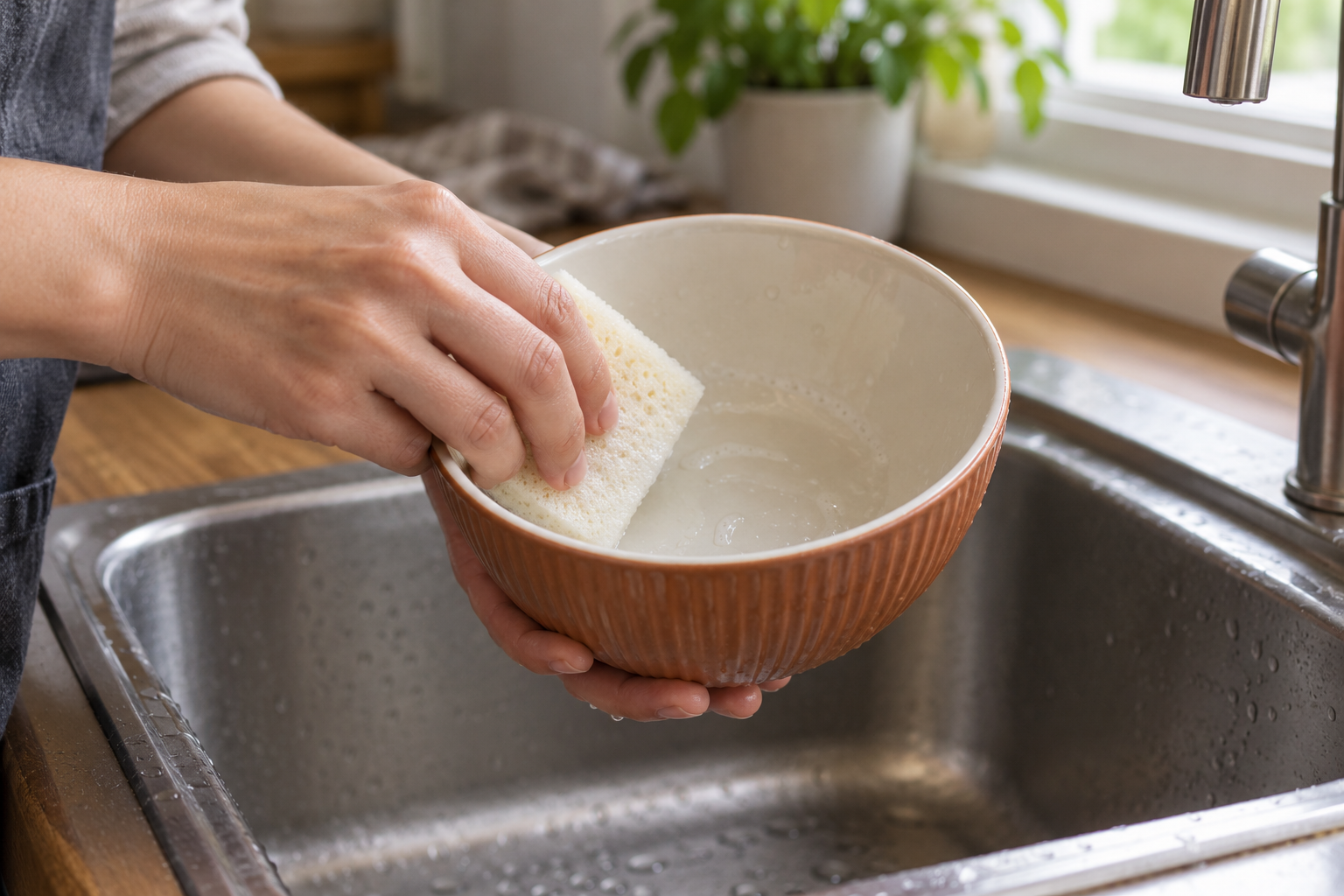
A photograph can demonstrate a useful action. It cannot establish that an untested action is suitable.
Imagine a brand launching a ribbed breakfast bowl. This is a hypothetical planning example. The designer wants a picture of it inside an oven because the scene feels warm and inviting. If oven use has not been established for that product, I would change the scene. An image can make a promise even when the caption avoids the word “safe.”
For care content, begin with approved instructions and photograph the actions they describe. Show the relevant area clearly: a foot ring, a rim contact point, or the space between pieces in storage. Keep captions specific to the product instead of applying one care rule to every ceramic body and decoration.
W3C guidance on informative images explains that text alternatives should convey the useful information in an image. Write alt text that helps someone understand the action or difference. Repeating “best ceramic dinnerware” across every image does not do that job.
Generated illustrations can explain an editorial idea, but they should be identified as concepts. They cannot serve as photographs of actual production, tested samples, or the product a customer will receive.
Myth Four: The Buying Guide Is Finished When the Collection Launches
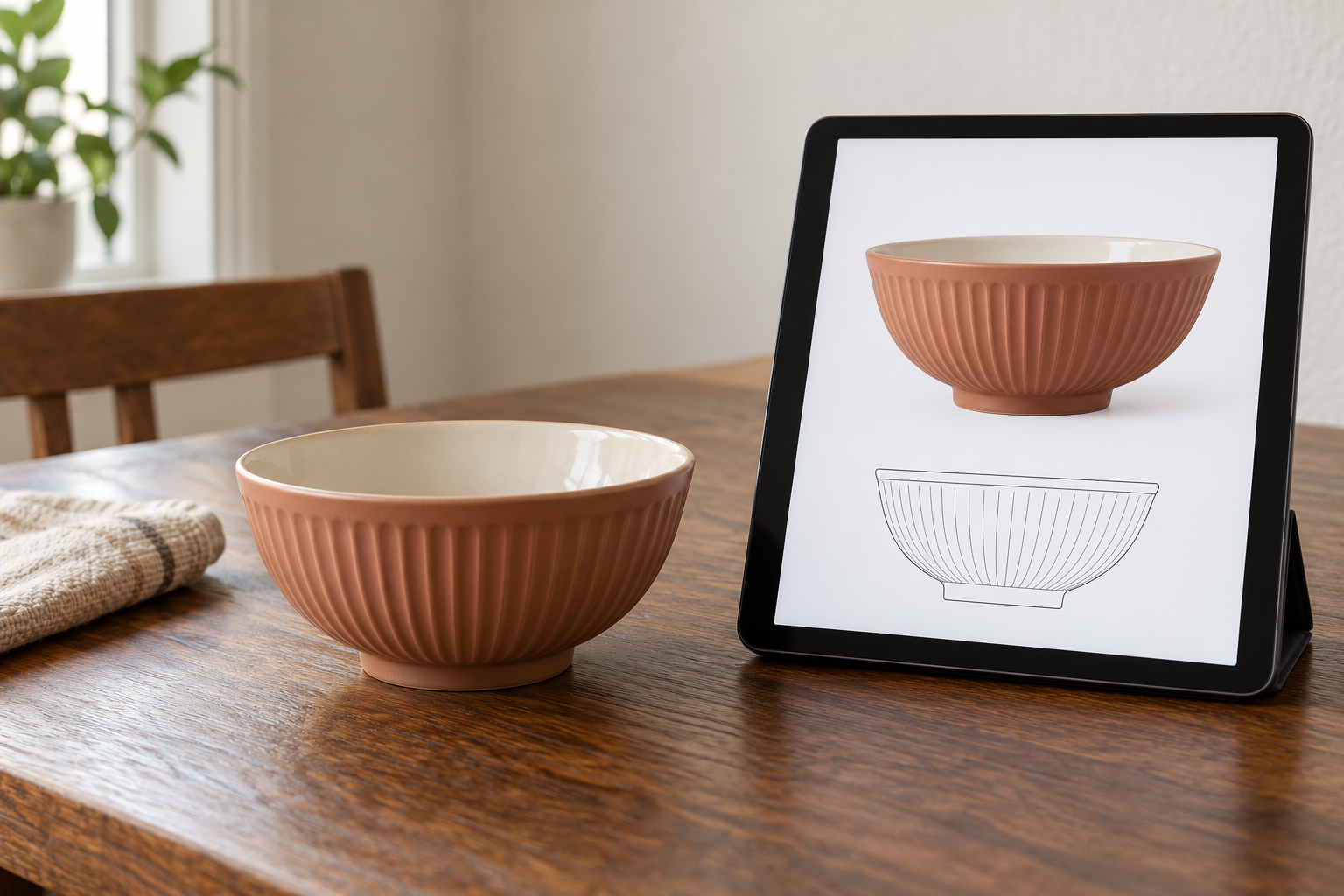
The best next paragraph often comes from a question after delivery.
Return to the breakfast bowl example. Suppose customers keep asking whether the listed capacity means a comfortable serving or water filled to the rim. The immediate fix is to name the measurement method on the product page. The longer guide can explain why usable volume differs. Adding three more lifestyle photographs would leave the question unanswered.
Treat a service question as a signal to investigate, not automatic proof that customers misunderstood. If pieces arrive chipped, check the product and packing records as well as the wording. Better copy cannot repair a weak packing structure.
Replacement information also needs an honest supply plan. Do not promise that a glaze will match forever unless you can support that promise. Explain how customers identify their shape and color, whether individual pieces are currently offered, and what batch variation may remain. Keep availability separate from any long-term commitment.
For a first content review, I would choose one collection and three real questions. Record each question, the current answer, the missing evidence, and the page that needs a change. Review again when materials, decoration, care evidence, packaging, or supply plans change.
A useful measure is whether customers can find the answer and whether the same question keeps returning. Compare similar products and periods before crediting content with a drop in returns. Sales volume, packing changes, and product changes may also affect the result.
Build a Small Set of Connected Answers
A ceramic dinnerware buying guide should help people choose. A product page should explain the exact item. A care page should support use after purchase. Link them where the next question naturally appears.
For example, put a short variation note beside the glaze images and link to the fuller explanation. Put replacement information near the set description or service section. Do not make a customer read a long brand story to find whether bowls are sold individually.
Keep a shared record of approved wording, source documents, reviewer, and revision date. When one product changes, identify every place that repeats its claims, including retailer files and printed inserts. Updating only the website leaves the old answer in circulation.
My Advice as a Manufacturer
I prefer a brand that explains one detail honestly to a brand that says everything is exceptional. Tell me what the customer is trying to decide, and I can help identify which factory information matters.
Start dinnerware brand education with one collection. Confirm the specifications, explain the finish, separate care claims from safety evidence, and make replacement information easy to find. Expand once those answers agree with the product and with each other.
Questions Buyers Often Ask
How much factory information should customers see?
Enough to make a useful choice or understand a limitation. Explain the practical meaning first. Keep confidential recipes and detailed process settings internal unless there is a clear, approved reason to share them.
Should we publish full test reports?
Not automatically. Review relevance, scope, confidentiality, and the reader’s needs. A clear summary with a route for requesting suitable supporting information may be more useful than an unexplained document.
Can one care page cover our whole range?
Only where the instructions apply to every included product. Separate exceptions by item or collection. Different decorations and intended uses may require different wording and evidence.
Does an FAQ guarantee visibility in AI answers?
No. Clear questions and direct answers make content easier to understand, but they do not guarantee ranking, citation, or inclusion. Keep the information accurate and useful even when no search engine sends traffic.
Where should a small brand begin?
Choose the question that most often delays a purchase or creates a service problem. Get the product evidence, write the short answer, and place it where customers need it. Then check whether it resolves the question.
Bring One Collection and Three Customer Questions
Send FENN your collection details, target market, current product copy, and three questions your customers ask. We can discuss which specifications, sample references, and supporting records your education plan needs. For related product-planning topics, explore the FENN Resources hub.