Short Answer
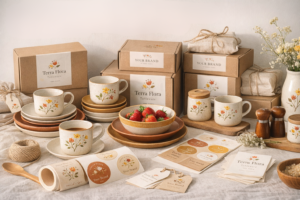
OEM vs ODM dinnerware is mainly about how much product development you bring to the supplier. OEM follows your fixed specification. ODM starts from the supplier’s design and manufacturing ability. Private label ceramic dinnerware usually customizes an existing product platform with your glaze, logo, packaging, or set plan.
When a buyer asks me which route is best, I first ask: “Do you already know exactly what you want to make?” If yes, OEM may fit. If you have a brand idea but need help turning it into a real product, ODM or private label may save time.
Quick Definition
OEM follows the buyer’s design and specification. ODM develops from the supplier’s design, mold, glaze, or product platform. Private label sells dinnerware under the buyer’s brand, often by customizing existing shapes, finishes, logo marks, or packaging.
Best Criteria for Choosing Your Development Route
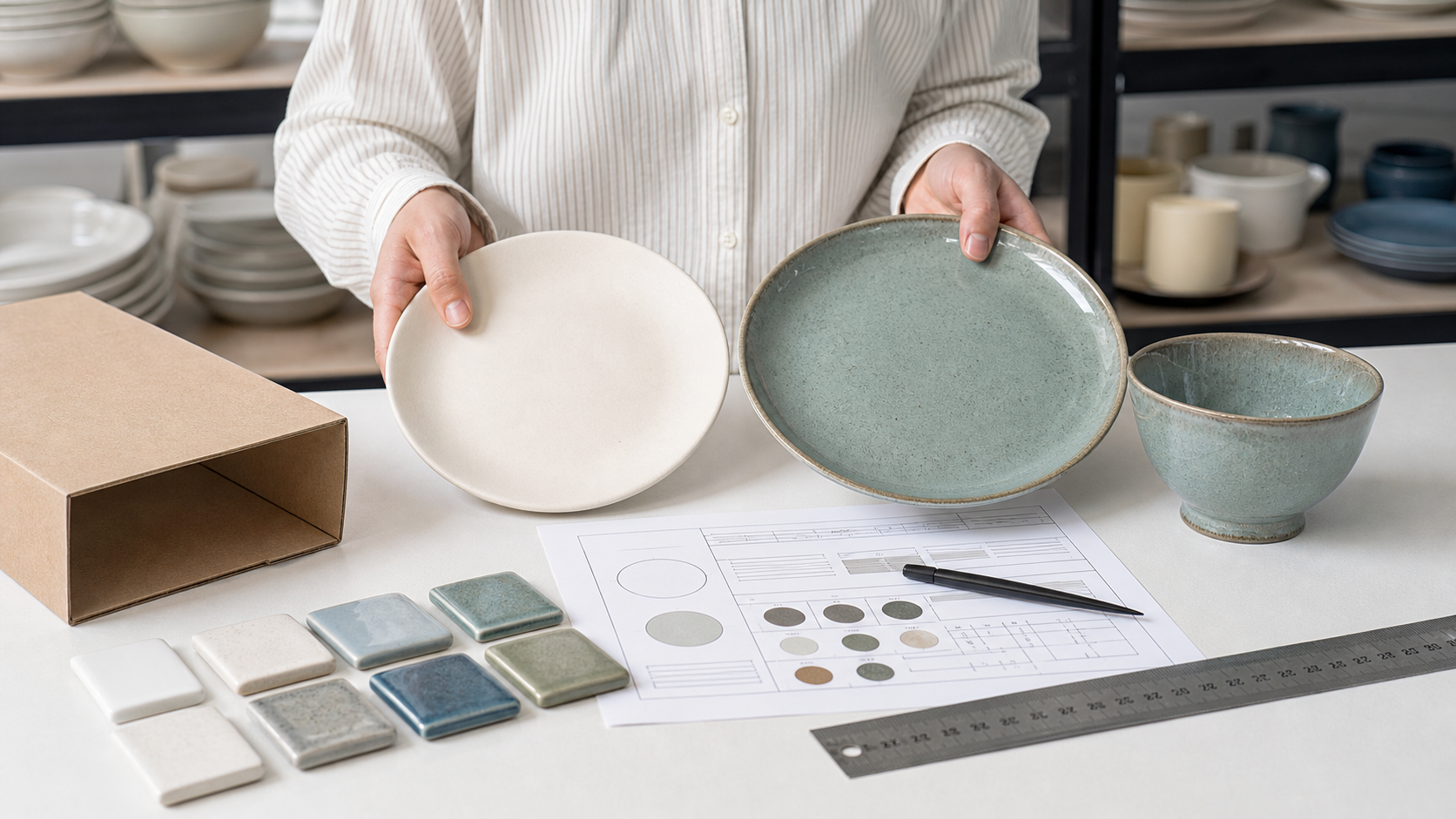
From a factory point of view, the best route depends on four things: how fixed your product idea is, how much uniqueness you need, how much time you have, and how much testing or packaging proof your market requires.
| Route | Best Fit | What Buyer Provides | Main Risk to Control |
|---|---|---|---|
| OEM ceramic dinnerware | Buyer has fixed specs and wants production control | Drawings, dimensions, material, glaze, logo, packaging, target testing | Supplier must follow specs and control sample-to-bulk consistency |
| ODM dinnerware manufacturer | Buyer wants supplier design help | Brand direction, target user, price band, reference mood, channel | Supplier design must still be manufacturable and repeatable |
| Private label ceramic dinnerware | Buyer wants a faster branded line | Chosen shape, glaze direction, logo, packaging, assortment plan | Customization must not create hidden MOQ, testing, or QC problems |
Why These Terms Get Confusing
Suppliers use these words in different ways, so I ask what actually changes in production: mold, glaze, decal, packaging, testing, or assortment. Small ceramic decisions can change cost and risk.
OEM Dinnerware: When Your Specification Leads
OEM works best when the buyer already has drawings, reference samples, dimensions, weight targets, glaze color, logo placement, carton style, and test requirements. The factory’s job is to make your product stable in ceramic production.
Ceramic has natural movement. Clay shrinks. Glaze can flow. Firing temperature and kiln position can change color slightly. A sharp rim may chip more easily. A very flat plate may warp if the body, thickness, and support are not balanced.
When I review an OEM project, I like to see:
- A drawing or reference sample with clear size and weight targets.
- Glaze and finish standard, including allowed shade range.
- Logo or decoration method and exact placement.
- Packaging structure, not only box artwork.
- Target market and food-contact test needs.
- Quality standard for critical, major, and minor defects.
A professional OEM supplier should tell you which parts are easy, which parts need sample testing, and which parts may cause higher cost or longer lead time.
ODM Dinnerware: When Supplier Development Helps
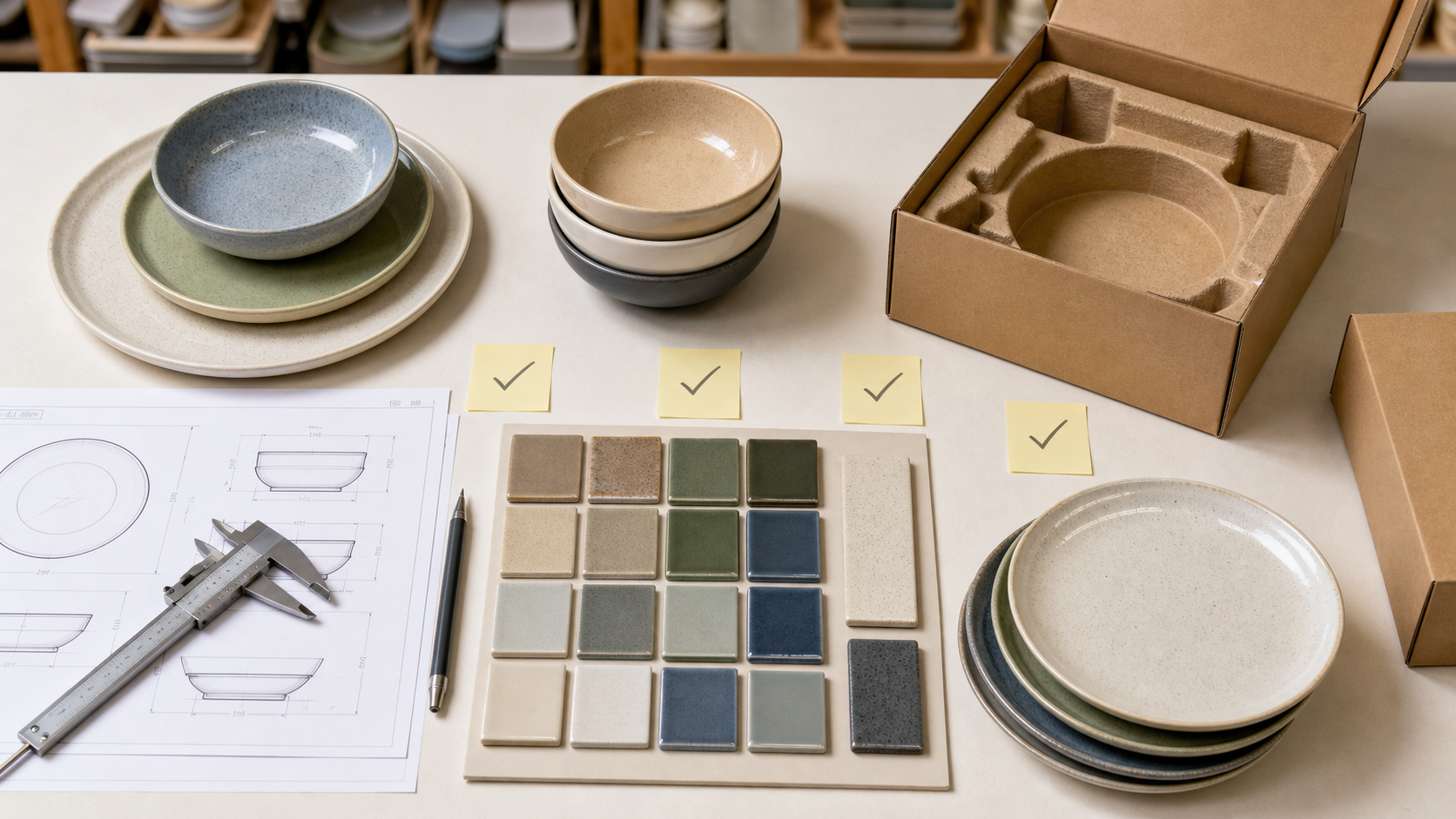
ODM is useful when the buyer has a mood board, target customer, price range, and reference photos, but not every detail. The supplier suggests shapes, clay body, glaze, finish, and packaging options that can be made in real production.
This can be faster because the supplier may already have stable molds, tested glazes, or sample platforms. But ODM is not magic. If the buyer only says “make something premium,” the sample may miss the channel, price, or use case.
For ODM dinnerware manufacturer projects, I suggest buyers prepare a simple brief:
- Who will use the dinnerware?
- What price band must the product fit?
- Do you prefer lightweight porcelain, warm stoneware, reactive glaze, matte finish, or classic white?
- Which market will the product enter?
- What packaging format is needed?
From there, the supplier can turn design direction into practical choices. A soft organic shape may work better in stoneware than thin porcelain. A reactive glaze may need a wider color range. A boxed set may need stronger dividers than open-stock packing.
Private Label Dinnerware: The Faster Branded Route
Private label ceramic dinnerware is often the fastest route for a new brand or importer. The buyer may choose an existing plate, bowl, mug, or set platform, then customize the glaze, logo, bottom mark, packaging, or assortment.
But private label is not automatically simple. A new glaze color still needs sample approval. A logo decal may need firing tests. A gift box may need drop-test thinking. A product sold in the United States should consider FDA guidance on lead in foodwares. A product sold in Europe should consider European Commission food contact materials rules. Decorated ceramic buyers can also discuss ISO 6486 ceramicware testing with their testing partner or supplier.
My advice is to treat private label as a real product-development project, just with a lower starting risk than a full new mold.
Decision Tree: Which Route Should You Choose?
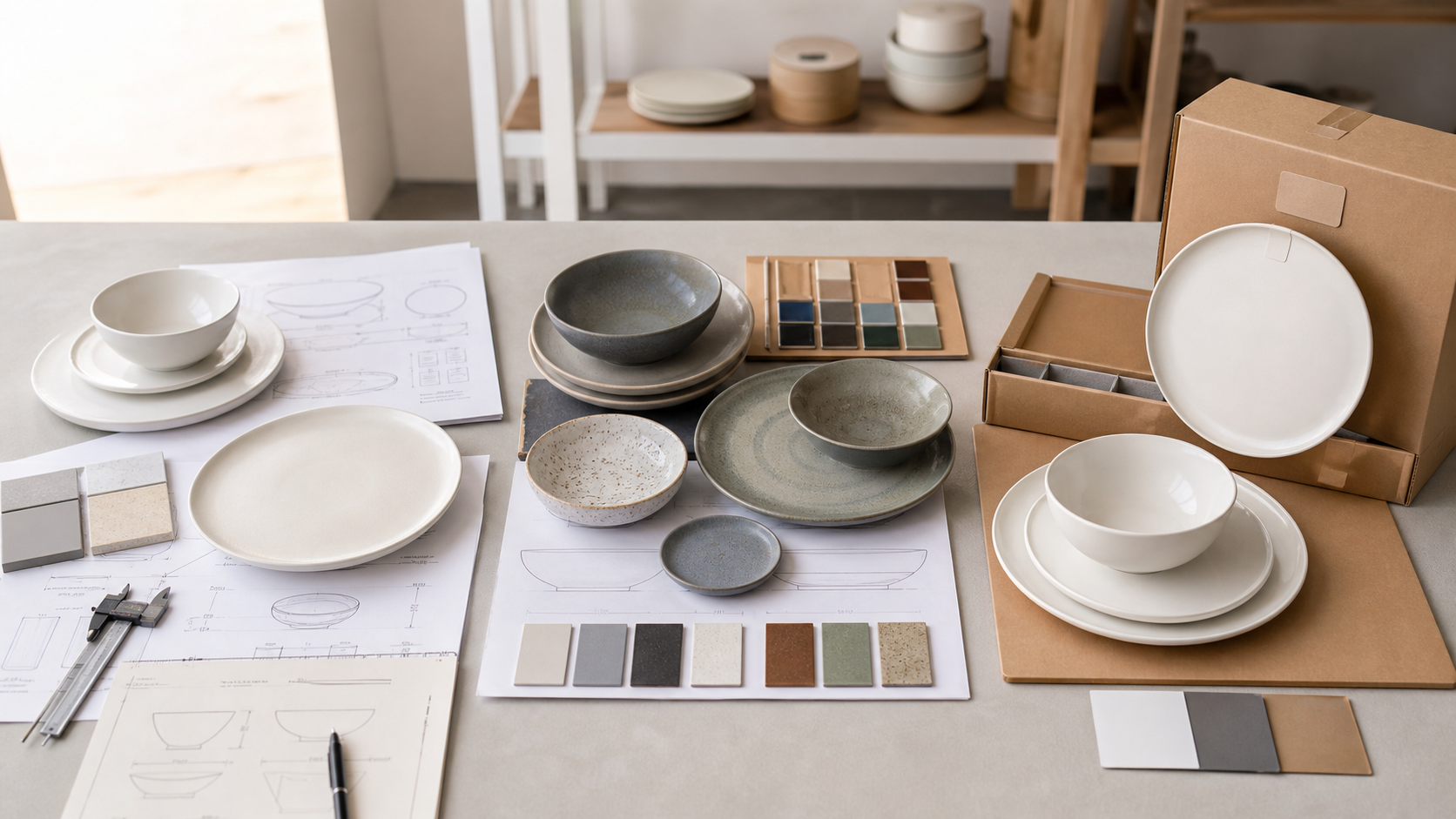
Use this simple route map before asking for quotes:
| Buyer Situation | Better Route | Why |
|---|---|---|
| You have full drawings, dimensions, and approved samples | OEM | The supplier should quote against a fixed specification |
| You have a brand idea but need product suggestions | ODM | Supplier design and factory knowledge can guide the project |
| You need a branded line quickly with manageable MOQ | Private label | Existing shapes can reduce mold work and sampling risk |
| You need a special silhouette no supplier already has | OEM with new mold | Tooling may be needed for exact shape control |
| You want a unique look without new molds | Private label or ODM | Glaze, finish, logo, and packaging may create enough difference |
| You are unsure about material, glaze, or price target | ODM discussion first | A development conversation prevents wrong sampling |
What Evidence Should You Request?
Ask for evidence that matches the route. For OEM, request a feasibility review, sample timeline, tolerance discussion, and QC standard. For ODM, ask what is supplier-developed and whether the shape is stable in bulk. For private label, ask which existing shapes are available, what glaze and logo options are realistic, what MOQ drivers apply, and whether packaging has been tested for export.
I also like buyers to ask about ISO 9001 quality management ideas, even if the supplier’s certificate is not the whole answer. Written process control, retained samples, inspection records, and change communication matter more than a logo on a certificate.
Buyer Checklist Before You Ask for a Quote
- I can explain what must be unique and what can use existing factory options.
- I have a target user, sales channel, and price band.
- I know the first launch assortment and expected order quantity.
- I have target market information for food-contact and care claims.
- I know whether I need new mold development.
- I have packaging expectations, including gift box, mailer, or export carton needs.
- I will ask the supplier to explain MOQ drivers, not only give a number.
- I will approve a master sample and written QC standard before bulk production.
My Advice as a Manufacturer
My simple advice is this: choose the route that matches how clear your product is today. If your design is fixed, use OEM and protect the specification. If your brand idea is clear but the product is not fully developed, use ODM support. If you want to launch faster, private label ceramic dinnerware can be a smart path.
At FENN, I prefer to discuss the route before we discuss only price. It helps both sides avoid wrong samples and plan mold needs, glaze testing, logo method, compliance documents, MOQ, production QC, and export packaging from the beginning.
Questions Buyers Often Ask
Is private label the same as OEM?
Not always. Private label means the product is sold under your brand. OEM means the supplier follows your specification.
Is ODM cheaper than OEM?
Sometimes. ODM can reduce design and mold work if the supplier already has usable platforms, but special glaze, packaging, testing, or exclusivity can still increase cost.
Which route gives the strongest brand difference?
A new OEM shape can give strong difference, but it adds cost and time. ODM or private label can still look distinctive through glaze palette, rim treatment, set mix, logo placement, and packaging.
Conclusion
OEM vs ODM dinnerware is not just a vocabulary question. It is a project-control question. OEM fits fixed specifications. ODM fits guided product development. Private label ceramic dinnerware fits faster branded launches using existing product platforms.
If you are not sure which route fits your dinnerware project, send FENN your references, target market, order plan, and packaging idea. I can help you choose the development path before you spend time and money on the wrong sample.