Short Answer
When buyers ask me about dinnerware open stock vs sets, I first look at the sales channel. Open stock is best when customers need replacement pieces and retailers can manage many SKUs. Boxed sets are easier for a first launch because the offer is clear. Giftable ceramic lines need stronger packaging, story, barcode planning, and breakage control before bulk production.
I have seen good products struggle because the assortment format was wrong for the channel. A plate may be beautiful, but if the buyer chooses too many open-stock SKUs for a small first order, MOQ pressure appears quickly. If the buyer chooses a boxed set for a retailer that wants replacement pieces, customer service becomes harder later.
So I do not treat packaging format as a small final step. It affects sampling, carton design, barcode work, inspection, warehouse handling, and repeat orders.
Definition Box: Three Common Assortment Formats
Open stock means each item, such as a dinner plate, side plate, bowl, or mug, can be sold and reordered separately.
Boxed sets combine several pieces into one selling unit, such as a 12-piece or 16-piece dinnerware set.
Giftable ceramic lines are designed for gifting or seasonal display, often with stronger retail packaging, inserts, sleeves, ribbons, or story cards.
Start With the Channel, Not the Box
Choose the assortment format before designing the packaging artwork.
A department store, online brand, supermarket, and gift shop do not need the same structure. The same ceramic plate can become three business models:
- A replacement-friendly open-stock program.
- A simple boxed set for fast online selling.
- A giftable collection with special packaging and a smaller product story.
If the channel decision is not clear, the supplier may quote the ceramic item only and miss the real work behind the offer. A boxed set needs inner protection and carton review. An open-stock program needs item codes, barcode control, and a reorder path.
The Assortment Format Decision Map
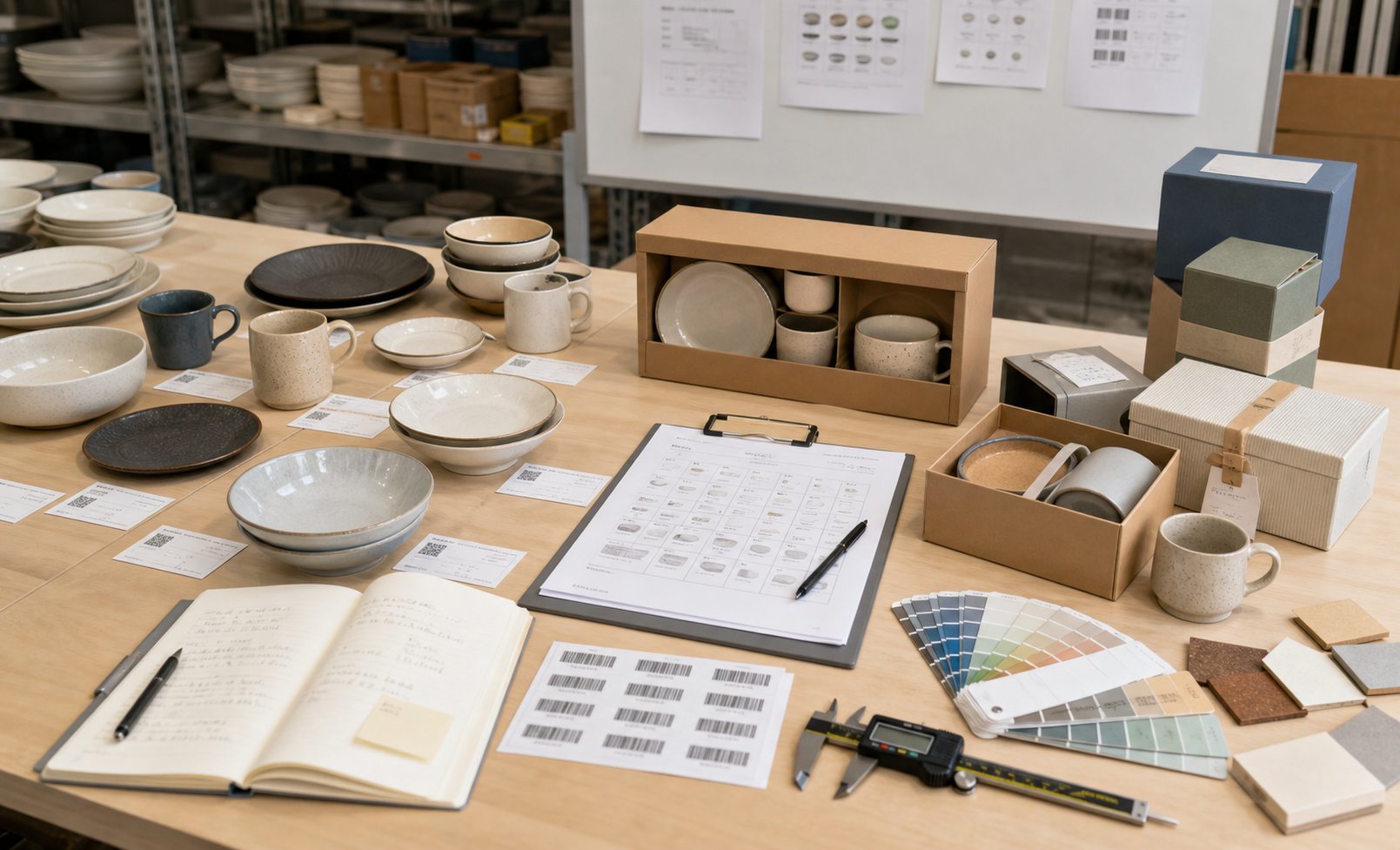
Use this table before asking for a final quotation. It helps the buyer choose the format that matches the business model, not just the product photo.
| Buyer Goal | Better Format | Why It Fits | Main Risk To Control | Supplier Proof To Request |
|---|---|---|---|---|
| Sell replacement pieces over time | Open stock | Customers can buy one plate, bowl, or mug later | Many SKUs create MOQ and inventory pressure | SKU list, item codes, barcode plan, retained samples |
| Launch a simple online dinnerware offer | Boxed set | The value is easy to explain and ship as one unit | Breakage risk and set-weight control | Packing mockup, master carton plan, drop-test discussion |
| Create a holiday, wedding, or housewarming offer | Giftable line | Packaging and story support the purchase reason | Gift box may look good but protect poorly | Gift box structure sample, inner protection, carton marks |
| Test a new glaze or color | Small boxed set or limited open stock | Lower assortment complexity for the first order | Customer may want replacement pieces later | Reorder plan and approved color range |
| Serve retail shelves with many choices | Open stock plus a few sets | Gives both flexibility and clear set offers | Barcode and shelf-label mistakes | GS1 GTIN plan and packing list control |
| Build a premium brand moment | Giftable line | Unboxing, insert card, and finish details matter | Cost rises quickly if packaging is overbuilt | Packaging cost breakdown and transit protection review |
Many brands start with boxed sets, then add open-stock replacement pieces after they see which items sell. Others use open stock as the main program and create one ceramic dinnerware gift set for holidays.
When Open Stock Works Best
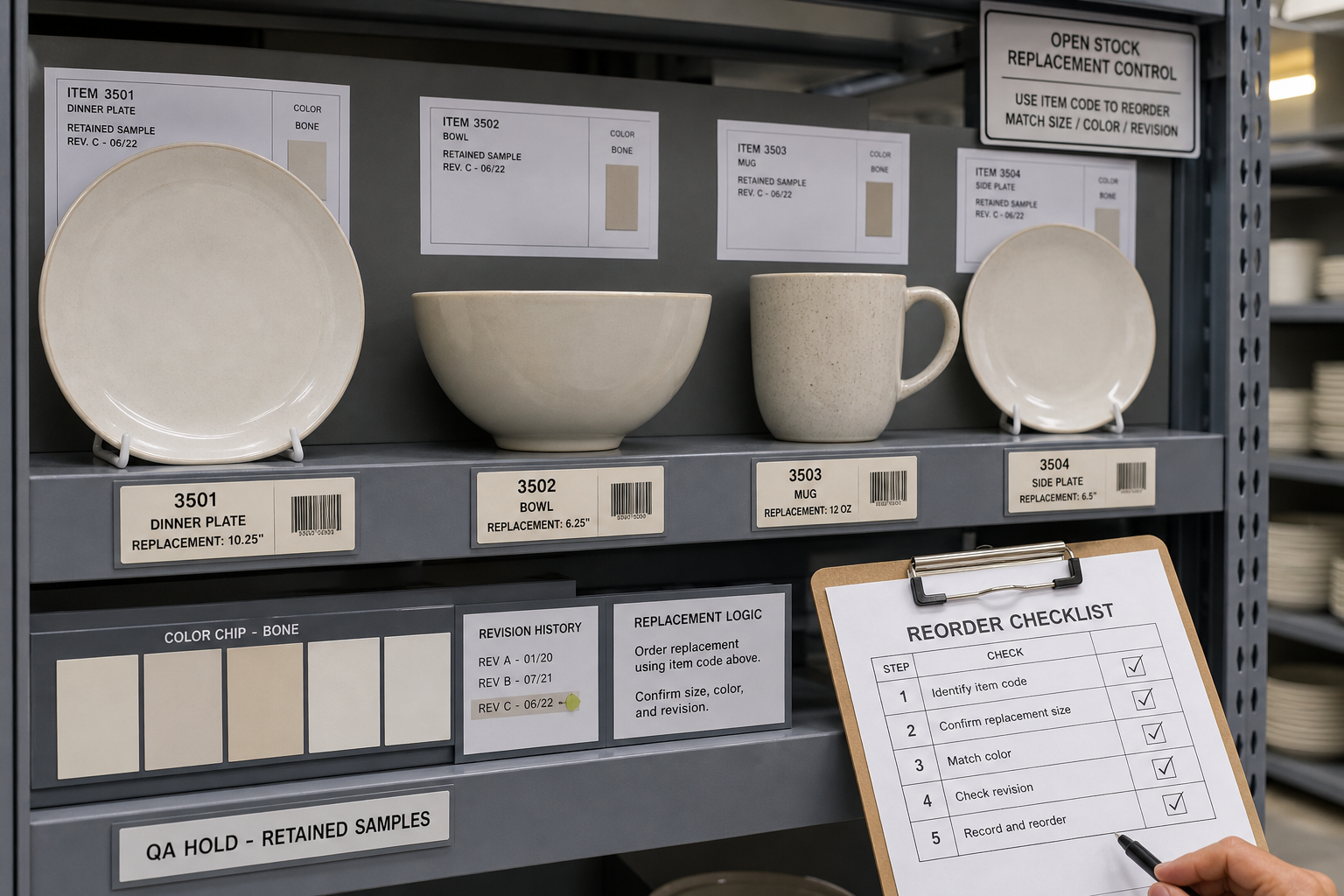
Open stock is strong when the brand wants a long-running dinnerware program. It is useful for retailers that sell replacement pieces or mix-and-match colors.
But open stock is not automatically easier. Each item becomes its own small project. A plate, bowl, and mug may each need:
- A separate item code.
- A separate barcode.
- A separate inner box or shelf label.
- A separate QC sample.
- A separate reorder record.
- A color and size standard.
In real ceramic production, each shape may have different yield, packing risk, and inspection points. A wide plate can warp more easily than a mug. A reactive glaze may look acceptable on a plate but too varied when bowls are stacked together.
For open stock, I prefer a focused first launch. Add serving pieces after reorder data is clear.
When Boxed Sets Are the Better First Step
Boxed sets are often easier for a new private label dinnerware launch. The customer understands the offer quickly.
The factory work becomes more connected. The set must be checked as a whole. I look at:
- Whether all pieces fit the retail box without pressure.
- Whether the full set weight is reasonable for online shipping.
- Whether the set count, barcode, carton label, and packing list match.
This is where private label tableware packaging becomes important. A thin gift box may look attractive in a photo but fail during export handling.
When a Giftable Ceramic Line Makes Sense
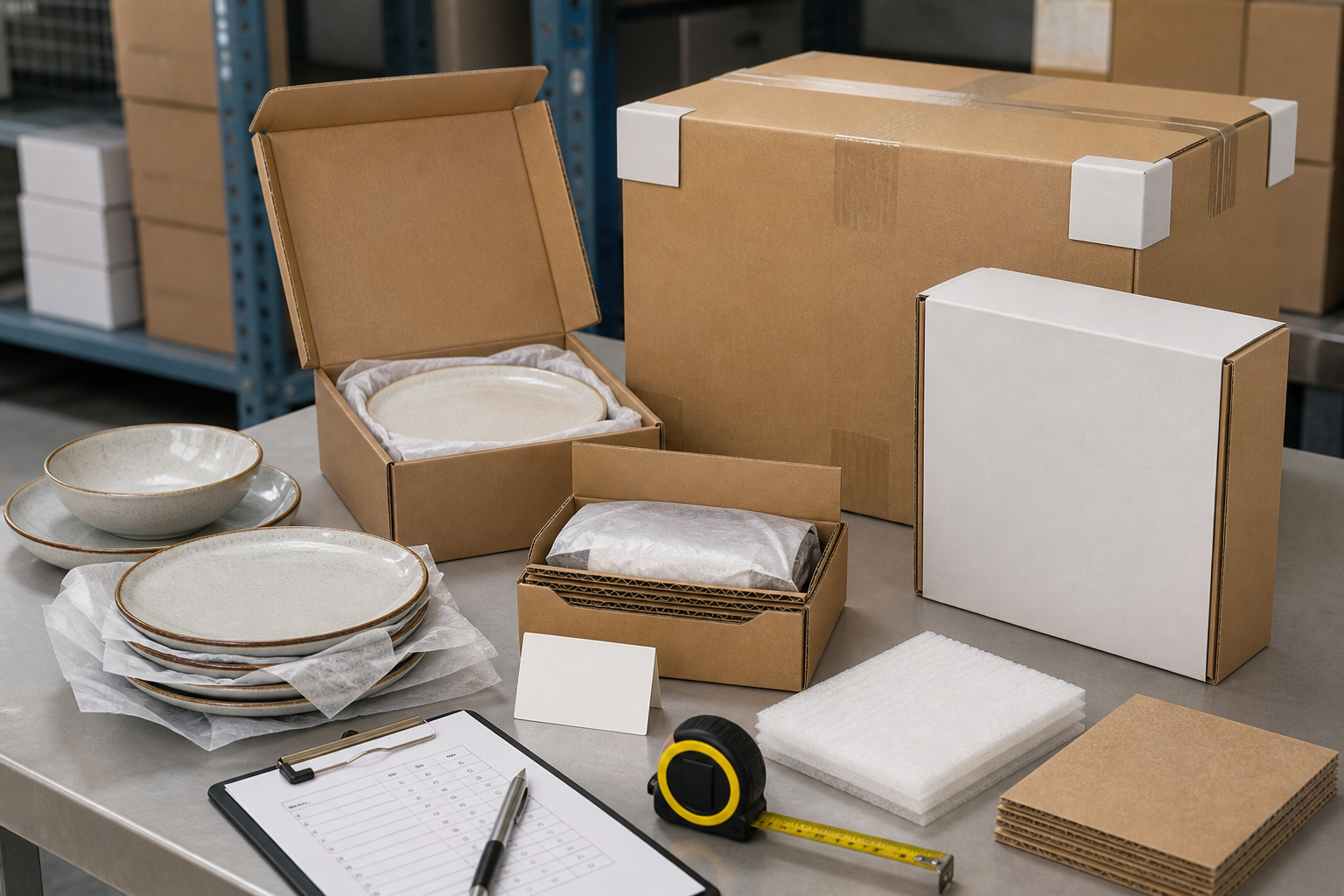
A giftable ceramic line is not just a boxed set with nicer printing. It needs a clear buying occasion.
For example:
- A two-mug set for housewarming.
- A bowl set for holiday hosting.
- A dessert plate set for gifting.
- A small dinnerware bundle for seasonal retail.
The ceramic product still has to perform in daily use, but the packaging carries more of the selling job. If the ceramic already has a strong glaze or shape, the packaging should protect and explain, not compete with the product.
I also ask buyers to be careful with sustainability wording on gift packaging. Words like “eco” or “green” need evidence. I would review the FTC Green Guides for U.S. claims and European Commission packaging waste guidance for EU direction before printing broad environmental language.
Packaging and MOQ Checks Before You Decide
Before choosing the format, review this checklist.
| Checkpoint | Open Stock | Boxed Set | Giftable Line |
|---|---|---|---|
| MOQ pressure | Higher because each item may need separate production and packing | Easier to plan as one selling unit | Medium to high because packaging often has its own MOQ |
| Barcode control | Many item-level codes | One set-level code, sometimes item codes too | Set or gift-pack code plus carton marks |
| Replacement need | Strong advantage | Must be planned separately | Usually limited unless it becomes a long-term line |
| Packaging development | Simple but repeated across SKUs | Needs full set protection | Needs protection plus retail presentation |
| Inspection focus | Item size, color, finish, individual label | Set count, mixed-item packing, box fit | Gift box finish, insert, protection, presentation |
| Reorder control | Retained sample for every SKU | Set configuration record | Packaging artwork and structure archive |
If the buyer cannot support many SKUs yet, boxed sets may reduce early pressure. If replacement pieces matter, plan open stock from the start.
What a Professional Supplier Should Confirm
When a buyer sends an inquiry, I like to see the planned channel and selling unit.
A good supplier answer should include:
- The shape list and set configuration.
- The item-level or set-level barcode plan.
- The packaging structure.
- The expected carton quantity and carton weight direction.
- Any ISTA package testing discussion, especially for online or export shipment.
- The retained sample and reorder control method.
If a supplier only says “we can do any box,” that is not enough. Ask how the plates are separated, how the retail box sits inside the master carton, and how the packing team avoids mixing the wrong counts.
My Advice as a Manufacturer
For a first order, I usually prefer a clear, narrow structure.
If the brand is new, start with one boxed set or a small open-stock core. Do not launch every shape, every color, and every gift box at the same time. Ceramic production already has natural variables: firing, glaze, shrinkage, packing, and inspection.
If the brand already has steady sales, open stock can be powerful. But it needs discipline. Keep item codes, barcodes, retained samples, packing specs, and photos organized from the first production.
For giftable lines, test the box like a product. Open it, close it, shake it gently, pack it into the master carton, and imagine it moving through export handling. Beautiful packaging that cannot protect ceramic dinnerware is not finished.
Questions Buyers Often Ask
Is open stock better than boxed sets for dinnerware brands?
Open stock is better when customers need replacement pieces or mix-and-match choices. Boxed sets are better for a simple first launch or clear online offer.
Can I start with boxed sets and add open stock later?
Yes. Keep the same shape, glaze, item codes, and retained samples so future open-stock pieces match the original set.
What makes a ceramic dinnerware gift set successful?
A successful ceramic dinnerware gift set has a clear occasion, protective packaging, correct labels and barcodes, and product quality for daily use.
Should each item in a boxed set have its own barcode?
It depends on how the set is sold and managed. Some retailers need only the set barcode, while others also need item-level control. Confirm this early and build a GS1 GTIN plan before packaging artwork is printed.
What is the biggest packaging mistake for giftable ceramic lines?
The biggest mistake is designing the box for shelf appearance only. Ceramic products need inner protection, stable spacing, carton strength, and realistic export packing.
Conclusion
The choice between open stock, boxed sets, and giftable ceramic lines is really a choice about channel, replacement, packaging, MOQ, and reorder control. Choose the selling unit first, then design the ceramic assortment and packaging around it.
If you are planning a private label dinnerware launch, FENN Home can help you compare open stock, boxed sets, and giftable packaging before sampling. A simple assortment map at the beginning can save many changes later.
Need help choosing the right dinnerware assortment format?
Send FENN your target channel, expected selling unit, SKU list, packaging idea, and launch quantity. I can help you compare open stock, boxed sets, and giftable ceramic lines before sampling.