
Short Answer
When comparing a ceramic dinnerware factory vs trading company, choose based on who can control the real risk. A factory can offer direct production access. A trading company may offer wider sourcing options. A design-led manufacturer can connect product development, sampling, production, QC, packaging, and compliance in one accountable workflow.
I have worked with many overseas buyers who ask this before placing a private-label dinnerware order. My honest answer is: there is no perfect supplier type.
The better question is, “Who takes responsibility when the sample changes in bulk, the glaze moves, the carton breaks, or the test report does not match my product?”
Quick Definition
A ceramic factory controls production. A trading company manages sourcing. A design-led manufacturer connects product development with factory responsibility, so the buyer can discuss design, sampling, QC, packaging, and repeat orders with one team.
Best Criteria for Choosing Your Supplier Model
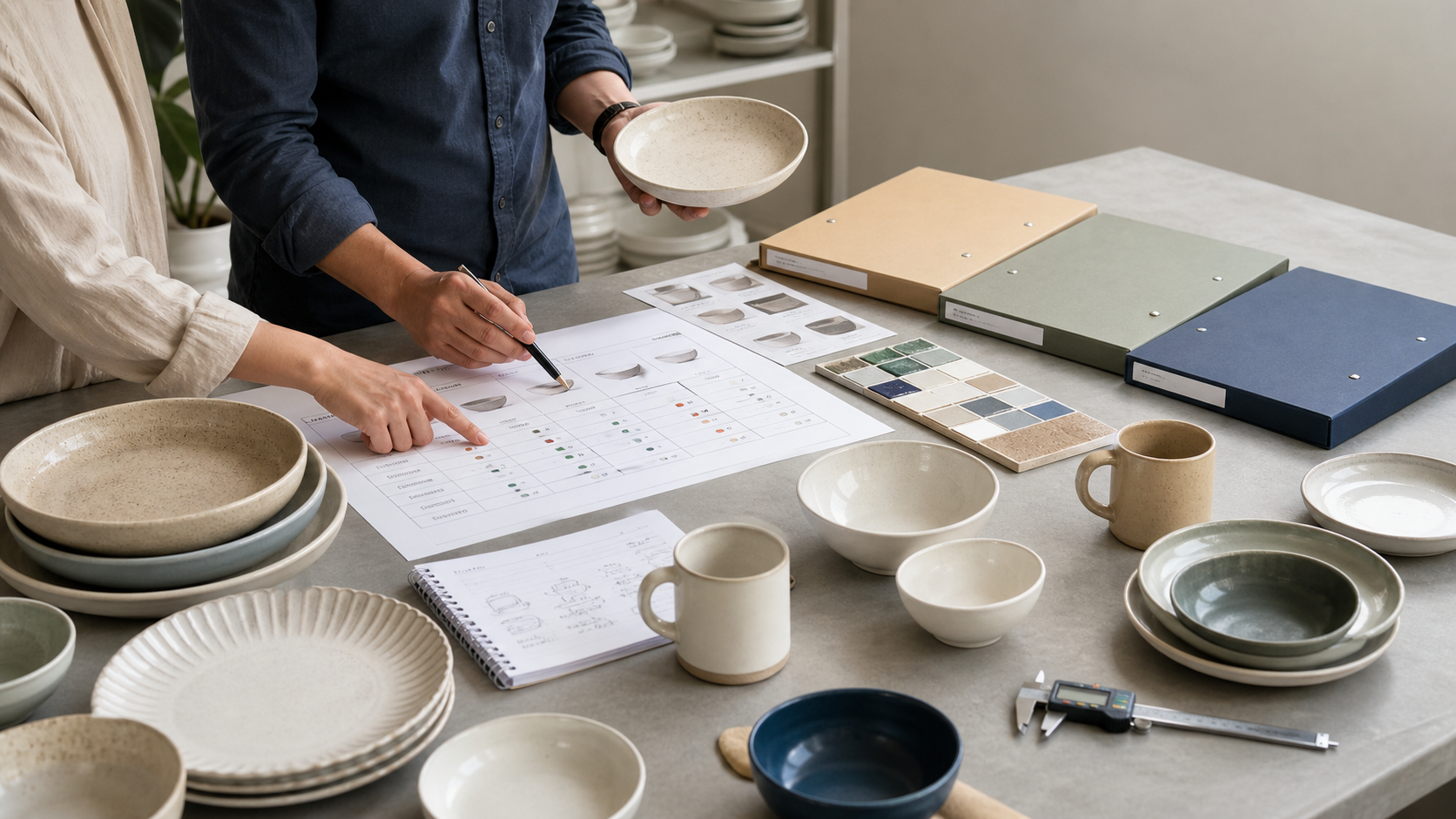
Use this simple rule: choose the supplier model that controls your biggest risk. For catalog sourcing, the risk is finding options quickly. For repeat ceramic orders, the risk is production consistency. For private-label dinnerware, the risk is turning a design idea into a stable product.
Ceramic Dinnerware Factory vs Trading Company: Which Fits?
This is the faster decision guide I use when a buyer is still comparing supplier models. These are starting points, not guarantees. A factory may outsource decoration, and a trading company may have a strong inspection team. Check who does each step before choosing.
| Project Situation | Recommended Supplier Type |
|---|---|
| You need many homeware categories, not only ceramics | Trading company |
| You already have fixed specs and need repeat production | Direct factory |
| You need private-label dinnerware with custom shape, glaze, logo, or packaging | Design-led manufacturer |
| You are still developing the product concept | Design-led manufacturer |
| You only need fast catalog comparison | Trading company or sourcing agent |
| You need strong sample-to-bulk responsibility | Factory or design-led manufacturer |
Why This Choice Matters in Ceramic Dinnerware
Ceramic dinnerware needs clear process control. Clay body, mold shrinkage, firing temperature, kiln position, glaze thickness, foot ring shape, and carton structure can change the final result.
For example, a buyer may approve a soft matte plate. In bulk, it may show cutlery marks or slight warping. If the supplier cannot explain body-glaze fit, surface testing, master samples, and inspection rules, the buyer has a hard conversation after money is spent.
In real projects, the problem is often not whether the supplier is called a factory or trading company. The problem is that the buyer does not know who is keeping the approved sample, who is confirming the carton, and who will take responsibility if the bulk goods do not match the sample.
Option 1: Working Directly With a Ceramic Factory
A factory is usually the strongest choice when you need production control. The team is close to the forming process, glazing, firing, inspection, and packaging.
This helps repeat orders because you need retained samples, glaze records, carton specs, and inspection history. But a factory is not automatically best. Some are strong at production but weak at product development, English communication, packaging design, or market-specific documentation.
When you talk to a factory, ask:
- Which clay body and glaze do you suggest for this use?
- What production risk do you see in this shape?
- What sample standard will you keep for bulk goods?
- What defects are critical, major, and minor?
- How do you control repeat orders?
A good factory answer includes practical limits, not only “yes.”
Option 2: Working With a Trading Company
A trading company can help when a buyer needs many product categories or fast sourcing. If you need ceramic dinnerware plus other home goods, a trading company may coordinate more categories than one factory can.
The risk is accountability. If a problem happens, who owns the answer? The factory may say the trading company confirmed the detail. The trading company may say the factory made the mistake.
This does not mean trading companies are bad. But I would ask for proof of factory relationship, QC process, product-specific test reports, and how they handle changes between sample and bulk.
For custom ceramic dinnerware, the weak point is often information transfer. The buyer may approve a sample through a trading company, but the factory may not receive the full approved standard, packaging notes, acceptable variation range, or latest logo file. That is why written sample approval and responsibility records matter.
I would also check quotation transparency. If the price does not separate product cost, decoration, packaging, testing, inspection, and logistics, it becomes harder to compare with a factory quote.
Option 3: Working With a Design-Led Manufacturer
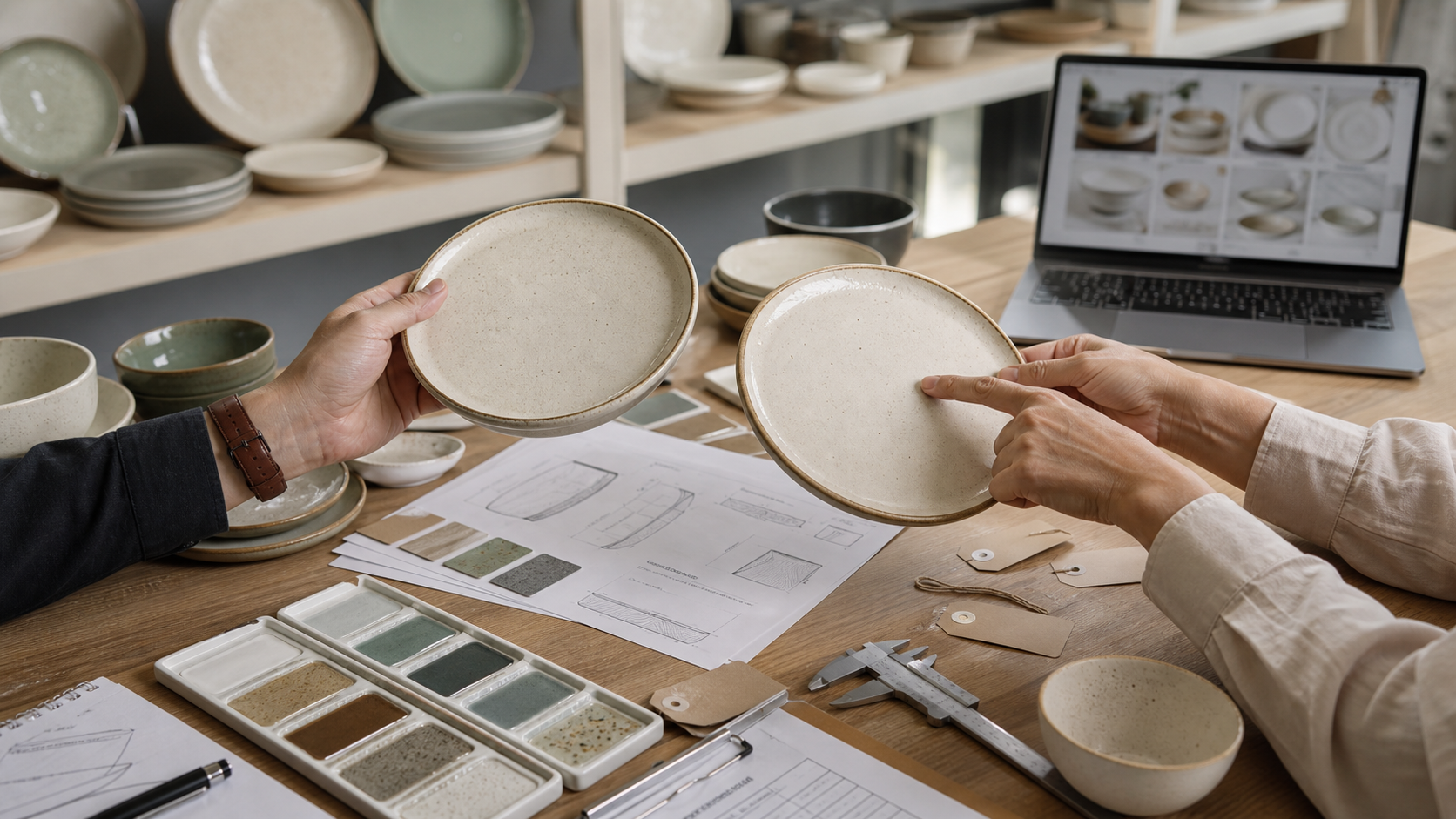
A design-led manufacturer is useful when the buyer wants more than a catalog item. This model often fits private-label dinnerware, ODM dinnerware manufacturer projects, and custom assortments.
The value is connecting design with manufacturing reality. If a buyer wants a low, wide bowl with reactive glaze, the team should discuss shape stability, foot ring support, glaze flow, kiln variation, color range, and packaging pressure before sampling.
Supplier Model Comparison for Dinnerware Buyers
| Supplier Type | Main Strength | Main Weakness | Best For | What To Verify |
|---|---|---|---|---|
| Direct factory | Production control | May have limited design or communication support | Stable ceramic product lines, repeat orders, OEM production | Factory capability, QC records, retained samples, packaging plan |
| Trading company | Broad sourcing | Less direct control over production details | Mixed-category sourcing, early catalog comparison | Factory identity, inspection process, document traceability |
| Design-led manufacturer | Design-to-production accountability | Requires a clearer project discussion | Private label, ODM, custom glaze, new assortments | Development process, sample standards, production ownership |
The key is not the label. The key is whether the supplier can prove control over your product.
What Evidence Should You Request?
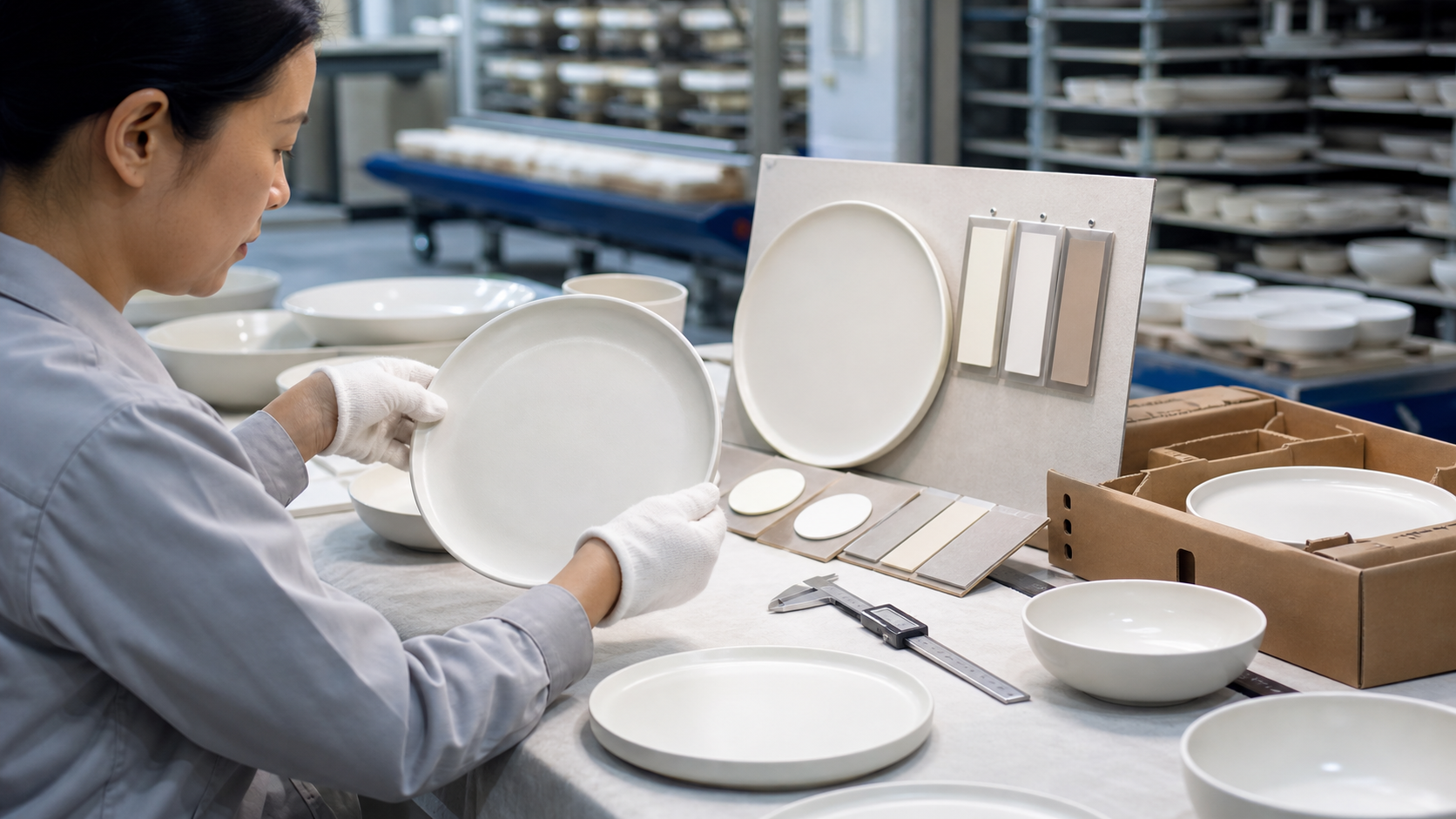
Before choosing any ceramic dinnerware supplier, ask for evidence that matches your project: sample timeline, shape feasibility comments, inspection checklist, defect examples, final inspection method, and product-matched test reports.
If you sell in the United States, FDA guidance on lead in foodware is useful when discussing ceramic food-contact safety. If you sell in Europe, European Commission food contact materials guidance is a good starting point.
ISO quality management principles can help buyers understand why written process control matters, even if a certificate alone is never enough. For export packaging, ISTA test procedures give both sides a shared testing language.
A useful test report identifies the tested product, material or decoration, test method, date, and result. Ask how that sample represents your planned order. A report for a plain white plate does not automatically cover a newly decorated mug. For a quality-system certificate, check the company, site, scope, and validity; it does not certify the dinnerware itself. For transport testing, agree the distribution route and exact packed configuration before choosing a procedure.
How To Judge the Supplier’s Answer
I like to listen for three things: detail, limits, and responsibility.
Detail means the supplier talks about your exact product, not only general ability. A professional answer may mention glaze thickness, rim strength, decal position, foot ring, packaging insert, or acceptable color range.
Limits mean the supplier is honest. If they promise exact reactive glaze color, zero variation, very low MOQ, very fast samples, and no testing concerns together, I become careful.
Responsibility means they can tell you who approves the sample, keeps the master sample, confirms the carton, checks final goods, and reports material changes.
Buyer Checklist: Which Model Fits Your Project?
Use this checklist before you choose between a factory, trading company, or design-led manufacturer:
- My dinnerware material, shape, finish, and target price range are written.
- My target market and food-contact documentation needs are clear.
- I know whether I need existing shapes or new mold development.
- I understand which supplier will control sample-to-bulk consistency.
- I know who will define QC defects and inspection standards.
- I know who will design and approve export packaging.
- I know who will keep retained samples for repeat orders.
- I know who takes responsibility when a problem happens.
My Advice as a Manufacturer
My advice is simple: choose the supplier model that gives you the clearest responsibility.
If you need broad sourcing, a good trading company can help. If you need production control, a factory may be stronger. If you need a private-label collection with shape, glaze, packaging, and quality decisions, a design-led manufacturer may fit well when its development and production roles are verified.
For ceramic dinnerware, I care less about what the supplier calls themselves and more about what they can prove. Can they explain ceramic risk, keep a master sample, control inspection, support documents, and repeat the order later?
Questions Buyers Often Ask
Is it cheaper to buy directly from a ceramic factory?
Sometimes, yes. But the lowest unit price is not always the lowest project cost if you need extra sampling, packaging redesign, inspection correction, or shipment replacement later.
Are trading companies always risky?
No. A strong trading company can be helpful, especially for mixed-category sourcing. The buyer should verify their factory relationship, QC role, documentation control, and responsibility when problems happen.
What is the best supplier type for private-label dinnerware?
For most private-label dinnerware projects, I prefer a factory or design-led manufacturer with clear OEM/ODM support. The supplier should connect design, sampling, production, QC, compliance, packaging, and repeat orders.
Should I work with a factory or trading company for custom ceramic dinnerware?
For custom ceramic dinnerware, a direct factory or design-led manufacturer can be useful because shape, glaze, sample approval, QC, and packaging need close production control. A trading company may still work if they have strong factory relationships and clear responsibility records.
Conclusion
The ceramic dinnerware factory vs trading company decision is really about control, communication, and responsibility. For catalog items, a trading company may work. For a stable ceramic line, a factory can be strong. For private-label dinnerware with custom design, glaze, packaging, and compliance needs, a design-led manufacturer can reduce the risk between idea and bulk shipment.
Compare Your Supplier Options With a Clear Brief
Send FENN your target market, product references, quantity plan, and packaging expectations. We can help you compare supplier responsibilities and identify what your dinnerware project needs before sampling.