Short Answer
Private label dinnerware design can look distinctive without new molds when buyers use existing stable shapes and customize glaze, rim detail, logo placement, set mix, and packaging. Ask your supplier to prove each idea with samples, cost impact, MOQ impact, food-contact checks, and repeat-order control before bulk production.
When a buyer tells me, “Kitty, I want my dinnerware line to look special, but I cannot pay for new molds,” I think it is a smart product-development question.
In real ceramic production, a new mold can be useful. But many strong collections begin with a simple shape and a clear design language.
Definition Box: What Low-Tooling Dinnerware Customization Means
Low-tooling customization means changing the visible brand experience of ceramic dinnerware without a fully new body shape. It can include glaze, rim detail, decoration, backstamp, assortment mix, packaging, and photography standard.
Start With the Customer Moment
Before choosing a glaze or decal, I ask buyers one question: where will the customer first feel the difference?
For an online brand, the first moment may be photos and unboxing. For retail, it may be shelf color and gift box front. For hotels, it may be stackability and rim feel. My simple advice is to pick two or three signals and repeat them.
The Customization Ladder
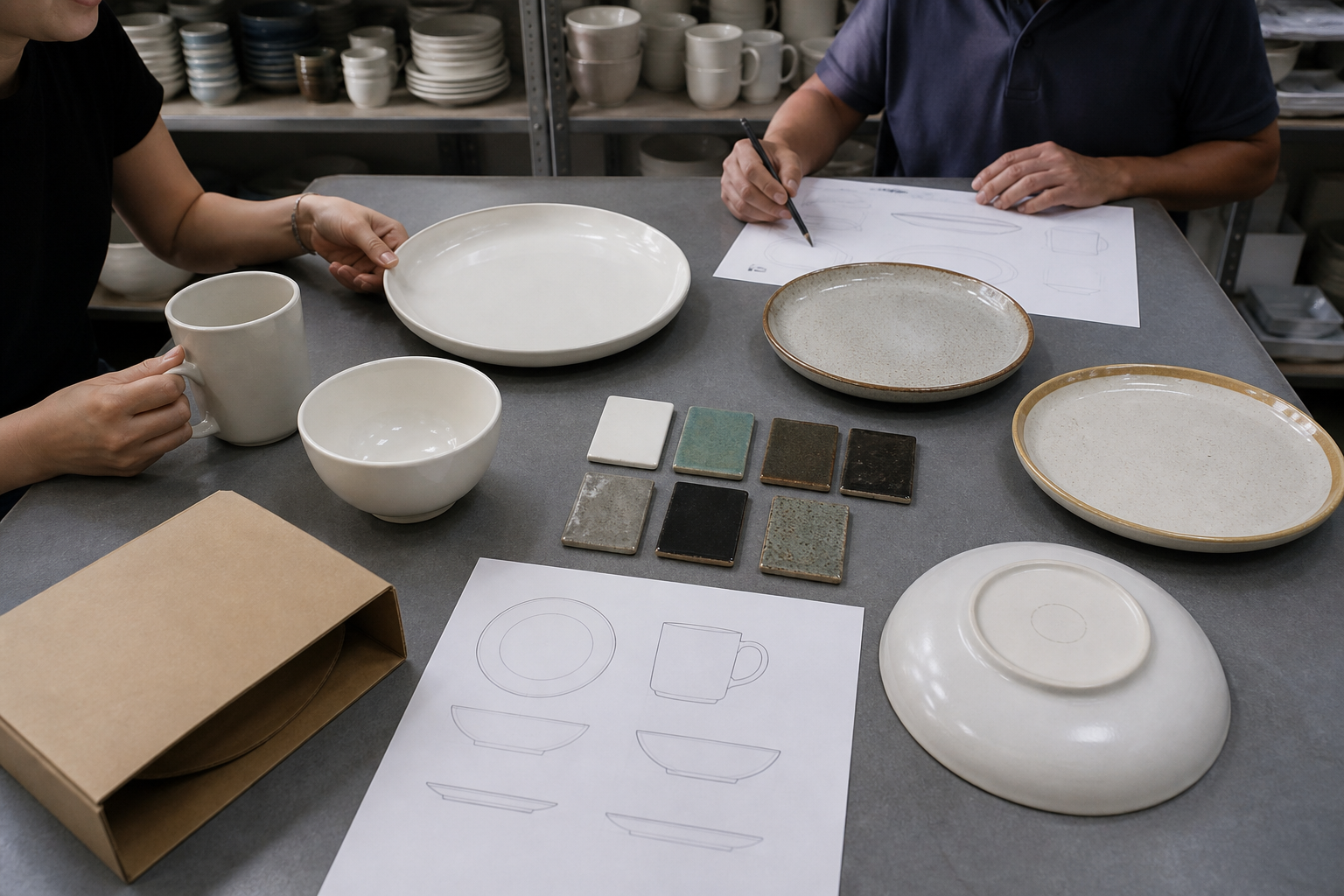
Use this ladder to choose where to spend design effort before paying for new molds.
| Customization Level | What You Change | Cost and MOQ Pressure | Best Use | Supplier Proof to Request |
|---|---|---|---|---|
| Level 1: Color story | Glaze color, gloss level, speckles, reactive effect | Low to medium | Fast private-label launch | Color chips, fired samples, approved range board |
| Level 2: Surface and rim | Matte feel, satin glaze, hand-painted rim, exposed clay edge | Medium | Lifestyle brands | Food-contact check, cleaning test, rim photos |
| Level 3: Decoration | Backstamp, small decal, line art, motif, logo | Medium | Brand identity and gift sets | Artwork proof, decoration position sample, lead/cadmium report if needed |
| Level 4: Set architecture | Plate and bowl mix, open stock, boxed set, serving add-ons | Medium | Channel-specific differentiation | SKU map, carton plan, MOQ calculation |
| Level 5: Packaging and story | Gift box, sleeve, insert card, barcode and carton marks | Medium | Retail and gifting | Packaging mockup, drop-risk review, GS1 GTIN plan |
| Level 6: New mold | New silhouette, exact dimensions, unique handle or foot ring | High | Strong long-term signature shape | Mold drawing, tooling quote, timeline, ownership terms |
For many first launches, I prefer Level 1 to Level 5 first. If sales prove the concept, a new mold is easier to justify.
Five Design Levers That Can Change the Look
1. Build a Recognizable Glaze Palette
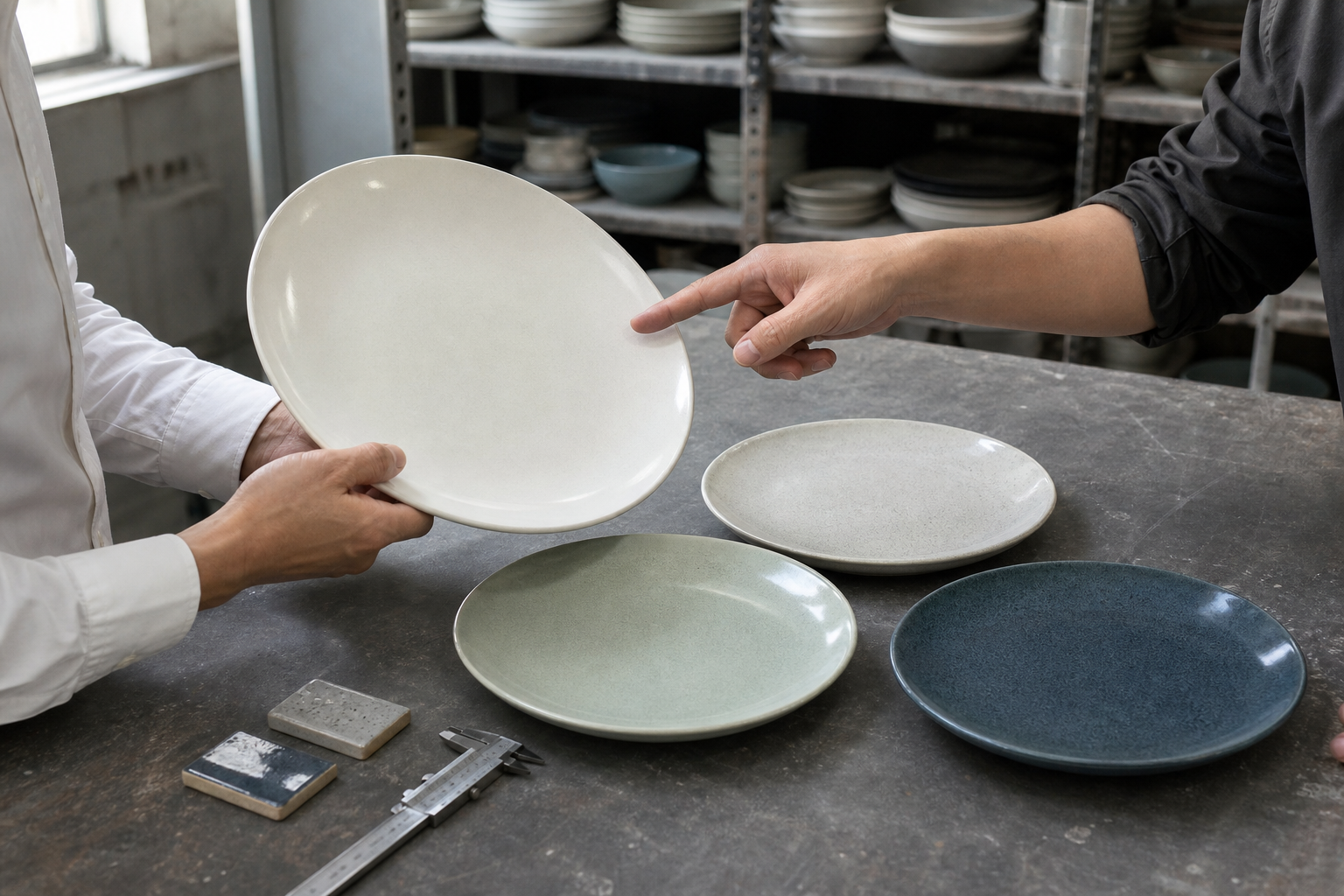
A glaze palette is often the fastest way to create dinnerware brand differentiation. But it must be manufacturable.
If you choose three colors, they should work together in the kiln and carton. A soft white, clay beige, and calm green may be easier to repeat than five deep reactive colors.
Ask for fired samples, not only color numbers on paper. Ceramic color changes with clay body, glaze thickness, firing temperature, and kiln position.
2. Use Rim and Foot Details Carefully
A rim detail can make an existing plate feel more ownable. This may be a hand-painted rim, a thin color line, a soft speckle edge, or a small contrast at the foot.
The key word is carefully. A rim is touched by lips, forks, dishwashers, and packing material. Ask for close-up rim samples and food-contact documents when decoration touches use areas.
3. Make the Set Mix Feel Designed
Many buyers only customize one plate. Then the full set looks accidental. Design the set like a small system: one hero item, one strong color item, and one neutral item.
The assortment can be the brand signature. Open stock, boxed sets, and giftable lines all need different SKU logic.
4. Treat Packaging as Part of the Product
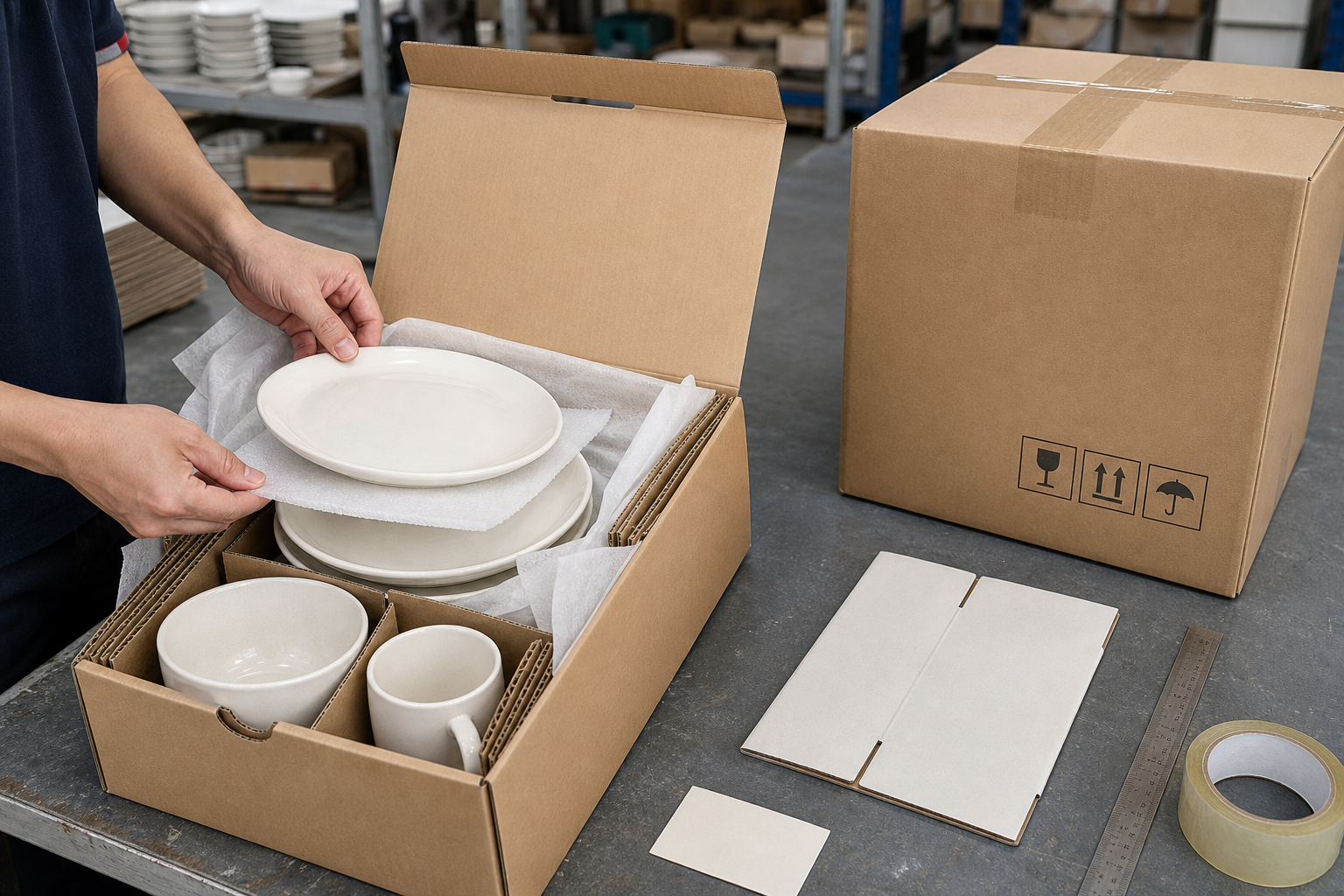
Packaging is not only protection. It is also the first brand touch. Ceramic gift boxes need tissue or thin EPE separators, corrugated pads, movement control, carton strength, item codes, and clear outer marks. A GS1 GTIN plan helps buyers avoid barcode and assortment confusion when colors, pack counts, or gift sets change.
Approve the packaging structure before final artwork.
5. Use Backstamps and Small Motifs With Restraint
A backstamp, small decal, or simple motif can make an existing shape feel branded. But decoration should support the collection, not fight the shape. If decoration is on the food-contact surface, use stronger testing review. For U.S. sales, I use FDA ceramicware lead guidance as a source direction.
A Low-Risk Launch Roadmap
Here is the route I often suggest when the buyer wants custom ceramic dinnerware without new molds.
| Step | Buyer Action | Factory Check | Good Result |
|---|---|---|---|
| 1 | Choose one stable shape family | Confirm mold condition, stacking, and packing fit | Lower tooling risk |
| 2 | Create a small color board | Fire real glaze samples on the chosen body | Clear visual direction |
| 3 | Pick one hero detail | Test rim, speckle, decal, or backstamp placement | Recognizable brand signal |
| 4 | Build a focused set | Limit SKUs and colors for first order | Easier MOQ and inventory control |
| 5 | Approve packaging structure | Check protection, labels, and barcode needs | Better launch readiness |
| 6 | Record repeat standard | Keep samples, photos, glaze range, artwork, and packing specs | Easier reorder consistency |
This roadmap is simple, but it gives the supplier a clear standard for production.
When a New Mold Is Still Worth It
I do not want buyers to think new molds are bad. A new mold is useful when the shape itself is the brand signature.
Consider a new mold when you need exact dimensions, a very specific stack height, a unique mug handle, a special serving form, or a silhouette competitors cannot easily copy.
Before investing, discuss mold ownership, sample rounds, shrinkage tolerance, timeline, and what happens if the first shape needs adjustment. WIPO industrial designs, the USPTO design patent application guide, and EUIPO design information are useful starting points for design protection questions.
What to Ask Your Supplier
Ask these questions before you approve a low-tooling design route:
- Which existing shapes are stable in production and export packing?
- Which glaze colors are proven on this clay body?
- What is the MOQ impact of each color, finish, decal, or package change?
- How will you control color range in repeat orders?
- Does any decoration touch the food-contact surface or rim?
- Can the packaging protect the set and still support my brand look?
- Which details should wait until a second order or new mold stage?
A professional supplier will separate easy changes from risky changes and explain what needs a sample trial before giving a firm answer.
My Advice as a Manufacturer
My advice is to make the first collection distinctive, but not complicated. When we review private label dinnerware design at FENN, I like to start with a stable shape, one clear color story, one small signature detail, and one practical packaging direction.
Send FENN your target customer, references, price band, sales channel, and launch quantity. I can help you decide what to do now.
Questions Buyers Often Ask
Can existing shapes really look unique?
Yes. Existing shapes can look distinctive when the glaze palette, set mix, rim detail, backstamp, packaging, and product photography work together.
What is the safest first customization?
A proven glaze color on a stable existing shape is usually safer than a new mold. Still approve fired samples and a color range before bulk production.
Should I put my logo on the plate face?
Sometimes, but be careful. A large logo on the eating surface may reduce daily-use appeal and can create extra compliance review.
When should I invest in a new mold?
Invest when the shape is central to the brand, sales volume can support tooling, and the timeline allows sample changes.
Conclusion
Private label dinnerware design does not need to start with expensive molds. Buyers can create strong dinnerware brand differentiation through glaze palette, rim detail, decoration, set architecture, packaging, and repeatable approval standards.
If you want custom dinnerware design with lower tooling risk, ask FENN to review your shape options, color references, packaging idea, and first-order plan. A focused first collection is easier to launch, easier to reorder, and easier for customers to remember.