
Short Answer
To support durable ceramic dinnerware claims, define the performance you mean, agree on relevant tests and acceptance limits, and test samples that match the finished product. Keep the results linked to each shape, glaze and decoration. Review care instructions alongside the claim, then check whether production changes require fresh evidence before repeating that promise.
I’m Kitty. After more than 20 years in ceramic dinnerware, I still pause when a buyer asks, “Can we call this durable?” It is a fair question. But I need to know what the plate will face: a family dishwasher, a busy restaurant rack, or daily stacking in a small café.
A lovely sample gives us something to discuss. A useful proof file gives your team something to approve.
Start a Claim Card Before You Order Tests
For this article, durability means keeping agreed physical and surface performance under defined use conditions. It does not give a ceramic piece an unlimited life.
I like one working card for each proposed claim. Copy these fields into your development file:
| Claim-card field | What your team should enter |
|---|---|
| Exact sentence | The wording intended for the product page or pack |
| Covered products | SKU, shape, size, body, glaze and decoration versions |
| Intended use | Home or hospitality; washing, handling and storage conditions |
| Performance question | Rim chipping, surface damage, decoration wear or another specific issue |
| Evidence plan | Test method and version, laboratory, sample selection and quantity |
| Approval rule | Measured limit or agreed visual reference, with reasons |
| Evidence location | Report number, dated photographs and retained-sample reference |
| Care boundaries | Restrictions that customers need to understand |
| Review trigger | Product or process changes that reopen approval |
A professional supplier can explain which entries are confirmed and which need a laboratory’s input. A reply that says only “our porcelain is very strong” leaves the central questions unanswered.
For US advertising, the FTC advertising substantiation policy explains the need for a reasonable basis for objective claims before they are made. Have the responsible market reviewer check your exact wording. I use the card to keep the commercial promise and its supporting records together.
Decide What Durable Means Before Ordering Tests
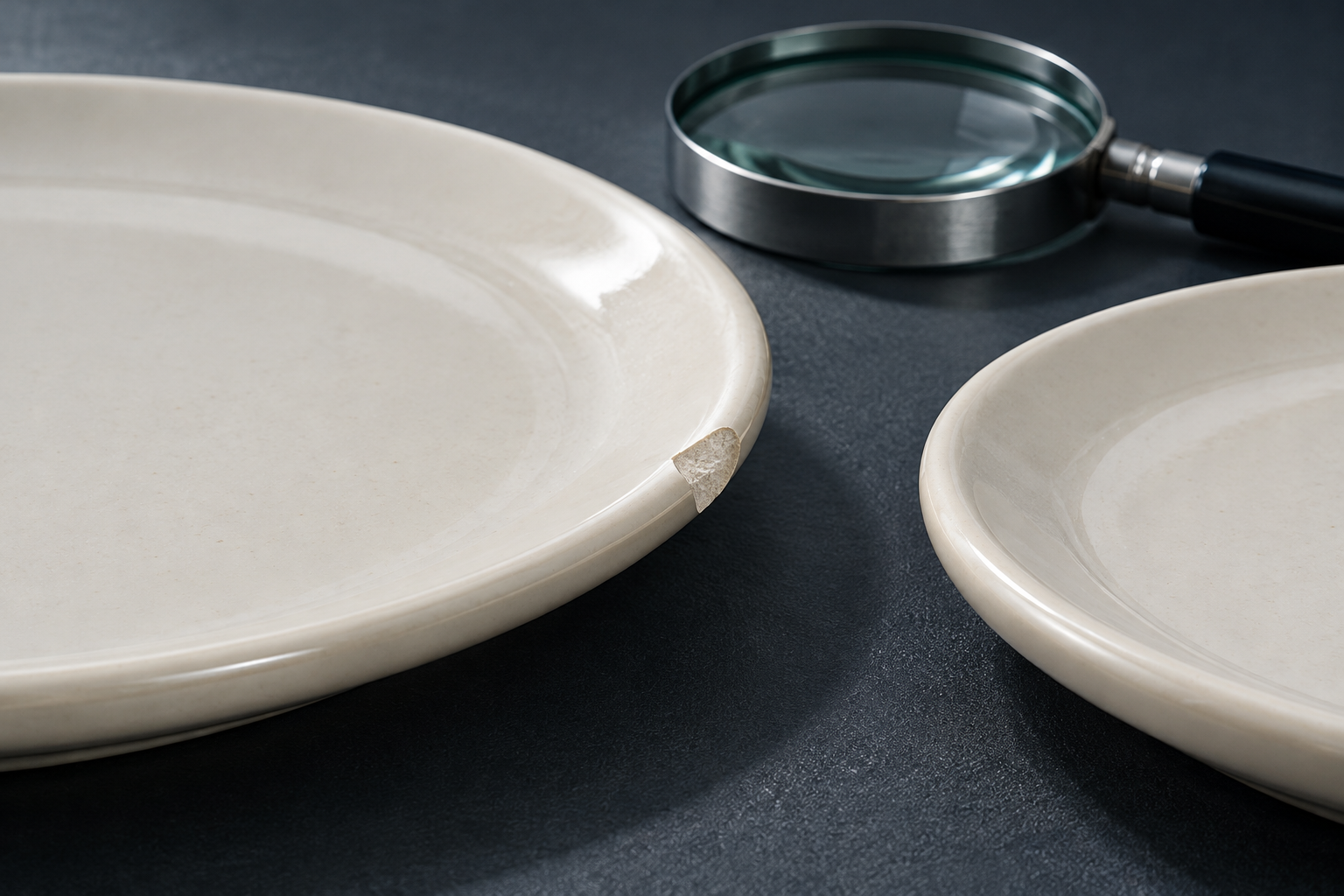
Imagine a brand developing an ivory dinner plate and a matching blue-rim bowl. This is a planning example, not a FENN test result.
The brand wants to say “durable for everyday use.” I would ask the team to name the failures it wants to reduce. Perhaps the plate rim chips during clearing, while the bowl decoration loses its appearance after washing. Those are different questions, even within one range.
Give rim damage its own question
Rim shape, local thickness and the body-glaze combination can affect damage. A thicker-looking edge does not settle the issue. Firing variation can also change the finished shape and contact points.
For chip resistant dinnerware, ask where the test force is applied, how samples are held, and what result is recorded. ASTM C368 is a relevant starting point for discussion with a laboratory about ceramic tableware impact and rim-chipping evaluation. Confirm the applicable part and product geometry with the lab.
A method name alone is not a product certificate or an agreed pass level. I want the report to identify the test conditions and results, then show how those results support the proposed claim. “Tested to ASTM” is too incomplete for my approval file.
Separate marks from actual surface damage
A dark cutlery trail can be metal transferred onto the glaze. A scratch is damage to the surface itself. Both can upset a customer, but they call for different investigation and wording.
Ask the supplier to inspect the surface before and after an agreed cleaning step. Record the utensils, contact conditions and photographs under consistent light. An internal comparison can help select a glaze; it should be described honestly as an internal screen unless a defined laboratory method was used.
For a matte finish, I also ask whether the customer can clean ordinary marks without unusual effort. A surface can remain physically intact and still disappoint the person using it.
Give Each Test a Clear Job
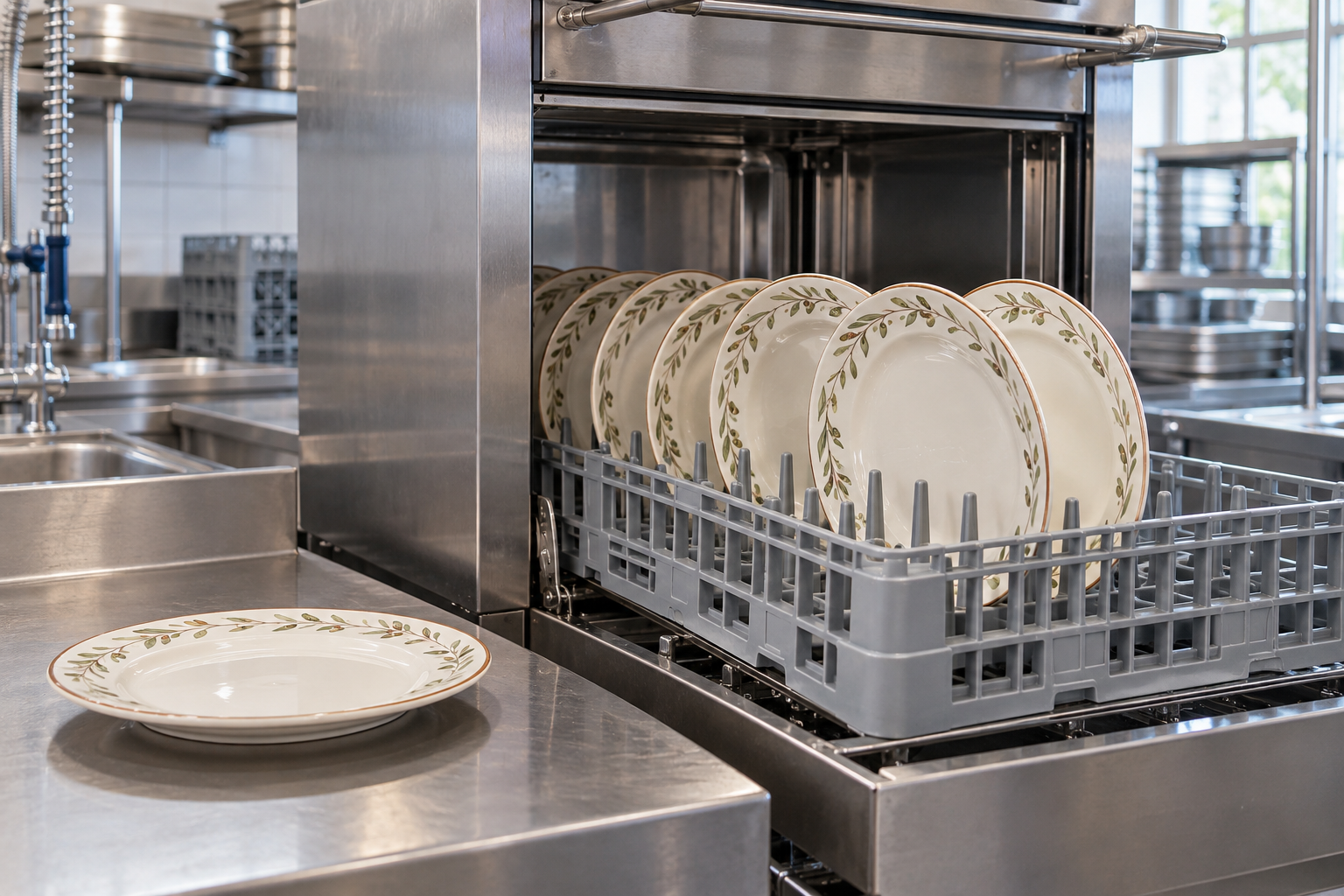
Dinnerware durability testing works best when each activity answers a named question. I avoid buying a bundle of tests simply because the report looks impressive.
For repeated washing, agree on the method, detergent, loading, cycle conditions and inspection points with the laboratory or retailer. Compare glaze appearance, decoration and visible damage against an unwashed control. A single wash may reveal an immediate problem, but it gives little evidence about repeated use.
For handling, check how the range stacks and moves through its intended setting. A foot ring rubbing the eating surface below it may create a complaint that a rim test would miss. Check stack contact, stable nesting and the likely clearance between pieces. Keep the setup repeatable so the factory can compare later samples.
For heat-related claims, plan separate work around the actual intended use. Washing evidence does not automatically support microwave, oven or sudden-temperature-change claims. Avoid adding those promises because another item in the catalog carries them.
Food-contact evidence also has a separate job. The FDA lead in food and foodwares guidance is useful background for US buyers. A migration report does not demonstrate chip resistance, and a strong impact result does not settle food-contact suitability.
My judgment standard is simple: the supplier should be able to point from each proposed sentence to the evidence that addresses it. An unrelated report is still unrelated, however recent it is.
Choose Samples That Represent the Range
I would not approve the blue-rim bowl using only results from the plain plate. Shape changes the stress and handling conditions. Decoration adds another surface to assess.
Ask the laboratory and your technical team to define sensible product groups and select representative or demanding examples. Record the reason for grouping. Where a report covers several SKUs, the file should explain why that coverage is valid.
Production-representative samples matter too. Record whether pieces came from development firing, a pilot run or normal production. If the factory specially selected the best pieces, that should be visible in the sample history.
Agree on sample quantity before testing, using the chosen method and the claim risk. There is no universal sample count I can responsibly give every buyer. One successful sample tells you little about variation across a production lot.
I prefer to see individual results and the spread of results where the method allows it. An average can hide a weak piece. Ask how failures, exclusions and retests were handled; do not let a replacement sample erase the first failure from the record.
Walk One Claim Through the Approval Desk
Return to our fictional ivory plate. Suppose the brand’s first wording is “virtually unbreakable.” I would stop that sentence. Ordinary ceramic dinnerware remains breakable, and a limited test cannot support that broad impression.
The team could instead consider a narrower description of intended everyday use, supported by relevant testing and clear care instructions. The final wording still needs review against the actual evidence. Softer language does not remove the need for proof when it makes a performance promise.
Before approval, I ask three people to read the same card: product development, quality and the person writing the customer copy. Can they all explain what was tested and what the customer is being promised?
If one person thinks “durable” means resistance to edge knocks while another thinks it means years without visible wear, the card needs another round. That conversation is much cheaper before packaging is printed.
A supplier warranty can be useful commercial protection, but check its scope separately. Replacement terms, exclusions and the claims process do not turn an unsupported performance sentence into a supported one.
Keep the Proof Alive After Launch
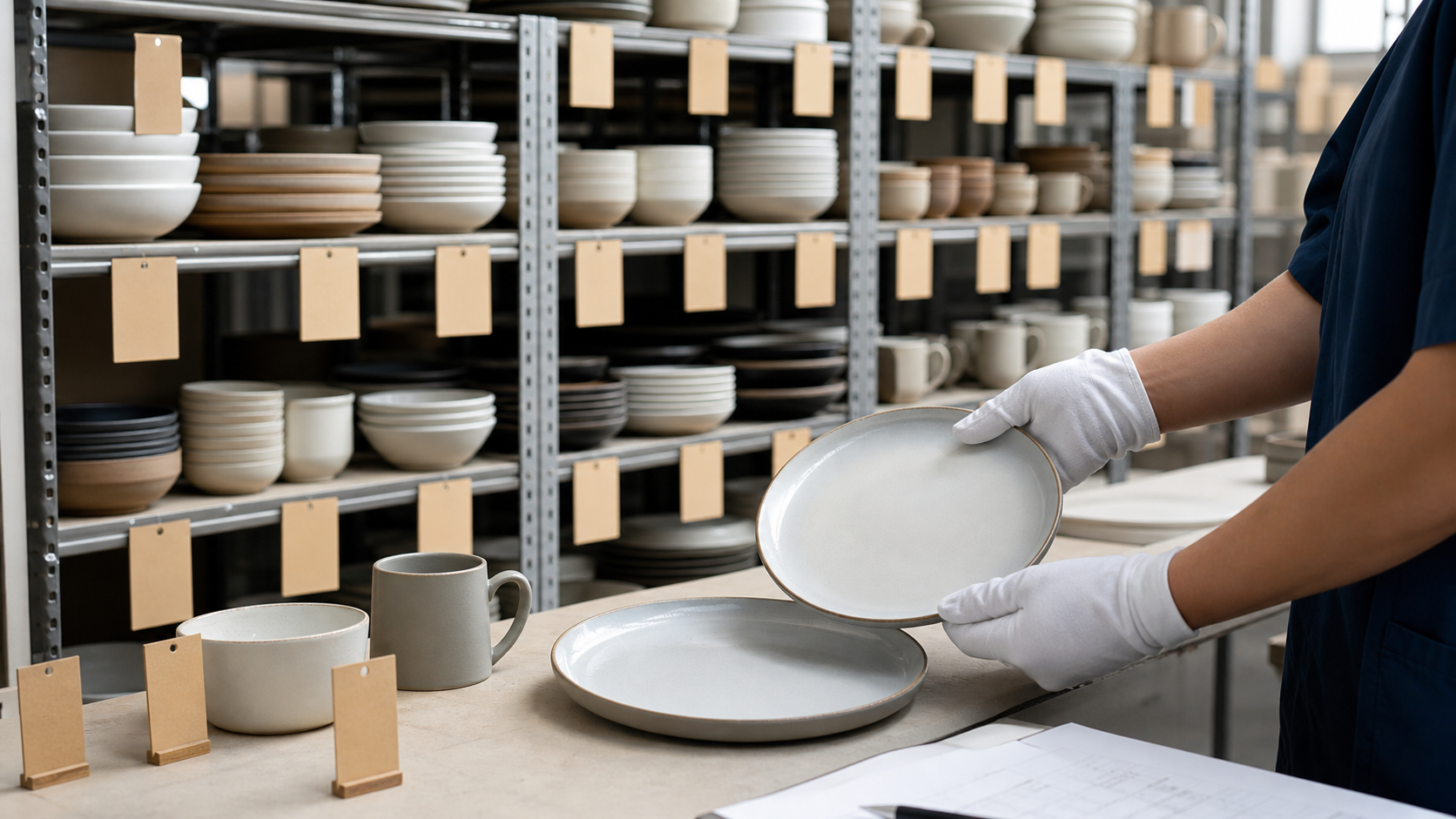
A proof file needs an owner and a review date. Keep the approved specification, reports, care copy and retained samples connected by version number.
Changes to body recipe, glaze, decoration, rim profile, forming route or firing conditions should trigger a documented review of affected performance. That review decides whether fresh testing is needed; it should not be an automatic assumption that every old result still applies.
Track complaints by failure type and SKU. “Broken” is not enough detail. Ask whether damage happened in transit, during stacking, after washing or in another situation. Packaging failure and use-related chipping need different responses.
Real-use feedback can reveal gaps in the test plan. It complements controlled evidence; it does not prove that every future item will behave the same way.
My Advice as a Manufacturer
I prefer a modest claim with a clear file behind it. It is easier for a buyer to defend, easier for a factory to maintain, and easier for a customer to understand.
Start with the likely weak points of your actual design. A wide plate rim, a tall bowl and a decorated mug can need different attention. Ask the factory to explain those differences before discussing the marketing sentence.
When the supplier can connect design, sample history, test results and production controls, I feel much more comfortable moving forward. That is the practical foundation of durable ceramic dinnerware claims.
Questions Buyers Often Ask
Does porcelain automatically justify a durability claim?
No. The material name does not describe the finished shape, glaze fit, decoration or production variation. Evaluate the actual product and intended use.
Is chip resistant the same as chip proof?
No. Resistance describes performance under conditions. “Chip proof” implies a much broader promise that ordinary ceramic tableware should not be assumed to meet.
Can one report cover every color and size?
Only when there is a documented technical reason for that coverage. Ask the laboratory and responsible reviewer to define the product group and its limits.
Should I publish every laboratory result?
Keep complete records internally. Customer wording should be accurate and understandable; if you publish a test reference or numerical result, include enough context to avoid a misleading impression.
Do care instructions replace testing?
No. Care instructions explain intended use and restrictions. They should agree with the supported claim and should not hide essential limits in small print.
Bring Your Proposed Claim to the Sample Review
If you are planning a ceramic range, share your proposed durability wording, product drawings, target market and expected use with FENN. We can discuss the design questions and testing scope to take into development. Our development and manufacturing solutions are a useful starting point for that conversation.