
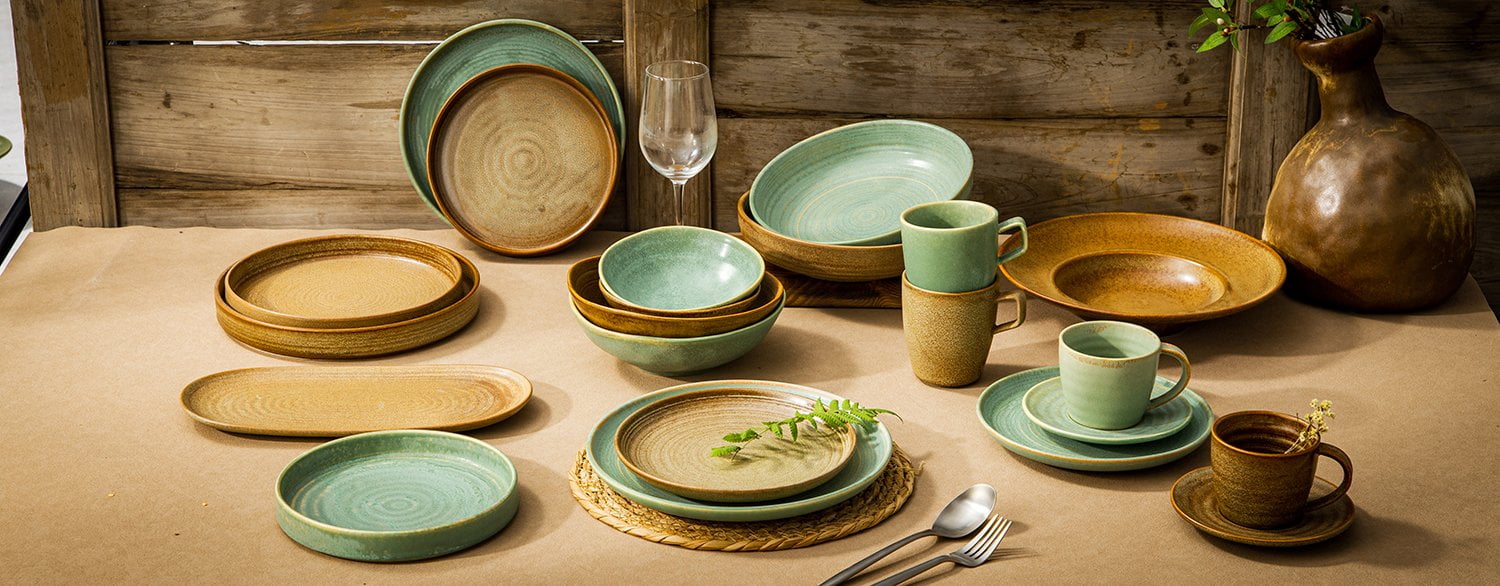
Reactive glaze can create a strong handmade look, but it also introduces more visual variation in production. Buyers should not evaluate it as a fixed-color finish. They should evaluate it as a controlled-variation system, especially when the project depends on collection consistency, repeat orders, and stable retail presentation.
Reactive glaze is a ceramic glaze that develops color variation, tonal layering, speckling, or flowing effects during firing. It is popular because it gives tableware a more natural, design-led look. But for buyers, the real issue is not beauty alone. It is repeatability. A reactive glaze sample can look excellent while the bulk production still drifts in tone, gloss, edge break, or pooling. That is why reactive glaze should always be approved with a clear visual range, defect boundary, and repeat-order logic.
That is why I treat reactive glaze as both a design choice and a sourcing control issue.
What is reactive glaze, and when is it the right choice for a product line?
Reactive glaze is a glaze that changes visually during firing because the final surface is influenced by glaze chemistry, application thickness, clay body, and kiln conditions. It is a good choice when a brand wants designed variation. It is a poor choice when the program needs tight visual uniformity.
Reactive glaze is best for brands that want depth, movement, and a more handcrafted appearance in ceramic products. It is less suitable for programs that depend on highly standardized color matching, strict set uniformity, or low-tolerance replenishment. Buyers should choose reactive glaze when controlled variation adds design value, not when every piece is expected to look nearly identical.
Key technical considerations:
- Small firing shifts can change color break, gloss, and glaze pooling behavior
- Clay body tone can make the same glaze read warmer, cooler, deeper, or flatter
- Sharp rims, embossed areas, and deep curves often increase movement and accumulation
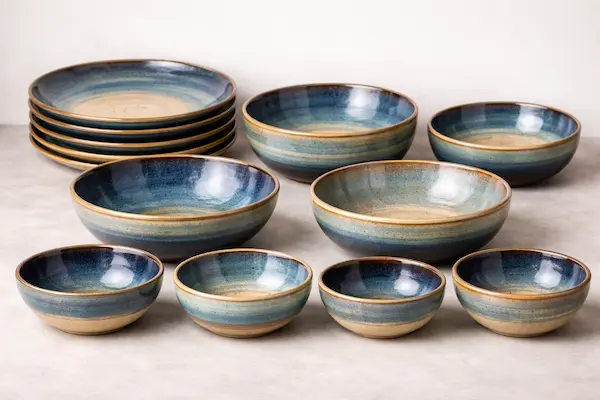
I usually explain reactive glaze as a controlled variation finish, not a fixed decorative result. That distinction matters. A buyer is not buying exact duplication. The buyer is buying a visual language with boundaries that need to be defined before mass production starts.
That is why reactive glaze works well for many design-led collections. It can create depth that flat glazes often cannot. You get tone movement, layered color, softer transitions, and a more natural surface story. For mugs, bowls, serving pieces, and lifestyle tableware, that can be a real commercial advantage because the product feels less generic.
But I do not think reactive glaze is automatically the right choice for every ceramic project. One mistake I see often is that a buyer falls in love with one beautiful sample and then assumes the same finish will behave well across the whole collection. That is where problems start.
When reactive glaze usually makes sense
Reactive glaze is often a good fit when:
- the brand wants an artisanal or design-led look
- variation is part of the visual value
- the retail presentation can tolerate some tone difference
- the team is willing to define an acceptable range instead of approving one hero sample
- the supplier has real batch control and repeat-order discipline
When reactive glaze is often the wrong choice
I would be more cautious when:
- the buyer needs very tight matching across a dinner set
- the product line is for hospitality or institutional use with strict visual consistency
- the replenishment model depends on near-identical repeat orders
- the sourcing strategy is price-first and does not allow time for proper glaze development
- the brand wants “handmade character” visually but rejects normal reactive variation in QC
A large flat plate often shows glaze variation more clearly than a deep bowl. An embossed mug can exaggerate pooling. A thin rim can break lighter than the center area. So even when the glaze is technically the same, the collection may not feel visually matched in the way the buyer expected.
| Product scenario | Reactive glaze fit | Why |
|---|---|---|
| Design-led tableware collection | Strong fit | Variation supports the visual identity |
| Retail giftware or seasonal collection | Strong fit | Surface movement adds perceived uniqueness |
| Standardized hotelware program | Weak fit | Tight consistency is usually more important |
| High-repeat replenishment with narrow tolerance | Cautious fit | Repeat-order drift can create disputes |
| Mixed-form ceramic set | Medium fit | Needs early cross-SKU validation |
Common Pitfall: buyers often assume reactive glaze is only a styling decision. In practice, it is also a system decision that affects tooling, shape compatibility, QC, packing presentation, and reorder stability.
I do not treat reactive glaze as a single-SKU finish. I treat it as a product system decision, because the same glaze has to survive different forms, production batches, transit conditions, and future replenishment orders.
What should buyers check before approving a reactive glaze sample?
Buyers should approve reactive glaze as a production range, not as a single perfect piece. The goal is to confirm how the glaze behaves across forms, what counts as acceptable variation, and where natural character ends and actual defects begin.
Before approving a reactive glaze sample, buyers should check visual range, cross-shape consistency, surface quality, food-contact testing scope, and repeat-order reference logic. A strong approval process does not stop at “this sample looks good.” It defines what the factory must repeat, what variation is acceptable, and what should be rejected during bulk inspection.
Key technical considerations:
- Pinholes, crawling, dry edge, and excessive run lines should be screened before bulk approval
- Lead and cadmium release requirements may vary by market and should be verified at product level
- Matte-reactive surfaces may show cutlery marking or stain visibility more easily than expected
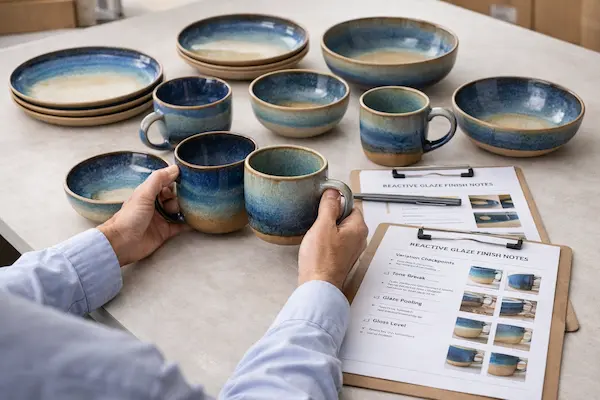
When I review a reactive glaze sample, I am not only asking whether it looks attractive. I am asking whether the finish is repeatable enough for the business model behind it. That is a different standard.
A sample should answer two questions. First, does the glaze direction fit the brand? Second, can the supplier hold it within a realistic visual window in production? A surprising number of projects only answer the first question.
Before approving a reactive glaze sample, I would check:
- whether I have seen a range of trial pieces, not only one hero sample
- how the glaze behaves on flat, curved, and vertical forms
- where pooling is acceptable and where it becomes messy
- whether rim break is part of the design or a process instability
- how the foot ring is cleaned and whether glaze wiping looks consistent
- whether the surface stays cleanable and commercially acceptable after use
- what testing is needed for the destination market
- how the supplier will keep batch references for repeat orders
Surface quality matters more than many buyers expect
Reactive glaze can hide small visual irregularities, but it can also create technical issues that show up later:
- pinholes
- crawling
- rough zones
- excessive thickness near the foot
- unstable gloss
- dry edges
- visible run marks
Some of these are aesthetic. Some are functional. A rough or unstable surface may affect cleanability, stack feel, or retail perception. Matte-reactive finishes can also show cutlery marking more clearly, which becomes a complaint risk if the buyer approved the look without checking actual usage performance.
Compliance should not be assumed
For food-contact ceramics, I would not rely on general claims alone. The actual glaze system, body, decoration area, and destination market matter. Depending on the project, buyers may need to review FDA, LFGB, EU food-contact requirements, or California Prop 65 relevance. Lead and cadmium release is one of the most common ceramic test areas, but the key point is simple: a supplier statement is not the same as a product-specific lab result.
| Approval checkpoint | Why it matters | Buyer question |
|---|---|---|
| Visual range | Controls shade disputes later | What is the approved light-to-dark window? |
| Cross-form behavior | Protects collection consistency | Has this glaze been tested on all core SKUs? |
| Surface defects | Prevents functional complaints | Which surface issues are rejectable? |
| Compliance scope | Reduces legal and retail risk | What testing is required for this market? |
| Repeat-order reference | Protects replenishment stability | How will batch standards be recorded? |
Industry Insider Tip: ask the supplier to show pieces that are slightly lighter, darker, and closer to the edge of acceptability. That tells you much more than a single “perfect” sample. In production, the edge cases often define whether the project stays stable or becomes a dispute later.
A sample can look right while the production logic is still weak. I treat sample approval as the moment to build control, not just to approve style.
The biggest hidden risk is not variation itself. It is unclear variation control. Most reactive glaze problems start when the buyer, supplier, and QC team do not define the acceptable range early enough.
In mass production, reactive glaze can drift in shade, pattern movement, gloss level, and surface character from batch to batch. The real risk is not that the glaze reacts differently. It is that the commercial team expects tighter consistency than the approved standard actually supports. Repeat-order disputes, carton inconsistency, and retailer complaints usually come from weak tolerance setting, not just poor firing execution.
Key technical considerations:
- Kiln loading density and placement can shift heat exposure and reaction strength
- Different SKU geometries often amplify variation even when the glaze formula is unchanged
- AQL inspection should separate natural variation, rejectable defects, and out-of-range drift
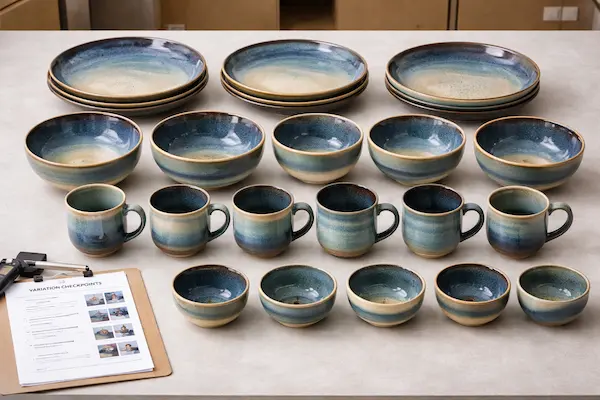
Reactive glaze gets harder to manage when a project moves from a sample-room mindset to a production-system mindset. In the sample room, one excellent piece can win approval. In production, the whole system has to hold together: glazing, firing, shape behavior, packing mix, and repeat orders.
One problem I see often is hero-sample bias. The buyer approves one especially attractive piece, but nobody defines the centerline for real production. Later, the factory delivers a batch that may be technically reasonable, yet the buyer still feels it does not match the memory of the original sample. That is not always a factory failure. Sometimes it is an approval failure.
Cross-SKU mismatch is one of the most common problems
A glaze that looks beautiful on a mug may not look equally controlled on a wide dinner plate. A bowl may show softer pooling. An embossed surface may exaggerate depth. A coupe plate may show larger tonal spread because the broad flat area makes every shift more visible.
This matters because many brands do not buy one isolated SKU. They build a set. And a set is judged visually as a group, not piece by piece.
Hidden Cost: tighter sorting can raise real operating cost
What buyers often miss is that a narrower appearance requirement can force the factory into more sorting, slower packing, extra internal rejection, or even reclassification of output. That affects:
- yield
- lead time
- unit economics
- replenishment stability
So a low quote on reactive glaze is not always a good sign. It may simply mean the supplier is allowing a wider appearance spread than the buyer expects.
Non-obvious Risk: retail display exposes inconsistency more harshly than product photography
A reactive glaze can look rich and appealing in styled images while still looking uneven when twelve units sit together on a shelf. E-commerce, catalog photography, and physical retail do not judge variation in the same way. I always want buyers to think about the real display environment before approving a very active glaze pattern.
Quality control needs three clear categories
I usually separate reactive glaze QC into:
- acceptable natural variation
- rejectable defects
- out-of-range process drift
That sounds simple, but many projects never define these categories clearly. If every difference is treated as a defect, the project becomes unrealistic. If every issue is excused as “handmade effect,” the standard collapses.
| Risk area | What can go wrong | Buyer action |
|---|---|---|
| Hero-sample bias | Bulk never matches the remembered sample | Approve a visual range, not one piece |
| Cross-SKU mismatch | Sets feel visually disconnected | Test glaze on all major forms early |
| Batch drift | Reorders feel different from launch stock | Keep physical range references by batch |
| Retail inconsistency | Shelf presentation looks uneven | Define carton sorting logic before packing |
| QC conflict | Factory and buyer judge pieces differently | Write reject criteria into approval files |
One thing I watch closely is whether the buyer approved a beautiful glaze or a commercially stable glaze. Those are not always the same thing.
How do reactive glaze choices affect cost, lead time, and supplier selection?
Reactive glaze can increase development time and control cost because the finish often needs more trial rounds, tighter process alignment, and clearer QC standards. Buyers should compare total project stability, not just unit price.
Reactive glaze usually affects more than surface appearance. It can add sampling rounds, increase sorting pressure, complicate cross-SKU matching, and make repeat-order management harder. Buyers should evaluate suppliers based on process control, batch reference discipline, and collection-level execution, not simply on who can produce the most attractive sample at the lowest price.
Key technical considerations:
- Sampling time often expands when glaze development needs multiple firing adjustments
- Body shrinkage, edge profile, and wall transition can change how the glaze reads after firing
- Packaging should protect both structure and surface presentation, especially for retail-facing collections
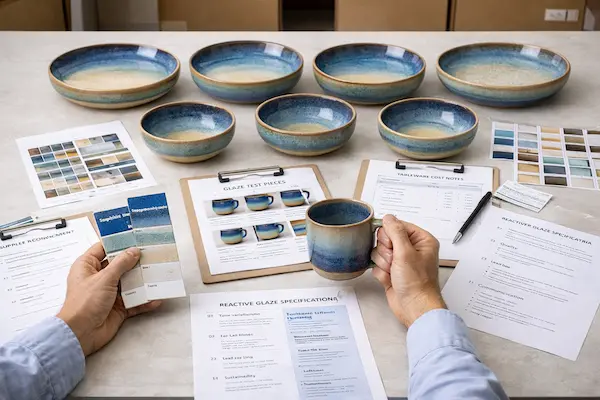
I have seen reactive glaze quoted very cheaply and perform badly in repeat production. I have also seen it quoted more carefully and run much more predictably. The difference usually comes down to whether the supplier is pricing for real control or only for initial sample attractiveness.
What actually drives cost
The hidden cost is often not the glaze material itself. It is the management around it:
- glaze development trials
- extra sample rounds
- lower yield if the visual range is tight
- slower packing because pieces must be sorted
- extra communication and approval time across SKUs
That is why two suppliers can show similar-looking pieces but still operate at very different levels of stability.
Lead time is usually affected by development logic
A ceramic sample program may already take around 2 to 4 weeks depending on mold complexity, glaze development, decoration method, and revision rounds. With reactive glaze, I normally expect a higher chance of extra iteration because small changes in firing curve, application thickness, or body interaction can change the final look more than the buyer expects.
The supplier screening questions matter
A supplier is not really qualified for reactive glaze production if they can only show a beautiful sample but cannot explain:
- how the acceptable range is controlled
- how batch references are retained
- how the glaze is adapted across different forms
- where natural variation ends and actual defects begin
- how repeat orders are aligned with earlier shipments
That is the difference between decorative capability and manufacturing capability.
Packaging should be part of the development conversation
I do not treat packaging as an afterthought. Reactive glaze collections are often chosen for visual impact, so poor transit protection can damage more than the product. It can damage the perceived finish quality. Carton dust, friction marks, weak dividers, or breakage inside a mixed set can all make the glaze look worse at arrival, even if the firing result itself was acceptable.
| Evaluation point | Weak supplier signal | Strong supplier signal |
|---|---|---|
| Glaze discussion | Only aesthetic language | Explains behavior, tolerance, and limits |
| Sample approval method | One hero sample only | Uses range samples and written criteria |
| Cross-SKU capability | Tests one form only | Confirms glaze across collection forms |
| QC logic | “Handmade look” used as excuse | Separates variation, defect, and drift |
| Repeat-order planning | No reference retention | Maintains batch records and physical standards |
| Packaging thinking | Treated as final step | Integrated into product development |
For a design-led ceramic manufacturer, reactive glaze is not just about making a surface look interesting. It is about making that surface commercially stable across tooling, production, QC, packaging, and repeat orders. That is the standard I would use to judge supplier fit.
Key Takeaways for Sourcing Managers
- Approve reactive glaze as a visual range, not as one perfect sample.
- Test the glaze across all key forms early, because plates, bowls, and mugs can react very differently.
- Separate acceptable natural variation from rejectable defects and out-of-range drift in writing.
- Check whether the supplier can explain repeat-order control, not just make an attractive prototype.
- Be careful with reactive glaze in programs that require tight set matching or highly standardized replenishment.
- Treat packaging and shelf presentation as part of the glaze decision, not as a final logistics detail.
Technical Glossary
- Reactive glaze: A ceramic glaze that develops visual variation during firing, often creating layered color, rim break, pooling, or tonal movement.
- Rim break: A lighter or different color effect that appears on edges where the glaze becomes thinner during firing.
- Glaze pooling: A heavier glaze build-up in lower or recessed areas that can deepen color and increase visual contrast.
- AQL inspection: A sampling-based quality control method used to judge acceptable defect levels in bulk production.
- Lead and cadmium release: A common food-contact test area for ceramic products, used to check whether regulated substances migrate from the surface under test conditions.
Conclusion
Reactive glaze can add real design value, but it only works well when variation is managed, not romanticized. Buyers should evaluate it as a system decision, define tolerance early, and work with suppliers who can hold the finish across forms, batches, and repeat orders.