
Short Answer
Ceramic dinnerware food contact testing for the US and EU should verify whether the actual product is suitable for food use, especially lead and cadmium release from glaze or decoration. Buyers should check the destination market, item type, food-contact surface, rim area, decoration method, and whether the test report matches the final production version before shipment.
When a buyer asks me, “Kitty, is this ceramic dinnerware food safe?”, I never answer only by looking at the plate. I ask where it will be sold, what glaze it uses, where the decoration sits, and what test report supports the order.
“Food safe” sounds like a small phrase. In real sourcing work, it is a serious promise.
Best Criteria: The Report Must Match the Product

For ceramic dinnerware, a useful food-contact report is not just any report from the supplier’s file. It should match the product you are buying.
I want to see a match in five areas:
- Product type: plate, bowl, mug, cup, serving item, or children’s item.
- Body and glaze route: the same material and fired surface.
- Decoration: same decal, color, metallic detail, rim band, or plain finish.
- Food-contact area: inside surface, rim, lip area, or exterior-only decoration.
- Market: US, EU, UK, California, retailer program, or another target market.
If the report only covers a plain white plate, it does not automatically prove a colored mug with rim decoration. This is where many buyers get trapped.
Why Ceramic Compliance Focuses on Release, Not Appearance
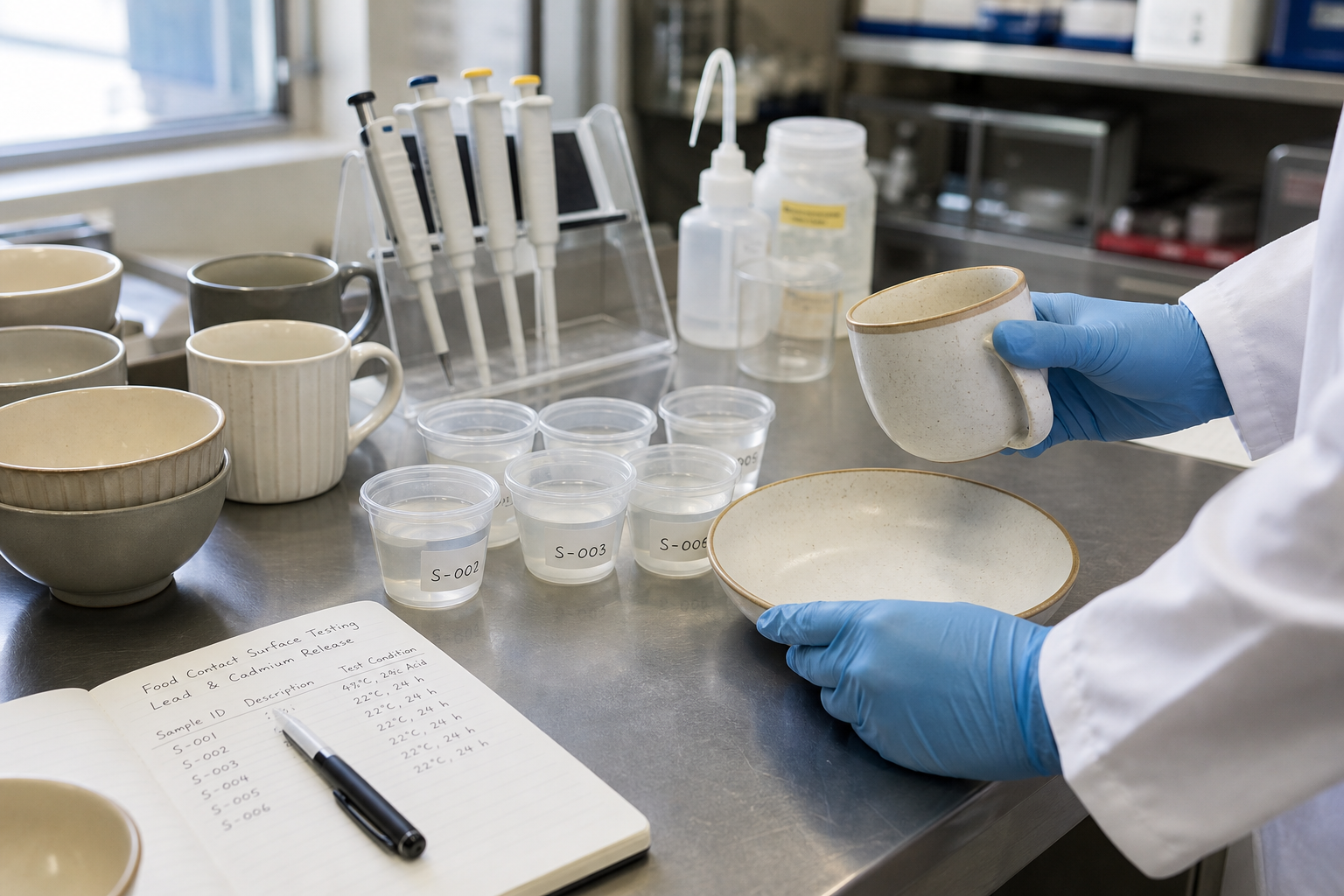
Ceramic can look clean, smooth, and modern while still needing proper food-contact review. The main question is not whether the piece looks safe. The question is whether substances can release from the glaze or decoration under test conditions.
For ceramicware, buyers usually pay close attention to lead and cadmium in ceramic dinnerware because these elements can be connected with certain glazes, pigments, or decorations. Official FDA lead guidance explains why lead in foodwares matters, and EU ceramic food contact rules also focus on release limits and documentation.
This does not mean every colored ceramic item is unsafe. It means buyers should not guess.
From a factory point of view, the safest habit is simple: decide the market early, choose a suitable decoration route, then prepare the right testing before bulk shipment.
The US and EU Compliance Route Map
Use this table before placing a purchase order.
| Buyer Question | What To Verify | Why It Matters |
|---|---|---|
| Where will the item be sold? | US, EU, UK, California, retailer-specific program | Each market may ask for different documents or limits |
| What type of item is it? | Flatware, hollowware, mug, cup, serving piece, children’s item | Item shape and use affect which surfaces and limits matter |
| Does the decoration touch food or lips? | Interior decal, rim band, lip area, exterior-only design | Food-contact and rim areas usually need closer attention |
| Is the report current and relevant? | Same product, body, glaze, decoration, supplier, and market | Old or similar-item reports may not support the final order |
| Are claims specific? | Food safe, lead safe, dishwasher safe, microwave safe | Care and safety claims should match product design and evidence |
I like this route map because it keeps the conversation practical. A supplier can say “we have reports,” but the buyer still needs to ask, “For which item, which market, and which decoration?”
What US Buyers Should Ask
For the US market, buyers should pay special attention to FDA ceramicware lead cadmium concerns and any retailer requirements. The FDA gives public guidance on lead in food and foodwares, and importers should treat ceramic test reports as part of their compliance file.
My practical advice is to ask for:
- A report for lead and cadmium release where relevant.
- The product name, item type, and sample description.
- The tested surface or article category.
- The test method or regulation referenced.
- The lab name, report date, and supplier name.
- Photos or descriptions that connect the tested sample to your product.
If you sell through a large retailer, do not assume the basic legal requirement is enough. Retailers may ask for their own format, newer dates, extra documents, or third-party lab testing.
For US buyers, I would also be cautious with bright colors, antique-style finishes, handmade-look glazes, metallic rims, and decoration near the lip. These can still be used, but the evidence should be clear.
What EU Buyers Should Ask
For EU ceramic food contact, buyers should review the general food-contact material framework and the specific ceramic article requirements. The European Commission food contact materials page is a good official starting point, and Directive 84/500/EEC is the core EU ceramic reference many buyers and labs discuss.
In plain English, the buyer should confirm that the ceramic article is suitable for food contact and that lead and cadmium release is controlled according to the relevant EU requirement.
For EU orders, ask the supplier and lab:
- Which regulation or directive is listed on the report?
- Does the report describe the ceramic item correctly?
- Does it cover the same glaze and decoration?
- Is a declaration or supporting document needed for your importer file?
- Do your retailer or national-market requirements add anything?
I do not treat “EU standard” as enough detail. A professional answer should name the relevant rule, product scope, sample, and test result.
Decoration Placement Changes the Risk
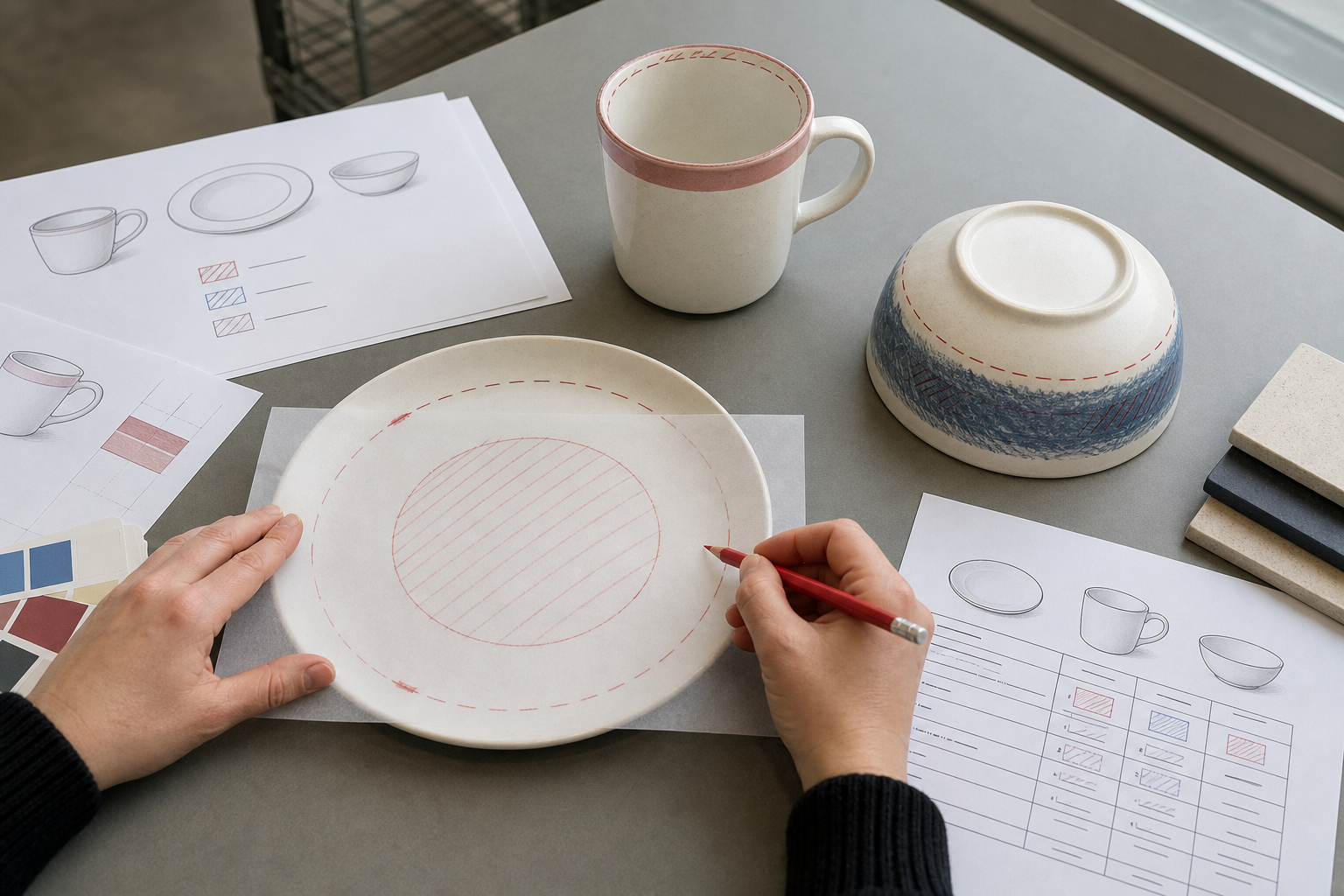
Decoration is often where the compliance conversation becomes real.
A decal on the outside of a mug is different from a decal inside a bowl. A colored band below the foot ring is different from a colored rim that touches the lips. Metallic decoration may be beautiful, but it can affect microwave instructions and may also need careful review depending on placement and market.
When we develop private-label ceramic dinnerware, I like to mark the product into three zones:
1. Food-contact zone: inside plates, bowls, cups, mugs, and serving surfaces.
2. Lip or rim zone: areas touched by the mouth during normal use.
3. Non-contact exterior zone: outside decoration that does not normally touch food.
This simple zone map helps the buyer and supplier decide where testing attention belongs. It also prevents a common mistake: approving artwork first, then discovering later that the decoration should have been moved.
How to Read a Ceramic Test Report
Many buyers receive a PDF and feel relieved. I understand that feeling. But the report still needs a careful read.
Here is my quick review method.
1. Check the sample description
The report should describe the item in a way that matches your order. If you are buying a speckled stoneware mug, a report for “white ceramic plate” is not enough.
2. Check the tested standard or rule
Look for the method, regulation, or directive named in the report. For example, ISO 6486-1 is a recognized reference for release of lead and cadmium from ceramic ware, glass ceramic ware, and glass dinnerware in contact with food. ISO 6486-2 covers permissible limits, with the current published 1999 version noted by ISO as expected to be revised.
3. Check the date and product version
If the glaze formula, decal, color, firing route, or supplier changes, the old report may not represent the new product. I prefer to review reports before bulk production, not after cartons are ready.
4. Check whether the report supports your claim
A lead and cadmium report does not prove dishwasher safety. A dishwasher test does not prove microwave safety. A plain body report does not prove a metallic decorated item. Match each claim with its own evidence.
When Buyers Should Retest
You may need new testing when the product changes in a meaningful way.
Retesting is especially wise when:
- You change from plain glaze to colored glaze.
- You add decal, hand painting, metallic trim, or rim decoration.
- You move decoration from exterior to food-contact or lip area.
- You change the clay body, glaze supplier, or firing route.
- You change the target market or retailer.
- The old report is too old for your customer or importer file.
- The first test used a sample that was not production-like.
I know testing adds time and cost. But testing after production is the expensive way. Testing before bulk production gives you room to adjust.
Common Buyer Mistakes I See
The first mistake is accepting the words “food safe ceramic dinnerware” without checking the report scope.
The second mistake is using one report for a whole collection. A collection may include plates, bowls, mugs, serving bowls, colored glaze, decals, and metallic accents. One result may not cover everything.
The third mistake is forgetting the rim. Customers do not only place food on a plate. They drink from mugs and touch rims with lips. For compliance review, rim and lip contact deserve respect.
The fourth mistake is separating compliance from design. If the buyer wants bright color inside a bowl, the compliance conversation should start during artwork and glaze planning, not at final inspection.
Purchase Order Checklist for Food-Contact Testing
Before you issue the purchase order, use this checklist.
| Checkpoint | Buyer Action | Strong Supplier Response |
|---|---|---|
| Destination market | Tell the supplier the exact selling markets | “We will prepare documents for US and EU, and check retailer needs separately.” |
| Product scope | List every item in the set | “The mug, bowl, dinner plate, and side plate are reviewed by item type.” |
| Decoration map | Mark food-contact, rim, and exterior areas | “The decal is exterior-only; the rim glaze and interior glaze are covered.” |
| Report match | Compare report sample to final sample | “The report sample uses the same glaze, body, and decoration route.” |
| Claim review | Check food safe, dishwasher, microwave, and care claims separately | “This report supports lead/cadmium release; other use claims need separate review.” |
| Timing | Complete testing before bulk shipment | “We will test production-like samples before final production release.” |
Keep this checklist with your sample approval record. It makes later reorder discussions much easier.
My Advice as a Manufacturer
My advice is to make compliance part of product development, not a final document chase.
Tell your supplier the target country, retailer, item list, glaze, decoration location, care claims, and launch timing before sampling. Ask which test reports should be prepared and which parts of the design create extra attention.
At FENN, I prefer to review the product drawing, decoration artwork, glaze choice, and test-report plan together. This helps us avoid painful changes after the buyer has already approved the look.
Good compliance work is not dramatic. It is steady, clear, and written down.
Questions Buyers Often Ask
Does every ceramic dinnerware item need food-contact testing?
If the item is intended to contact food or drink, buyers should prepare suitable food-contact documentation for the target market. The exact testing plan depends on item type, glaze, decoration, use, and customer requirements.
Is lead-free the same as food safe?
No. “Lead-free” can be unclear unless it is defined by a test method, limit, and product scope. Food safe ceramic dinnerware should be supported by relevant documentation for the actual item and market.
Are colored ceramic glazes allowed for dinnerware?
They can be, but buyers should verify the glaze and decoration with suitable testing. Bright colors, rim decoration, and food-contact decoration deserve closer review.
Can one test report cover a full dinnerware set?
Sometimes one report may cover related items, but do not assume. Check whether the report scope includes all product types, sizes, glazes, and decorations in the set.
Should I test samples or bulk production?
Test production-like samples before bulk production when possible. If the final bulk product changes from the tested sample, discuss whether updated testing is needed.
Conclusion
Ceramic dinnerware food contact testing is a buyer protection step, not just a paperwork task. For US and EU markets, pay attention to lead and cadmium in ceramic dinnerware, decoration placement, product scope, report date, and claim language.
If you are developing ceramic dinnerware for the US or EU market, share your target country, product type, glaze or decoration plan, and retailer requirements with FENN. We can help identify which documentation should be prepared before production.
Need help checking ceramic food-contact documents?
Send FENN Home your target market, item list, glaze or decoration plan, and retailer requirements. Kitty can help review which ceramic dinnerware food-contact documents should be prepared before production.