Short Answer
Good sustainable dinnerware copy names a specific feature, explains what it applies to, and matches evidence for the product being sold. Separate the ceramic piece from its packaging. Check percentages, comparisons, care promises and images before publishing. Ask your supplier for records tied to the actual body, glaze, pack version and production period, rather than accepting a general green statement.
I understand why brands want a short, friendly sentence about the environment. A product page has little room, and a long technical explanation can lose the reader. But in my ceramic work, the small details often decide whether that sentence is fair.
A brown box does not tell me its recycled content. A thick plate does not tell me how long it will last. I would rather help a buyer write one clear fact than polish a promise the factory cannot support.
A sustainability claim is a statement or visual suggestion about a product’s environmental qualities. Its meaning includes what a customer would reasonably take from the whole page.
My first check is simple: can someone outside the project tell what changed, which item it concerns, and where the evidence is? If those answers are missing, the copy needs more work.
Give Your Sustainable Dinnerware Copy a Red Pencil
Here is how I would review common draft lines. These are editing examples, not approved claims for FENN or any particular product. Use the suggested direction only when your own evidence supports it and your market review accepts it.
| Draft line | What is missing? | A more useful editing direction |
|---|---|---|
| “An eco-friendly dinner set” | The exact environmental benefit and its limits | Remove the broad label; describe a supported feature of the piece or pack. |
| “Made from recycled materials” | The component, percentage and calculation basis | Name the carton board or ceramic body, state the verified share, and explain its basis. |
| “Less packaging, less impact” | A comparable old pack and evidence for the impact claim | State the measured packaging-weight change against a named previous version. |
| “Made to last forever” | A realistic lifespan and relevant performance evidence | Describe verified care and replacement options without promising a lifetime. |
| “Plastic-free delivery” | Every packing stage, including fulfilment | Name the components you have checked; do not extend a factory-pack fact to the whole delivery. |
For US-facing copy, the FTC Green Guides summary explains why broad environmental claims need care and why specific qualifications matter. A small note hidden at the bottom is a poor way to explain a large headline.
I ask the writer to read the page aloud without the footnotes. If that version promises more than the records show, I change the headline first.
Edit One Product Page, Not Five Separate Slogans
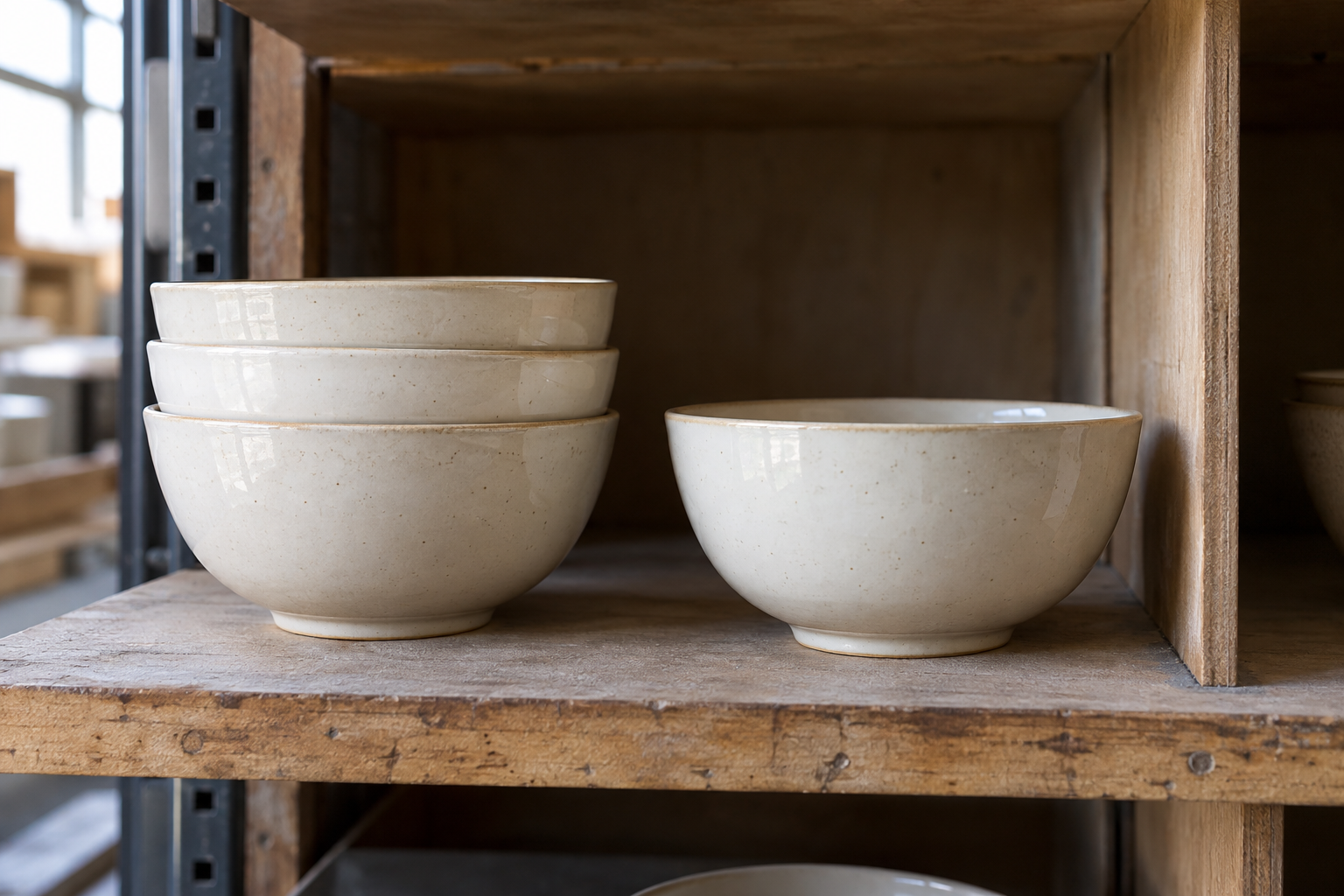
Imagine a brand launching a cream stoneware bowl. Its first draft says:
“Meet our planet-friendly bowl. Natural clay, sustainable packaging and timeless strength make every meal a greener choice.”
The purchasing team has a body specification, an approved bowl sample and a packaging bill of materials. It does not have a product environmental assessment or evidence of a lifetime in use.
Those records support useful product facts. They do not support the whole promise above.
My first rewrite would remove the environmental conclusion:
“Cream stoneware bowl with a smooth glazed interior. Sold individually, with matching pieces available separately.”
That second sentence is useful only if the sales team actually offers individual pieces. It describes an option; it does not claim a measured reduction in waste.
If the team also has checked packaging evidence, it can add a separate packaging sentence. Keeping that sentence separate helps the customer understand that a box fact is not a claim about the bowl’s clay, glaze or firing.
This is the difference I want buyers to see: good editing can preserve useful information while removing an unsupported conclusion. The page still has a story. It simply tells a smaller, clearer one.
Keep the Bowl, the Box and the Factory Apart
A material name is a starting point
Clay is part of ceramic production, but “natural clay” does not describe the full finished piece or its environmental impact. The glaze, decoration, firing and transport also belong in the discussion when a claim reaches that far.
If a supplier offers recycled ceramic content, I ask what material enters the mix, where it comes from and how the share is calculated. A percentage of the dry body recipe is not automatically the same percentage of the finished glazed product.
A professional answer identifies the relevant body recipe and batches. A general factory brochure leaves too much unanswered. Changes in the body can also affect shrinkage, fired colour and glaze fit, so the approved sample and production controls still matter.
A packaging improvement needs its own sentence
Suppose an illustrative four-bowl pack used 500 grams of packaging and a revised pack uses 450 grams. The reduction is 50 grams, or 10% of the old packaging weight.
A possible factual line is: “This four-bowl pack uses 10% less packaging by weight than our previous pack.” Before using it, name the comparison version nearby and confirm that both measurements cover the same components and sales unit.
That calculation does not establish 10% lower carbon emissions. It also says nothing about damage rates. From a factory point of view, I would check whether the new divider still keeps the bowl rims apart and protects the foot rings during transport. Removing protection can create a new problem.
A factory fact needs a boundary
A photograph of solar panels does not show which processes they power. Electricity used in an office and fuel used in a kiln are different parts of production.
For a production-energy statement, ask for the site, period, energy source and processes covered. If the evidence covers one site, do not quietly extend the sentence to every supplier or every product line. I prefer wording the operations team can explain without guessing.
Do Not Turn Care Advice Into a Lifetime Promise
Ceramic dinnerware sustainability claims often lean on durability. Here I slow the conversation down.
A successful washing trial may support a carefully scoped care statement. It cannot tell us how every customer will stack bowls, strike rims with cutlery or move a cold piece into sudden heat. Glaze fit, decoration and edge shape all affect what needs checking.
Ask for the test method, sample identity, conditions, number of cycles where relevant, and acceptance criteria. Match the evidence to the finished surface and decoration being sold. A report for a plain white glaze is not automatically evidence for a new metallic decoration.
If you promise replacement pieces, check the commercial details too. Which shapes can customers buy singly? In which markets? For how long is availability confirmed? Do not turn a current assortment choice into a permanent supply promise.
Useful care instructions and clear replacement options can help customers use the product well. Describe those services directly unless you also have evidence for a broader environmental outcome.
Read the Pictures and Small Print Together
Words are only part of the message. A green seal, leaves around a plate, or a recycling symbol beside the product name can suggest a claim that the sentence never makes.
The UK Green Claims Code guidance addresses the overall impression, evidence and important information. I use that perspective when reviewing a finished page, including badges, photographs and captions.
Do not put a packaging recycling instruction where it appears to describe the ceramic bowl. Check the actual collection options for the destination market. A supplier’s material description alone does not settle disposal instructions.
For EU-facing projects, the European Commission green claims overview is a useful policy starting point. It discusses a legislative proposal; it is not a complete statement of every rule already applying to your page. Have the market reviewer check the applicable rules and dates before release.
My Advice as a Manufacturer
I like to keep a small claim record beside the product specification. For each public sentence, save the exact wording, SKU, evidence reference, market, reviewer and review date.
Then add one practical field: what change would make us check this again? It could be a new carton supplier, a revised body recipe, a decoration change or a different fulfilment warehouse.
This keeps the marketing file connected to real production. It also makes repeat orders easier to discuss. If the packaging changes, the team knows which sentence may need attention.
My advice for sustainable dinnerware copy is to begin with facts the supplier can trace. Make those facts helpful to the customer, and leave room to say more when better evidence becomes available.
Questions Buyers Often Ask
Can we call all ceramic dinnerware sustainable?
I would not use the material name alone to support that broad claim. Define the specific benefit and review the evidence, scope and market requirements before choosing the wording.
Can we repeat a supplier’s green claim unchanged?
Not without checking it. Ask which product, component, site and period it covers. Your page may create a wider impression than the supplier’s original statement.
Does a recycled carton make the dinnerware recycled?
No. Keep carton information attached to the carton. A claim about the ceramic body needs separate evidence and a clearly explained calculation basis.
Is a food-contact report proof of sustainability?
No. It answers a different question within its stated test scope. Keep food-contact evidence and environmental evidence in separate parts of the claim file.
What if we have no environmental data yet?
Write clear product facts, care information and verified service details. You do not need an environmental headline to help customers make a thoughtful purchase.
For more practical buyer guidance, explore our Resources.