
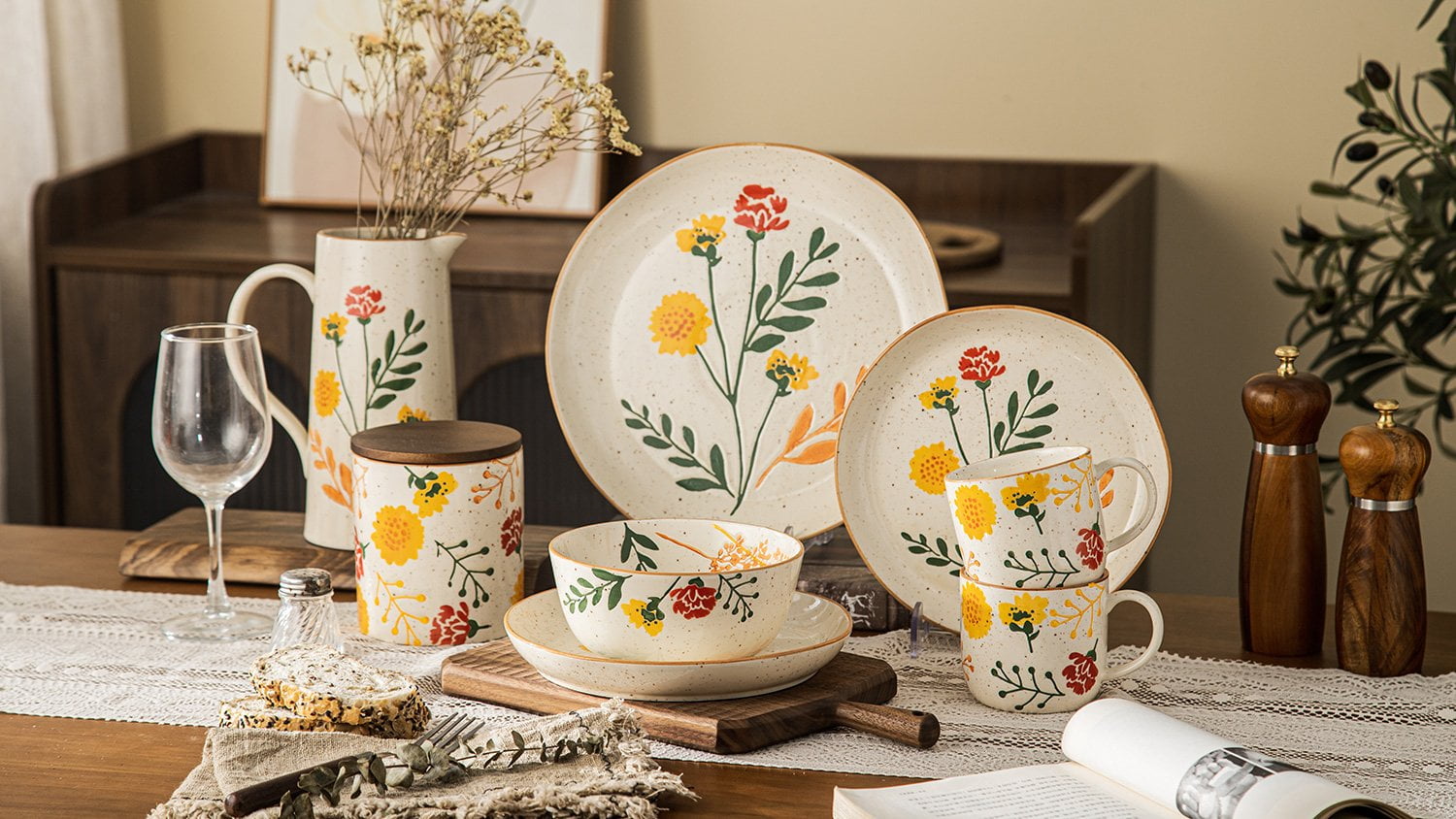
MOQ strategy for a new product launch should not start with “What is the factory’s minimum?” It should start with “What quantity makes this product commercially safe, technically stable, and easy to reorder?”
For a new ceramic product launch, the right MOQ is the lowest quantity that still supports mold payback, stable production, acceptable glaze consistency, efficient packaging, and repeat-order viability. A low MOQ can reduce opening inventory, but it can also raise unit cost, weaken quality control, and make the second order harder. I usually treat MOQ as a launch design decision, not just a sourcing negotiation. If the quantity is too low for the product system, the project may look affordable at quote stage but become expensive and unstable in production.
MOQ is not one number. For ceramics, it is a structure that connects development cost, production logic, launch risk, and replenishment planning.
How do I decide the right MOQ for a new ceramic product?
The right MOQ is the quantity that lets the product launch without forcing unstable production, inflated unit cost, or a weak reorder model. I normally check development cost, SKU mix, packaging format, and repeat-order timing before I accept any MOQ target.
A workable launch MOQ should cover three things at the same time: fixed development cost, efficient production setup, and realistic first-cycle sales volume. If one of those three is out of line, the MOQ is probably wrong. In ceramic projects, I usually separate MOQ into development MOQ, production MOQ, and commercial MOQ. That makes the decision clearer because the supplier’s minimum and the buyer’s safe launch quantity are often not the same thing.
Key Technical Considerations:
- Mold and tooling cost are fixed costs, so low starting volume carries a higher unit burden.
- Kiln loading efficiency matters because underfilled firing runs increase cost and can reduce process efficiency.
- AQL inspection and carton pack-out are less efficient when volume is too fragmented across many small SKUs.
Alt-text suggestion: decision framework for setting MOQ in a ceramic product launch
I usually start MOQ planning with one simple question: what is the smallest quantity that still uses normal production logic? That question is more useful than asking for the lowest possible number.
In ceramics, a supplier may agree to a small opening order, but the project can still be structurally weak. The factory may need to treat it as a special run, absorb setup inefficiency, split glaze batches, or use a packing method that is not ideal for repeat orders. That is why a “possible MOQ” and a “healthy MOQ” are often two different things.
Here is the model I use:
| MOQ Layer | What It Covers | What I Watch Closely |
|---|---|---|
| Development MOQ | Mold, prototype trials, sample revisions, artwork setup | Whether the first PO is carrying too much fixed cost |
| Production MOQ | Forming, glazing, firing, packing, inspection | Whether the run uses normal factory workflow |
| Commercial MOQ | Sell-through, storage, launch cash flow, reorder speed | Whether the brand can move the quantity safely |
A new brand often looks only at commercial MOQ because cash is tight. A factory often looks only at production MOQ because efficiency matters. I try to connect both. That is the only way to avoid a launch that looks manageable on paper but falls apart during reorder.
A practical buyer checklist before confirming MOQ
Before I approve MOQ for a new ceramic SKU, I want clear answers to these questions:
- Is MOQ driven by mold cost, glaze setup, decoration setup, packaging, or carton quantity?
- Is the MOQ per SKU, per color, per design, or per total order?
- Can several SKUs share one body, one glaze family, or one carton structure?
- Does this MOQ still allow normal QC, not just rushed visual checking?
- What quantity makes repeat pricing more stable?
- What changes between the first PO and the second PO?
Common Pitfall: buyers often approve MOQ at SKU level without checking whether the full collection is operationally coherent. Four low-volume SKUs can be much harder to control than one stronger SKU family. I usually prefer fewer launch SKUs with cleaner production logic.
The main goal is not to “win” the lowest MOQ. The goal is to launch at a quantity that can survive both production and replenishment.
How does mold cost affect launch MOQ?
Mold cost affects launch MOQ because tooling is usually paid back by the first production volume. The more custom the form, the more pressure there is on opening quantity.
If a ceramic product needs custom tooling, MOQ should be based on tooling recovery and repeatability risk, not only on target unit price. A fully custom piece usually needs a higher launch MOQ than a standard form because the first order must absorb mold cost, forming trials, dimensional adjustment, and sample revision time. I usually ask how many units are needed before tooling stops distorting the economics of the project. That point is often closer to the true launch MOQ than the supplier’s opening quote.
Key Technical Considerations:
- Multi-part molds, deep forms, and textured surfaces increase tooling complexity and approval risk.
- Drying and firing shrinkage affect final dimensions, especially for lids, stackable items, and fitted accessories.
- Thin walls, sharp edges, and tall forms can increase deformation risk during green body handling and firing.
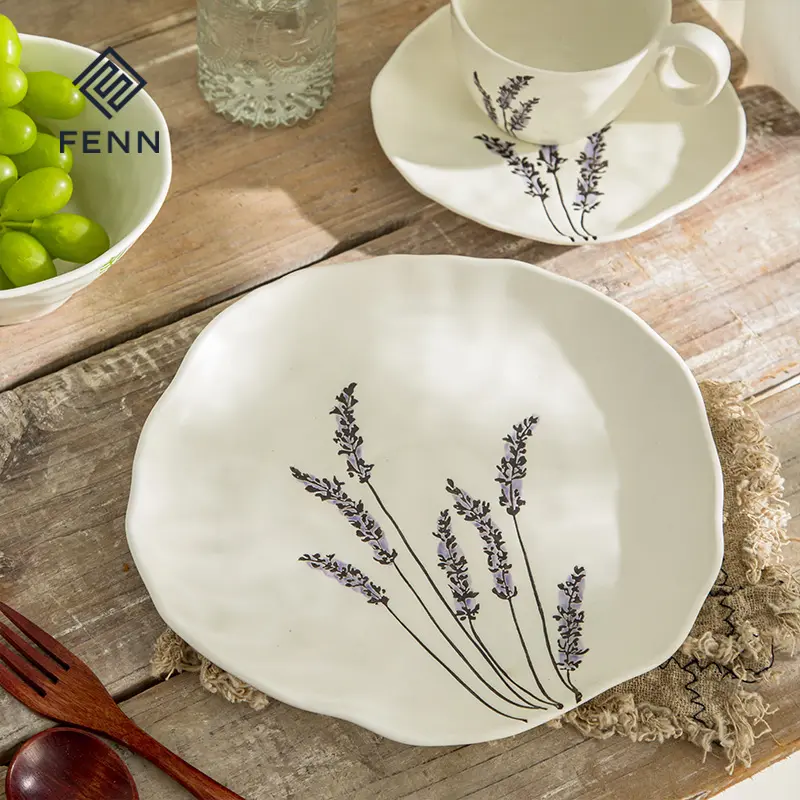
Alt-text suggestion: custom ceramic mold cost and MOQ planning for new product development
A lot of MOQ mistakes begin with one false assumption: if the mold charge is acceptable, the order quantity must also be acceptable. That is not always true.
The mold invoice is only the visible part. The hidden part is the amount of production learning the first order still needs to absorb. A custom ceramic item may need dimensional correction after the first prototype, weight adjustment for handling, or small changes to the foot ring, lip thickness, or stacking geometry. Even when the original mold is technically usable, the path to a stable production version may still involve more development work than the buyer expected.
I usually look at tooling pressure in four categories:
| Tooling Situation | MOQ Pressure | Why |
|---|---|---|
| Existing shape | Low | No new tooling recovery needed |
| Modified standard mold | Medium | Some tooling and sample cost, but lower risk |
| Fully custom form | High | First order absorbs more development cost |
| Custom form with fitted parts | Very high | Dimensional control and fit repeatability are harder |
What buyers often miss
A sample can look right while the production logic is still weak. I see this often with custom lids, ribbed walls, or sculptural silhouettes. The shape may pass sample review, but the forming consistency may still be fragile at scale. I treat that as a repeatability issue, not just a design issue.
Hidden Cost
Low launch volume can make tooling seem more expensive than it really is because too few units are carrying too much fixed cost. But the opposite can also happen: a buyer approves a bigger MOQ to dilute mold cost, then discovers the product is too complex to replenish consistently. That is why tooling cost should never be evaluated alone.
A better question is this: how much volume makes the custom form commercially sensible without creating a reorder headache? That is the MOQ question that matters.
What product and packaging choices push MOQ up or down?
MOQ moves up or down based on product complexity. Shape, glaze, decoration, fit tolerance, and packaging structure all change the real starting quantity.
Simple ceramic products usually support lower MOQ because they are easier to form, fire, glaze, inspect, and pack. Custom forms, reactive glazes, fitted components, and premium gift packaging usually push MOQ upward because they increase setup cost, variation risk, and approval complexity. I usually tell buyers to decide early where they want uniqueness: in shape, in surface, in packaging, or in brand graphics. If they try to make every layer special, MOQ pressure rises fast.
Key Technical Considerations:
- Reactive glaze and hand-finished effects can widen appearance variation between production batches.
- Matte glaze may need extra review for scratch visibility, metal marking, and long-term surface performance.
- Custom inserts, low-volume printed gift boxes, and fragile pack-out structures can set the real MOQ before production does.
Alt-text suggestion: ceramic design and packaging factors that increase or reduce MOQ
In real projects, MOQ is often a design configuration problem in disguise. Buyers think they are negotiating quantity, but they are actually carrying too many product variables into the launch.
This is how I usually frame it:
| Choice | Effect on MOQ | Why It Matters |
|---|---|---|
| Standard round form | Pushes MOQ down | Easier forming and more stable yield |
| Fully custom silhouette | Pushes MOQ up | More tooling and process variation |
| Single stable glaze | Pushes MOQ down | Simpler batching and approval |
| Reactive or layered glaze | Pushes MOQ up | Greater visual variation across batches |
| Simple brown box | Pushes MOQ down | Easier carton sourcing and pack-out |
| Premium gift box with insert | Pushes MOQ up | More packaging engineering and freight risk |
Packaging is often the real MOQ driver
This is one of the most overlooked issues in ceramic launches. A mug or bowl may be easy to produce, but the final retail packaging can make the launch MOQ much less flexible. If the project uses custom inserts, special finishes, sleeves, barcode variants, or multiple gift box sizes, the packaging supplier may impose a higher workable minimum than the ceramic factory.
That matters because packaging also affects transit risk. Ceramics are not soft goods. If the pack-out is underdeveloped, low-volume packaging shortcuts can lead to breakage, claims, and relabeling work. I usually check inner protection, master carton strength, carton count efficiency, and pallet behavior before I approve a launch plan.
Non-obvious Risk
A low MOQ with too many glaze colors can create messy replenishment logic. The first order may look manageable, but later the brand has to reorder unpopular colors or accept uneven stock positions across the assortment. I prefer to launch with fewer colorways and cleaner volume concentration unless the sell-through data already supports wider variation.
The simplest version of the product is not always the right one. But the most complex version is rarely the best product to launch first.
How can I keep MOQ low without damaging margin or repeat-order stability?
You can keep MOQ lower by simplifying the product system, not by pushing the supplier into an unhealthy structure. The goal is controlled flexibility, not artificial cheapness.
The best way to lower MOQ safely is to reduce complexity in tooling, glaze, packaging, and SKU structure while protecting the parts of the product that create real brand value. I usually do this by using shared forms, shared packaging architecture, fewer launch variants, and a phased reorder plan. That keeps opening risk lower without creating a weak production model. A low MOQ works only when the product system is simple enough to support it.
Key Technical Considerations:
- Shared body platforms can reduce mold exposure across multiple SKUs.
- Standardized carton sizes improve packing efficiency and reduce packaging MOQ pressure.
- Repeat-order stability depends on defined tolerance, approved variation range, and consistent process control, not sample appearance alone.
Alt-text suggestion: phased MOQ strategy for ceramic product launch and repeat orders
I do not usually recommend “lowest MOQ” as a target. I recommend lowest safe MOQ. That is different.
A safe low MOQ normally comes from reducing variables, such as:
- using one body across several decorations
- using one glaze family instead of many unrelated finishes
- sharing cartons or insert logic across products
- reducing launch SKU count
- separating pilot launch from scale launch
This is the framework I use most often:
| MOQ Type | What It Looks Like | Main Risk | Best Use Case |
|---|---|---|---|
| Very low MOQ | Small opening volume, high unit cost | Weak cost structure, unstable repeat order | Simple test launch with low complexity |
| Workable MOQ | Balanced cost and execution | Requires disciplined SKU planning | Most new private label launches |
| Scalable MOQ | Stronger efficiency and margin | Higher opening inventory commitment | Proven products or wider retail rollout |
What I watch before approving a “low MOQ” plan
I want to know whether the supplier is lowering MOQ by improving structure or by creating exceptions. Those are not the same thing.
If MOQ becomes lower because the product uses an existing form, shared glazing, and a smarter packaging setup, that is healthy. If MOQ becomes lower because the factory is making a one-off exception, relaxing process discipline, or using temporary cost assumptions, the project may become unstable on the second order.
Industry Insider Tip: one of the best ways to lower MOQ without hurting the project is to design the collection as a system. Shared diameters, shared colors, shared carton sizes, and compatible accessories can make a factory much more flexible. That is one reason design-led ceramic development matters. Good design is not only about appearance. It improves supply chain behavior.
Repeat order is the real test
The first PO proves market interest. The second PO proves whether the product has a future. I care a lot about that distinction.
A launch MOQ is only successful if it makes reorder easier, not harder. That means the buyer should know:
- what quantity stabilizes pricing
- what lead time changes at reorder stage
- whether glaze appearance can be matched within an agreed range
- whether packaging materials can be replenished cleanly
- whether the supplier treats the item as a standard program or a special case
That is why I do not judge MOQ by first-order affordability alone. I judge it by whether the product can be repeated without operational friction.
Key Takeaways for Sourcing Managers
- Set MOQ by product system logic, not by the lowest number a supplier offers.
- Separate development MOQ, production MOQ, and commercial MOQ before approving launch volume.
- Check whether mold, glaze, packaging, or SKU fragmentation is the real driver behind MOQ.
- A lower MOQ is useful only if it still supports stable quality, normal packing logic, and repeat-order viability.
Technical Glossary
- MOQ: Minimum order quantity. In practice, it is the smallest volume that still makes a product commercially and operationally workable.
- AQL: Acceptable Quality Limit. A standard inspection method used to define sample size and defect tolerance during quality checks.
- Firing Shrinkage: The dimensional reduction that happens during drying and firing, which affects fit, stacking, and final tolerance.
Conclusion
A good MOQ strategy helps a new ceramic product launch with less waste, fewer surprises, and better reorder stability. I always look for the lowest quantity that still protects tooling logic, production efficiency, packaging integrity, and long-term scalability.