
Short Answer
Good ceramic bowl design starts with the food and the way a person eats it. Buyers should match bowl depth, opening, wall angle, rim shape, base, and spoon path to the intended portion. Then test filled, fired samples for access, stability, nesting, cleaning, and handling. A bowl that looks elegant in a catalog can still feel awkward when the spoon cannot reach the last bite.
Start with the meal the buyer plans to serve. Soup, rice, pasta, cereal, and shared dishes place different demands on the bowl. In the FENN bowl development brief, use, dimensions or capacity, and market requirements guide the sampling work.
Usable bowl depth depends on the opening, inner curve, base width, wall angle, and the path from the rim to the center.
Start With the Meal, Not the Catalog Shape
A beautiful silhouette is a starting point, not a complete specification. Put the food, serving volume, utensil, and eating setting into the brief.
A deep narrow bowl may hold broth well, yet a wide spoon can hit the wall too early. A low wide bowl helps pasta presentation but may spill liquid when carried. An oversized rim can steal usable space and add weight.
I prefer to choose a route before discussing millimeters.
Ceramic Bowl Design Route Map
| Main Use | Shape Direction to Sample | What the User Should Feel | Main Risk to Check |
|---|---|---|---|
| Broth or soup | Medium-to-deep body, open mouth, smooth inner curve | Spoon enters naturally and liquid stays controlled while carrying | Wall too upright, hot rim, poor spoon access, or excess weight |
| Rice or grain bowl | Comfortable hand-held size, stable foot, moderate depth | Easy to hold, scoop, and finish without chasing food around a corner | Base too narrow, steep inner corner, or uncomfortable heat transfer |
| Cereal or breakfast | Open mouth with enough depth for liquid and toppings | Easy stirring with room for a normal spoon | Splashing, low capacity, or spoon handle tipping outward |
| Pasta or composed food | Low, wide profile with a generous eating surface | Food is visible and fork or spoon can move freely | Looks large but holds little, stacks poorly, or spills sauce |
| Shared serving | Wider body, steady base, practical lifting points | Easy to place, serve from, and pass at the table | Heavy filled weight, slippery rim, or weak edge |
| Dessert or side dish | Smaller controlled volume and clean spoon path | Portion feels intentional rather than cramped | Thick walls reduce capacity or the spoon cannot clear the curve |
Treat this as a route map, not a universal rule. Your menu, portion, and customer habits should decide which samples move forward.
Compare Two Bowl Profiles From FENN Luna Radiance
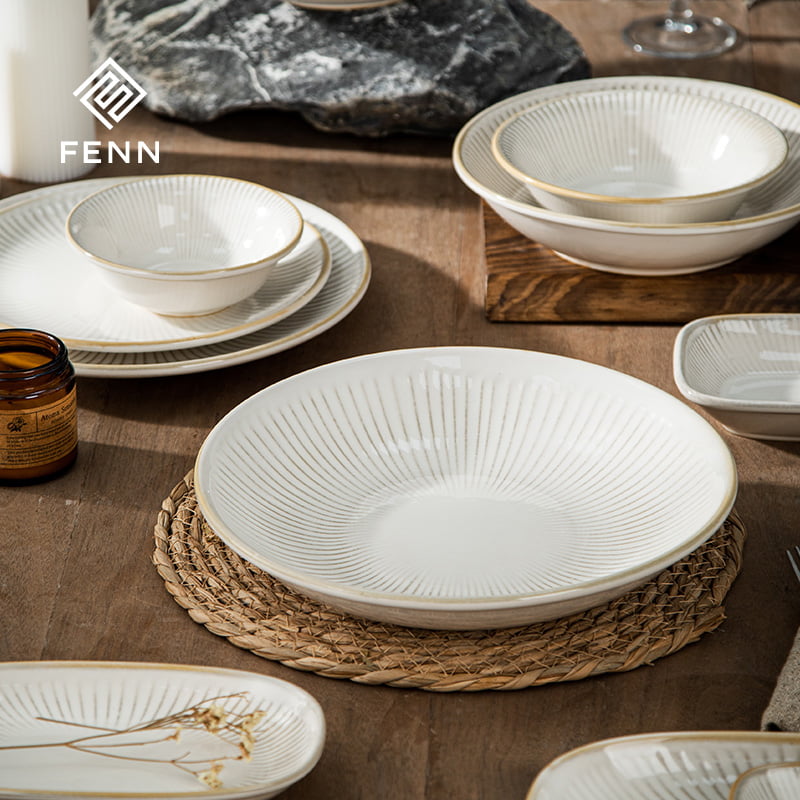
The Luna Radiance product photo shows a wide, shallow ivory bowl with a ribbed interior and a gently rising wall. Its broad opening makes it a practical shape reference for a plated portion such as pasta. When sampling that profile, move a loaded spoon from the edge to the center and carry the intended portion to see how much clearance the shallow wall leaves.
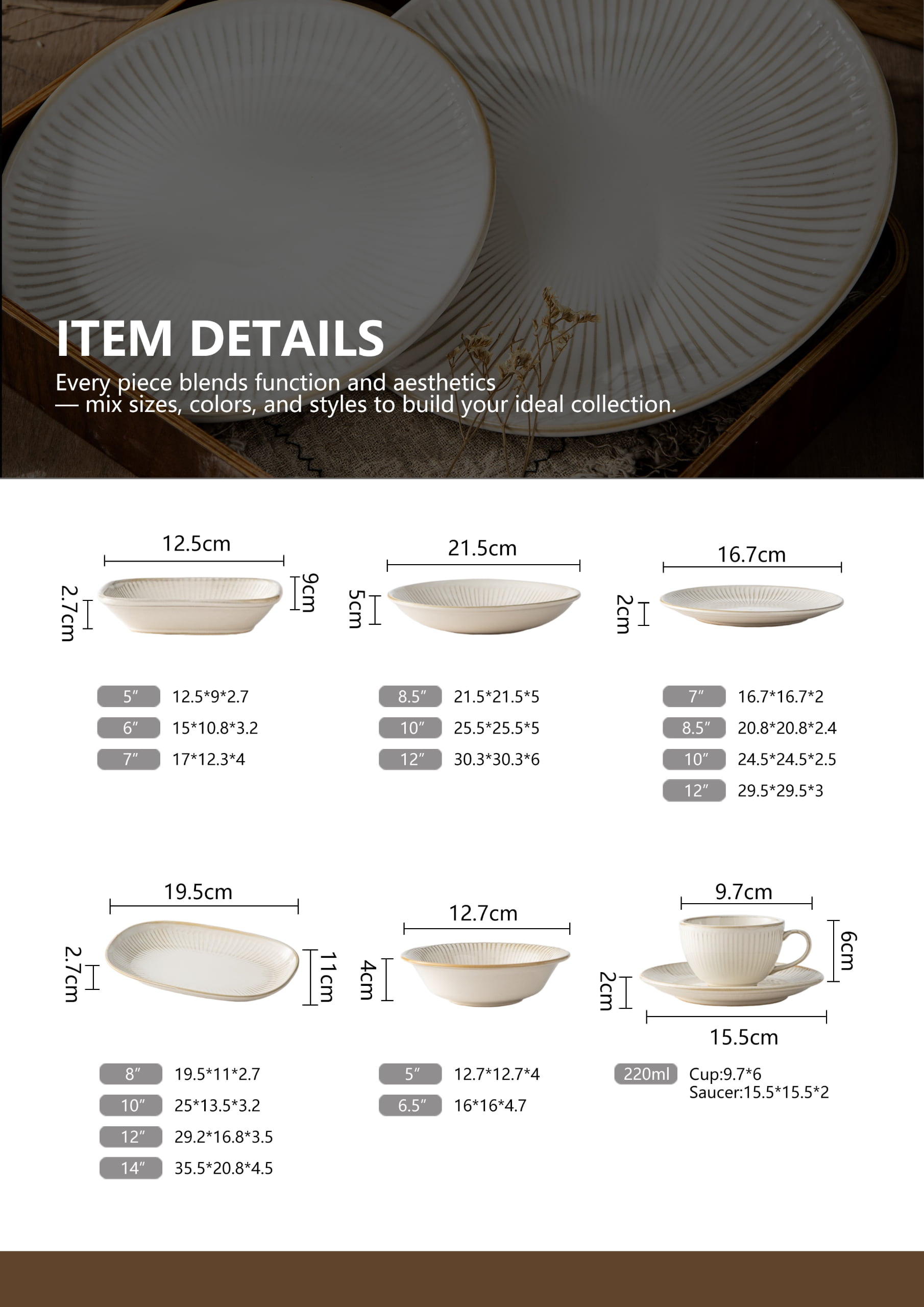
The FENN Luna Radiance size guide lists a wide form at 21.5 cm across and 5 cm high and a smaller bowl at 12.7 cm across and 4 cm high. It also shows a 25.5 cm version of the wide form at the same 5 cm overall height. These are published outside dimensions. Ask for the inside opening, floor-to-rim depth, and measured serving volume for the exact sample under review.
Run a Spoon-Path Test Before You Approve the Profile
The spoon-path test is simple and surprisingly useful. Use the real spoon or a representative utensil, not a tiny tasting spoon chosen to make the bowl look good.
1. Fill the bowl with the intended food or a safe material with similar movement.
2. Scoop from the center, sidewall, and inner base corner.
3. Try to collect the last spoonful without turning the bowl to an extreme angle.
4. Rest the spoon naturally and see whether the handle falls, tips, or pushes against the rim.
5. Repeat with both right- and left-handed users if the shape is asymmetric.
Watch the transition between the floor and wall. A tight inside corner may trap food and glaze, while a smooth radius helps the spoon follow the surface. If the inner curve changes suddenly, the user often feels it before anyone notices it on a drawing.
For custom soup bowls, carry the filled bowl a short, safe distance. Check sloshing, rim heat, finger clearance, and grip when damp. A bowl must work from kitchen to table, sink, and shelf.
Judge Rim Shape by Four Jobs
Food Access
The rim should not block the spoon or force the wrist into an awkward angle. An inward rim can contain liquid, but too much inward curve reduces access. A very broad flat rim gives a strong visual frame, yet it may reduce usable opening and take more shelf space.
Drinking and Pouring
Some users drink broth from the bowl. If that is part of the use, review lip comfort, rim thickness, glaze smoothness, and flow. A decorative irregular rim may suit a handmade look, but sharp peaks or uncontrolled waviness are not charming in use.
Chip Resistance
Rim thickness, edge radius, body choice, firing, and handling all affect chip performance. A thick rim is not automatically stronger if the profile creates stress or the piece hits neighboring bowls in a stack. Ask for fired samples and define the contact points.
Cleaning and Quality Perception
Food should release from the rim and inner curve without hidden ledges. The glaze surface, decoration, and care claim matter too. If a bowl is sold as dishwasher safe, the claim should be supported by a defined review of repeated washing and the actual decorated product.
Check Capacity in a Way Customers Will Understand
Factories and buyers sometimes use “capacity” differently. A brimful measure and a practical fill line can produce very different numbers.
Record at least these three values:
- Brimful capacity: liquid filled to the highest safe edge for measurement.
- Practical serving capacity: the intended portion with space for carrying, stirring, or toppings.
- Recommended portion: the serving amount used in product copy, merchandising, or hospitality planning.
State the test method, measuring tool, and sample count. Compare several fired pieces, because forming, drying, firing shrinkage, and kiln position can affect the final profile.
Use Fired Samples to Balance Comfort and Production
A section drawing helps us discuss diameter, height, wall angle, rim, base, and foot ring. It does not show every production result.
Wide open bowls may be more sensitive to warping. Deep shapes can be harder to glaze evenly inside. A narrow base with a heavy upper wall may feel unstable. Nesting can create wall-to-wall rubbing, rim pressure, or vacuum-like sticking between bowls.
I like to review a small sample group using this approval card:
| Approval Point | How to Test | A Professional Result Looks Like |
|---|---|---|
| Portion and capacity | Fill with the intended food and record practical and brimful volumes | The claimed portion fits with useful headspace |
| Spoon comfort | Scoop center, wall, and base corner with the intended utensil | The spoon follows the inner curve without a trapped zone |
| Table stability | Place several fired pieces on a verified flat surface | Bowls sit securely without repeated rocking |
| Hand comfort | Lift empty and safely filled samples with dry and slightly damp hands | Grip feels controlled; rim and base do not cut into the hand |
| Nesting | Stack the real working quantity, rotate, lift, and inspect contact | The stack stays stable and pieces separate without hard rubbing |
| Cleaning | Wash the inner curve, rim, foot, and any decoration | No hard-to-reach ledge, sharp area, or unexpected water trap appears |
| Fired consistency | Measure several samples across trials or kiln positions | Variation stays inside the agreed functional and visual range |
Ask the supplier which dimensions vary across the fired sample group and how much they vary. Check whether that variation changes capacity, stability, or nesting.
Use the Golden Mimosa Stack to Plan a Handling Check
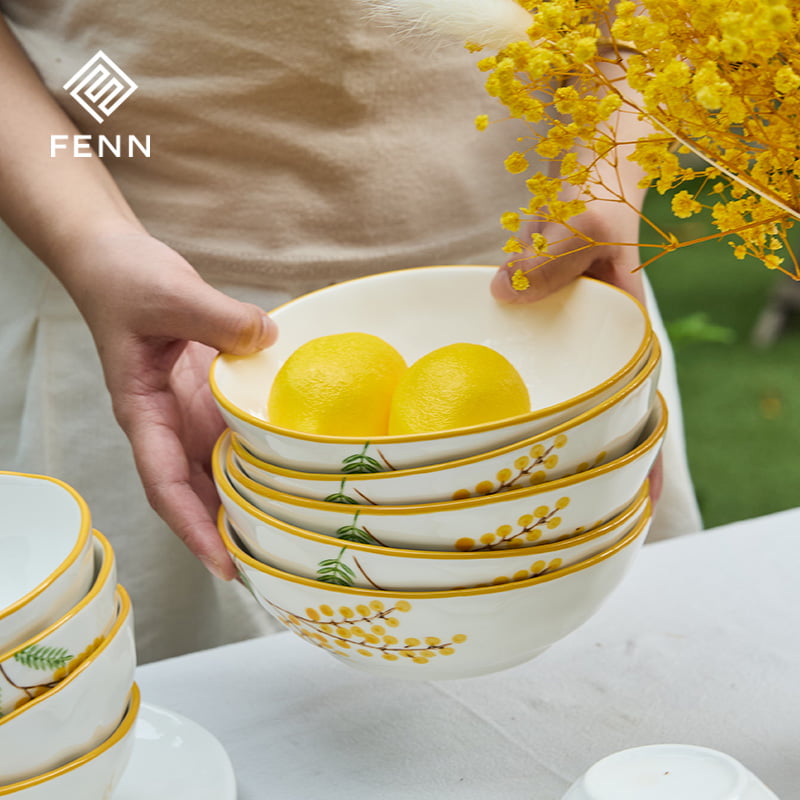
FENN’s Golden Mimosa Heritage Edge product photo shows nested bowls with yellow rims and floral decoration. Use the image to identify where to look on the physical sample. Lift the top bowl with both hands, find the contact points between pieces, and check the rim and decoration for marks after repeated stacking. Measure the full working stack against the shelf height.
The FENN custom ceramic bowl program reviews the intended use, usable capacity, profile, glaze, decoration, and packing during development. Include a working stack quantity in the brief so the foot, rim, and sidewall can be checked together during sampling.
Add Safety and Market Documents to the Same Approval File
Usability approval does not replace food-contact review. Reports should match the actual ceramic body, glaze, decoration, product type, and destination market. A generic material report or an old report for a different color is not enough evidence for every SKU.
For U.S. context, the FDA lead and foodwares guidance explains concerns around lead in ceramic foodware. For the EU, the European Commission food-contact materials overview explains the general framework, while the ISO 6486 ceramicware standard overview identifies an internationally recognized standard concerning lead and cadmium release from ceramicware.
I would keep the drawing, capacity record, fired sample approval, food-contact documents, care claim, packaging test record, and retained samples together. That makes repeat orders much easier to judge.
My Advice as a Manufacturer
My simple advice is to approve a bowl with real food and real hands. Look at the profile, then stop looking at it for a moment. Carry it. Scoop from it. Drink from it if that is expected. Stack it. Wash it. Ask someone with a different hand size to do the same.
Do not search for one “perfect” bowl depth. Search for the right relationship between portion, opening, inner curve, rim, weight, base, and use. That relationship is what makes ceramic bowl design feel natural.
Questions Buyers Often Ask
Is a deeper ceramic bowl always better for soup?
No. Depth can control liquid, but a narrow opening or steep wall may reduce spoon access and cooling space. Test the intended portion and spoon together.
What is the best bowl rim shape?
There is no single best rim. A good bowl rim shape fits the eating method, strength need, cleaning method, and visual style. It should feel smooth and should not create awkward utensil contact.
Should bowl capacity be measured to the rim?
Record brimful capacity, but do not use it alone. Practical serving capacity is usually more useful for buyers and customers because it includes working headspace.
How many bowl samples should we test?
Use enough fired pieces to see normal variation, not only one presentation sample. The right number depends on project stage and risk. Include different production trials or kiln positions when possible.
Can one bowl serve cereal, soup, rice, and pasta?
Sometimes, but a general-purpose bowl involves tradeoffs. Define the priority use first, then check whether secondary uses still feel comfortable.
What should go on a custom bowl drawing?
Include fired target dimensions, profile section, opening and base, rim detail, foot ring, capacity method, key tolerances, glaze boundaries, stacking contact, and any decoration location.
Conclusion
Ceramic bowl design works when food use, bowl depth, rim shape, spoon comfort, capacity, stability, nesting, and cleaning support one another. Choose the meal route first, test the real spoon path, measure practical capacity, and approve several fired samples with clear records.
Develop a Bowl Around Your Menu
Contact FENN with the intended food, serving portion, utensil, market, and working stack quantity. We can review the profile, capacity measurement, rim, and nesting with you before sampling.