
Short Answer
To reduce dinnerware returns, separate delivery damage, product defects, expectation gaps, and picking errors before choosing a fix. Compare complaints with the exact SKU, production batch, listing, and packing version. Ask suppliers for physical samples, clear acceptance limits, and relevant test evidence. Then measure the same complaint type after the change, allowing time for customers to report problems.
I would start with the customer’s words, not a thicker carton. “The plates are wrong” might mean the wrong size arrived, the glaze looks different, or the plate cannot fit in a cupboard. Those problems need different answers.
From a factory point of view, a useful complaint is one we can trace. A photograph helps. A photograph tied to a shape, batch, and delivery route helps much more.
Returns prevention means removing avoidable causes of disappointment or failure. It does not mean making a valid complaint harder to resolve.
First, Find Out What the Customer Actually Received
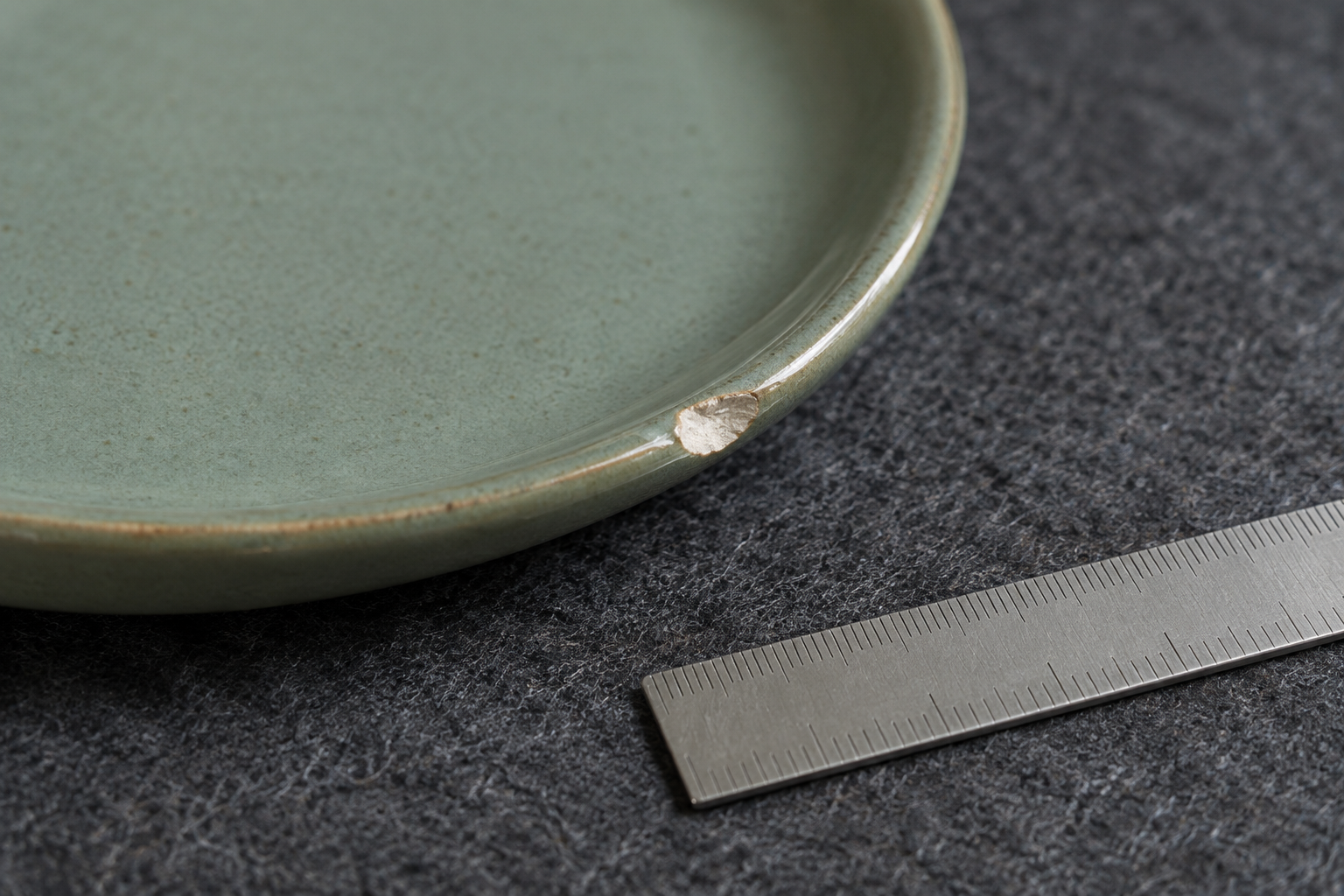
Keep the customer’s original description beside your internal reason code. “Damaged” is too broad to guide production. Was there a small rim chip, a crack across the plate, or a crushed box with several broken pieces?
Record the SKU, shape, color, batch if available, order date, delivery date, and when the problem appeared. Add the packing version and sales channel. A complaint after months of use should not be counted as damage on arrival without further evidence.
Request clear photos of the piece and, when available, its inner and outer packaging. Do not ask customers to handle sharp fragments for a better picture. Separate customer-service resolution from technical investigation so a slow factory review does not leave someone waiting without an answer.
For ceramic tableware returns, I use this first-pass diagnosis tool:
| What the customer reports | What I would check first | What would justify the next action |
|---|---|---|
| Rim chipped on arrival | Chip position, nearby contact points, separators, carton condition | Repeated damage at a matching contact point supports a packing investigation |
| Color differs from the listing | Actual piece beside an approved reference under consistent light | A piece outside the agreed range needs quality review; an inaccurate listing needs content review |
| Plate is too large or bowl too shallow | Finished dimensions, usable area, height, stated capacity | Measured product differs from the listing, or the listing omitted a buying detail |
| Wrong piece or quantity | Order options, selling unit, pick record, pack count | A traceable mismatch identifies a listing, warehouse, or packing control gap |
| Cracks or surface changes after use | Timing, use conditions, retained samples, body and glaze records | Similar reports within a batch justify a focused technical investigation |
These are starting points, not verdicts. An undamaged outer carton does not prove that the product was sound when packed. A chipped rim alone does not prove that the courier caused it.
Follow the Chip Before Adding More Packaging
Chipped dinnerware complaints can come from several stages. A rim may be damaged during factory handling, warehouse picking, transport, or use. Look for patterns before assigning responsibility.
I would compare damage locations across reports and inspect unused stock from the affected batch. If chips repeatedly appear where pieces touch inside the pack, check whether the separators shift or compress. If stock already shows rim damage before dispatch, look upstream at handling and inspection.
Ask the supplier to review rim profile, local thickness, forming consistency, and fired condition. A vulnerable edge cannot always be rescued with extra paper. Equally, a sound plate can still break if the pack allows ceramic-to-ceramic contact.
A useful supplier response names a likely cause, the evidence behind it, a proposed change, and how the change will be checked. “We will tell workers to be careful” leaves too much unanswered. ASQ’s root cause analysis tools can help organize possible causes; the investigation still needs evidence from your product.
For transport-related changes, use the ISTA test procedure guidance to discuss a suitable test with a packaging specialist. Check that the test sample matches the actual product count, carton, cushioning, and shipment route. A result for a bulk export carton does not automatically cover a single-set parcel sent from your warehouse.
When the Product Is Sound but the Listing Is Wrong

Imagine a customer buying a wide-rim bowl for a generous serving of pasta. The top diameter is correct, yet the eating space feels small. A beautiful overhead photograph may have hidden the depth and usable area.
I prefer product pages that answer the questions a buyer would ask while holding the piece: How wide is it? How tall? How heavy? How many items arrive? For bowls and mugs, explain how capacity was measured. Capacity filled to the rim is different from a practical serving amount.
Use finished-product measurements from approved samples and check production against agreed tolerances. Wet clay or mold dimensions are not customer dimensions; firing shrinkage matters. Avoid publishing a very precise number when normal production cannot reliably hold it.
For images, show the actual selling configuration, a side view, and useful scale. Google’s product image guidance calls for an accurate view of the product with little or no staging for the main image. Your own supporting images can then explain depth, finish, and size without hiding the item among props.
For reactive glaze, show a representative range from approved fired pieces. Glaze application and kiln conditions can affect color and pattern. Do not choose the prettiest unusual sample as the only product image. Also, do not stretch “natural variation” to cover chips, cracks, or pieces outside the agreed appearance range.
My check is simple: hand someone the listing and the sample separately. Ask what surprised them when the real piece arrived. Each surprise is worth reviewing before launch.
Treat Care Complaints as Product Feedback
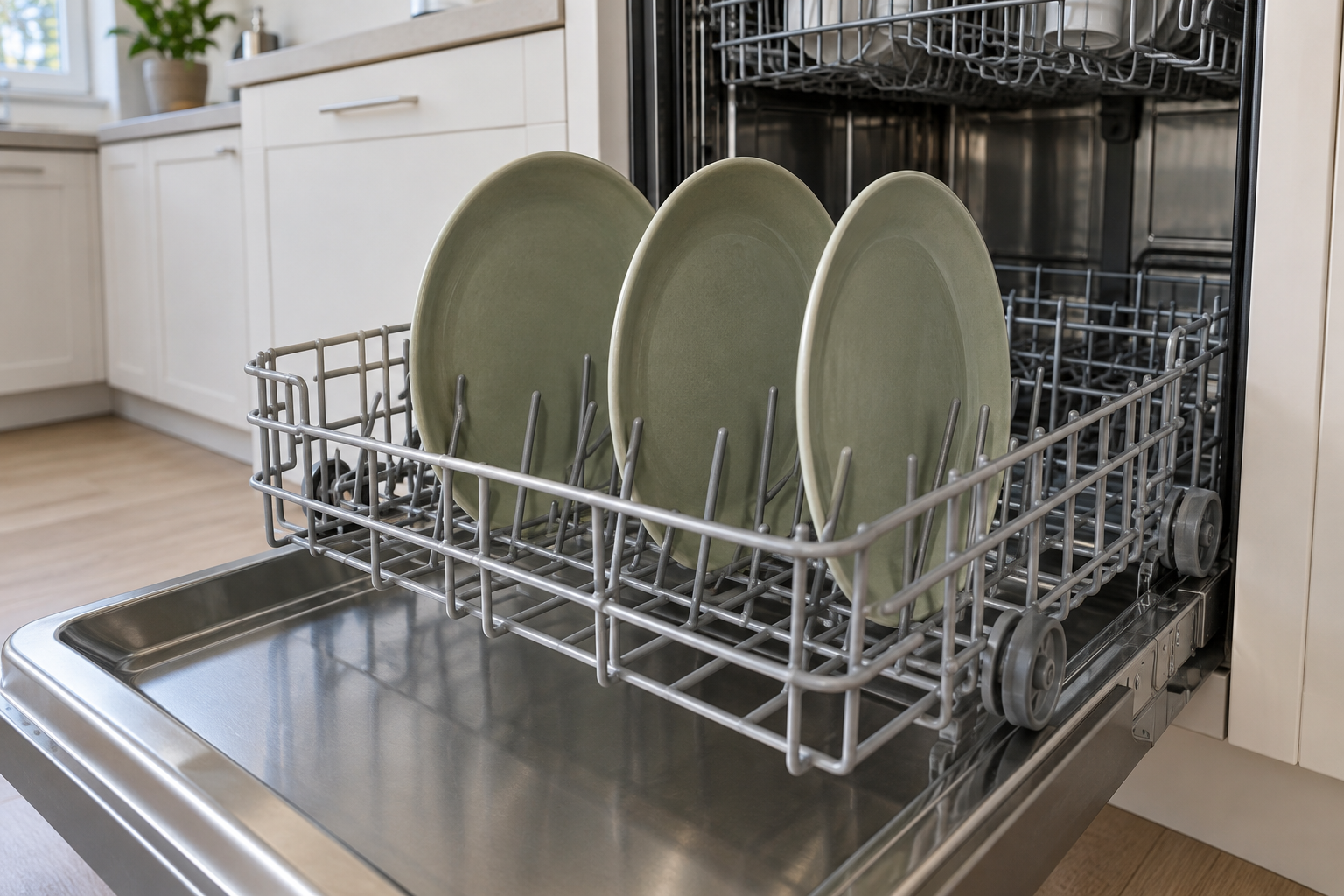
A care card should help customers use the dinnerware as intended. It should not become a quick excuse for every surface complaint.
If a customer reports gray marks, ask whether the marks sit on the surface or appear to be scratches. If fine cracks appear, review the complaint with the factory rather than diagnosing it from one phone picture. Body and glaze fit, firing, and use conditions may all need investigation.
Ask for evidence behind dishwasher or microwave claims for the relevant product construction and decoration. A plain glazed plate and a decorated version should not automatically share every claim. Food-contact testing also does not establish every durability or appliance-use claim.
Keep the product page, packaging, and service replies consistent. Where a limitation applies, explain it clearly before purchase. If repeated reports suggest a batch issue, identify and hold suspect stock for review instead of simply rewriting the care card. Route possible safety concerns through the brand’s responsible quality team promptly.
Measure Whether You Actually Reduce Dinnerware Returns
A lower headline return rate can hide a growing problem in one shape. Separate rates by reason and SKU, then look at batch, channel, and packing version when the volume allows.
Use a clearly defined measure. For example: orders with at least one reported arrival-damaged piece divided by delivered orders from the same shipment group. Count an order once in that measure. Track the number of damaged pieces separately; do not switch between orders and pieces halfway through a comparison.
Here is an illustrative case, not a FENN result:
A brand records 24 arrival-damage orders among 800 delivered orders using pack A: 24 ÷ 800 = 3%. After a separator change, it records 10 among 500 delivered orders using pack B: 10 ÷ 500 = 2%.
That is one percentage point lower. It is encouraging, but it does not prove the separator caused the change. Check the product mix, carriers, delivery areas, and reporting time. A new group with only a few days for complaints to arrive is not a fair comparison with an older group.
Keep one change record linking the suspected cause, pack or product revision, owner, start date, affected stock, and review date. When practical, change one major factor at a time. Record other changes so you can interpret the result honestly.
Watch replacements, refunds without physical returns, and customer contacts too. Moving complaints into another service category does not mean the product problem disappeared.
My Advice as a Manufacturer
I would bring one recurring complaint to the supplier meeting and work through it fully. Bring the actual piece if possible, the approved sample, the listing, the packing record, and a short summary of affected orders.
Before closing the issue, I want three things: a reason supported by evidence, a change people can follow, and a check on the next relevant shipment. If the cause is uncertain, say so and agree what evidence comes next.
That small loop is more useful than asking for “better quality” across the whole collection.
Questions Buyers Often Ask
What is a good dinnerware return rate?
There is no universal target that fits every channel and definition. Establish your own baseline by reason, with a consistent counting method and reporting period. Treat serious defects separately even when their rate is low.
Should we strengthen every carton immediately?
First check the damage pattern and actual packing. Extra material can add cost without fixing rim contact, missing separators, or damage that happened before packing. Test a specific change against the problem found.
Can clearer photos reduce color complaints?
They can help set expectations when they show representative pieces and realistic color. They cannot excuse production outside an agreed range. Review the product and the listing together.
Do we need to wait for a returned piece?
Not for every service decision. Photos and order records can start the investigation. A retained sample or returned item may be needed for technical work; avoid treating a photo as a complete diagnosis.
Conclusion
To reduce dinnerware returns, connect each complaint to a clear cause and a checkable change. Start with the most repeated avoidable problem, preserve the evidence, and follow the next shipment long enough to learn whether your fix worked.
Explore the FENN Resources for related guidance on ceramic quality and packaging.