
Short Answer
Ceramic crazing in dinnerware is a network of fine cracks in the glaze, usually caused by poor body-glaze fit, thermal stress, or weak firing control. For commercial dinnerware, buyers should not accept crazing casually. Ask the supplier for stable test samples, food-contact testing where relevant, thermal-use checks, and a written acceptance standard before bulk production.
When a buyer sends me a photo of cracked glaze ceramic and asks, “Is this still okay?” I do not answer from the photo only.
Sometimes the lines are a planned decorative crackle effect. Sometimes they are a real quality problem. Sometimes they look small at first, then become darker after tea, coffee, sauce, or dishwasher use.
My simple advice is this: for dinnerware that touches food, crazing must be treated as a quality and compliance question, not only a style question.
What Buyers Usually See
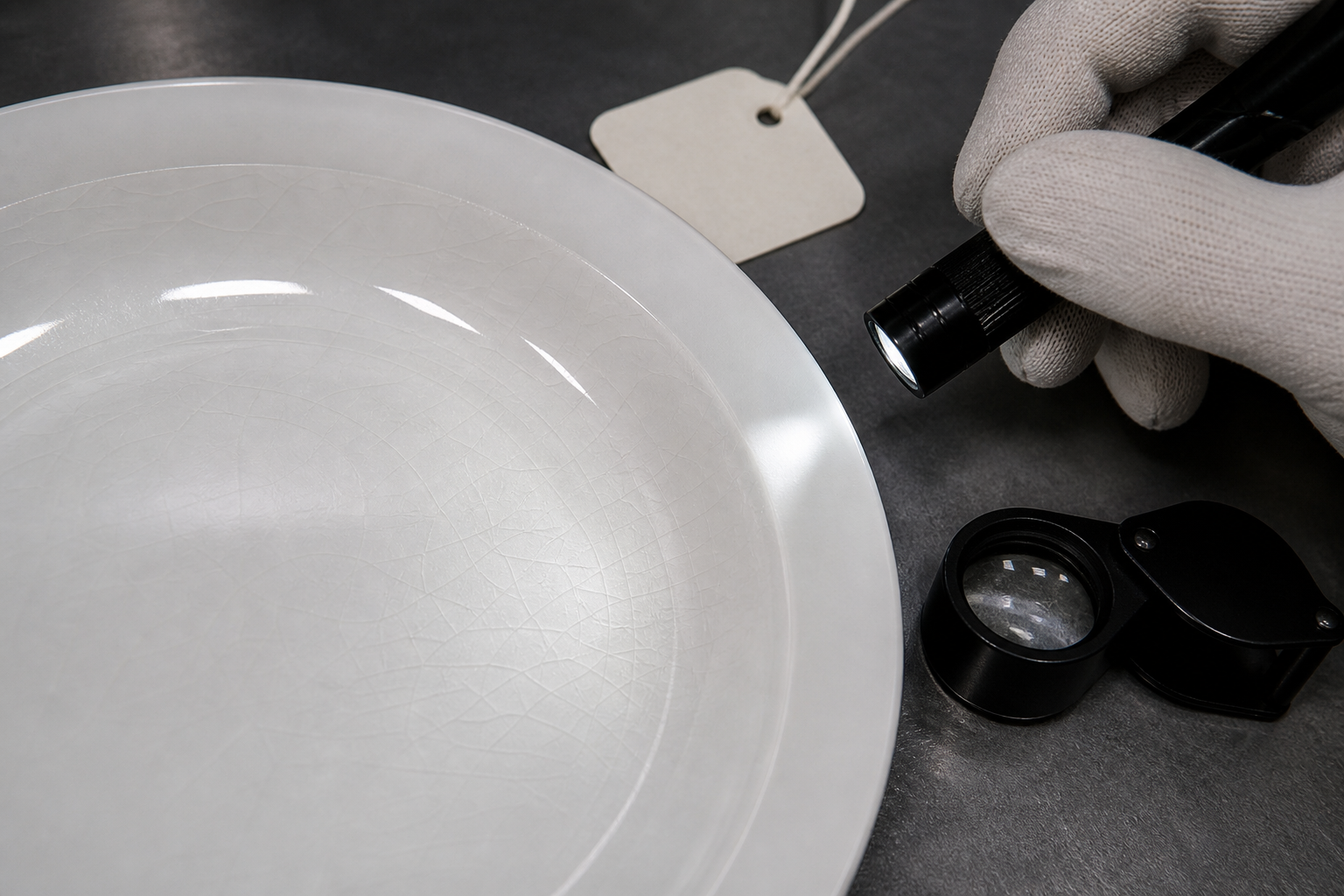
Crazing looks like very fine lines under or inside the glaze. The lines may look like a spider web, a dry river pattern, or tiny hairline cracks. On white glaze, crazing can be hard to see until light hits the surface at an angle. On colored glaze, it may appear darker after use.
In real sourcing projects, buyers usually notice crazing in one of four moments:
- During sample review under strong light.
- After a dishwasher or hot-water test.
- After the product holds tea, coffee, oil, or sauce.
- After customer complaints from the first selling season.
That last moment is the most painful one. By then, cartons are shipped, product pages are live, and the brand has to explain the problem to customers.
Definition Box: What Is Ceramic Crazing?
Ceramic crazing is fine cracking in the fired glaze layer. The ceramic body may still be whole, but the glaze surface is no longer a continuous sealed layer.
This matters because dinnerware is used with food, water, detergent, heat, and repeated cleaning. A buyer should judge crazing by product use, food-contact area, test evidence, and customer expectation.
Decorative crackle glaze is different. It is intentionally designed to show a crackle pattern, and it should be clearly specified, tested, and explained. If the product was sold as normal smooth dinnerware, unexpected crazing is a defect signal.
Problem Diagnosis: Crazing Risk Table
Use this table when you inspect samples or review a supplier answer.
| What You See | Likely Meaning | Buyer Risk Level | What To Ask The Supplier |
|---|---|---|---|
| Fine lines on the food-contact surface after hot water | Body-glaze fit or thermal stress problem | High | Ask for glaze fit review, thermal-use check, and food-contact test plan. |
| Lines appear only after dishwasher cycles | Glaze may not handle repeated use conditions | Medium to high | Ask for dishwasher-use test records and revised care claim. |
| Dark lines after tea, coffee, or sauce | Liquid or stain is entering the crack network | High | Do not approve until supplier explains cause and prevention. |
| Crackle pattern is part of the approved design | Decorative crackle glaze | Depends on use | Ask whether it is suitable for food-contact dinnerware and which tests support it. |
| Crazing appears on the back or foot ring only | Local stress, glaze thickness, or unglazed/glazed transition issue | Medium | Check whether it spreads, affects stacking, or reaches food-contact zones. |
| Only one piece in the batch has crazing | Possible local firing, handling, or sample damage issue | Medium | Ask for batch inspection photos and more samples before deciding. |
The key question is not, “Can we hide it in photos?” The right question is, “Will this product still be safe, stable, and acceptable after real customer use?”
Why Crazing Happens in Ceramic Dinnerware
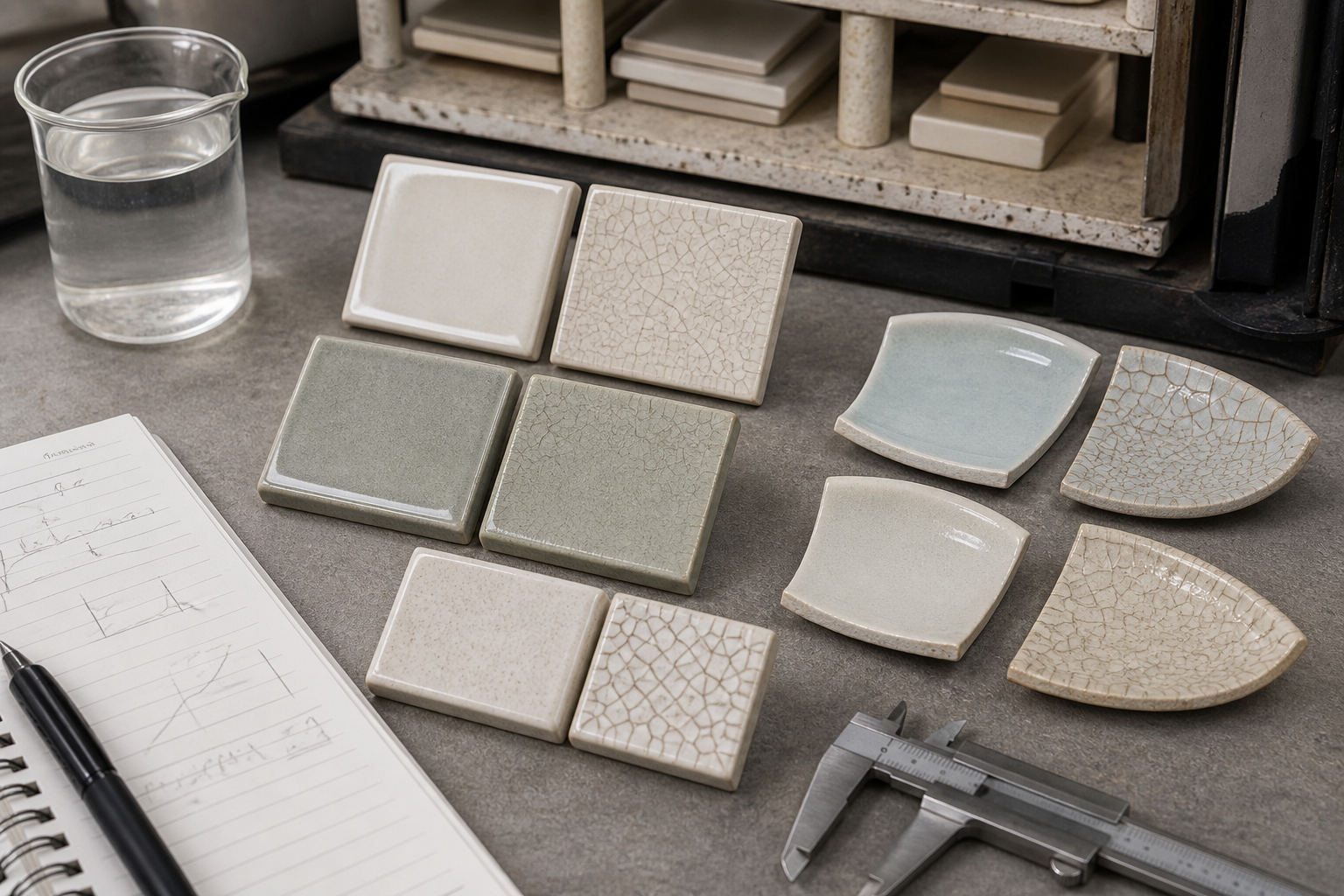
From a factory point of view, crazing often comes from mismatch. The glaze and ceramic body expand and shrink at different rates during firing and cooling. If the fit is poor, stress stays inside the glaze. Later, heat, water, or time can make the fine cracks appear.
Common causes include:
- The clay body and glaze formula do not fit each other well.
- Firing temperature or soaking time is not stable enough.
- The glaze layer is too thick in some areas.
- The piece cools too quickly or unevenly.
- The shape has stress points, such as a wide flat center, sharp rim, or complex foot.
- The product is exposed to sudden temperature changes beyond its design.
I also watch repeat orders carefully. A sample may look stable, but if the factory changes the body supplier, glaze batch, kiln curve, or firing position, the same design can behave differently.
Is Glaze Crazing Food Safe?
I am careful with the phrase glaze crazing food safe because it depends on the product, market, and evidence.
For dinnerware sold in the United States, buyers should understand FDA guidance on lead in foodwares and FDA ceramicware compliance policy. For EU sales, buyers should understand EU food contact materials rules and ceramic articles requirements, including lead and cadmium transfer limits. These sources do not mean every crazed product is automatically unsafe, but they show why buyers must treat food-contact surfaces seriously.
My practical rule is simple:
If crazing appears on a food-contact surface of regular dinnerware, do not approve bulk production until the supplier proves the product is suitable for the intended market and use.
That proof may include a matching food-contact test report, ISO 6486-1 lead and cadmium release testing where relevant, retained samples, thermal-use review, and clear care instructions. A supplier saying “many customers accept it” is not enough.
How To Judge Accept, Reject, or Retest
Here is the decision tool I use with buyers.
| Decision | When It May Fit | What Must Be True |
|---|---|---|
| Accept as planned design | Decorative crackle glaze was specified from the beginning | The sales copy, care instructions, food-contact test scope, and approved sample all match. |
| Retest before approval | Crazing is light, limited, or appears only after one stress condition | More samples, thermal-use checks, and food-contact evidence are needed before bulk order. |
| Reject and revise | Crazing appears on food-contact surfaces of standard dinnerware | Supplier must adjust body, glaze, firing, thickness, or shape before new samples. |
| Change product use | The look is desired but food-contact risk is unclear | Consider non-food decorative use only, with correct labeling and market review. |
For most private-label dinnerware brands, unexpected crazing should not pass sample approval. It creates too many questions later.
What Evidence Buyers Should Request
When we review ceramic crazing dinnerware issues, I like to build a small evidence file. It should connect the test report, the real sample, and the production plan.
Ask for:
- Approved physical samples from the same body and glaze route.
- Photos under angled light before and after use testing.
- Glaze/body fit explanation in simple factory language.
- Firing-control notes where the supplier can share them.
- Food-contact test report for the right sales market, product type, glaze, and decoration.
- Lead and cadmium release test scope when the market requires it.
- Dishwasher, microwave, or hot-water use checks if those claims are planned.
- Written defect standard that says whether crazing is critical, major, minor, or not allowed.
- Retained sample plan for repeat orders.
A professional supplier should explain what changed, what was tested, and how bulk production will stay stable.
Prevention Before Bulk Production
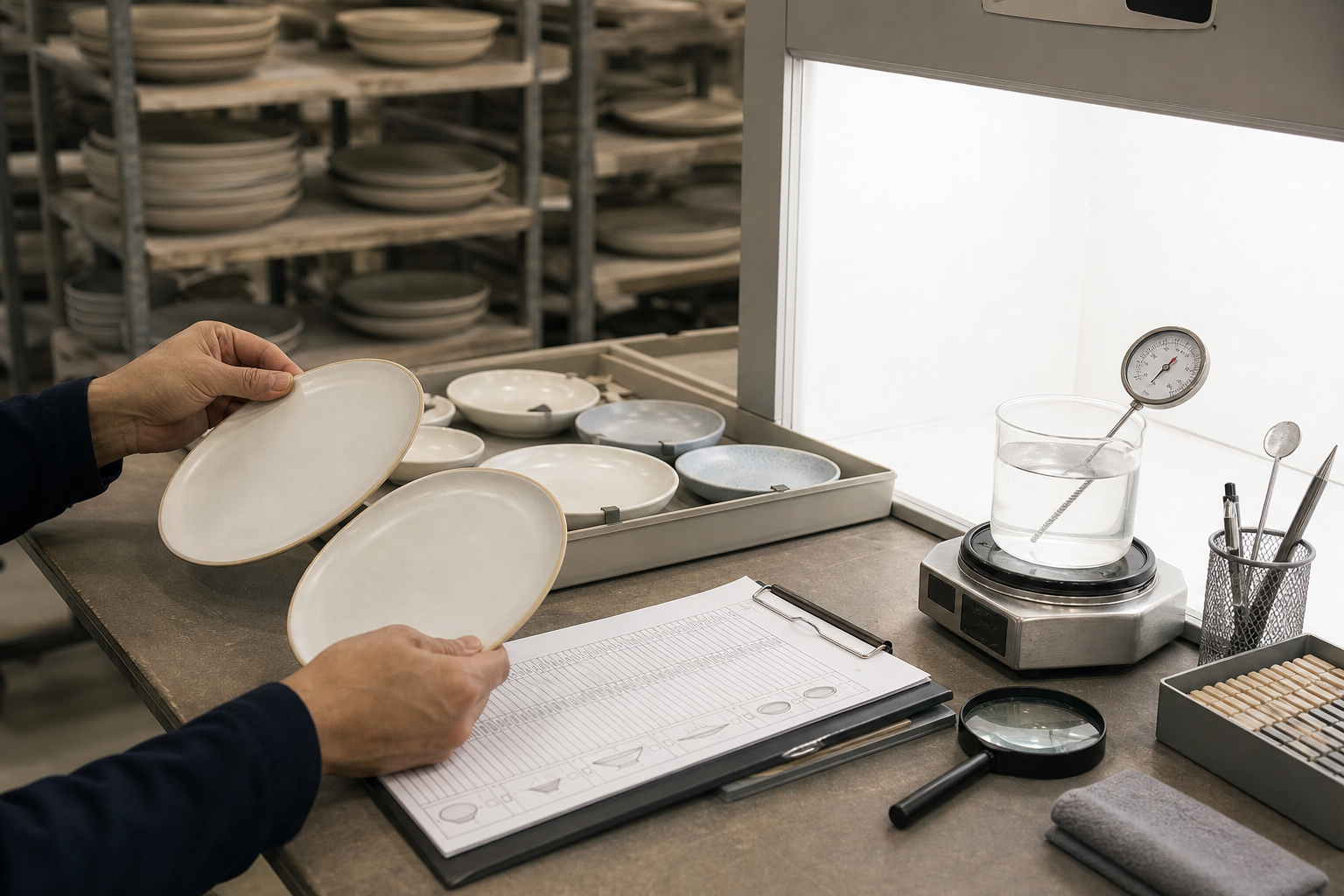
Crazing is easier to prevent before production than to argue about after shipment.
Before you place the order, check these points:
- Confirm whether the product is normal smooth glaze or intentional crackle glaze.
- Approve physical samples, not only renderings or supplier photos.
- Test samples with realistic hot water, detergent, dishwasher, and staining exposure if those uses matter.
- Check flat plates, bowls, mugs, and rims separately because each shape carries stress differently.
- Keep one signed master sample with the supplier and one with the buyer.
- Write “unexpected crazing on food-contact surface: not acceptable” into the defect standard if that is your requirement.
- Ask the supplier to confirm no body, glaze, or firing route change without written approval.
In my factory experience, this written standard saves time. Without it, one side may call crazing “natural ceramic character” while the other side calls it a defect.
Supplier Answers That Worry Me
Some supplier answers sound easy, but they do not protect the buyer.
“This is normal for ceramic” is too broad. Many ceramic products do not craze when body and glaze fit well.
“It will disappear after firing” does not help if you are already looking at a fired sample.
“Only a little crazing is acceptable” needs a photo standard, location rule, and use judgment.
“The glaze is food safe” should be supported by a test report that matches the actual material, decoration, and market.
“We can fix it in bulk” is risky unless the supplier explains the exact correction and sends new approved samples.
I prefer calm, specific answers. For example: “We will reduce glaze thickness, adjust firing, produce new test plates, run hot-water and staining checks, and send samples before bulk production.” That is a real answer.
My Advice as a Manufacturer
If your dinnerware line is designed for daily meals, treat crazing as a serious sample approval point.
Do not panic from one photo, but do not ignore it. Ask where the lines appear, when they appeared, whether the product touches food, and what use claims will be printed on the package. Then ask for evidence.
For decorative crackle glaze, be even more careful. It may look beautiful, but the buyer must decide whether it fits the market, food-contact area, care instructions, and customer expectation.
My best prevention is early testing. Test the body and glaze together. Review the shape. Use real samples. Write the defect rule. Keep retained samples. For repeat orders, keep the same approved route unless both sides agree to a change.
If you are unsure whether crazing is acceptable, send FENN the sample photos, intended market, use claims, and test report scope. I can help you decide what to ask the supplier before you approve bulk production.
Questions Buyers Often Ask
Is ceramic crazing the same as a cracked plate?
No. Crazing is cracking in the glaze layer, while a cracked plate means the ceramic body itself may be broken. Both need review, but they are not the same defect.
Can crazed ceramic dinnerware be sold as food safe?
Do not decide from appearance only. If crazing is on a food-contact surface, buyers should check market rules, test reports, intended use, and supplier evidence before selling it as dinnerware.
Is crackle glaze always a defect?
No. Crackle glaze can be an intentional decorative effect. But it must be specified, tested, and communicated clearly. Unexpected crackle on a normal smooth glaze is a different issue.
Can crazing appear after shipment?
Yes. It may appear after thermal stress, dishwasher use, staining, or time if the body-glaze fit is weak. This is why sample testing before bulk production matters.
What should I write in the QC standard?
For regular dinnerware, write where crazing is not allowed, especially on food-contact surfaces. Add photo examples, inspection light conditions, and what happens if crazing appears after use testing.
Conclusion
Ceramic crazing dinnerware issues are best handled before bulk production. Look at the symptom, find the likely cause, judge food-contact and customer-use risk, then ask for proof. A clear sample approval rule, matching test report, stable glaze/body route, and retained sample plan will protect the buyer much better than a vague promise.
Need help reviewing a crazing issue before approving dinnerware samples? Send FENN your product photos, intended market, use claims, and supplier test information. I can help you turn the issue into clear supplier questions.
Need help reviewing a ceramic crazing issue?
Send FENN your sample photos, intended market, use claims, and supplier test information. I can help you turn the issue into clear supplier questions before bulk production.