
Short Answer
A ceramic dinnerware purchase order should identify the exact products, quantities, prices, approved samples, specification versions, acceptance limits, packaging, inspection plan, required documents, and delivery milestones. Attach the working details and agree how changes will be approved. Ask the supplier to confirm the complete package, including exceptions, before production starts. A product photo and total price leave too much open.
I like the moment when a buyer is ready to place an order. The samples have arrived, the range feels right, and the project finally looks real.
That is also when I slow down a little. The person receiving your order may not have joined every sample call. A packing supervisor should not need to search six weeks of messages to find the approved divider.
This is how I turn a buying decision into instructions that a factory team can use. The focus here is practical order control; governing law and enforceable remedies belong in your agreement review with qualified counsel.
Start With a Ceramic Dinnerware Purchase Order Attachment List
A PO attachment list names the documents and physical references that describe the order, including their versions and approval status. It connects a short purchasing form to the details needed for production.
I prefer a compact main PO with clearly identified attachments. Copying every drawing into the order body can make later revisions harder to follow.
Use this OEM tableware PO checklist as a starting point. Each blank needs an answer or an explicit status, such as pending approval with bulk production on hold.
| PO record | Fill in before release | What a useful supplier confirmation looks like |
|---|---|---|
| Order identity | Buyer and supplier entities, PO number, date, revision, responsible contacts | Correct entities and a named order contact |
| SKU schedule | Item codes, descriptions, quantities by color and shape, unit prices, currency, totals | Each line acknowledged; exceptions listed separately |
| Product specification | Drawing and spec IDs, revisions, body, dimensions, finish, decoration | Same document versions returned or explicitly named |
| Sample references | Approved sample IDs, approval dates, storage locations, boundary pieces | Factory confirms it holds the matching references |
| Quality attachment | Measurement methods, agreed limits, defect examples, inspection plan | QA confirms how each acceptance decision will be made |
| Packing attachment | Pack revision, piece count, separators, cartons, labels, carton marks | Packing team can identify the exact approved configuration |
| Evidence schedule | Required reports and documents, scope, responsible party, due point | Each deliverable has an owner and a completion milestone |
| Commercial schedule | Payment milestones, delivery basis, named location, timing, agreed quantity allowances | Supplier identifies dependencies and unresolved conditions |
| Change record | Authorized approvers, written revision process, affected-work hold | No substitution proceeds on an informal assumption |
This is a working checklist, not a complete contract. Keep any signed supply agreement connected to the PO. Have the parties agree how conflicting documents will be resolved rather than assuming the newest email automatically wins.
Write the Three Details That a Product Name Cannot Explain
What does one ordered unit contain?
“Cream dinnerware set” is not enough. List every piece in the selling unit and the number of selling units ordered. Show whether the price is per piece, per set, or per carton.
For example, 500 sets containing four dinner plates and four bowls require 2,000 plates and 2,000 bowls. If spare pieces are included, list them separately. This avoids confusing packed sales stock with replacements.
Agree whether over-delivery or under-delivery is allowed, at what level, and how it affects invoicing. An order-level allowance can hide a shortage of one important SKU. I want the supplier to confirm the intended quantity of each shape and color.
Which sample defines the appearance?

Name the physical sample and specification revision together. A photograph helps identify the reference but should not become the only color standard.
For reactive glaze, include the accepted shade or pattern boundaries and any set-matching rules. For an organic plate, separate intended outline variation from unwanted rocking or distortion. “Handmade look accepted” gives the inspector very little help.
The strongest confirmation comes from someone who can locate the factory reference and explain the limits. A forwarded photo with “same as this” is still incomplete.
How will dimensions and function be checked?
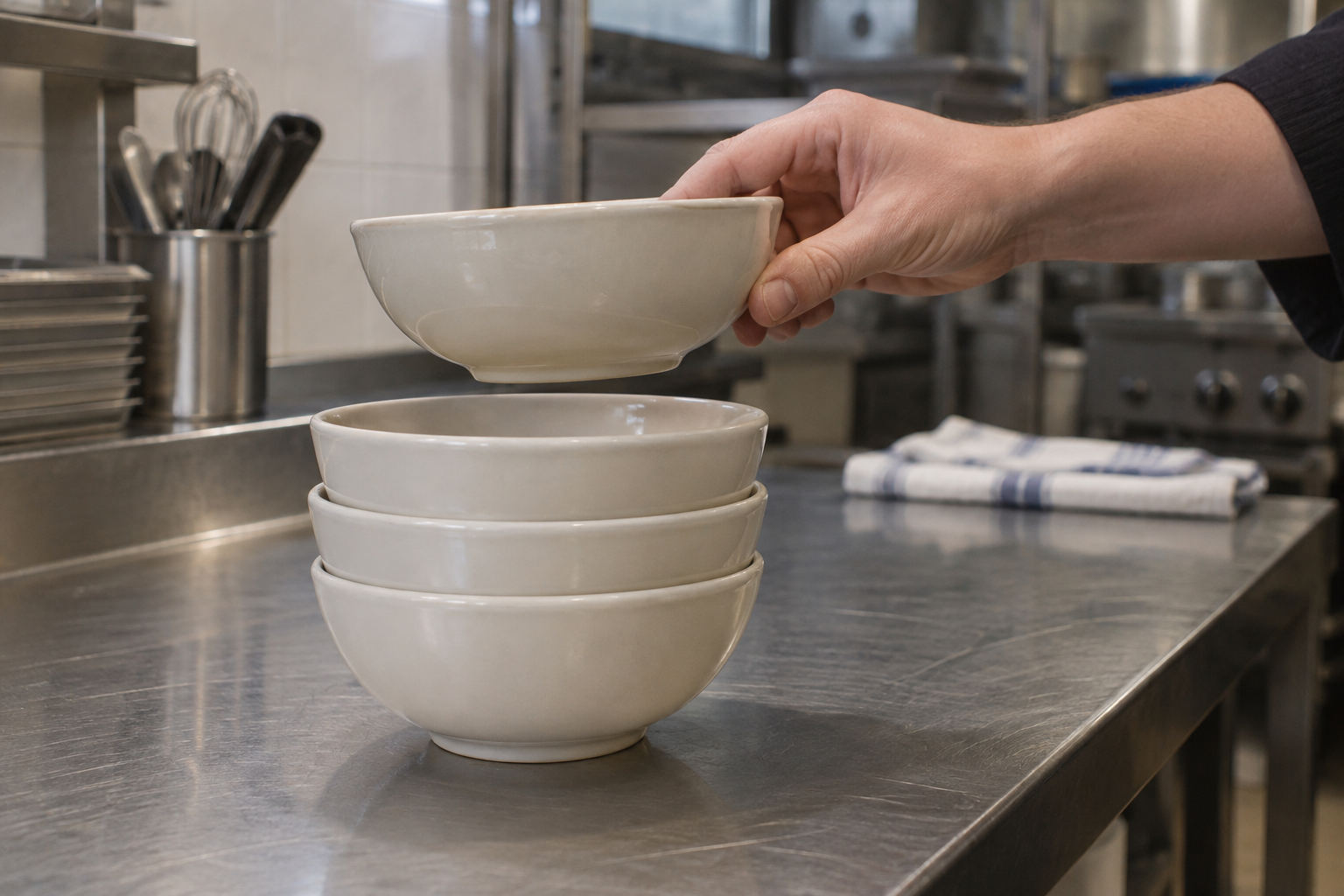
State the measurement method alongside the agreed limits. A bowl’s full-to-rim capacity and useful serving volume are different measurements. A softly irregular plate may need more than one width measurement.
Fired dimensions also depend on shrinkage. Wall thickness, foot shape, and firing support can affect the finished profile. Agree realistic limits from production-route samples; do not copy precision tolerances from a different material.
Include the intended stack size and the relevant checks for stability, rim contact, or removal from the stack. My test of a good instruction is simple: could the buyer and factory repeat the check and compare their results?
Give Every Approval a Clear Stop Point
An order can be commercially confirmed while some technical work remains open. Record what may proceed and what must wait.
For a new decoration, you might approve the body and shape while keeping decorated bulk production on hold. For packaging, printed artwork approval does not automatically approve the protective structure. Those decisions need separate entries.
I use four plain statuses: pending, approved, approved with stated conditions, and superseded. A conditional approval should name the condition, owner, and affected work. Avoid a broad “approved” stamp beside an unresolved glaze question.
Inspection needs the same clarity. Name who inspects, when the goods must be ready, which lot is covered, which acceptance plan applies, and who authorizes shipment. If a sample-based inspection is used, agree its parameters and defect classifications with QA before booking it.
Also record the process for a failed inspection: how the lot is held, who reviews sorting or rework, how reinspection is arranged, and how costs are agreed. An inspection report should lead to a named decision, not sit in an inbox while the truck arrives.
Connect Packaging and Evidence to the Actual Order
The packing attachment should show the complete product configuration: selling unit, protective materials, orientation, inner pack, master carton, and marks. Identify approved artwork files separately from structural drawings.
Use a packed sample to check whether a foot ring presses against another glazed surface or whether a rim takes load when the box closes. A drawing alone may miss those contact points.
When planning transport evaluation, discuss suitable ISTA test procedures with the test provider. Record the selected procedure and pack version with the result. A report for another piece count or cushioning system needs review before it supports this order.
For product evidence, identify the destination market and the agreed laboratory scope. The FDA’s lead in food and foodwares page is useful background for a foodware testing discussion. It does not approve your particular ceramic range.
Ask for reports that can be traced to the relevant body, glaze, decoration, and product configuration. List who supplies the samples, who pays, and when the reports must be reviewed. Avoid asking only for a “food-safe certificate” without explaining what evidence is required.
Make a Change Visible Before It Reaches the Kiln
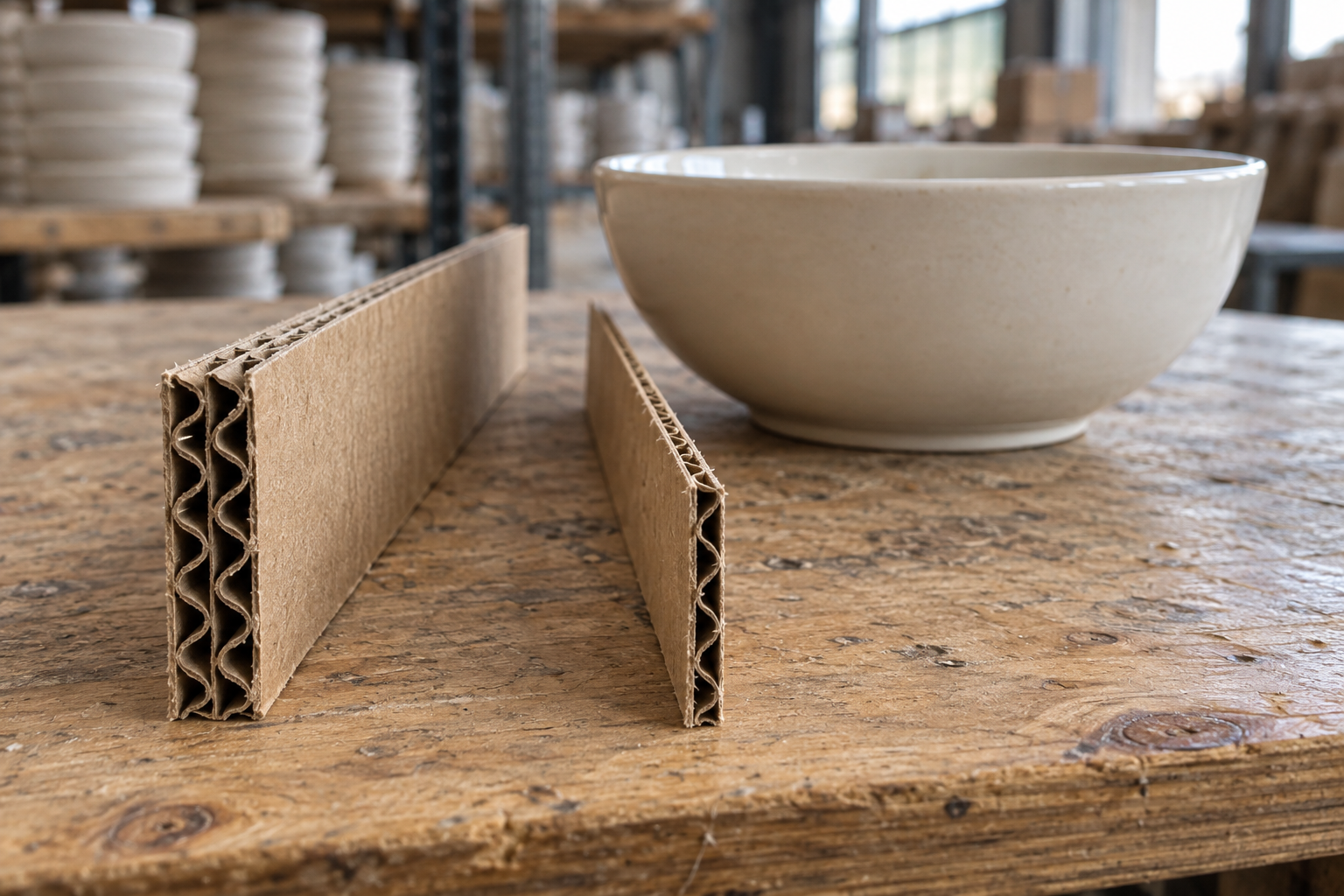
Imagine the approved bowl uses packing revision B. During preparation, the supplier suggests a thinner divider because the original material is unavailable.
I would ask for a change request identifying the original and proposed materials, affected SKUs, reason, cost effect, timing effect, and checks needed. The packing team should hold the affected work until the authorized buyer decision is recorded.
If the new divider is approved, issue revision C and mark B as superseded for that order. State whether existing packed stock must be changed. Keep the result connected to the PO instead of leaving the decision only in a chat.
Apply the same discipline to a clay body, glaze recipe, decal, mold, or subcontracted operation. A change that looks small in a message can affect fired color, size, performance, or the relevance of test evidence.
My Advice as a Manufacturer
Before release, ask the supplier to return one consolidated acknowledgment naming the PO revision and all attachments. Request a separate list of exceptions. Silence beside an attachment is not the confirmation I would rely on for production planning.
For delivery, record the chosen rule, precise named place or port, and edition. ICC Incoterms rules help explain delivery responsibilities, costs, and risk allocation. They do not settle every payment, ownership, or quality issue in your agreement.
Separate production readiness, inspection, dispatch, and expected arrival. Write down what starts the lead-time clock and how approval delays are handled. A promised arrival date needs more coordination than a factory completion date.
Finally, agree how shortages, damage, and other nonconformities are reported and reviewed, including the evidence, response process, and resolution responsibilities. Have legal advisers review the custom dinnerware order terms where legal rights or remedies need to be established.
Questions Buyers Often Ask
Is a pro forma invoice enough?
It may record important commercial details, but check whether it also connects to the approved specifications, packing, samples, and acceptance plan. Its title alone does not tell you whether the order instructions are complete.
Can I approve a change by email?
Use the agreed written approval method and authorized contacts. Include the PO, affected revision, exact change, and decision. Then update the working documents so the factory team receives the same instruction.
Should every small visual variation be rejected?
Use the agreed standard. Ceramic variation can be acceptable within defined boundaries. Do not widen those boundaries after production merely because sorting is inconvenient.
Does passing inspection replace sample approval?
No. Samples and specifications define the target; inspection checks the identified lot against agreed requirements. Keep both connected to the same product version.
Conclusion
A useful ceramic dinnerware purchase order lets the buyer, factory, QA team, and packing team work from the same decision. Name the versions, define the checks, assign the approvals, and make changes traceable.
If you are preparing an order, contact FENN with your SKU schedule, sample references, and open production questions. I can help you identify technical details to settle before release. Remove confidential commercial information that is not needed for the review.