
Short Answer
Ceramic dinnerware shape design has a direct effect on plate warping, edge chipping, stacking, and final QC. Wide flat plates, very thin rims, sharp corners, uneven wall thickness, and complex handles usually need more development control. Before approving a shape, ask for production-like samples, a flatness check, stack review, rim inspection, firing support details, and packaging tests.
When a buyer shows me a plate drawing, I ask how the piece will sit in the kiln, stack in a carton, and feel in daily use. These questions help us keep the design while removing avoidable risk.
Best Criteria: A Good Shape Must Pass Three Moments
I judge a ceramic shape at three moments: in the kiln, in the stack, and in the customer’s hand.
- In the kiln: the piece needs even thickness, balanced shrinkage, and stable support.
- In the stack: rims, handles, and glazed surfaces should not press against weak points.
- In the hand: the edge should feel refined without becoming too fragile for the sales channel.
A shape is ready when it can pass all three, not when one sample looks good in a photo.
What Buyers See When the Shape Is Not Stable
Shape problems often arrive as simple complaints:
- A plate rocks on the table.
- A stack leans or feels tight.
- One rim sits higher than the others.
- A mug handle twists or pulls away from the body.
- A sharp corner chips inside the carton.
- A large platter looks slightly oval after firing.
The cause may start in the drawing, forming method, drying, firing support, glaze weight, or packaging. If we understand when the shape begins to move, we can choose the right control.
Shape Risk Map for Ceramic Dinnerware Buyers
Use this red-yellow-green map when you review a new shape with a supplier.
| Shape Feature | Risk Level | What Can Go Wrong | What I Would Ask the Factory to Show |
|---|---|---|---|
| Medium coupe plate with a clear foot ring | Green | Normal ceramic variation | Flatness check, stack of 10, rim inspection |
| Deep bowl with an even wall | Green | Slight ovality or glaze flow | Top-view measurement and glaze range |
| Wide flat plate with a small foot ring | Red | Plate warping, rocking, uneven rim height | Production-like samples from more than one kiln position |
| Very thin or sharp rim | Red | Ceramic edge chipping during handling and use | Rim profile, impact review, packed-carton test |
| Square plate with sharp corners | Red | Corner lift, uneven shrinkage, corner chipping | Corner-height check and packaging protection |
| Organic plate with gentle irregularity | Yellow | Buyer and factory may disagree about acceptable shape | Approved visual range and measurement points |
| Mug with a large or angular handle | Yellow | Handle twist, joint crack, poor carton clearance | Handle alignment, joint inspection, packed sample |
| Large serving platter | Red | Sagging, ovality, high breakage cost | Firing support plan, flatness range, shipping test |
The risk level tells you how much evidence you need before bulk production.
Why Wide Flat Plates Are More Likely to Warp
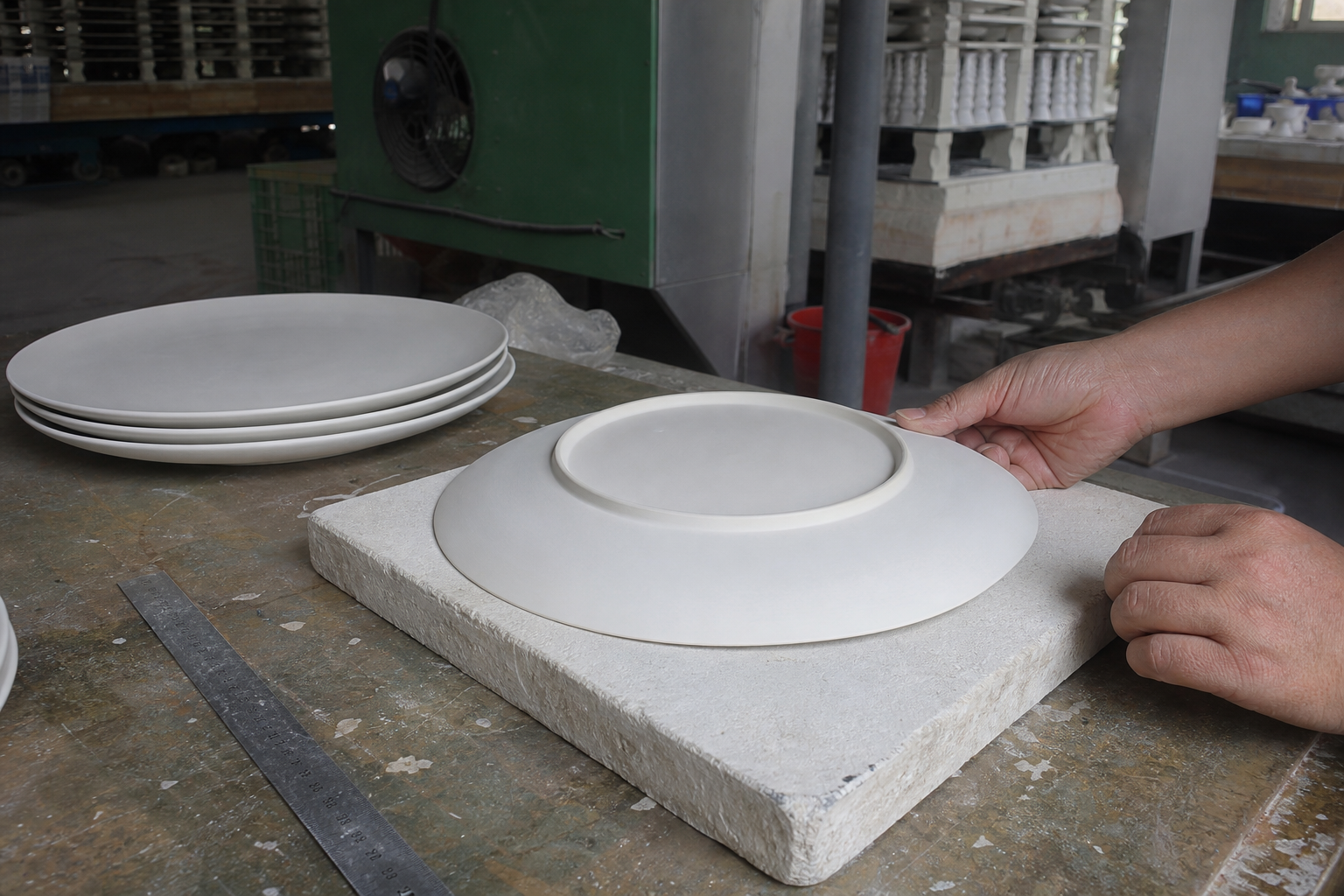
A ceramic plate shrinks during drying and firing. If the shape is wide and flat, a small difference across the surface can become visible at the rim. A small foot ring under a large plate may also leave too much area without support. Uneven thickness or glaze weight can pull the piece differently as it heats and cools.
When I review plate warping, I want the supplier to place the plate on a reliable flat surface, check whether it rocks, and compare several pieces, not just the best one. I also want to see rim height from the side.
Do not accept the answer, “Ceramics are handmade, so this is normal,” without a range. Some movement is natural. The factory should still define what is acceptable for your product and channel.
Firing Support and Shrinkage Must Match the Shape
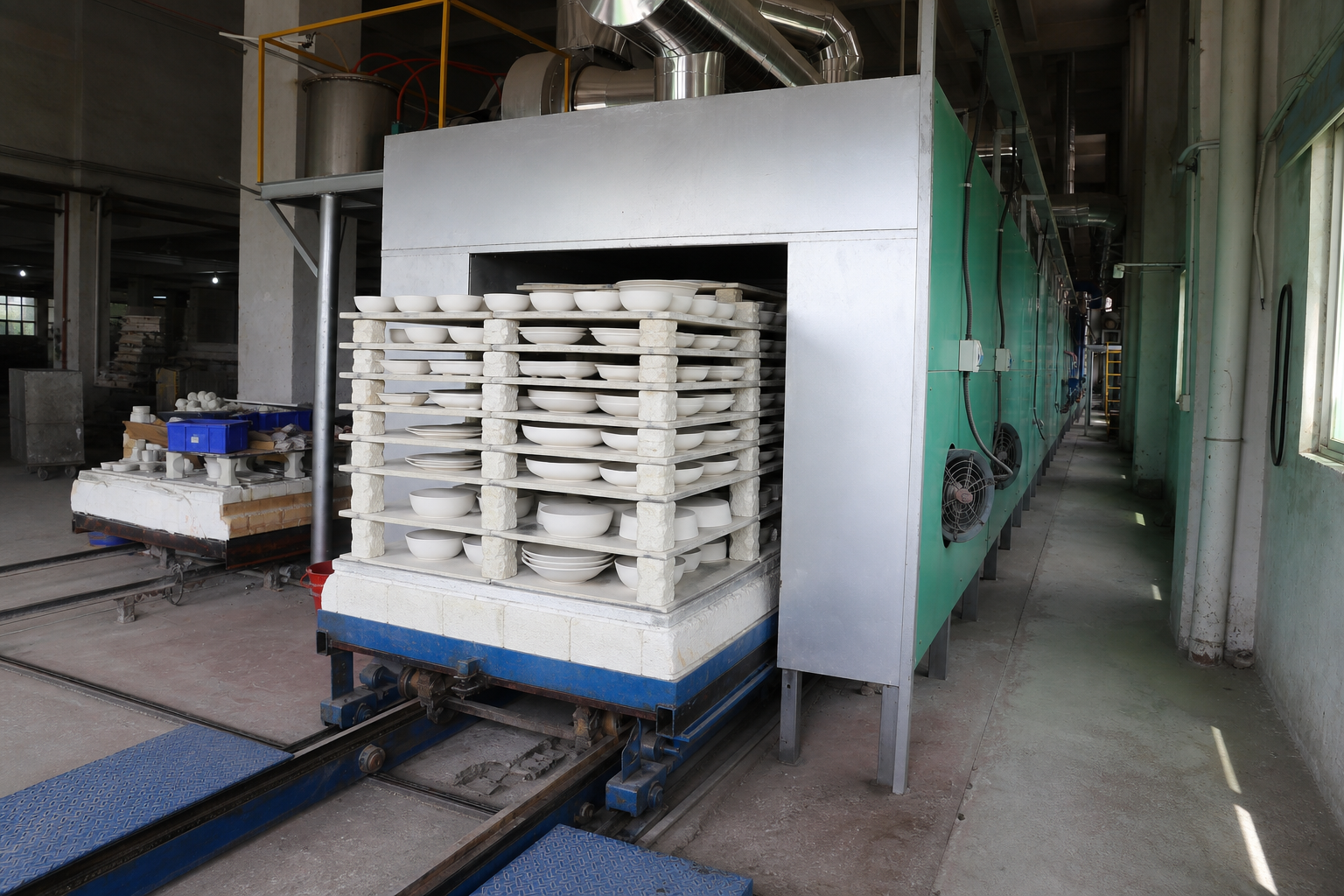
The same drawing can behave differently with different clay bodies, forming methods, firing temperatures, and kiln support.
For a wide plate or platter, ask how the piece sits during firing. Is the foot ring fully supported? Is special kiln furniture needed? Does the support leave marks? Can the factory repeat the same loading method in bulk?
A professional answer should connect the shape to the production route. For example, the supplier may suggest a slightly wider foot ring, a softer transition between the well and rim, or a small thickness change. These changes can improve stability without changing the product’s visual character.
I become cautious when a supplier says every shape can use the same process. Ceramic geometry does not work that way.
Thin Rims, Sharp Profiles, and Ceramic Edge Chipping
Buyers often ask for a thin rim because it feels refined. That can work, especially in porcelain, but the rim still needs enough strength for handling, packing, retail, and daily use.
A sharp edge concentrates impact in a small area. A softly rounded edge spreads the contact more gently. The clay body, firing, glaze fit, and rim thickness all matter, but shape is the first decision.
For hotel or restaurant use, I favor a practical rim and stable stacking. A finer homeware rim may be acceptable if the pack format and customer use support it. The useful question is not, “Can you make this rim?” It is, “Can this rim survive my channel?”
ASTM ceramic tableware impact testing can provide a useful standards direction when a buyer wants a more formal impact-resistance discussion. The exact test plan should still match the item, use case, and buyer requirement.
Stackability Is a Quality Issue, Not Only a Storage Issue
If glazed surfaces rub, the product may show marks. If rims carry the full weight of the stack, small chips may appear. If a mug handle touches the mug above it, transport vibration can create a pressure point. If bowls lock too tightly, customers may damage them while separating them.
For sample approval, ask to see a real stack:
1. Stack the intended retail or food-service quantity.
2. Check whether the stack leans.
3. Look for rim-to-rim or glaze-to-glaze contact.
4. Measure the total stack height for carton planning.
5. Separate the pieces and inspect contact points.
One sample cannot answer these questions.
Packaging Cannot Rescue a Weak Shape by Itself
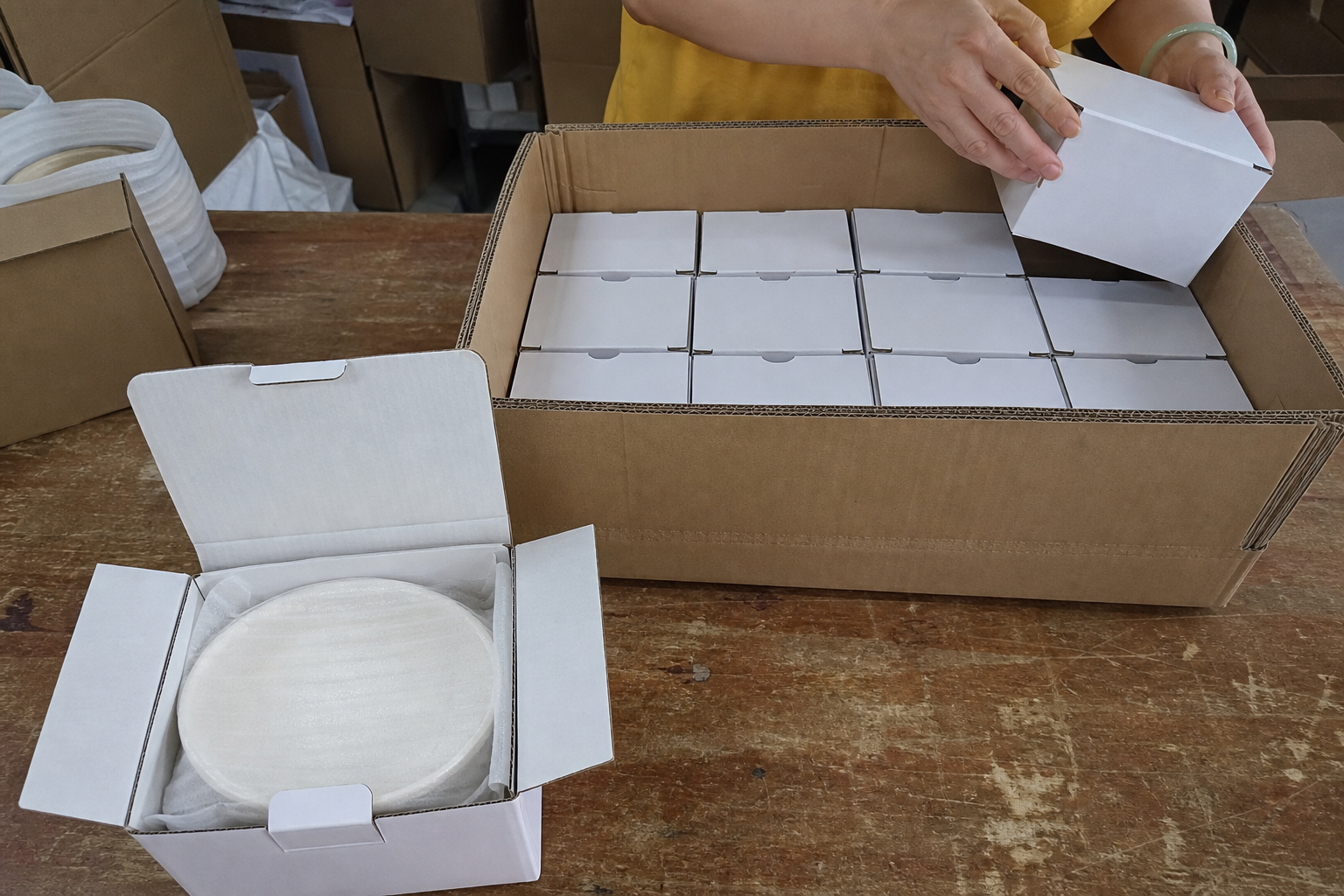
Good packaging protects the product, but it should not be used to hide an unstable shape.
The carton structure, dividers, cushioning, piece orientation, and empty space should match the rim and profile. A thin rim may need more separation. A handle needs clearance. A square plate needs corner protection. A heavy platter needs support that prevents movement.
I suggest using recognized ISTA package test procedures as a planning reference when building a transport test with your packaging partner or lab. The final test level should reflect carton size, weight, shipping route, and customer requirements.
After testing, check for small rim chips, handle joint cracks, glaze rubbing, and changes in stacking, not only full breakage.
The Sample Approval Gate I Use
Before a buyer signs off on a risky ceramic shape, I would pass it through five gates.
| Approval Gate | Buyer Check | Strong Evidence |
|---|---|---|
| 1. Drawing review | Dimensions, rim, wall, foot ring, handle, stack space | Marked drawing with agreed measurement points |
| 2. Production-like sample | Shape made with the intended body, glaze, and process | Several samples, not one selected hero piece |
| 3. Shape control | Flatness, ovality, rim height, handle alignment | Written tolerance or approved visual range |
| 4. Use and stack check | Stable table contact, comfortable handling, safe stacking | Stack photos, measurements, contact-point review |
| 5. Packaging check | Protection matches weak edges and shipping route | Packed sample and agreed transport test result |
If a supplier cannot explain one gate, keep the project at sample stage. It is cheaper to adjust a drawing than to sort a bulk order.
Food-Contact Checks Still Apply to a Good Shape
A stable shape is not automatically a compliant product. Glaze, decoration, food-contact area, and target market still need review.
For general official background, buyers can consult FDA lead guidance for foodwares and European Commission food contact materials information. Product-specific reports should match the body, glaze, decoration, item type, and selling market as closely as possible.
Shape quality and compliance are separate approval lines, not one vague “quality certificate.”
My Advice as a Manufacturer
My advice is to protect the main design idea, then simplify the hidden risks.
Keep the broad rim, but give it better support. Keep the organic outline, but define an approved range. Keep the fine edge, but test the pack and channel honestly. Keep the statement handle, but check the joint and carton clearance.
When we review a new ceramic dinnerware shape design at FENN, I prefer to discuss the drawing, clay body, forming route, glaze, stacking, target market, and packaging together. These choices affect one another.
The best factory answer is not always “yes.” Sometimes a small design change is the most professional answer a manufacturer can give.
Questions Buyers Often Ask
How much plate warping is acceptable?
There is no single number for every plate. Acceptance depends on diameter, profile, use, customer expectation, and inspection method. Agree on the measurement surface, points, sample size, and visual limit before bulk production.
Are thin-rim plates always easier to chip?
They usually have less material at the impact point, so they need closer review. Body strength, firing, glaze fit, rim profile, handling, and packaging also affect the result.
Can an organic shape have a normal tolerance?
Yes. Approve a visual range and identify the dimensions that still matter, such as overall size, foot stability, stack height, and rim movement.
Should buyers approve only one dinnerware sample?
No. One sample can hide normal production variation. For higher-risk shapes, review several production-like pieces and a full stack.
Can packaging solve ceramic edge chipping?
Packaging can reduce impact and movement, but it cannot fully correct a rim that is too fragile for the channel. Shape and packaging should be developed together.
Conclusion
Ceramic dinnerware shape design is a quality decision long before final inspection. Wide flat areas, small foot rings, thin rims, sharp corners, complex handles, and poor stack clearance can raise warping and chipping risk.
Ask your supplier to connect the drawing to firing support, sample variation, stackability, rim strength, and packaging. If you are developing a new plate, bowl, mug, or platter, send FENN your drawing, target market, pack format, and expected use. I can help you review the shape before the risk becomes part of the bulk order.
Need help reviewing a ceramic dinnerware shape?
Send FENN Home your product drawing, target market, pack format, and expected use. Kitty can help identify warping, stacking, rim, and packaging risks before bulk production.