
Short Answer
For ceramic dinnerware quality inspection, buyers should define critical, major, and minor defects before production, then check safety, function, appearance, dimensions, logo, color range, packaging, and carton condition. AQL ceramic tableware inspection is useful, but it only works when the supplier and buyer agree what counts as a defect.
When a buyer asks me, “Kitty, what quality standard should I use?”, I usually say: start before the final inspection. Final inspection can catch problems, but it cannot repair a weak standard. In real ceramic production, quality control is a chain: sample approval, in-process checking, final sorting, and packing review.
Definition Box: What Quality Inspection Means for Ceramic Dinnerware
Ceramic dinnerware quality inspection checks whether plates, bowls, mugs, and serving pieces match the approved sample, buyer specification, food-contact expectations, visual standard, packing plan, and shipment requirements.
It is not only looking for broken pieces. It is also checking whether the product is safe to sell, easy to use, consistent enough for the brand, and protected for international shipping.
Inspection Should Start Before Final Packing
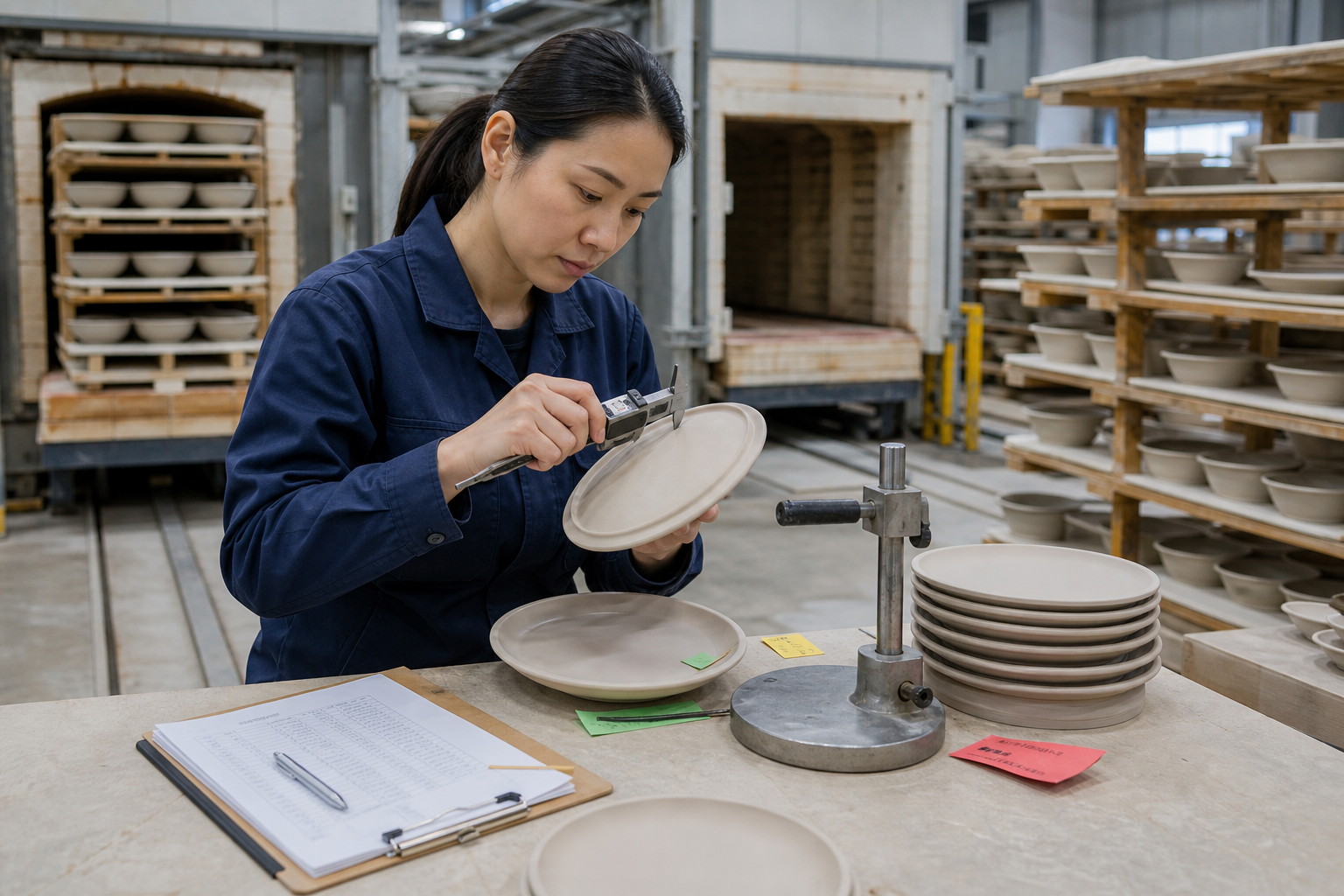
I like to walk buyers through the factory process because it shows where problems begin.
First, check the approved master sample. This should include shape, size, weight feeling, clay body, glaze color, finish, logo, decoration, foot ring, and packing method. If the master sample is not clear, the final inspection has no strong reference.
Second, check in-process control. For ceramic dinnerware, this can include clay condition, forming, drying, trimming, bisque firing, glazing, decal work, final firing, and sorting. A warped plate cannot be fixed by a better carton. A glaze color that is not controlled during firing cannot be solved by final photos only.
Third, check final goods before packing. This is where defect categories matter most. The inspector should look at real pieces from the production lot, not only the best samples.
Fourth, check packaging. For export dinnerware, packaging is part of quality. A beautiful bowl is still a failed order if it arrives broken.
The Defect Categories Buyers Should Agree On
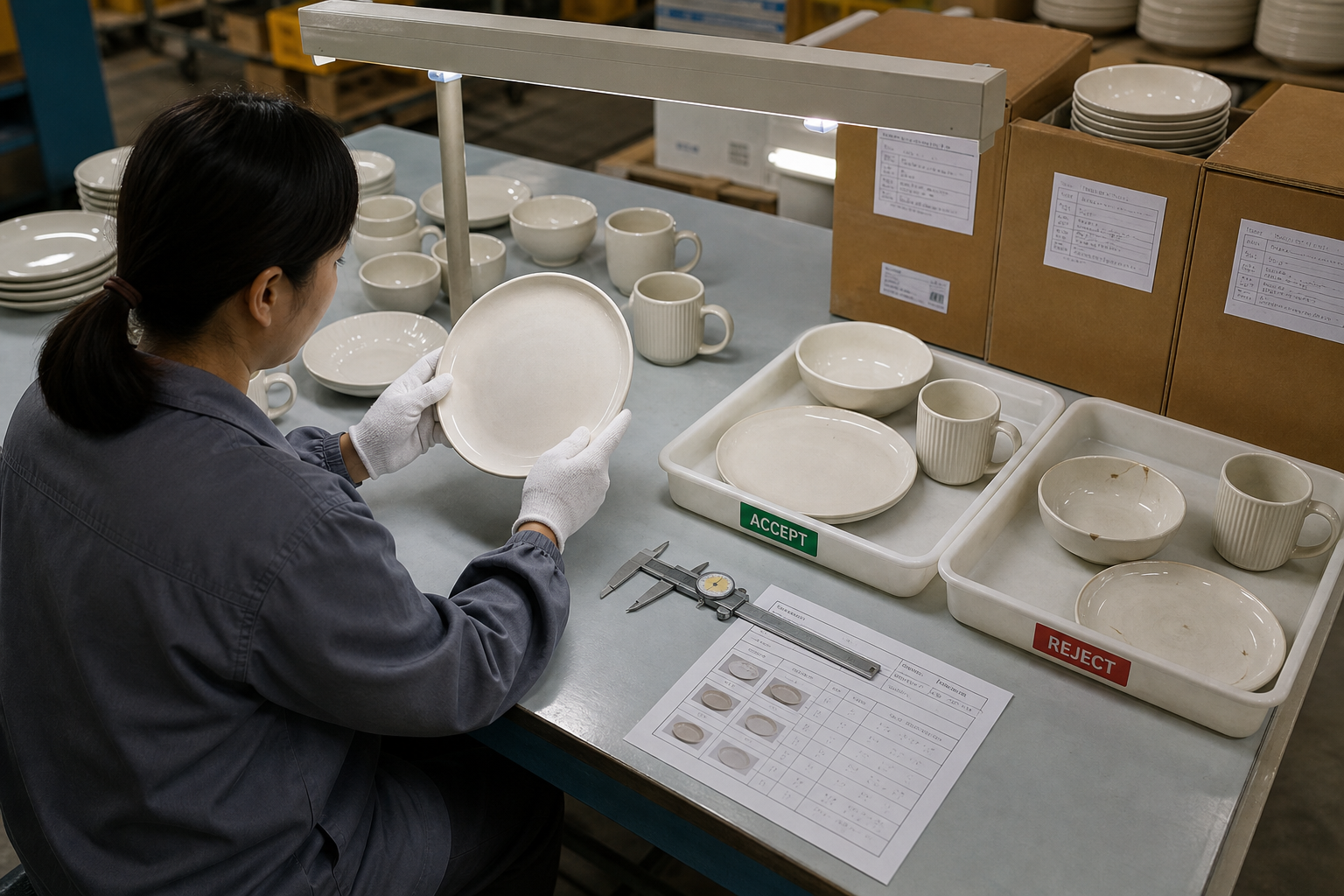
Before bulk production, ask the supplier to classify defects into three groups. This keeps the inspection conversation practical.
| Defect Level | Dinnerware Examples | Buyer Decision |
|---|---|---|
| Critical | Cracks through the body, sharp broken edges, unsafe decoration on food-contact areas, wrong item that affects compliance | Usually reject or hold for investigation. |
| Major | Chipped rim, severe warping, wrong size, wrong logo position, obvious color mismatch, unstable mug handle, packing that cannot protect goods | Usually reject above agreed limit or require sorting. |
| Minor | Tiny speck, light glaze dot, slight handmade variation, small foot-ring mark, small color shift within approved range | Accept only if within agreed visual standard. |
The exact standard changes by brand level. A handmade-look reactive glaze line can accept more natural variation than a clean white hotel-style porcelain line. But the boundary must be written. “Looks okay” is not a quality standard.
A Practical Dinnerware QC Checklist
Use this dinnerware QC checklist before the final inspection date. It helps the supplier prepare the right records and helps the buyer avoid last-minute arguments.
| Checkpoint | What To Inspect | Professional Evidence To Request |
|---|---|---|
| Product identity | Item code, shape, size, color, set count | Approved sample photo and production order sheet |
| Dimensions | Diameter, height, capacity, weight, foot ring | Measurement record with tolerance range |
| Appearance | Glaze coverage, pinholes, black spots, warping, color range | Defect board or approved limit photos |
| Function | Stacking, handle strength, stable foot, flatness | In-process check record or sample test notes |
| Decoration | Logo, decal, rim line, backstamp, food-contact position | Artwork file and decoration placement approval |
| Safety documents | Lead/cadmium, food-contact scope, use claims | Test report matching item, glaze, decoration, and market |
| Packaging | Inner protection, gift box, carton, labels, barcodes | Packing spec, carton photos, drop-test plan if needed |
| Shipment readiness | Quantity, carton mark, pallet, export documents | Final packing list and inspection report |
My simple rule: if the inspector cannot compare goods against a written standard, the inspection is only an opinion.
How AQL Helps, and Where It Does Not
AQL means acceptance quality limit. In many consumer goods inspections, it gives a sampling plan instead of checking every piece. For AQL ceramic tableware, the buyer may inspect a sample quantity from the full lot and decide whether the lot passes based on agreed defect limits.
This is useful because dinnerware orders can contain thousands of pieces. But AQL is not magic. The buyer and supplier still need to define critical, major, and minor issues.
From a factory point of view, I prefer to agree on defect categories before production starts, then use AQL-style sampling for final inspection. For important launches, I also like in-process checks because they catch shape, glaze, and decoration problems earlier.
What Inspectors Should Look For on Ceramic Pieces
For plates, I check flatness, rim smoothness, foot ring, stacking, glaze coverage, warping, pinholes, black spots, color range, and surface feel. A plate may look fine alone but wobble when stacked.
For bowls, I check roundness, capacity, foot stability, glaze pooling, inside food-contact surface, and whether sets nest safely. Deep bowls can hide glaze or color issues near the inner curve.
For mugs, I check handle attachment, rim comfort, capacity, logo position, and decoration. A mug handle should not look thin at the joint. If the mug has metallic decoration, the buyer should be careful with microwave claims.
For all items, check the bottom. Foot-ring roughness can scratch tables or other plates. A small bottom detail can create a big customer complaint.
Packaging Inspection Is Part of Dinnerware QC
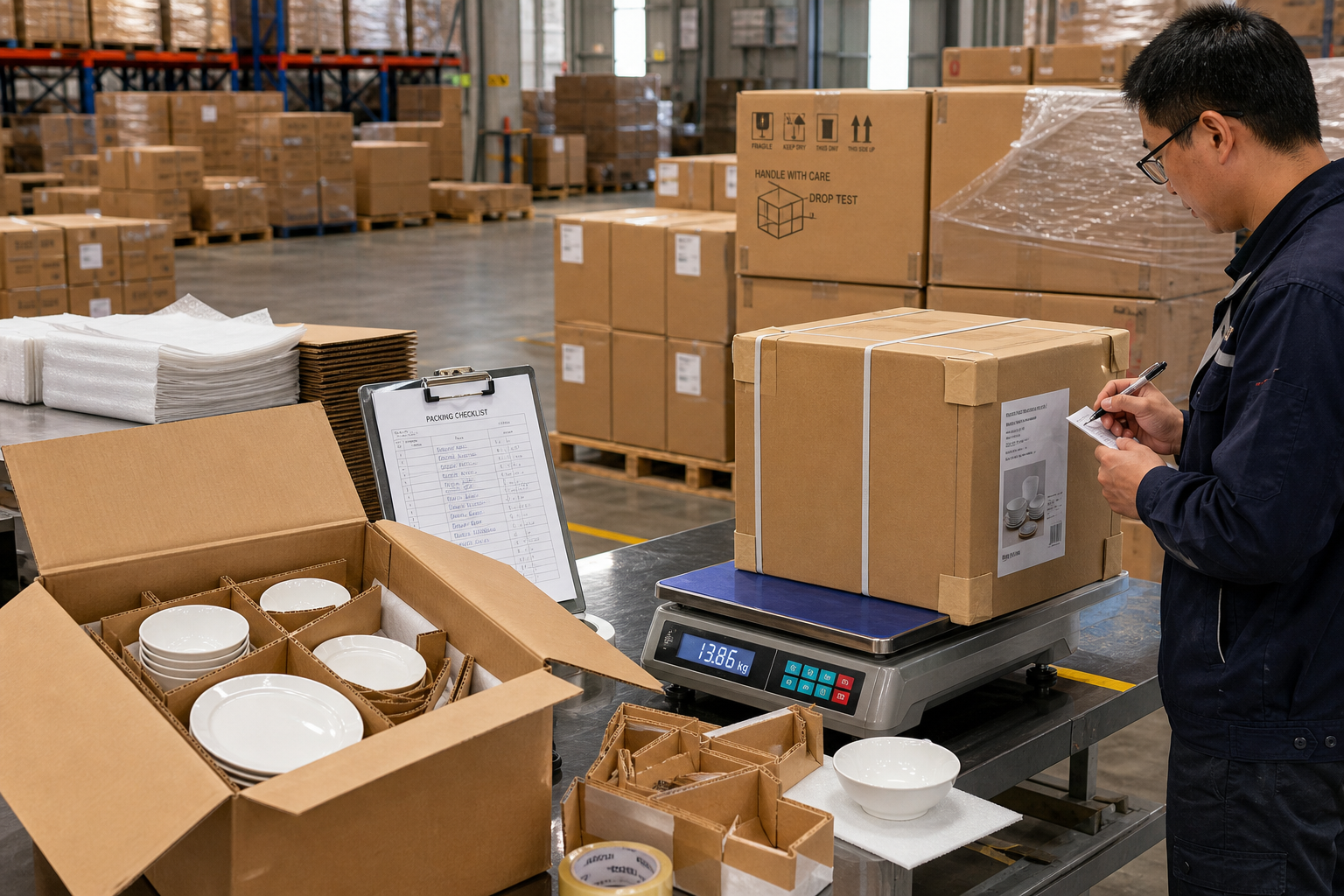
Many broken shipment problems begin before the carton leaves the factory.
The inspection should confirm how each item is protected, how plates are separated, how bowls are nested, how mugs are held, and whether the master carton is strong enough for export handling. If the product is sold as a set, check the set count inside the retail box. If the product is open stock, check item labels, GTIN needs, and carton marks carefully.
For fragile ceramic orders, a buyer may request carton drop testing or other transit checks through a lab or packaging partner. The test plan should match the product weight, pack format, shipping route, and retailer requirements.
Do not judge packaging only by thickness. Good packaging controls movement, pressure, and stacking.
What to Ask the Supplier Before Inspection
Ask these questions before you book the final inspection:
- Which approved sample will the inspector use as the standard?
- What tolerance is allowed for size, weight, and capacity?
- What color range is acceptable for this glaze?
- Which defects are critical, major, and minor?
- What AQL level or sampling plan will be used?
- Are food-contact test reports matched to this item, glaze, decoration, and market?
- Are packaging materials the same as approved?
- Will the supplier provide in-process QC records and final packing photos?
A professional supplier should answer with documents, photos, records, and clear limits. A weak answer is only, “Do not worry, our quality is good.”
My Advice as a Manufacturer
My advice is to write the inspection standard while the sample is being approved, not after the goods are finished.
When we review samples at FENN, I try to mark what must match exactly and what can vary naturally. For example, diameter and logo position may need tighter control. A speckled glaze may need an approved range board. A handmade-look rim may allow small variation, but chips and sharp edges should not pass.
If you are preparing a ceramic dinnerware quality inspection plan, send FENN your approved sample photos, SKU list, target market, packaging method, and quality concerns. I can help you turn them into a practical inspection checklist before production starts.
Questions Buyers Often Ask
Should every ceramic dinnerware order use AQL?
Many export orders use AQL-style sampling, but the buyer should choose the plan based on order size, risk, retailer requirement, and product complexity. High-risk issues may need 100% sorting or earlier process checks.
What defects should never be accepted?
Do not accept cracks, sharp broken edges, unsafe food-contact surfaces, unstable handles, wrong product identity, or packaging that cannot protect the goods. These are not normal ceramic variation.
Are pinholes and black spots always defects?
Not always. Tiny marks may be acceptable on some handmade-look lines, but they should stay within the approved limit. Large, dirty-looking, sharp, or food-contact surface problems need stricter judgment.
Can final inspection replace food-contact testing?
No. Final inspection checks visible and physical quality. Food-contact testing checks safety and compliance. For US or EU sales, use FDA ceramicware lead guidance and EU ceramic food-contact rules as source directions, then make sure reports match the real item, glaze, decoration, and market.
How can I reduce inspection disputes?
Approve defect photos, tolerance ranges, packaging specs, and AQL rules before production. The more visual and written the standard is, the fewer arguments happen at shipment time.
Conclusion
Ceramic dinnerware quality inspection works best when buyers define the standard early. Agree on defect levels, use AQL ceramic tableware sampling where suitable, check process records, inspect packaging, and make sure safety documents match the real product.
If your next order needs a clear dinnerware QC checklist, ask FENN to review your samples and inspection plan before bulk production. A little work before production can save a difficult shipment conversation later.
Need a clearer dinnerware QC standard?
Send FENN your approved sample photos, SKU list, target market, packaging method, and quality concerns. I can help turn them into a practical inspection checklist before bulk production starts.