
Short Answer
Good ceramic dinnerware gift packaging separates each piece, protects rims and handles, and keeps the presentation box inside a suitable transport pack. Approve the whole packed set with real fired samples, then check both ceramic damage and gift-box appearance after a route-appropriate transport test. A neat opening experience matters, but it must not remove the protection that makes delivery possible.
When a buyer shows me a lovely gift-box drawing, I want to see what happens underneath the tissue. Where does the mug handle sit? What stops two bowls touching? Can the recipient lift the first piece without tipping the others?
I am Kitty. From a factory point of view, those small questions connect the design to the packing line. Let us follow a two-mug gift set from the bench to the person opening it. The same thinking helps with bowls and small plate sets.
Gift pack versus transport pack: The gift pack presents the product. The transport pack protects it through the agreed delivery route. Sometimes one structure does both jobs, but that needs evidence from the complete packed product.
Start Ceramic Dinnerware Gift Packaging With the Journey
Before choosing ribbon or print, I ask where the set will go after leaving the factory. A gift box delivered in a master carton to a shop has a different final journey from one sent individually to a home.
Write down every repacking point. If a warehouse removes the master carton, what protects the gift box afterward? The answer should name the final shipping box and its packing method. “Export packing included” leaves that last journey unanswered.
I also ask what the buyer promises on the product page. If the box is part of the gift, a crushed corner may create a complaint even when both mugs arrive intact. That promise belongs in the acceptance standard from the beginning.
My early approval rule is simple: the supplier must show the product, the gift presentation, and the shipping protection together. A box drawing alone is too early for approval.
At the Bench: Fit Protection Around Fired Pieces

Start with actual fired mugs within the agreed production range. Firing shrinkage and shape variation mean a compartment made around one small sample may squeeze a larger acceptable piece.
For our example, I would explore separate folded corrugated inner boxes with clean paper wrapping, held within the gift box. This is a development route, not a proven specification. Tissue keeps the opening tidy and can help prevent rubbing; thin tissue alone is not impact cushioning.
The support should restrain the mug through suitable body areas without forcing the handle against a wall. Check clearance above the rim as well. A lid that closes only when someone pushes down on the ceramic needs a redesign.
For plates, examine where each foot ring sits relative to the glazed face beneath it. For bowls, check that nested rims cannot strike one another when the pack moves. A separator that looks large enough when flat may shift during handling.
I judge a supplier’s answer by whether they can show the folded structure, the material specification, and the fit with different acceptable samples. “We will add more paper” does not define a repeatable pack.
At the Closing Station: Give the Story Card Its Own Space
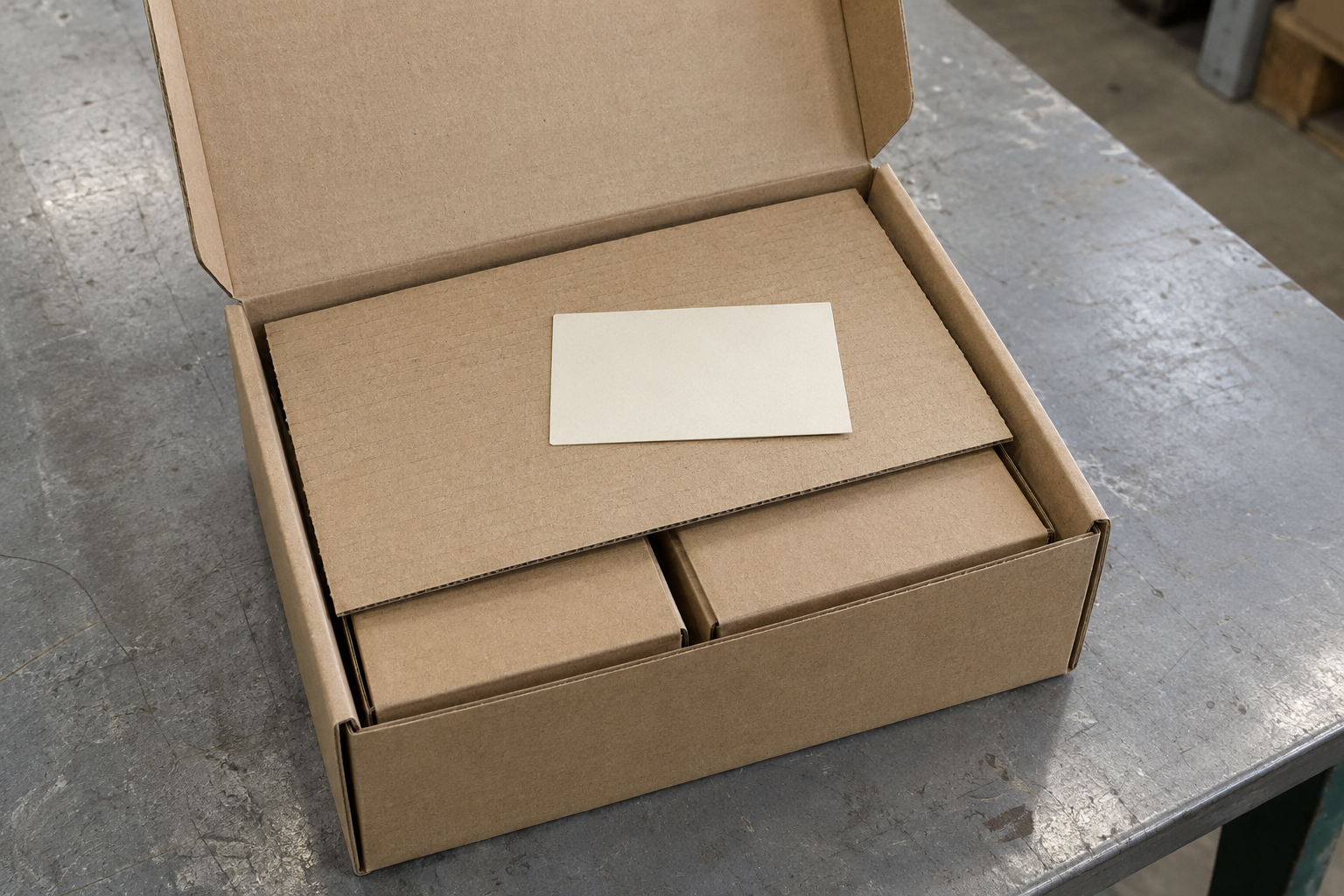
Giftable tableware needs a small moment of discovery. It does not need loose accessories scattered over fragile pieces.
Put the story card above a protective top layer or in a defined paper pocket. Keep it easy to find. Avoid making the recipient dig between mugs, and keep ribbons or other additions from pulling a piece out when the lid opens.
Try opening the sample yourself without instructions from its designer. Can you see where to lift? Does the box stay steady? Can you put everything back without tearing the structure? This is particularly useful when a gift buyer wants to inspect the contents before giving it away.
A useful card can explain the glaze character, care, and replacement contact. Any dishwasher or microwave wording should match the approved product claims. Gift copy cannot expand the limits of the ceramic inside.
I also keep environmental language specific. The FTC Green Guides summary is a useful US reference when reviewing claims such as recyclable or recycled content. Brown paper alone does not support a broad environmental promise. Ask for evidence about the actual materials and review the wording for the market where the set will sell.
At Dispatch: Protect the Box the Customer Will Give Away
Now close the gift pack and review the shipping layer. A decorative sleeve is not automatically a shipping carton. Neither is a rigid box simply because it feels expensive.
The FedEx guidance on packing breakables explains individual protection, cushioning, and double-boxing. Use the guidance relevant to your carrier and service when developing the parcel. Do not copy a photograph and assume its clearances work for your set.
For a gift line, I want two outcomes recorded after testing: the ceramics remain acceptable, and the presentation remains gift-ready. Define what gift-ready means. For example, agree reference photos showing acceptable light rubbing and unacceptable torn corners, open seams, or a badly creased sleeve.
Do not hide shipping labels under decorative parts that staff must remove later. Decide where labels and tape belong before the first warehouse trial. A warehouse operator should not have to guess which surface the customer is meant to see.
Run a Packing Trial Before Ordering All the Printed Boxes
A sample maker can spend several minutes making one pack look perfect. The packing team needs a method they can repeat throughout the order.
Have an operator follow the proposed sequence using the intended materials. Watch for repeated trimming, forced folds, extra tape, and improvised filler. Those are useful signals that the design or work instructions need attention.
Use this approval record during the trial. Keep the photos with the physical sample, rather than sending six separate messages that may get lost.
| Station | Record to keep | Hold approval when |
|---|---|---|
| Product loading | Fired sample IDs, wrap and support positions | Handles or rims carry pressure from the pack |
| Gift-box closure | Closed-box photo and material version | The lid needs force or the sleeve distorts |
| First opening | Short opening and repacking video | A piece lifts unexpectedly or protection tears |
| Parcel assembly | Outer-box specification and packing sequence | Warehouse staff must invent missing protection |
| Transport review | Test scope, pack version, before-and-after photos | Results do not identify the tested configuration |
| Production release | Signed pack sample and approved component list | Materials can change without review |
There is a cost decision here too. Compare board, print, wrapping, assembly time, storage space, and shipping size together. A cheaper flat box can cost more to assemble if every corner needs hand adjustment.
For seasonal graphics, I prefer exploring a replaceable sleeve around a stable protective structure. That can reduce leftover printed stock. Check the sleeve fit and confirm whether any change affects the tested pack; do not assume every cosmetic revision is harmless.
Open the Pack Again After Transport Testing
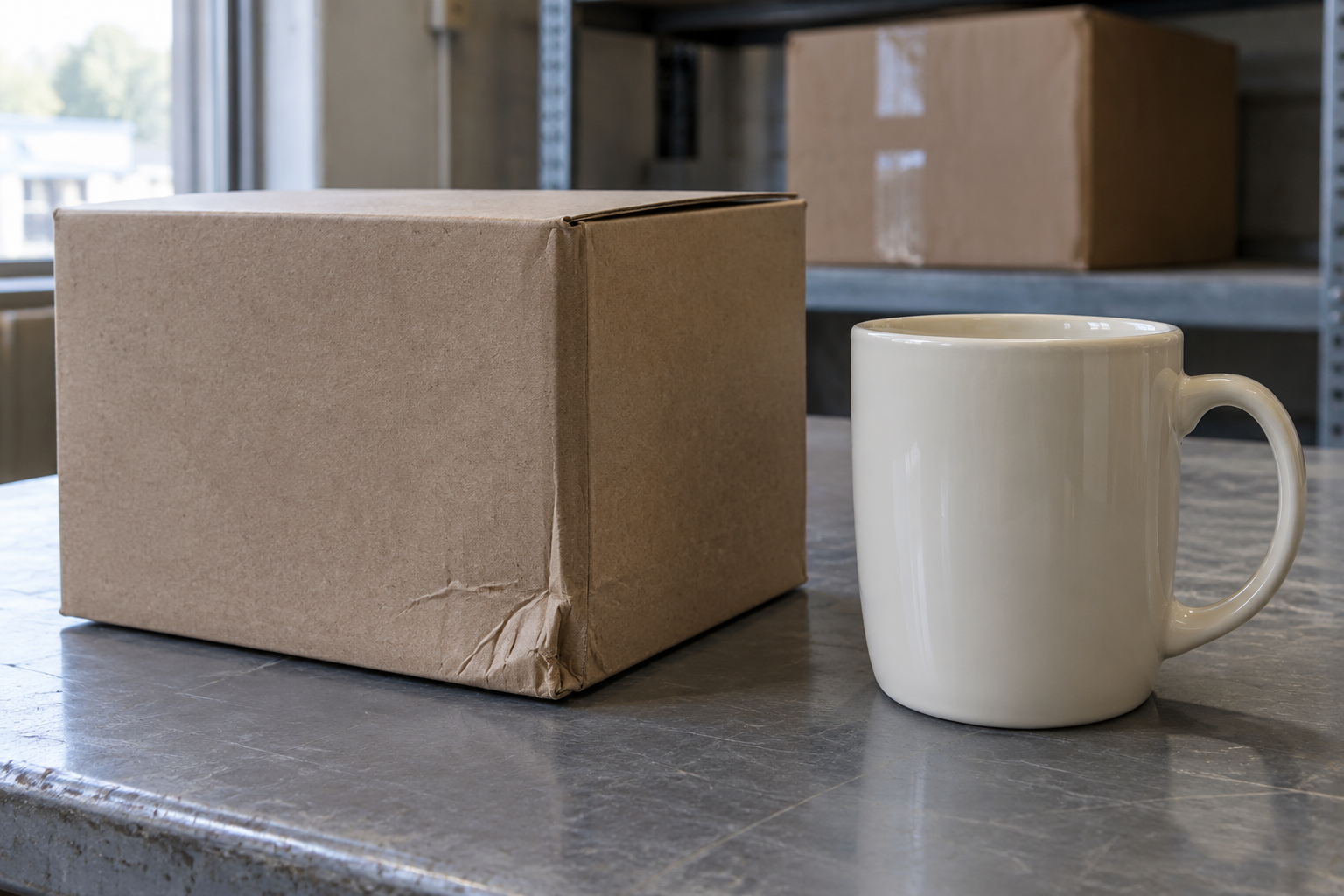
Ask the lab or packaging specialist to select the method for the actual distribution route. The ISTA test procedure guide distinguishes early screening from tests that simulate transport hazards. An informal drop demonstration does not replace an agreed test plan.
A useful report identifies the product quantity, packed weight, materials, pack revision, test method, and results. If the report covers a different mug or a different insert, ask how that difference has been assessed. The same outer-box size is not enough to establish equivalence.
Inspect each piece after the test, including rim edges, handle joins, and surfaces that can rub. Then inspect the gift presentation separately. Photograph the first opening before rearranging the contents; otherwise a shifted card or collapsed support may disappear from the record.
Passing a test does not guarantee zero damage in delivery. Keep early customer damage reports tied to pack versions so the team can investigate patterns. A handle complaint and a scuffed gift sleeve need different corrective actions.
My Advice as a Manufacturer
I would spend the first packaging meeting on the inner fit and the last on the ribbon.
A modest box with a clear opening sequence can feel thoughtful. An expensive box that needs force to close is still an unfinished design. My preferred approval sample is the complete set packed exactly as the warehouse will send it, with every component identified.
Keep one unopened reference pack and a separate opened example showing the layers. When production changes a board grade, wrap, insert, or product shape, review the fit and testing implications before accepting the substitution.
Questions Buyers Often Ask
Does a gift set always need molded inserts?
No. Folded corrugated structures and individual inner boxes are options worth developing. Choose by fit, protection, assembly, and the opening experience. No material name proves that the finished package works.
Can tissue replace protective cushioning?
Thin decorative tissue should not be treated as the main impact protection. Give wrapping and structural protection separate jobs, then test the complete combination.
Should the gift box pass the shipping test by itself?
Test the configuration that will actually be shipped. If the gift box travels inside an outer carton, include that carton and its protection. A box shipped alone needs its own suitable assessment.
What if the mugs survive but the gift box looks damaged?
Judge it against the agreed presentation standard. If an attractive box is part of the offer, product survival alone may not meet the buyer’s requirement. Improve the relevant layer and review the revised pack.
Build a Gift People Can Open With Confidence
The best ceramic dinnerware gift packaging brings protection and presentation into the same approval process. Start with the fired pieces, walk through packing and opening, then review the whole delivery configuration.
For related buying guidance, visit our Resources.