Short Answer
Ceramic dinnerware MOQ exists because each order needs clay preparation, glaze batching, kiln loading, decoration setup, packaging materials, inspection, and export handling. Buyers can often manage MOQ by using existing shapes, limiting colors, reducing first-launch SKUs, simplifying packaging, and planning phased reorders instead of asking a factory to split production into many tiny batches.
When a new buyer asks me, “Kitty, can we start with a very small order?”, I do not want to answer with only one number.
I first ask what they are trying to test. Is it the shape, the color, the market price, the retail packaging, or the full dinnerware range? Once we know that, we can often build a smarter path.
MOQ is not just a factory rule. In ceramic production, MOQ is tied to real setup work.
Definition Box: What MOQ Means in Ceramic Dinnerware
MOQ means minimum order quantity. For ceramic dinnerware, it may apply to one item, one shape, one glaze color, one decoration, one carton print, or one full shipment. A useful MOQ discussion should always say what the number covers.
If a supplier says “MOQ is 1,000 pieces,” ask: 1,000 pieces per shape, per color, per SKU, per decal, or per order?
That one question prevents a lot of confusion.
The MOQ Map I Use With First-Time Buyers
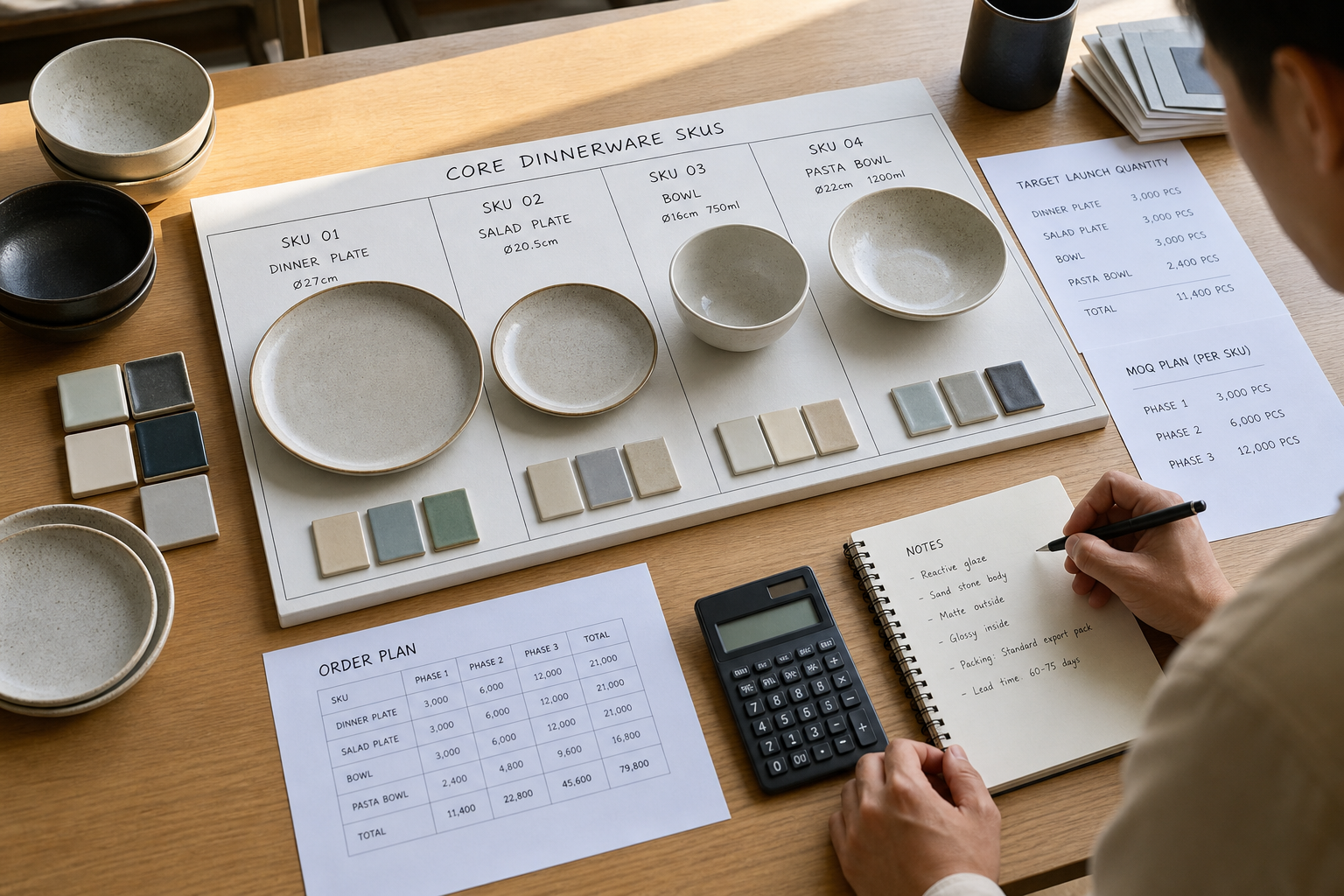
Before negotiating, I like to map the order into production blocks. This makes the conversation calmer and more practical.
| Buyer Goal | Lower-MOQ Path | Tradeoff To Accept |
|---|---|---|
| Test a new dinnerware line | Use existing shapes with one shared glaze family | The silhouette is less exclusive at first |
| Launch several items | Start with dinner plate, side plate, bowl, and mug only | Fewer choices on day one |
| Show brand identity | Use backstamp, simple decal, or packaging color | Less complex surface decoration |
| Reduce glaze risk | Choose one or two stable glaze colors | Smaller color story |
| Control cash flow | Split into pilot order and reorder plan | Unit cost may be higher in the first run |
| Improve retail test speed | Use standard export-safe packaging first | Gift-box experience can be upgraded later |
This table is not about making the product boring. It is about choosing where customization matters most.
Why Ceramic MOQ Is Different From Simple Assembly
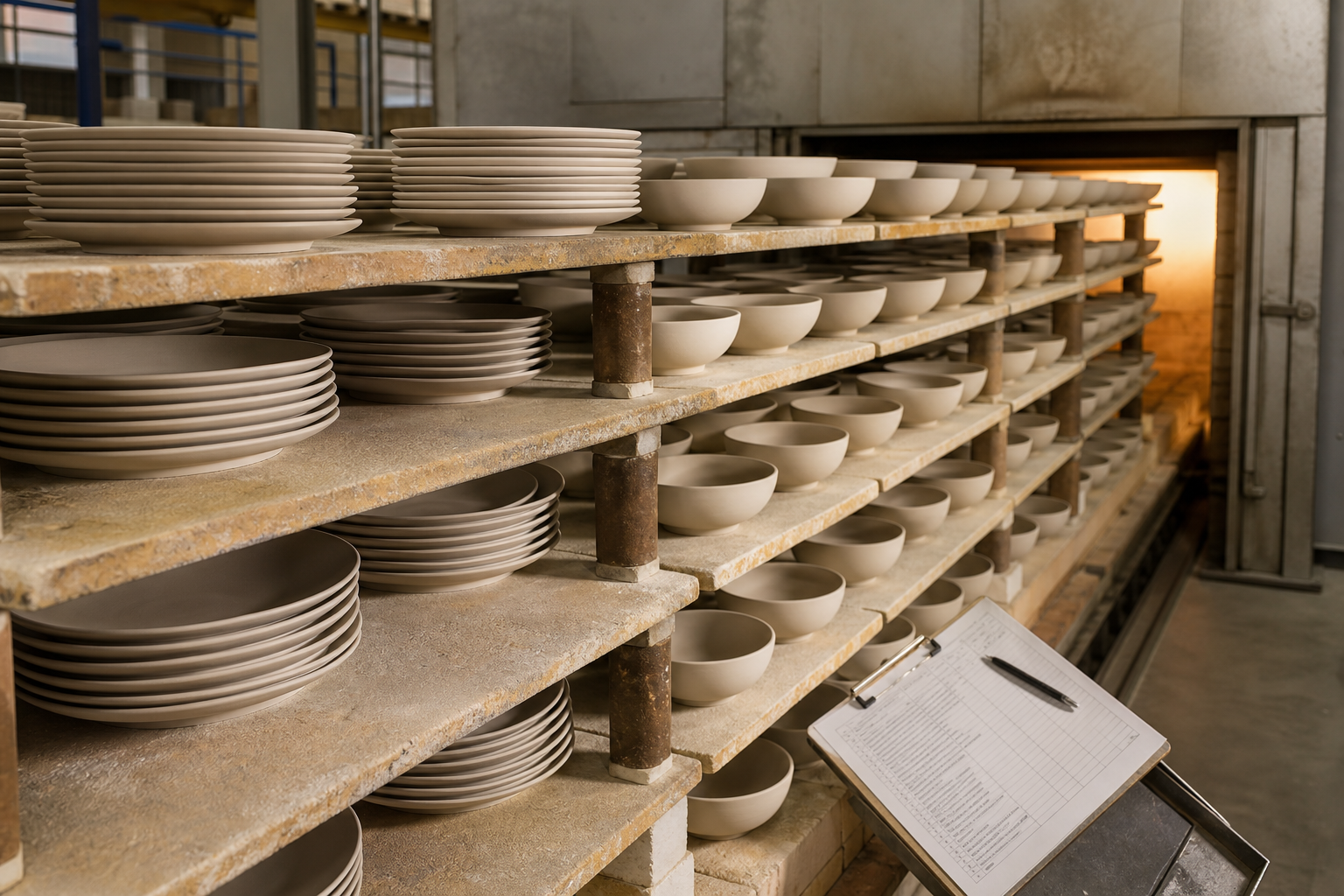
Ceramic dinnerware is not assembled from ready parts. The clay body is formed, dried, fired, glazed, fired again, decorated if needed, inspected, packed, and shipped. Each step has setup time and yield risk.
A low MOQ ceramic manufacturer may still need enough pieces to fill kiln space, mix glaze properly, run decoration efficiently, and check quality against a stable standard. If the order is too small and too mixed, the factory spends more time changing setups than making good products.
Six MOQ Drivers Buyers Should Understand
1. Shape and clay body preparation
Existing molds help reduce first-order pressure. New molds need drawing review, tooling, trial forming, shrinkage checks, and sample corrections. A professional supplier should explain whether the MOQ is linked to shape setup, mold availability, or production line efficiency.
2. Glaze batching and color control
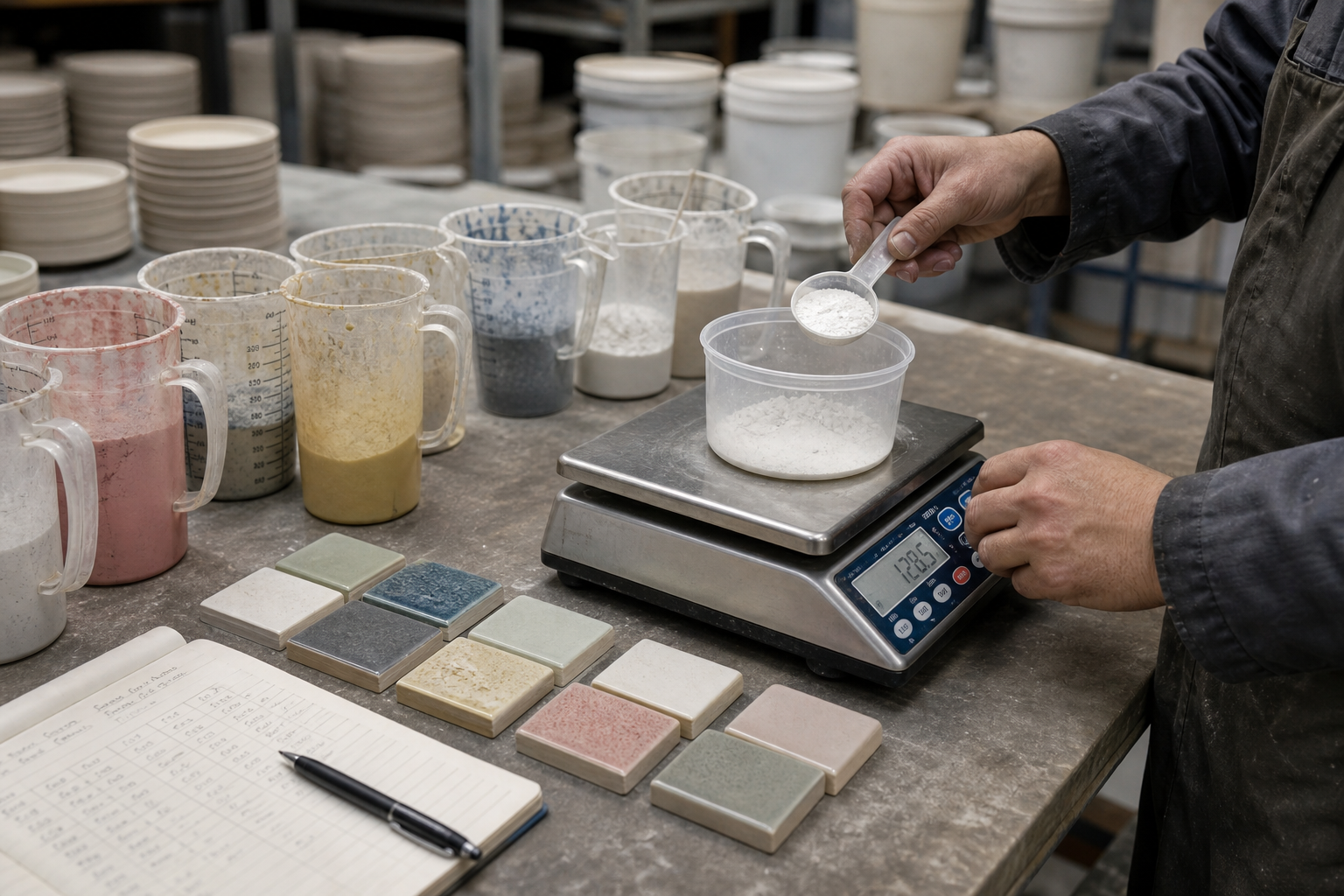
Glaze is one of the biggest MOQ drivers in private label dinnerware MOQ planning. A custom glaze needs batching, testing, firing, and approval. If you ask for six colors in one small first order, each color becomes a small production problem.
3. Kiln loading and firing yield
Kiln space has its own logic. Plates, bowls, and mugs use space differently. Heavy shapes, wide flat plates, reactive glazes, and delicate rims may need more careful loading. Good MOQ planning should leave room for normal ceramic loss, not assume every piece will pass.
4. Decoration, logo, and decal setup
A backstamp, logo decal, rim line, or pattern can have its own setup cost. Decal printing may also have a minimum print quantity. For OEM ceramic dinnerware MOQ, ask whether logo work is counted per SKU, per color, or per decal design.
5. Packaging materials
Packaging MOQ can be separate from ceramic MOQ. Printed boxes, color sleeves, inserts, labels, barcodes, and master cartons may each have supplier minimums. For a first launch, standard export-safe packaging plus a simple brand label or insert is often easier.
6. Inspection and export handling
Every order needs inspection, sorting, packing, carton marking, and shipping documents. A very small mixed order still needs serious QC work. Sometimes a focused order is easier to control than a tiny order with too many variations.
How To Ask for a Better MOQ Quote
Instead of asking, “What is your lowest MOQ?”, try a more useful question:
“Here is my target launch quantity, SKU list, glaze plan, packaging idea, and reorder expectation. Which parts make MOQ higher, and what can we simplify?”
A strong supplier answer should separate the drivers. The existing shape may be fine, but the custom glaze may need a minimum batch. The ceramic quantity may work, but the printed gift box may have a separate MOQ.
Here is a quote review tool I suggest.
| Quote Line | What To Ask | Good Answer Looks Like |
|---|---|---|
| Shape MOQ | Is this per shape or per full order? | “Per shape, but these four items can share the same body route.” |
| Color MOQ | Is this per glaze color? | “One glaze color is easier; three colors split the batch.” |
| Logo/decal MOQ | Is decal setup separate? | “Backstamp is simple; surface decal has print setup.” |
| Packaging MOQ | Is printed box MOQ separate? | “Standard carton is flexible; custom color box has its own minimum.” |
| Price | What changes if quantity is lower? | “Unit cost rises because setup is spread across fewer pieces.” |
| Reorder | Can the same standard be repeated? | “We will keep master samples and specs for reorder control.” |
A Practical First-Launch MOQ Plan
For a new brand, I like a phased launch more than an oversized first order.
Phase one can be a focused commercial test: core shapes, one or two glazes, simple logo, export-safe packing, and clear sample approval. Phase two can add more color, gift packaging, extra serving pieces, or deeper customization after sales data is available. Phase three can consider new molds or a fuller custom dinnerware order quantity if the line is working.
This approach protects cash flow and gives the factory a cleaner production standard.
What Not To Do When Negotiating MOQ
- Do not split one small order into too many colors.
- Do not ask for new molds, special glaze, full decoration, gift box, and tiny quantity all at once unless you accept the cost and timing.
- Do not compare quotes unless the MOQ scope is the same.
- Do not remove inspection to save money.
- Do not hide your target price.
My Advice as a Manufacturer
My advice is to negotiate the plan, not only the number.
When I review a small private-label dinnerware launch, I look for the easiest way to keep the brand feeling strong while removing unnecessary production pressure. Sometimes that means using existing shapes and spending the effort on glaze. Sometimes it means reducing eight SKUs to four for the first order.
At FENN, I would rather explain the real MOQ drivers early than promise an easy number and create problems later. A professional MOQ conversation should help both sides protect quality, cost, and reorder consistency.
Questions Buyers Often Ask
Can a ceramic dinnerware supplier offer very low MOQ?
Sometimes, especially with existing shapes, stable glazes, and simple packaging. But very low MOQ usually raises unit cost or limits customization. Ask what the MOQ covers before comparing suppliers.
Is MOQ counted by piece or by set?
It depends on the supplier and product plan. Always confirm whether MOQ is counted per piece, per set, per SKU, per shape, per color, or per full order.
Why does custom glaze increase MOQ?
Custom glaze needs batching, testing, firing approval, color control, and sometimes repeat trials. A tiny custom glaze batch can be inefficient and harder to control.
Can I mix many colors in one small order?
It may be possible, but it often increases cost and QC pressure. For a first launch, one or two shared colors are usually easier to manage.
What is the best way to reduce MOQ risk?
Use existing shapes, reduce SKU count, limit colors, simplify decoration, choose practical packaging, approve master samples, and plan a reorder path before expanding.
Conclusion
Ceramic dinnerware MOQ is not only about supplier preference. It comes from clay preparation, glaze batching, kiln loading, decoration setup, packaging, inspection, and export handling. If you want a realistic private label dinnerware MOQ, start with a focused product plan and ask which choices create the biggest minimums.
If you are planning a private-label ceramic dinnerware launch, send FENN your target quantity, SKU list, shape references, glaze ideas, and packaging expectations. We can help identify where MOQ can be simplified and where customization is worth keeping.
Need help planning a realistic ceramic dinnerware MOQ?
Send FENN your target quantity, SKU list, shape references, glaze ideas, and packaging expectations. I can help identify where MOQ can be simplified and where customization is worth keeping before you place the first order.