
Short Answer
Publish ceramic dinnerware specifications for the exact item a customer will receive: material, finish, dimensions, piece weight, clearly defined capacity, set contents, care limits, and expected variation. Keep retail product data separate from shipping data. Before publishing, connect each value or claim to an approved sample, measurement record, or relevant supporting document, with someone responsible for updates.
I like a beautiful collection name. But when I review a product page, I also want to know what arrives in the box. Is that weight for one plate or four? Does the mug width include its handle? Small gaps like these make a good product surprisingly hard to buy.
From a factory point of view, the useful job is turning approved product details into language a customer can understand. Here is how I would build that record.
Start With One Ceramic Dinnerware Specifications Record
A product specification record is the approved set of facts for one sellable item or variant. A dinnerware product spec sheet can hold that record before the facts move to your website, retailer forms, and packaging.
My quick judgment rule is simple: another person should be able to identify the item, repeat the measurement, and find the reason behind a care claim without asking the original writer.
Copy these fields into your working sheet. The final column belongs in your internal file; it does not all need to appear on the customer page.
| Field | Customer-facing information | Internal source to keep |
|---|---|---|
| Identity | Item name, color, size, and pieces included | SKU, revision, and approved variant |
| Material and finish | Confirmed ceramic body and glaze description | Approved material and finish specification |
| Dimensions | Named dimensions with units and approximate-value wording where justified | Fired-sample measurements and method |
| Weight | Approximate weight per piece, or clearly identified set weight | Sample weights and approved range |
| Capacity | Volume with its fill level defined, where relevant | Capacity measurement record |
| Use and care | Supported uses, limits, and care instructions | Relevant test or review reference |
| Appearance | Expected shade, speckle, or rim variation | Approved variation examples |
| Pack contents | Exact count by shape; what is and is not included | Approved packing list |
| Maintenance | Available replacement or care information, if offered | Current service policy and item references |
Add an owner, approval date, and revision number above the sheet. I prefer an empty field marked for checking over a polished guess that quietly spreads to five sales channels.
Separate the Product, the Set, and the Shipping Carton
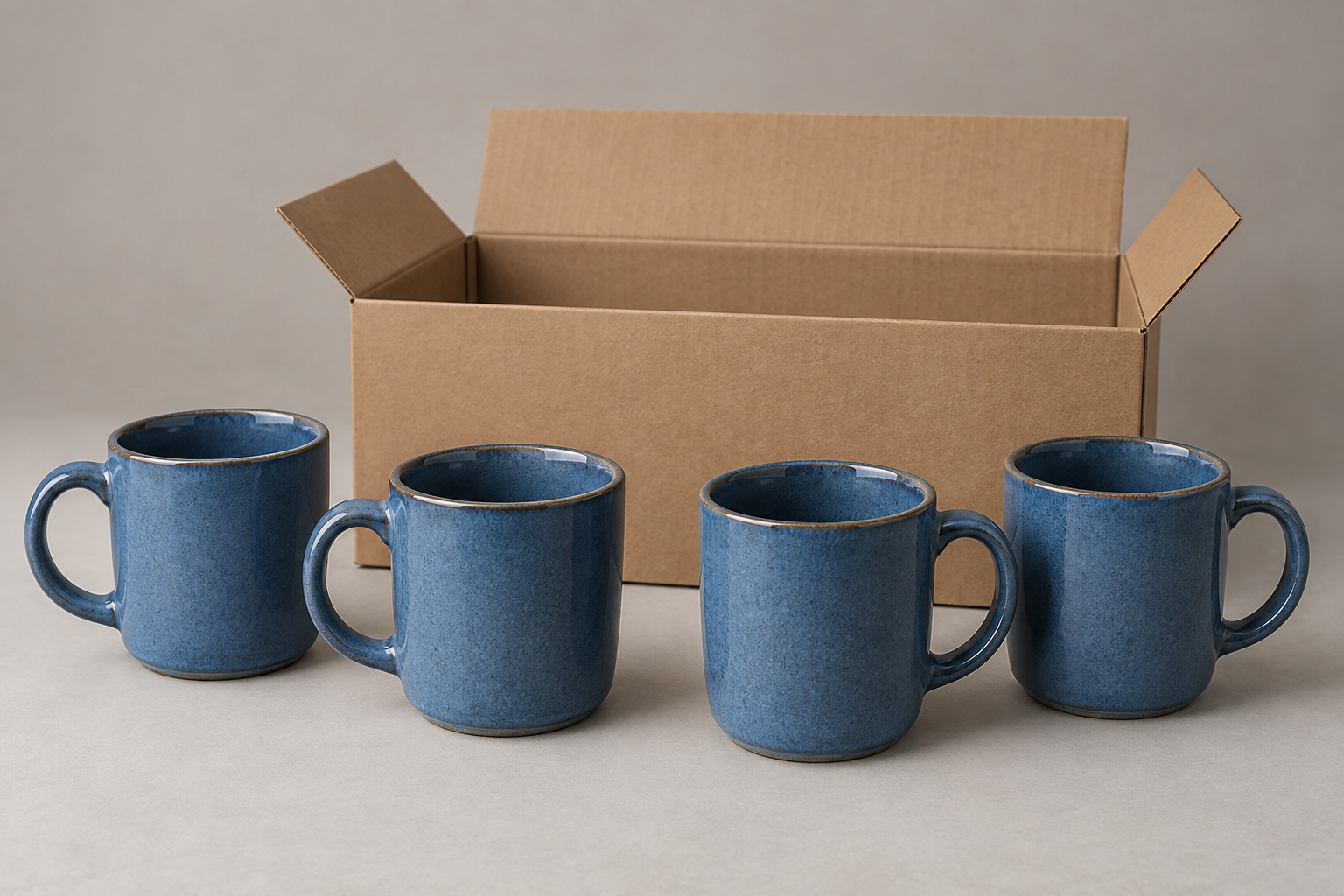
Imagine a content team receives a spreadsheet containing “weight: 2.4 kg.” That could mean a heavy serving bowl, a retail set, or a packed parcel. The number may be correct and still be useless.
Give each level its own name. Record piece weight, retail pack contents, packed retail weight, and master-carton data in separate fields. A wholesale page may need case quantity and order units; a consumer page needs an unmistakable description of what one purchase includes.
For example, “12-piece set” is weaker than “four dinner plates, four side plates, and four bowls.” A mug shown as a styling prop should not quietly become part of the customer’s expectation.
The GS1 product measurement guidance is a useful starting point when a retailer needs standardized trade-item measurements. Check the requested packaging level and orientation before filling its form. Those trade-item dimensions should not be copied blindly into the section describing the bare ceramic piece.
A professional supplier response labels the level for every number. A column called “size” beside a carton photo is not enough to approve dinnerware dimensions for a product page.
Let the Fired Product Set the Published Facts

In real ceramic production, a drawing is a target. Drying and firing change the body, and forming or firing differences can affect the finished shape and weight. Publish values checked against approved fired pieces, rather than taking dimensions from a mold drawing.
For a round plate, name the outside diameter. For a mug, distinguish body width from overall width including the handle. For an oval serving dish, use named length and width fields. Keep the detailed measuring method in the internal record so the next person can repeat it.
I also want more than the reading from one especially tidy sample. Agree a representative sample selection with the factory and compare the results with the production limits. The public value may be rounded, but the internal record should retain the measurements behind it.
“Approximately” explains normal variation; it does not rescue a number that was never checked. If fit matters, such as a plate fitting a storage slot, discuss the approved maximum dimension instead of relying only on a rounded nominal value.
Capacity needs the same discipline. Name whether a mug’s volume is measured to the rim or to a stated practical fill level. If two values are published, identify both. Do not present one informal serving estimate as a universal standard.
For units, keep one master value and convert from it. Avoid letting different teams independently round millimeters into inches until the label and website describe noticeably different products.
Keep Care Wording Attached to the Right Variant
A material name does not tell a customer everything about use. Glaze, body, decoration, and the finished construction all matter when reviewing product claims.
Suppose a plain mug later gains a decorative band. I would reopen its care review instead of copying the original page automatically. A family resemblance is not evidence that every finish supports the same dishwasher or microwave wording.
Ask for the exact wording approved for the item, the supporting document reference, and any use limits. A professional answer makes clear which body, glaze, decoration, and product version were assessed. A generic certificate image with no identifiable connection to the item is a reason to ask again.
Keep food-contact evidence and appliance-use evidence in separate fields. One should not silently stand in for the other. Publish the care instructions and required market information that apply; retain the fuller supporting file for review.
I avoid vague phrases such as “safe for everything.” A short, specific instruction helps a buyer much more. If a claim is not yet supported, resolve it before using it as a selling point.
Give the Content Team a Finished Handoff
Here is a fictional example of the difference I mean. These figures are illustrative, not a FENN product specification.
Weak handoff: “Blue mug. Ceramic. 350 ml. Small. Comes boxed.”
Stronger handoff: “One blue glazed stoneware mug; approximate body diameter 85 mm, overall width including handle 120 mm, height 95 mm, and piece weight 320 g. Capacity 350 ml to the rim. One mug per retail box; other photo props excluded.”
That second version still needs the approved care wording, appearance guidance, and evidence references before release. Better numbers do not make an incomplete page finished.
For a varied glaze, describe the actual feature: shade, speckle density, or rim color may differ within an approved range. Show representative production examples. Do not use “each piece is unique” to cover chips, unstable bases, or other failures against the agreed specification.
I would also send the content team a simple image-to-item list. It should identify which photo shows the selected color, which explains scale, and which shows the pack contents. Real product photos must support the specification; a generated concept image cannot prove a measurement or an approved shade range.
Check the Website, Feed, and Sheet Together

Once the record is approved, use it as the common source for tableware product data. Editing the website alone leaves room for old dimensions to survive in a retailer feed or downloadable catalog.
Google’s product detail attribute provides a structured way to submit extra technical details in Merchant Center. Have the feed owner check the current attribute guidance and use dedicated fields where applicable, rather than placing every fact in free text.
The Schema.org Product vocabulary also includes properties such as material, width, height, depth, and weight. Your web team can use appropriate structured fields alongside readable page content. This is a data-formatting aid, not a promise of search placement.
Before release, run a small handoff check:
1. Open one selected variant and compare it with the approved sheet.
2. Change the color or size and check that specifications and photos change correctly.
3. Compare the page with its retailer feed and care insert.
4. Ask someone outside the project to describe exactly what they would receive.
5. Record who approved publication and which revision is live.
If that person needs to ask whether the price buys one bowl or a set, fix the wording. You have found a useful problem before a customer does.
My Advice as a Manufacturer
I would rather approve a modest product record that everyone maintains than a beautiful catalog nobody owns. Give product development responsibility for physical facts, the appropriate reviewer responsibility for claims, and the content team responsibility for clear wording.
When the factory changes a mold, body, glaze, decoration, or pack format, ask whether the public record needs review. Not every change alters the listing, but someone should make that decision deliberately.
Questions Buyers Often Ask
Do customers need every factory tolerance?
Usually they need clear nominal dimensions and meaningful variation guidance. Keep detailed acceptance limits internally, and provide relevant limits where fit or a trade buyer’s specification makes them important.
Should I publish net or gross weight?
Name the meaning. Piece weight helps customers judge handling; packed weight serves a different purpose. Never leave readers to guess whether packaging or other pieces are included.
Can I use the same specifications for every color?
Only after checking. A color or decoration change may affect finish descriptions, care wording, photos, and supporting evidence. Link each variant to its approved record.
Should capacity appear on every dinnerware page?
It is useful for mugs, cups, bowls, and other vessels. Define the fill level. For a flat dinner plate, named dimensions usually help more than a volume figure.
Conclusion
Good ceramic dinnerware specifications make the physical product easy to understand and the published facts easy to maintain. Start with one approved record, name what each number means, and carry the same version into every customer-facing channel.
You can also explore the FENN Home Resources for related sourcing guidance.