
Short Answer
Ceramic dinnerware pricing is affected by material, shape difficulty, glaze, decoration, firing yield, packaging, testing, inspection, logistics, and supplier service. To compare quotes fairly, ask each supplier to price the same body, finish, packaging, quality standard, test scope, and shipment term.
When a buyer sends me two private label dinnerware quote sheets and asks, “Kitty, why is this one cheaper?”, I first ask what is included. Is the body the same? Is testing included? A low price can be real, but sometimes it is only a thinner quote.
Definition Box: What Ceramic Dinnerware Pricing Should Include
Ceramic dinnerware pricing should show the cost of making, checking, and packing. If the quote does not say what is included, it is not ready for serious comparison.
The Cost Stack I Use Before Comparing Quotes
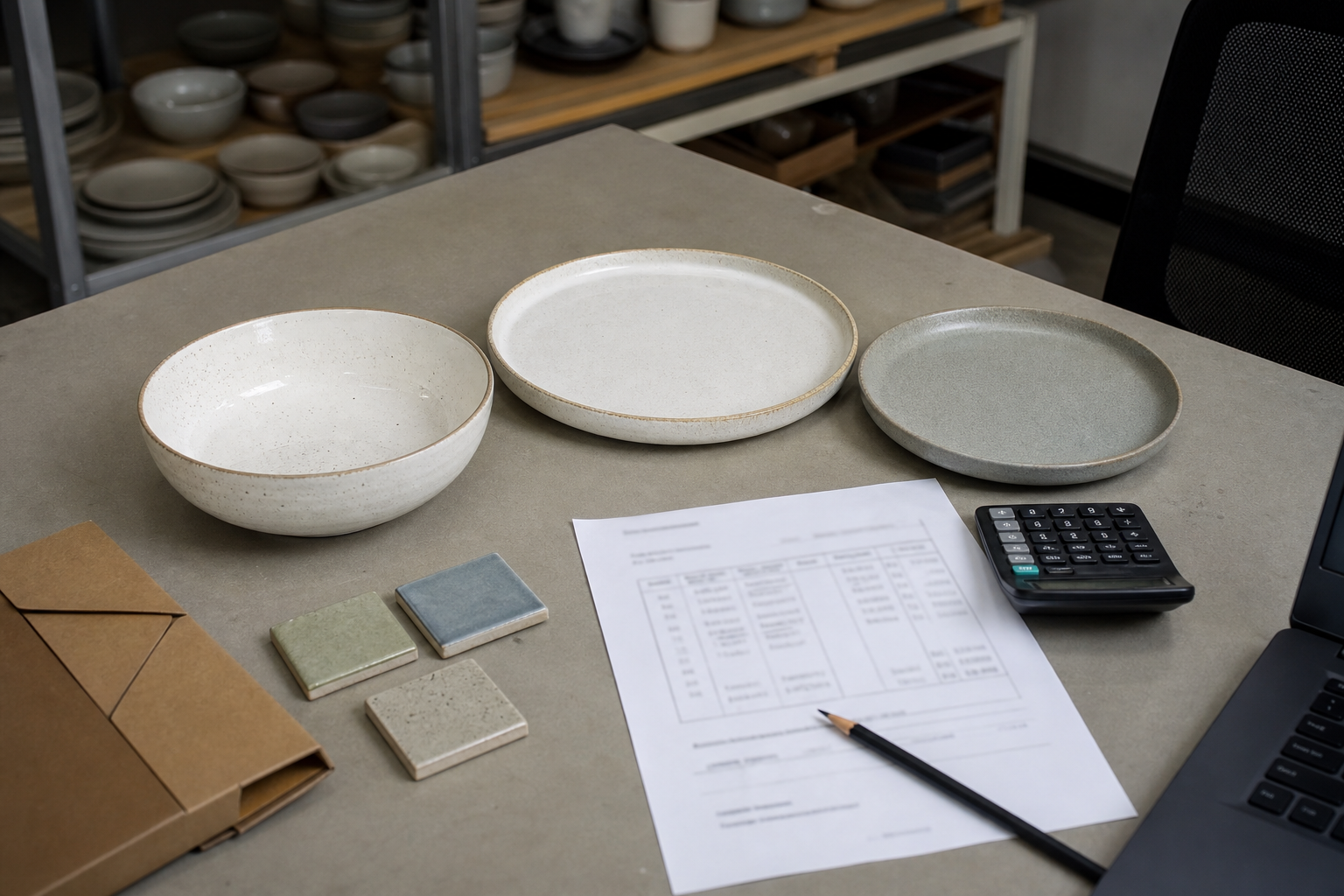
I like to break ceramic dinnerware cost factors into layers. This makes the conversation more honest because each layer has a reason.
| Cost Layer | What It Covers | Buyer Question |
|---|---|---|
| Product body | Stoneware, porcelain, weight | Same as approved sample? |
| Shape difficulty | Mold, rim, foot ring, handle | Does it raise warping or loss? |
| Glaze and finish | Glossy, matte, speckled, reactive | Is repeat production stable? |
| Decoration | Backstamp, decal, rim line, metallic effect | Priced per SKU, color, or artwork? |
| Yield and QC | Normal loss, sorting, inspection time | What defect standard is assumed? |
| Packaging | Inner protection, gift box, carton | Export-safe or only basic packing? |
| Testing | Food-contact reports, use claims | Which market and item scope? |
| Logistics handover | FOB, EXW, freight support, documents | What trade term is used? |
If one supplier includes stronger packaging and another includes only a basic carton, the unit prices are not equal.
Material and Weight Change the Base Cost
The clay body is the first cost decision. Porcelain, stoneware, and other ceramic bodies have different raw material costs, forming behavior, firing needs, and finished weight. A heavier plate also increases carton weight.
From a factory point of view, I check water absorption, firing maturity, glaze fit, and edge strength. Simple material labels are not enough.
Shape Difficulty Can Raise Cost Quietly
Shape is one of the easiest price drivers to underestimate. A clean round bowl can be efficient. A wide flat plate, thin rim, sharp profile, deep coupe shape, or complex handle can increase trimming work, warping risk, kiln support needs, and inspection loss.
When a buyer wants a special silhouette, I ask whether the shape is important enough to carry extra cost. If the launch has a tight price target, an existing stable shape with a better glaze may be smarter.
Ask the supplier to explain shape cost, not only the mold fee.
Glaze and Finish Affect Both Price and Risk
Glaze is not just color. A simple glossy white glaze is usually easier to control than a reactive glaze, deep matte glaze, speckled glaze, or dark colored glaze. Custom glaze may require test batches, kiln trials, master sample approval, and a color range standard.
Matte finishes need cutlery-mark and cleaning checks. Reactive glaze needs an acceptable variation boundary. Dark colors may show pinholes, dust, or uneven areas more clearly.
If two quotes have different glaze assumptions, the lower price may simply mean a simpler finish.
Decoration, Logo, and Artwork Have Setup Costs
Decoration can be small and still affect price. A backstamp, decal, rim band, metallic trim, full-surface pattern, or hand-painted detail may each have setup work.
For a private label dinnerware quote, ask:
- Is logo application included?
- Is decal printing charged separately?
- Is the price per artwork, per SKU, or per color?
- Does the decoration touch the food-contact surface or rim?
- Does decoration change the testing plan?
Metallic decoration may also affect microwave claims, care wording, and compliance review. The quote should reflect the real product plan.
Firing Yield and Inspection Standards Matter
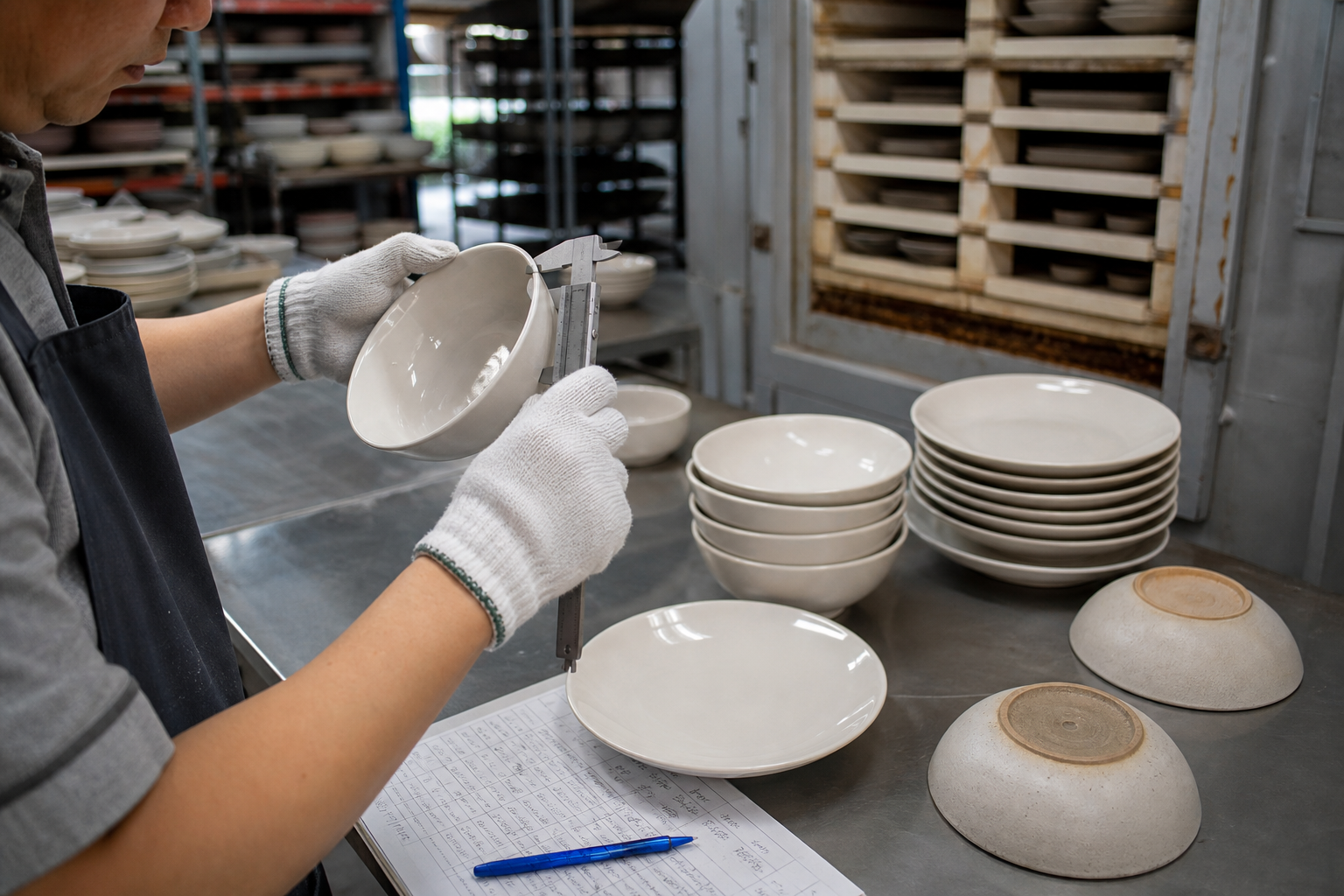
Ceramics always have some production loss. Clay shrinks. Glaze flows. A rim may chip during handling. A plate may warp. Good suppliers price with realistic yield and quality control in mind.
I prefer to agree on defect categories before bulk production: critical, major, and minor. For dinnerware, this may include cracks, chips, glaze pinholes, black spots, deformation, logo position, color range, and packing condition.
Official quality-system references such as ISO 9001 are useful because they remind buyers to ask about process control and documented records, not only final inspection.
Packaging Can Change the Real Cost
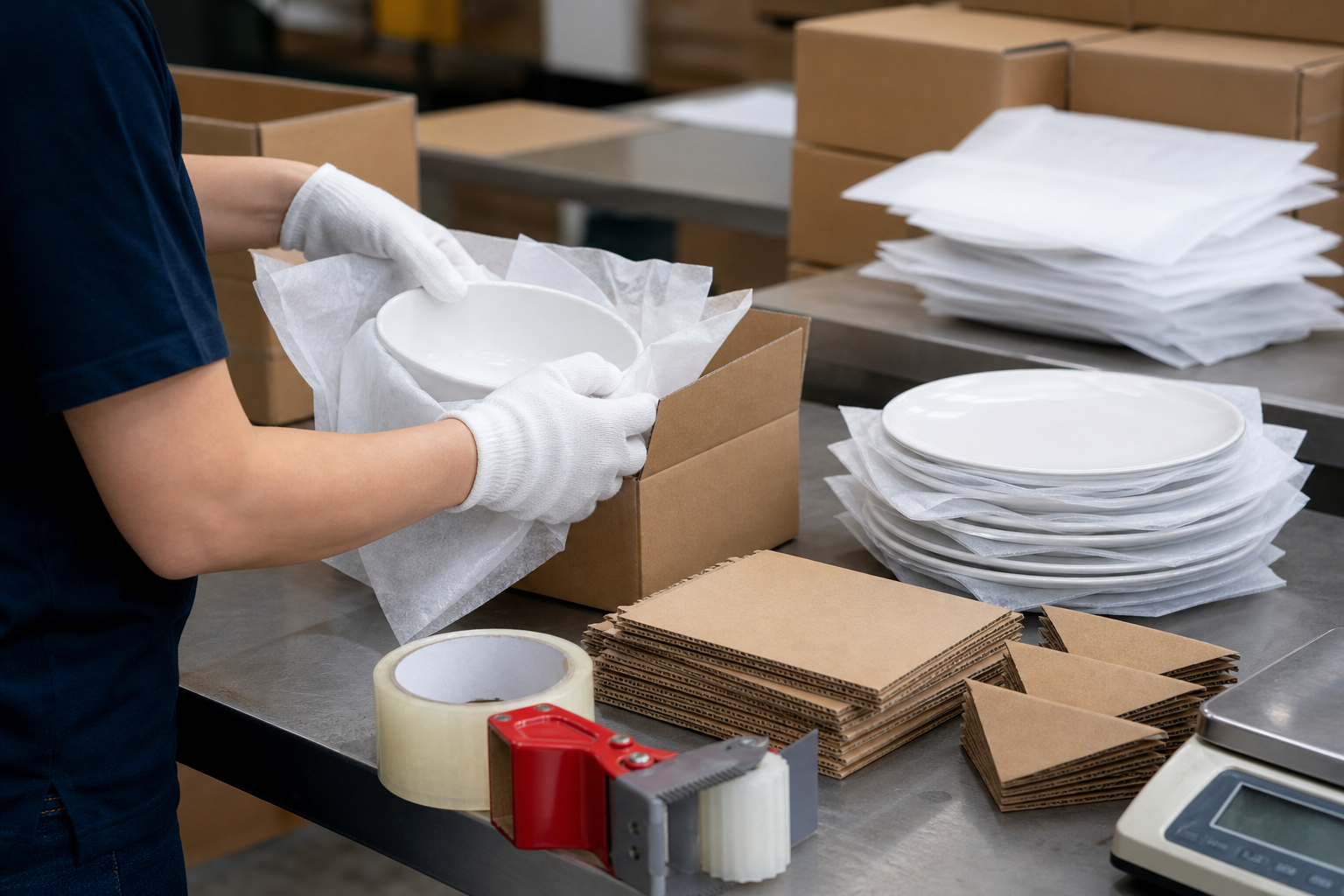
Packaging is not decoration after production. It is part of the product cost. Ceramic dinnerware needs protection from movement, stacking pressure, carton compression, and long transport handling. A basic export carton, paper divider, foam sheet, corrugated pad, gift box, sleeve, barcode label, instruction insert, and master carton can all change cost.
ASTM packaging standards are a useful high-trust direction when buyer teams discuss carton strength and transport testing with labs or packaging partners. The exact test plan should match the product, channel, and shipment route.
My practical advice is simple: do not reduce packaging until you understand the breakage risk. A cheaper carton can become very expensive if it creates replacements, claims, and bad reviews.
Testing, Claims, and Documentation Are Not Free
Food-contact testing, lead and cadmium checks, dishwasher or microwave claim support, retailer files, and inspection documents all need time and cost. The test must match the item, glaze, decoration, and selling market. One old report cannot safely cover every new design.
If the product will make marketing claims, FTC advertising substantiation is a useful reminder for US-facing brands: claims should be supported by evidence. This matters for “dishwasher safe,” “microwave safe,” “eco,” “non-toxic,” and similar wording.
In pricing, ask whether reports are included, optional, or buyer-arranged. Do not assume.
Logistics and Landed Cost Can Change the Winner
The factory unit price is not the final business cost. Buyers also need to review freight, insurance, duty, tax, port handling, customs clearance, warehousing, and breakage reserve. I like to compare landed cost, not only FOB unit price.
The International Trade Administration explains landed cost as the total price after a product arrives at the buyer’s door. For tariff review, buyer teams may also need the correct Harmonized System code for their importing market.
A supplier with a higher FOB price may still be better if packaging is compact, carton weight is lower, defects are lower, or documents are cleaner.
Quote Comparison Tool for Buyers
Before choosing a supplier, put each quote into the same frame:
| Quote Item | Supplier A | Supplier B | What To Check |
|---|---|---|---|
| Body and weight | Same material, size, and target weight? | ||
| Shape route | Existing mold, new mold, or modified mold? | ||
| Glaze finish | Same color, finish, and variation range? | ||
| Decoration | Same logo method, decal scope, and artwork count? | ||
| Packaging | Same inner protection, gift box, carton, and labels? | ||
| QC standard | Same defect criteria and inspection responsibility? | ||
| Testing | Same market, item scope, and claim reports? | ||
| Trade term | Same EXW, FOB, CIF, DDP, or handover point? | ||
| Reorder control | Same retained samples and change-control plan? |
If one column has many blanks, do not treat that quote as cheaper yet. Ask for the missing details first.
Red Flags in a Low Ceramic Dinnerware Price
Be careful if the supplier will not confirm body type, weight, glaze standard, packaging scope, test market, defect rules, or trade term. Also be careful if they promise a fast order but do not discuss sample approval.
A low price with clear scope can be a good opportunity. A low price with missing scope is a risk.
My Advice as a Manufacturer
My advice is to compare value by specification, not by number.
When I review ceramic dinnerware pricing with a buyer, I build one shared quote sheet. Then we mark which choices must stay and which choices can be simplified. This is how price work becomes practical.
At FENN, I prefer to show the cost drivers early. A deep reactive glaze, heavy body, custom box, and strict inspection standard should be priced honestly from the start.
If you are comparing OEM ceramic cost for a new dinnerware line, send FENN your quote sheets, sample photos, target market, packaging idea, and quality standard. I can help you see whether the cheaper quote is truly efficient or only missing important work.
Questions Buyers Often Ask
Why is one ceramic dinnerware supplier much cheaper than another?
Sometimes the supplier has better efficiency, but sometimes the quote excludes testing, stronger packaging, defect sorting, artwork setup, or realistic yield loss.
Does higher order quantity always reduce ceramic dinnerware pricing?
Higher quantity can reduce setup cost per piece, but shape difficulty, glaze risk, packaging, inspection, testing, and logistics still matter.
Should I choose the lowest private label dinnerware quote for a first order?
Not automatically. If the lowest quote has missing scope, ask questions before paying a deposit.
Which cost factor is easiest to simplify?
Usually SKU count, glaze count, decoration complexity, or packaging format. I try not to simplify food-contact checks, basic QC, or export protection.
How can I ask a supplier for a fair quote?
Send the same brief to every supplier: material, size, weight, shape, glaze, decoration, packaging, quantity, market, testing needs, quality standard, and trade term.
Conclusion
Ceramic dinnerware pricing is not only about order quantity. Material, shape, glaze, decoration, yield, packaging, testing, inspection, and landed cost all affect the real business decision.
If you want to compare dinnerware supplier quotes fairly, ask each supplier to price the same product and the same responsibilities. A clear quote protects your margin, your launch schedule, and your customer experience.
Need help reviewing your ceramic dinnerware quote? Send FENN your product brief, target price, packaging plan, and quote sheet. I can help check which cost drivers are real and which should not be cut.