
Short Answer
To keep repeat order ceramic dinnerware consistent, buyers need retained samples, stable material records, batch history, written change control, updated packaging specs, and pre-production approval before every reorder. A supplier should prove what changed, what stayed the same, and how the new batch was checked against the last approved order.
When a buyer says, “Kitty, this is only a repeat order, so it should be easy,” I always smile a little. Repeat orders can be easier, but only if the first order left behind a clear control file.
In real ceramic production, clay, glaze, kiln loading, decoration, packaging materials, and even carton suppliers can change over time. Small changes may be normal. Hidden changes are the problem.
Definition Box: What Repeat-Order Consistency Means
Repeat-order consistency means the new ceramic dinnerware order still matches the approved product identity, shape, size, color range, finish, logo, food-contact documentation, packaging method, and customer-use promise from the earlier order.
It does not mean every piece is identical. Ceramic has natural tolerance. It means the buyer, supplier, and inspector use the same standard again.
Build a Repeat-Order Control File
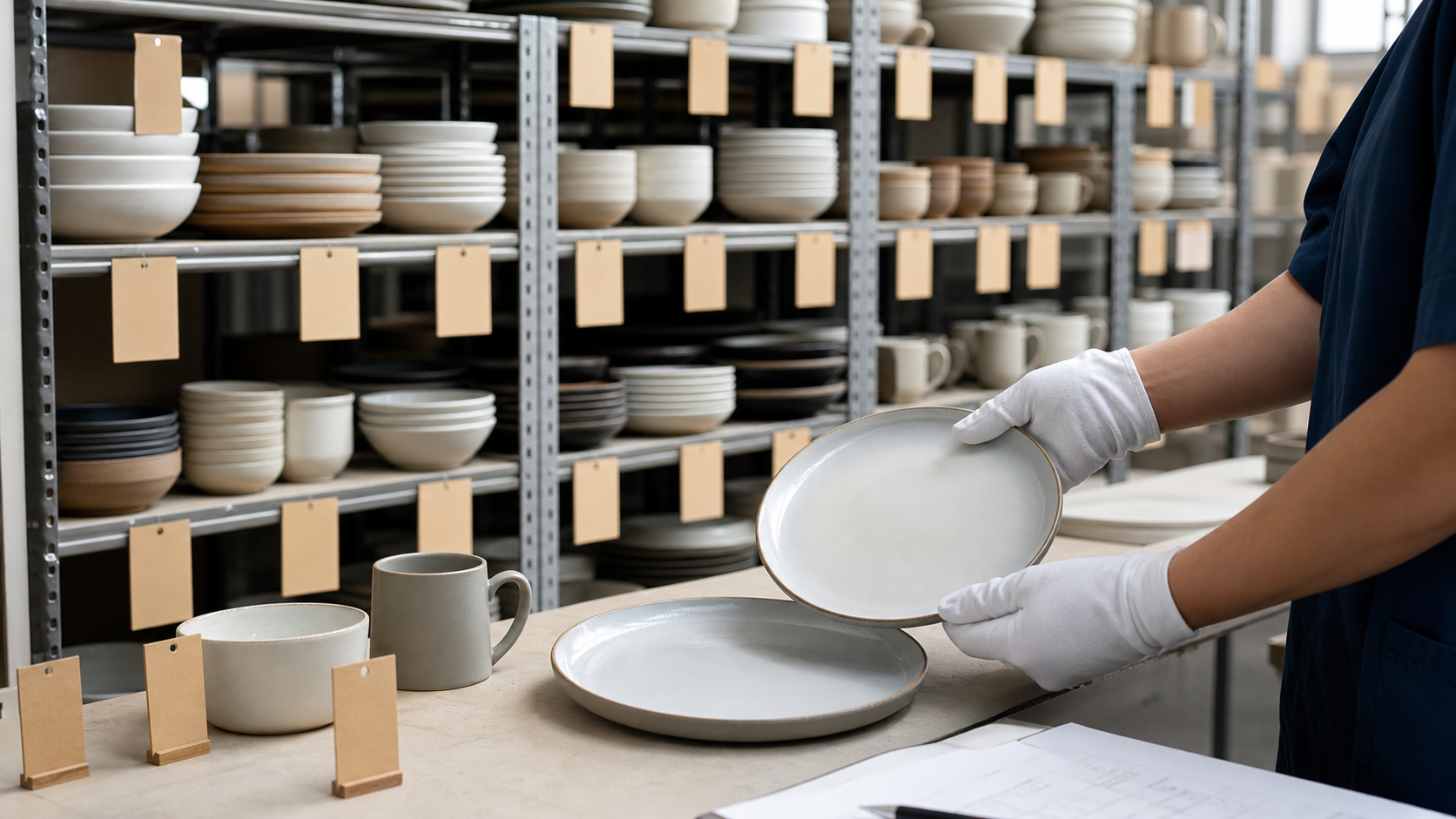
For ceramic reorder quality, I like to build one simple file after the first successful shipment. This file becomes the memory of the product.
It should include approved master samples, final sample photos, product drawings, size and weight tolerance, glaze code or range board, decal or logo artwork, food-contact test reports, packaging drawings, carton marks, inspection results, and customer complaint notes if any.
The file should also show the date and batch number of the first order. If the reorder happens six months later, nobody should depend on memory only.
From a factory point of view, this is where good suppliers become easy to work with. They do not only keep a nice sample on a shelf. They keep the story behind that sample.
The Reorder Consistency Map
Use this map before you place the next purchase order. It helps you see where consistency can break.
| Control Point | What Must Match | What Can Change Only With Approval | Evidence To Request |
|---|---|---|---|
| Product identity | Item code, set count, size, capacity, backstamp | SKU name, barcode, carton quantity | Product spec sheet and GS1 GTIN or item-code list |
| Shape and body | Mold, clay body, foot ring, stacking feel | New mold, clay formula, rim thickness | Retained sample comparison and measurement record |
| Glaze and color | Approved color range, finish, food-contact surface | Glaze supplier, firing curve, color limit | Range board, batch record, controlled-light photos |
| Decoration | Logo position, decal method, rim line, bottom mark | Artwork, decal supplier, metallic detail | Artwork proof and decoration approval photo |
| Safety documents | Market, item, glaze, decoration, report scope | New market, new glaze, new decoration | Updated food-contact test report if needed |
| Packaging | Inner protection, retail box, master carton, labels | Box material, insert, carton size, pallet plan | Packing spec, ISTA package testing if required |
| Inspection | Defect levels, AQL plan, photo standard | Acceptance limit, sorting rule, shade grouping | Previous and current inspection report |
My simple rule is this: if the supplier says “same as before,” ask them to show what “same” means.
Step 1: Compare Against Retained Samples
A retained sample is one of the most useful tools for repeat order ceramic dinnerware. It should be stored safely, labeled clearly, and protected from damage.
Before the reorder starts, compare new pre-production samples with the retained sample. Check shape, rim feel, weight, foot ring, glaze color, gloss level, speckles, logo position, and packaging fit.
For colored or reactive glaze, do not compare with only one perfect piece. Compare with the approved range. A reorder can look slightly different and still be acceptable, but it should not feel like a new collection.
If the retained sample has aged or been damaged, note that honestly.
Step 2: Review Batch Records Before Production
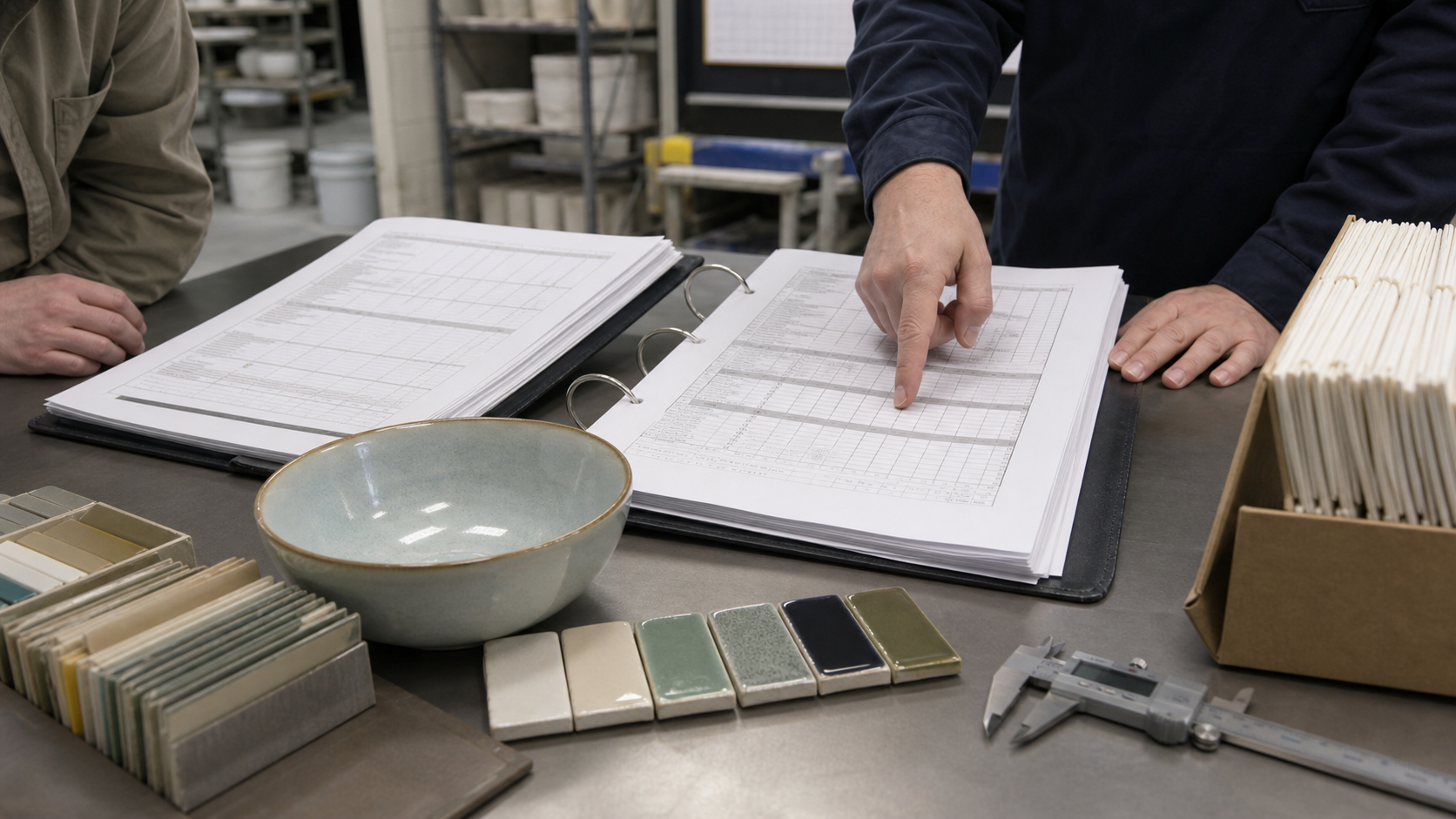
Dinnerware batch consistency depends on process records, not only final photos.
Ask the supplier whether the same clay body, glaze recipe, firing range, decoration method, and packaging material will be used. If anything changed, ask why.
Some changes are harmless or even helpful. A carton supplier may improve board strength. A glaze supplier may update a raw material. The point is to approve important changes before they become surprises.
For a professional answer, I expect the supplier to explain the change, show the risk, and offer a check plan. A weak answer is, “It should be no problem.”
Step 3: Control Change Before It Reaches the Customer
In my factory experience, many repeat-order problems come from quiet changes.
A buyer approved a blue bowl last year. This year, the new bowl is a little greener. The supplier may think it is close enough. The buyer’s customer may place the new bowl next to old inventory and see the difference immediately.
Change control should cover:
- material or glaze supplier changes
- mold repair or new mold use
- decal, logo, or backstamp changes
- packaging material or box size changes
- new retailer or market requirements
- new dishwasher, microwave, or food-contact claim
- any customer complaint from the previous batch
I prefer one short change-control note before production. It does not need to be complicated. It only needs to say what changed, why it changed, who approved it, and how the new batch will be checked.
Step 4: Check Packaging Again, Not Only the Ceramic
Repeat orders sometimes fail because the product is the same, but the packaging changed.
Maybe the inner paper is thinner. Maybe the retail box is tighter because artwork changed. Maybe the master carton count increased to save shipping cost. Maybe the barcode or carton mark no longer matches the buyer’s warehouse system.
For dinnerware, packaging protects quality and product identity. Ask for the previous packing spec and the new packing spec side by side. If the channel requires transport evidence, review ISTA package testing records or another agreed packaging test plan.
Do not assume packaging is unchanged because the plate looks unchanged.
Step 5: Approve a Reorder Sample Before Bulk Production
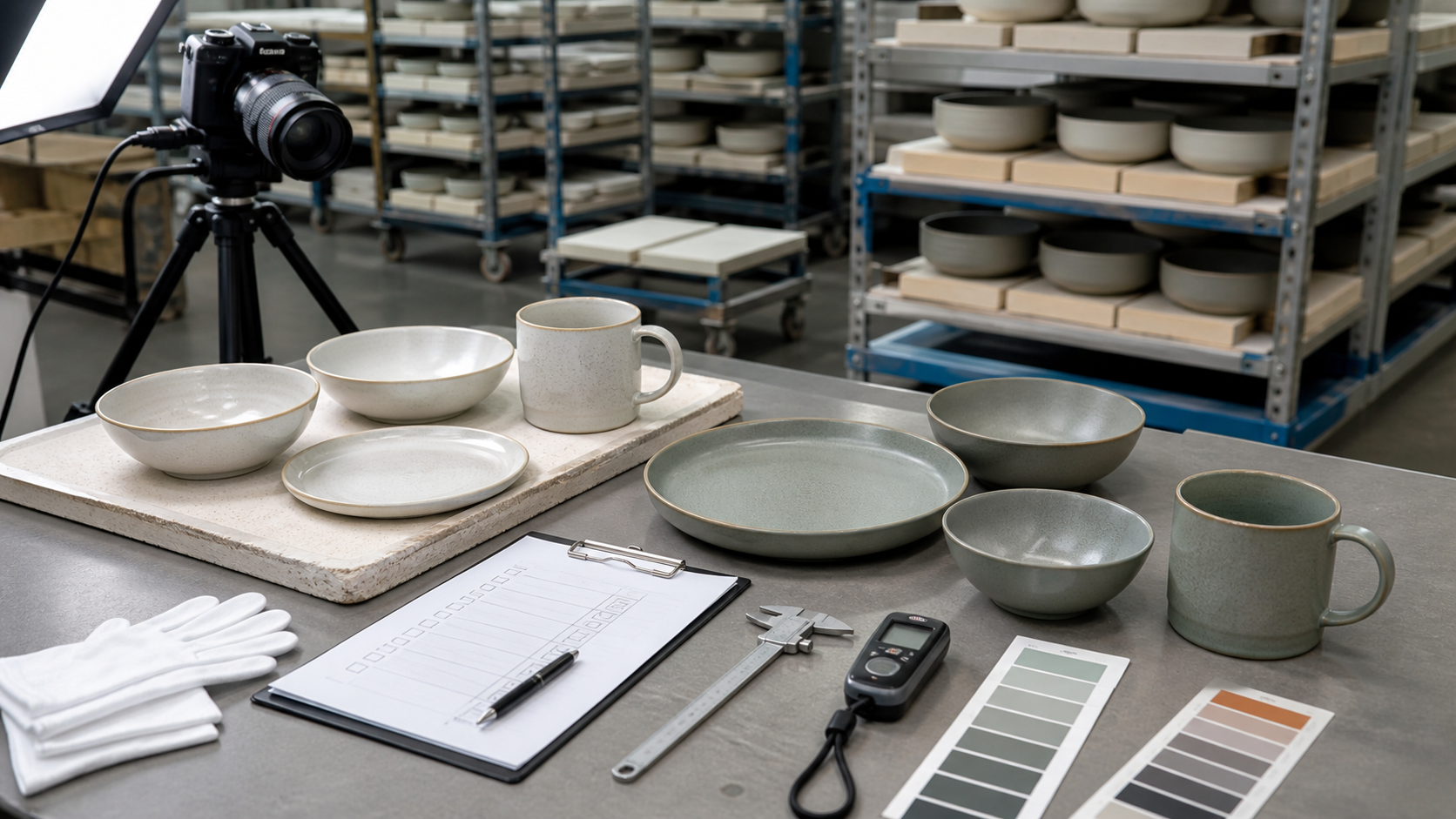
For important reorders, I prefer a small pre-production check before full production. The supplier can make a small run or pull first pieces from the new batch and compare them against the retained standard.
The approval should include steady-light photos, measurement records, set-matching photos if needed, and notes about any change.
If you still have old inventory, compare the new sample beside old stock. This is especially useful for open-stock programs, replacement pieces, hotel lines, and brands that sell the same collection for several seasons.
Reorder Risk Scorecard
Use this quick scorecard to decide how strict the reorder approval should be.
| Risk Factor | Low Risk | Higher Risk |
|---|---|---|
| Time since last order | Less than 3 months | More than 9-12 months |
| Color or finish | White, clear glaze, stable color | Reactive, matte, speckled, deep color |
| Shape | Existing stable mold | Repaired mold, thin rim, difficult shape |
| Sales model | One-time set sale | Open stock, replacements, long-running collection |
| Documentation | Complete control file | Missing samples, old photos, unclear specs |
| Packaging | Same approved carton | New box, new insert, new retail channel |
| Compliance | Same market and claim | New market, new decoration, new use claim |
If two or more items fall in the higher-risk column, slow down and request stronger proof before bulk production.
What a Professional Supplier Should Show
A professional supplier should show a retained sample, current pre-production sample, batch record, change-control note, packaging spec, inspection plan, and updated documents when the product, market, or claim has changed.
If the supplier has ISO 9001 quality management, that can be useful, but buyers should still check the actual order records. A certificate does not replace item-level evidence.
For ongoing programs, ISO 2859-1 AQL sampling can help plan inspection, but AQL does not define your approved color, shape, or packaging standard. Those must come from your control file.
My Advice as a Manufacturer
My advice is to treat the first order as the foundation for the second order.
When we ship an order at FENN, I like to keep the sample, photos, key production notes, packing method, and inspection comments together. Then, when the buyer reorders, we do not start from a vague memory. We start from proof.
If you are planning a ceramic dinnerware repeat order, send FENN your previous order photos, current sample, packaging spec, complaint history, target reorder quantity, and market. I can help you check whether the reorder is truly “same as before” or needs a fresh approval step.
Questions Buyers Often Ask
Can I skip sampling for a repeat order?
Sometimes, if the product is simple, recent, fully documented, and low risk. But for colored glaze, reactive finish, open-stock programs, or long gaps between orders, I suggest at least a pre-production comparison.
What if the old retained sample and new sample are slightly different?
First check whether the difference is inside the approved tolerance or color range. If not, decide whether to approve a new standard, request adjustment, or separate the new batch from old inventory.
Do repeat orders need new food-contact testing?
Not always. If the same item, glaze, decoration, food-contact surface, and market remain unchanged, the old report may still be useful. If any of those change, review FDA lead in foodwares guidance, EU rules, retailer requirements, and your test lab’s advice.
How do I keep replacement pieces consistent?
Use stable item codes, clear GTIN or barcode control, retained samples, color range boards, and batch photos. Replacement programs need tighter repeat control because customers compare new pieces with old pieces at home.
What is the biggest repeat-order mistake?
The biggest mistake is assuming a reorder is automatic. Ceramic production is repeatable when the standard is recorded, checked, and protected from hidden changes.
Conclusion
Repeat order ceramic dinnerware stays consistent when buyers build a control file, keep retained samples, review batch records, approve changes, recheck packaging, and compare new samples before bulk production.
If your next reorder needs ceramic reorder quality control, ask FENN to review your previous order standard and new production plan before the factory starts. A careful reorder check is much cheaper than explaining mismatched goods later.
Need Help Checking a Ceramic Dinnerware Reorder?
Send FENN your previous order standard, new samples, packaging spec, and target market. I can help you check whether the repeat order is ready for bulk production.