
Short Answer
A ceramic dinnerware production delay after sample approval usually means another requirement is still open: stable bulk glaze, available materials, kiln capacity, packaging, testing, or a buyer decision. Ask for the blocked step, affected quantity, named owner, and evidence needed to restart. Judge the revised date from the remaining work, not from a fresh promise.
I understand why buyers feel relieved when they approve a sample. The color looks right. The bowl feels good. Finally, the difficult part seems finished.
Then the shipping date moves.
From a factory point of view, an approved sample tells us what to make. It does not, by itself, prove that every material, process, and packing detail is ready for the full order. I like to separate those two questions early. It makes a difficult phone call much more useful.
First, Find Out What “Nearly Finished” Means
When a supplier says an order is 90% complete, I ask what they counted.
Pieces formed? Pieces fired? Pieces accepted by inspection? Complete retail sets packed and ready for release? Each answer describes a different position in the tableware production schedule.
A shelf of finished plates can look reassuring while every matching bowl is waiting for a second production run. You cannot sell a complete set made only of plates.
My working definition: a production blocker is an unresolved condition that stops the next required step. The useful question is which blocker controls the final ready date.
Ask for a dated quantity breakdown by SKU: required, accepted, awaiting inspection, on hold, and still to make. Make sure those categories do not count the same pieces twice. Keep packed quantity as a separate progress measure within accepted stock.
A professional update connects those numbers to the actual batch and next operation. A photograph without a batch reference is only a photograph.
Trace a Ceramic Dinnerware Production Delay to Its Blocked Step
I use this map to narrow the conversation. Several problems may exist at once, but they rarely need the same response.
| Where work stops | What may be happening | Evidence I would request |
|---|---|---|
| Before forming | Clay lot, working molds, quantity split, or production release is unresolved | Material availability, tooling readiness, and the released SKU list |
| Before or during firing | Ware is not ready, capacity is unavailable, or a process trial is still open | Batch status, planned kiln slot, trial result, and the next review time |
| After firing | Shade, pinholes, distortion, or other defects reduce accepted output | Accepted and held counts by SKU, defect photos, and sorting or remake plan |
| Before packing | Insert fit, printed box, label, or set arrangement is unapproved | Current packing revision, physical pack sample, and component arrival dates |
| Before release | Inspection, agreed testing, document review, or buyer decision is unfinished | Named outstanding item, responsible person, and confirmed review date |
A sample glaze may still need a bulk check
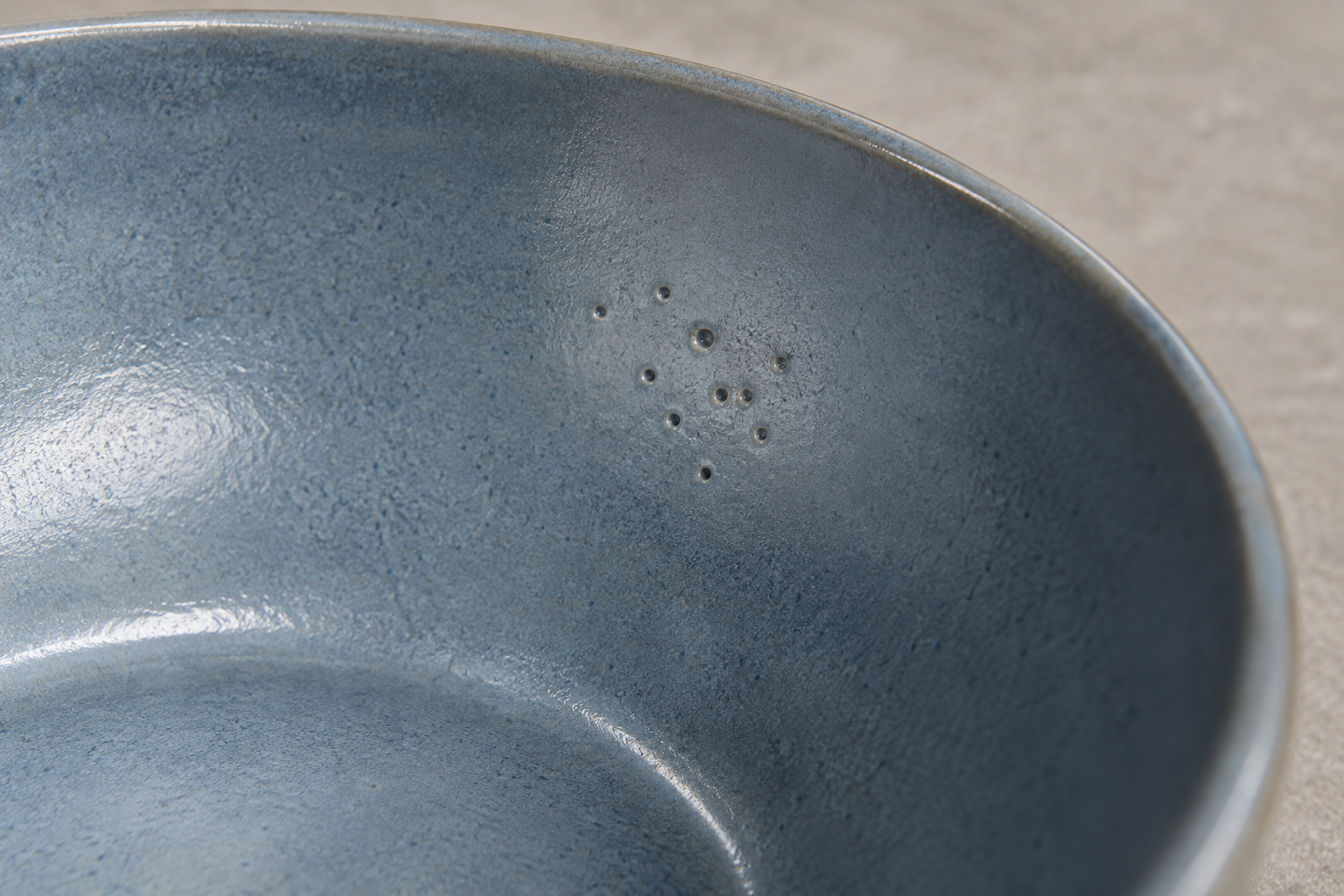
A small sample batch and a full production run do not always behave alike. Material variation, glaze application, and firing conditions can affect the result. A supplier should be able to explain which variable they are checking, rather than saying that ceramics are simply unpredictable.
For example, if blue-gray bowls show pinholes, I want to know whether the affected batch is isolated, what the trial changes, and how the next pieces will be judged. “We will fire them again” needs technical support. Refiring is not a universal repair, and making new pieces may be necessary.
If the supplier proposes a different clay body, glaze, or decoration, ask what must be checked again against the approved product and required evidence. A substitution can create a new approval task while appearing to solve a material shortage.
Kiln time includes more than reaching temperature
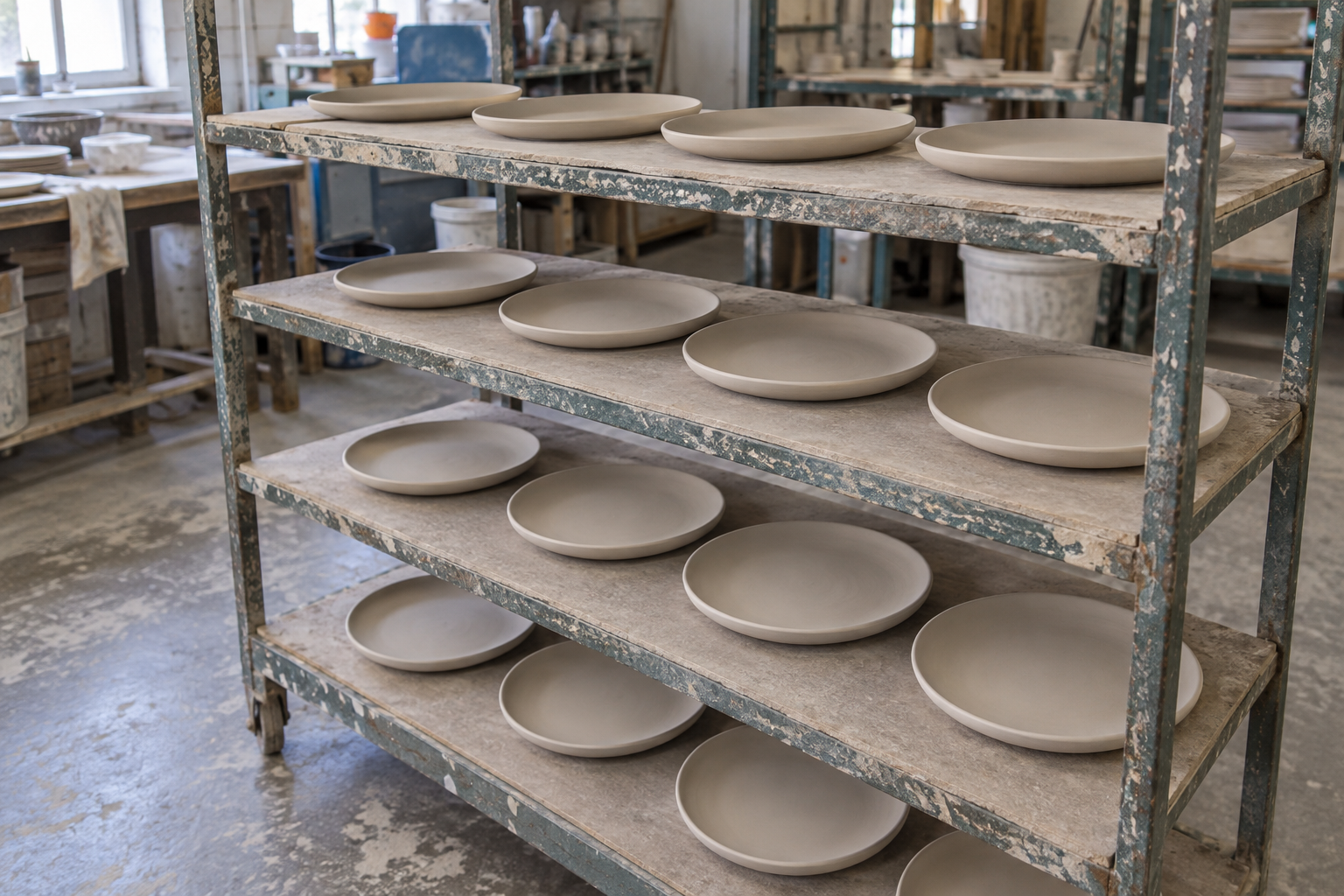
The firing schedule includes controlled heating and, where applicable, holding and cooling stages. These conditions help determine the fired result. I would not accept a faster cycle as a recovery plan without a validated process behind it.
Also separate the time the ware needs in the process from the time it spends waiting for a slot. Adding staff may help inspection or packing. It does not automatically create suitable kiln capacity.
A useful factory reply names the booked production window, what must be ready before it, and the consequence if that readiness check is missed.
A finished bowl can still wait for a box
Packaging work should run alongside production where possible. A late color decision on a gift box can hold an otherwise ready order. So can an insert that no longer fits the finished product.
Ask to see the intended set packed in the current materials. Check piece count, separation, movement, and closure. An empty printed box proves very little.
If transport testing is required, agree the relevant ISTA test procedures with the packaging team or laboratory. Their suitability depends on the distribution route and package. A material or layout change should trigger a review of whether existing test evidence still applies.
Reports need their own place in the schedule
“Testing arranged” could mean a quote was requested or that the laboratory already received the samples. Ask which.
Record sample identification, laboratory receipt, expected report date, and who reviews the result. Allow for clarification or further work if the result is unsuitable. A test booking is not a passed report.
The FDA’s background on lead in food and foodwares explains why ceramic foodware deserves attention. For the order itself, have the responsible compliance specialist or laboratory confirm the required test scope and representative samples. This scheduling check does not replace a market-specific compliance review.
Count Complete Sets Before Promising a Recovery Date
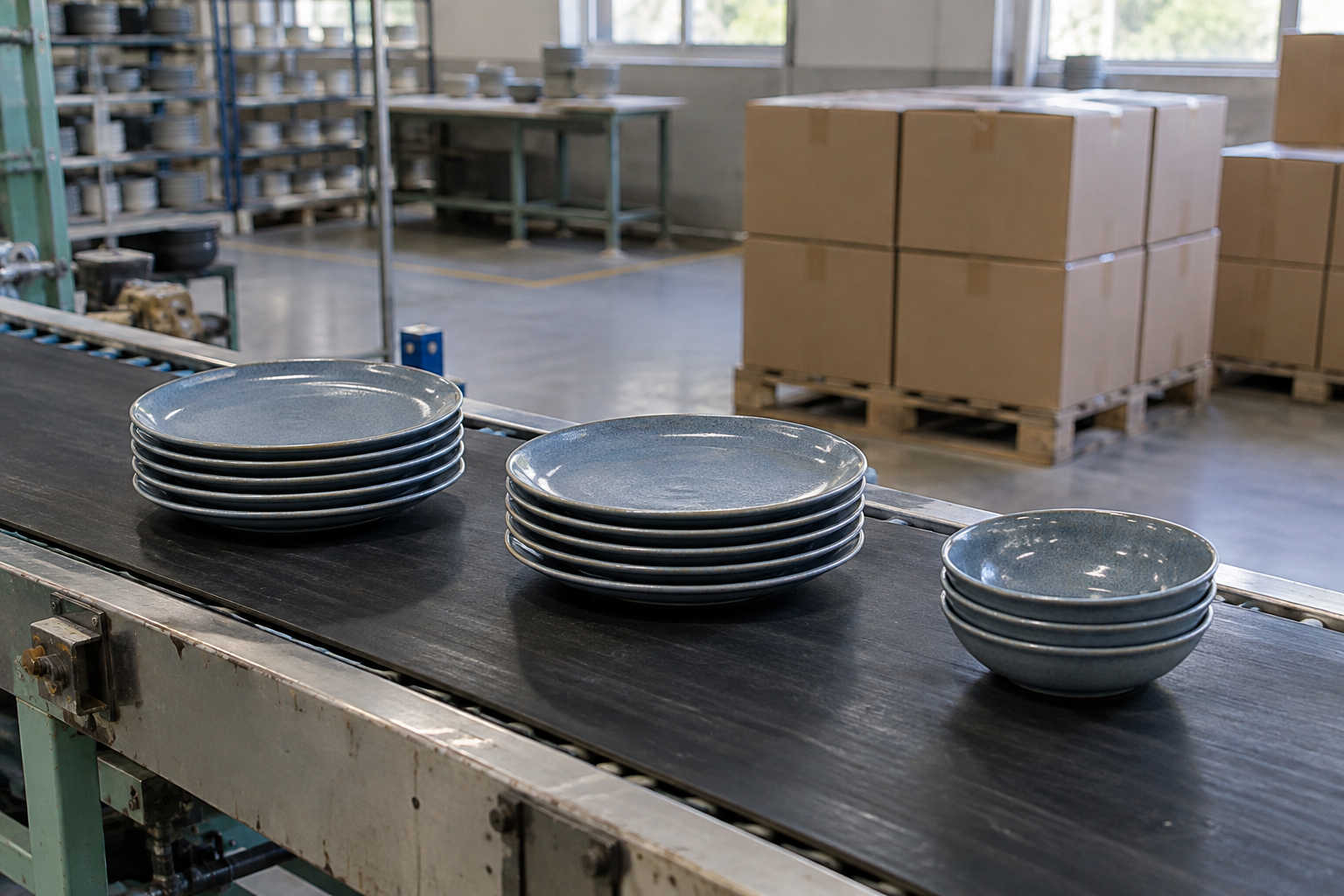
Here is an imaginary order I might use in a planning meeting: 1,000 sets, each containing two dinner plates and two bowls.
Suppose inspection has accepted 2,000 plates and 1,600 bowls. That is 3,600 accepted pieces out of 4,000, or 90%. Yet the order can make only 800 complete sets, assuming the accepted pieces can be matched within the agreed appearance range.
I would work through it this way:
- Find the limiting item. Divide accepted quantity by pieces needed per set: plates support 1,000 sets; bowls support 800.
- Calculate the usable shortage. The remaining 200 sets need 400 accepted bowls.
- Ask for the production input plan. Making exactly 400 more bowls leaves no allowance for further rejects. The factory should explain its planned allowance using relevant process results.
- Connect the missing bowls to release. Add the necessary forming, drying, firing, inspection, packing, and document steps. Identify which can overlap and which must wait.
These numbers are an illustration, not a recommended yield allowance. I would not apply one fixed percentage to every shape and glaze.
If the supplier cannot explain how a replacement batch becomes accepted stock, its new delivery date is still an estimate with an important gap.
Recover Time Where the Work Allows It
My first choice is to remove waiting between decisions. Confirm the packaging artwork, answer the outstanding shade question, or arrange the inspection appointment. These actions can help without changing the product standard.
A second option is to separate work that can proceed safely. Accepted pieces might be sorted while the missing SKU is being made. Packaging components can be prepared while a report is under review. Keep any required hold or release control visible so prepared cartons are not shipped early by mistake.
Partial delivery can help, but only if the first shipment is useful. In the example above, 800 complete sets may support a smaller launch. Sending loose plates may create extra handling and no saleable stock.
Before agreeing to a split, check freight cost, documents, receiving capacity, set matching across batches, and responsibility for the balance. Record the exact SKU quantities in each shipment.
I treat promises such as “extra overtime will solve everything” carefully. Ask which operation gains capacity and which operation still controls the date. Better evidence should accompany a better promise.
Set the Next Decision Date, Not Just the Final Date
For an OEM ceramics delay, I prefer a small recovery record with five entries: blocker, owner, evidence due, decision due, and revised ready date.
Then I add one question: What happens if this decision is late?
If a glaze trial must be accepted before a booked slot, record that dependency and the next available option. Use an exact date and time zone. Do not assume a missed morning reply always costs only half a day.
Keep factory readiness, carrier departure, and warehouse arrival as separate milestones. A factory recovery plan cannot guarantee the transport leg. Build any buffer around the remaining uncertainties, and ask the logistics team to confirm its own dates.
My Advice as a Manufacturer
I prefer an early, specific warning to a cheerful update that hides a growing shortage.
My simple test for a recovery plan is this: can I see what is blocked, how much stock is affected, what evidence will close the issue, and who decides next? If one answer is missing, I keep asking before relying on the date.
I also ask buyers to keep one person available for decisions. The factory has its responsibilities, but an unanswered packaging approval can stop an order just as firmly as a production problem.
Questions Buyers Often Ask
Does sample approval mean bulk production has started?
No. Confirm what the approval releases and whether materials, tooling, commercial conditions, and the production slot are ready. Ask for the actual start milestone.
Should I accept a wider shade range to save time?
Only after reviewing physical examples and the effect on your range. Record any accepted change clearly. Schedule pressure alone does not establish an acceptable product standard.
Can I solve the delay by paying for air freight?
Air freight may reduce transit time after goods are ready. It cannot make unfinished or unaccepted bowls ready. First confirm the release date and shipment weight, then compare transport options.
How often should I request an update?
Match updates to the next meaningful event. During an active trial, agree when results will be available. Ask for changed counts, evidence, and decisions rather than repeated daily assurances.
Conclusion
A ceramic dinnerware production delay becomes easier to manage when the conversation moves from “How soon?” to “What must happen next?” Count accepted stock by SKU, protect the agreed standard, and build the date from the remaining steps.
If your approved order is slipping, share the sample reference, quantities by SKU, current production status, and required warehouse date with FENN Home. I can help you turn those details into a clearer delay-prevention discussion.