
Short Answer
Dishwasher safe ceramic dinnerware and microwave safe dinnerware depend on mature clay, good glaze fit, low water absorption, safe decoration placement, no metallic details for microwave use, and testing that matches the actual product. A supplier should support ceramic dinnerware safety claims with relevant reports, sample checks, and clear care instructions before bulk production.
When a buyer asks me, “Kitty, can we print dishwasher safe and microwave safe on the box?”, I do not answer yes only because the item is ceramic. I first ask about the clay body, glaze, decal, metallic rim, firing, absorption, and evidence.
Ceramic can be practical for daily use. But daily-use claims are product promises.
Best Criteria for Safe Daily-Use Claims
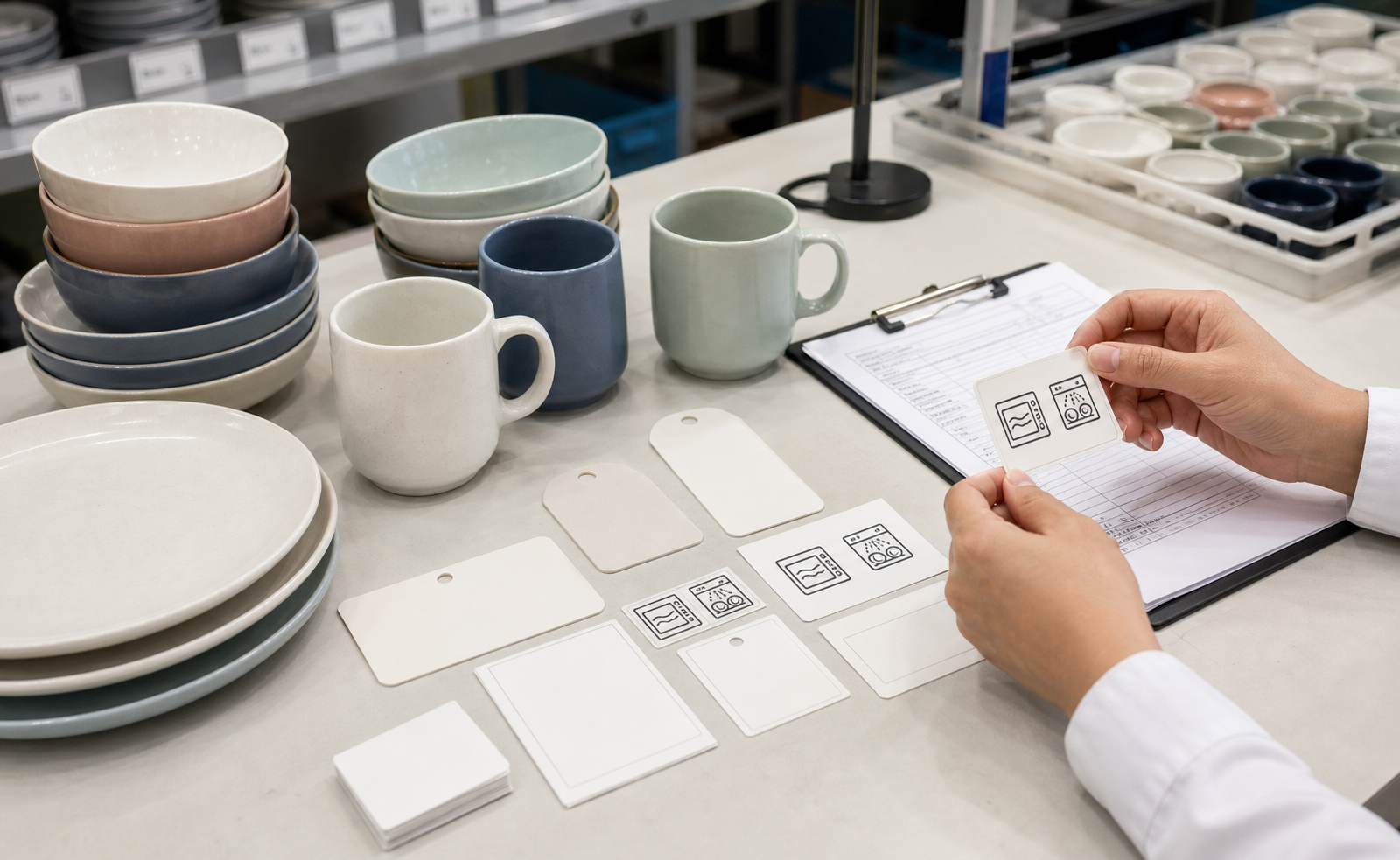
A safe claim has three parts: the product design supports the claim, the test evidence is relevant, and the care instruction tells the customer how to use the product correctly. If one part is missing, the claim is weak.
The Customer Problems Buyers Are Trying to Prevent
Most complaints do not start with technical words. Customers say simple things:
- “This mug became too hot in the microwave.”
- “The plate sparked.”
- “The glaze looks cracked after use.”
- “The decoration faded in the dishwasher.”
- “The bowl says microwave safe, but the gold rim looks risky.”
From a factory point of view, these complaints can have different causes. Some are real product risks. Some are unclear care instructions. Some happen because one general claim was used for several decoration methods.
Symptom, Cause, and Buyer Control Tool
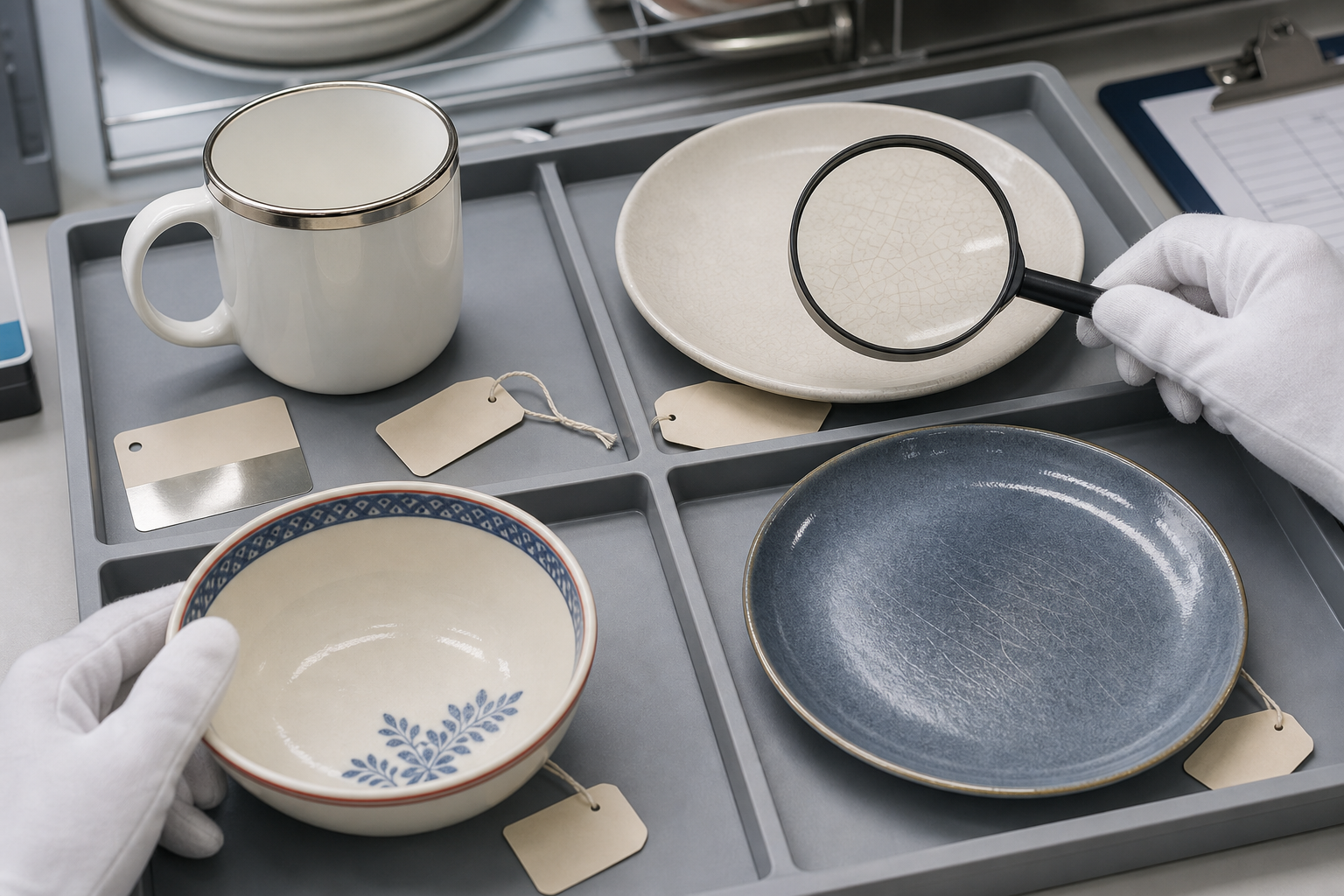
Use this table when reviewing dishwasher safe ceramic dinnerware or microwave safe dinnerware with a supplier.
| Customer Symptom | Possible Ceramic Cause | What Buyer Should Control Before Production |
|---|---|---|
| Mug or bowl gets very hot in microwave | High absorption, body not mature enough, shape holds heat, or glaze/body issue | Ask about water absorption, firing maturity, and microwave heating checks on the real item |
| Sparks in microwave | Metallic decal, gold or silver rim, metal-containing decoration, or wrong care label | Keep metallic decoration away from microwave-safe claims and write clear warnings |
| Glaze cracks or crazing appears | Poor glaze fit, thermal stress, or body-glaze mismatch | Review glaze fit, thermal shock risk, and sample performance before approval |
| Decoration fades after washing | Weak decoration method, onglaze decal wear, or harsh dishwasher exposure | Match decoration method to dishwasher claim and test the actual decoration |
| Food-contact safety concern | Glaze, colorant, decal, or rim decoration needs market-specific review | Request relevant food-contact documentation, especially for lead and cadmium release |
This is why I prefer diagnosis before promises: safe for which use, with which decoration, and supported by what evidence?
What Makes a Ceramic Body More Suitable for Daily Use
The body should be properly fired and mature for its intended use. If the ceramic body absorbs too much water, it may heat unevenly, hold moisture, or become less suitable for strong daily-use claims. Buyers should not rely only on a material name like stoneware or porcelain.
Porcelain is often dense and clean when fired well. Stoneware can also be strong and practical when the body is mature. The material name helps, but the supplier still needs to explain firing, absorption, glaze fit, and inspection.
When we review samples, I check the bottom, foot ring, rim, handle joint, wall thickness, and glaze coverage. A beautiful top view does not show everything.
Why Glaze Fit Matters
Glaze fit means the glaze and clay body work together after firing and during use. If they do not fit well, the surface may show crazing, peeling, or other defects.
For dishwasher and microwave use, glaze fit is important because the product faces heat, moisture, detergent, and repeated handling. A sample can look fine on day one, then show weakness after use cycles.
My practical advice is to ask for production-like samples, not only a pretty first sample. If the final bulk body, glaze, and decoration route changes, the claim should be reviewed again.
Decoration Is Often the Hidden Risk
Many buyers think the ceramic body decides everything. Decoration can change the answer.
A plain glazed plate may be suitable for microwave use, while the same shape with a metallic rim should not carry the same microwave claim. A decal inside a bowl, decoration on the lip area, or a bright colored surface may also need closer food-contact review.
For dishwasher claims, decoration method matters too. Underglaze decoration is protected differently from onglaze decoration. Metallic decoration and some special finishes often need more careful care instructions.
Official references such as FDA guidance on lead in foodwares, European Commission food contact materials, and ISO 6486 ceramicware testing are useful starting points for lead and cadmium release discussion. Still, the report should match the actual item, glaze, decoration, and target market.
How to Judge Supplier Evidence
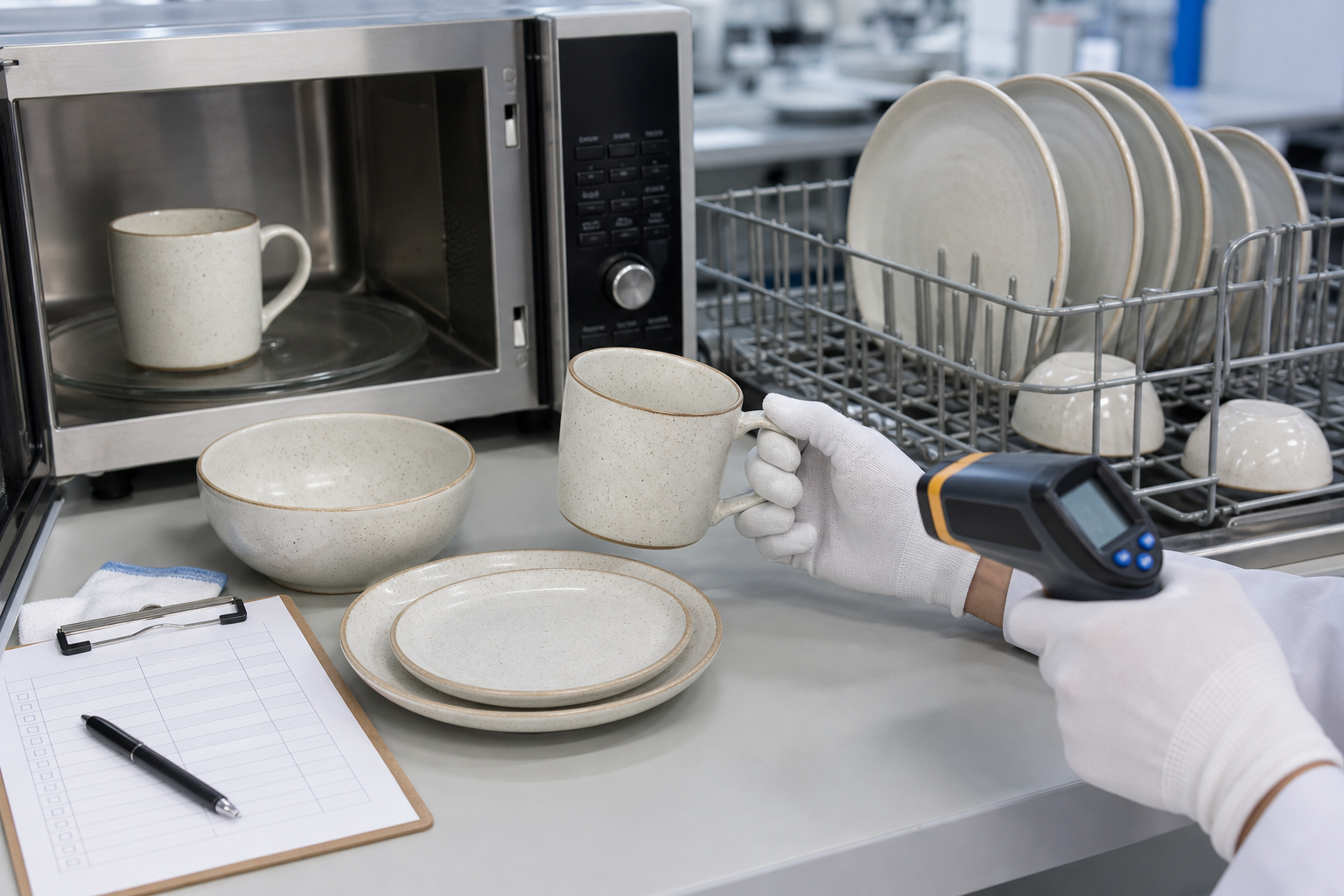
Do not ask only, “Do you have a test report?” Ask what the report proves.
A useful report or test record should match:
- The same product type, such as plate, bowl, mug, or serving item.
- The same body and glaze route.
- The same decoration placement, especially food-contact and rim areas.
- The same market or retailer requirement.
- A current product version, not an old catalog item.
For microwave safe dinnerware, also ask whether the supplier checked heating behavior and decoration risk. FDA microwave oven safety-you-radiation-emitting-products/microwave-oven-radiation) information can help buyers understand microwave use in general, but product-specific ceramic claims still need supplier evidence.
For dishwasher safe ceramic dinnerware, ask what cycle, detergent exposure, and inspection method were used. The supplier should explain what changed after washing: glaze gloss, decal color, surface marks, rim condition, and handle joints.
Care Label Claim Checklist
Before printing a care label, use this simple claim checklist.
| Claim You Want to Make | Check Before You Print It | A Strong Supplier Answer Sounds Like |
|---|---|---|
| Dishwasher safe | Body, glaze, decoration, and repeated-wash appearance | “We tested the final decorated sample and checked gloss, decal, rim, and surface after cycles.” |
| Microwave safe | No metallic decoration, suitable body/glaze, heating behavior reviewed | “This version has no metallic rim or decal, and we checked heating on the actual mug and bowl.” |
| Food safe ceramic dinnerware | Food-contact surfaces and market documents reviewed | “The report matches this glaze or decoration route and target market.” |
| Not for microwave | Metallic or special decoration present | “We will mark the packaging and product page clearly, not hide it in small text.” |
| Hand wash recommended | Decoration may wear faster in dishwasher | “The finish is beautiful but needs a conservative care instruction.” |
Simple icons are good, but the decision behind the icon should not be casual.
Common Mistakes I See Buyers Make
The first mistake is using one care label for every SKU. A white bowl and a gold-rimmed plate may need different instructions.
The second mistake is testing the plain white body, then adding decal, metallic trim, colored glaze, or rim decoration without reviewing the claim again.
The third mistake is writing claims too strongly. If you are not sure, use careful wording and confirm with your importer, lab, or compliance adviser.
My Advice as a Manufacturer
My advice is to build dishwasher and microwave safety into the product brief, not add it at the end.
Tell the supplier your target market, selling channel, product type, decoration plan, and care claim before sampling. Then develop the body, glaze, decoration, and test plan around those claims.
At FENN, I prefer to review safety claims together with product design. If a buyer wants a metallic rim, I will not treat it like a normal microwave-safe mug.
Good ceramic dinnerware safety means the customer can use the product as promised.
Questions Buyers Often Ask
Is all ceramic dinnerware microwave safe?
No. Many plain ceramic items can be suitable for microwave use, but metallic decoration, some special finishes, poor body maturity, or unclear testing can change the answer. Check the exact product version.
Can a gold rim ceramic plate be microwave safe?
In most buyer decisions, metallic rims should not carry microwave-safe claims. I would mark the care instruction clearly and avoid confusing icons.
Is dishwasher safe the same as scratch proof?
No. Dishwasher safe usually speaks to washing use, not every surface mark. Matte glazes, colored glazes, and some decorations may still need cutlery-mark or cleaning checks.
What documents should I ask for before bulk production?
Ask for relevant food-contact reports, lead and cadmium release support where needed, dishwasher or microwave use checks if you plan to make those claims, and care-label confirmation for the final decorated item.
Conclusion
Dishwasher safe ceramic dinnerware and microwave safe dinnerware are not just marketing phrases. They depend on body maturity, glaze fit, water absorption, decoration method, food-contact review, use testing, and clear ceramic care instructions.
If you are developing a private-label dinnerware line, send FENN your product type, decoration plan, target market, and care claims before sampling. I can help you check whether the claim fits the product design before you print it on the box.
Need help checking dinnerware safety claims before sampling?
Send FENN your product type, decoration plan, target market, and care claims before sampling. I can help you check whether the claim fits the product design before you print it on the box.