
Short Answer
Thermal shock in ceramic dinnerware happens when a fast temperature change makes different parts of a piece expand or contract unevenly. The stress can crack the body or glaze. I ask buyers to define the actual heating and cooling route, check the finished design, and request testing that matches the intended use before approving thermal claims.
When someone asks me, “How much heat can this plate take?” I usually ask what happens just before and just after the heat. A plate sitting in a warm room has a different job from one moving between cold storage, hot food, and wash-up.
That small change in the question can save a lot of confusion. We need to understand the journey, not just the highest temperature on a product page.
A Crack Tells You to Stop, Not Why It Happened
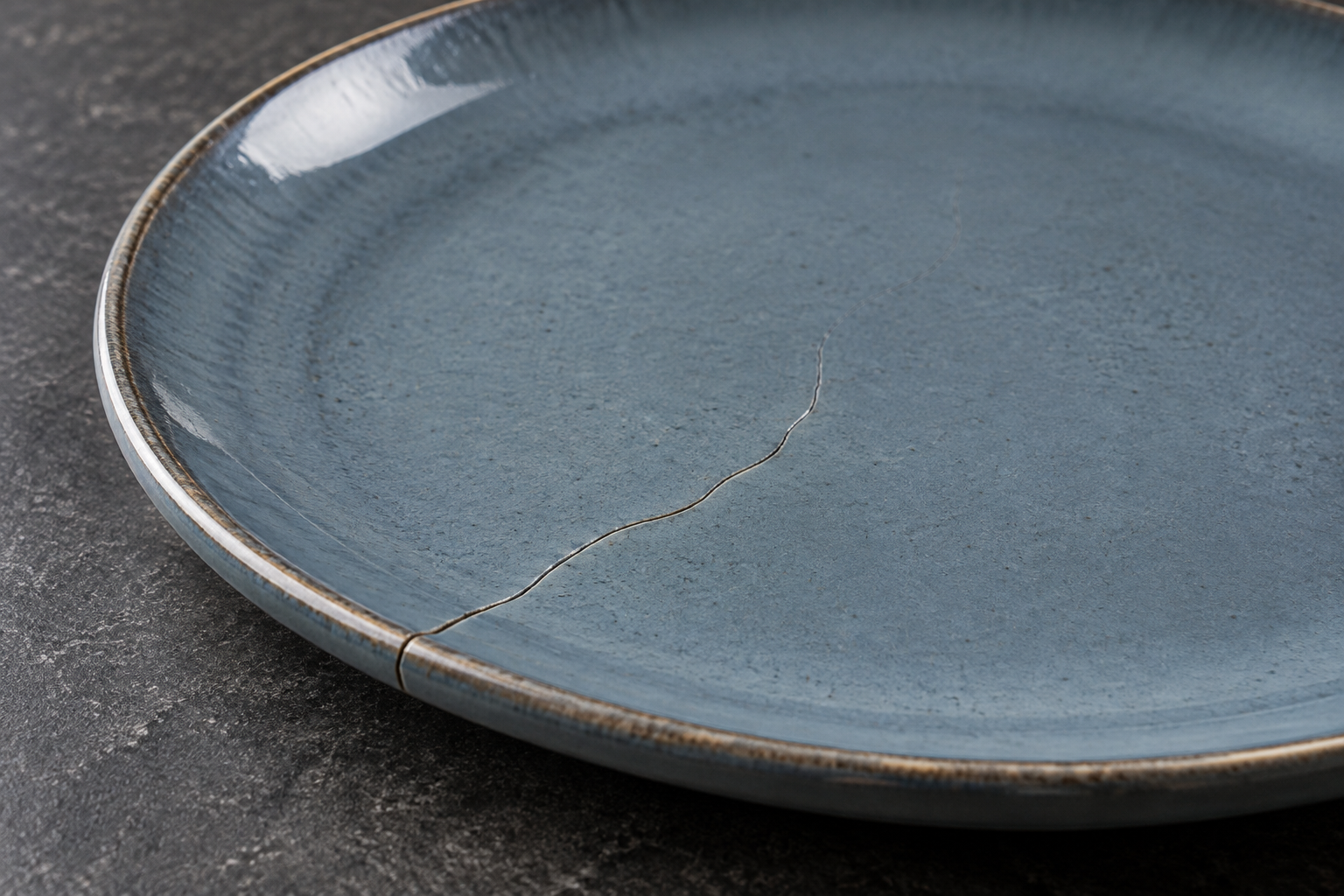
A new crack after a temperature change is a reason to remove the piece from use and investigate. It is not enough to prove the cause. Earlier impact damage, a production flaw, or stresses already in the body and glaze may also matter.
I would save photographs and the product details without asking anyone to repeat the failure. For a restaurant complaint, record where the plate had been, what touched it next, and when the crack was noticed. Keep batch information and any earlier damage history.
A long crack through the body and a network of fine glaze lines are different observations. Record them separately. A supplier who immediately calls both “normal ceramic variation” has not answered the question.
My first approval rule: the explanation should connect a specific piece, a specific use sequence, and a suitable investigation. A photograph alone cannot establish thermal performance.
Map the Temperature Journey Before Choosing a Test
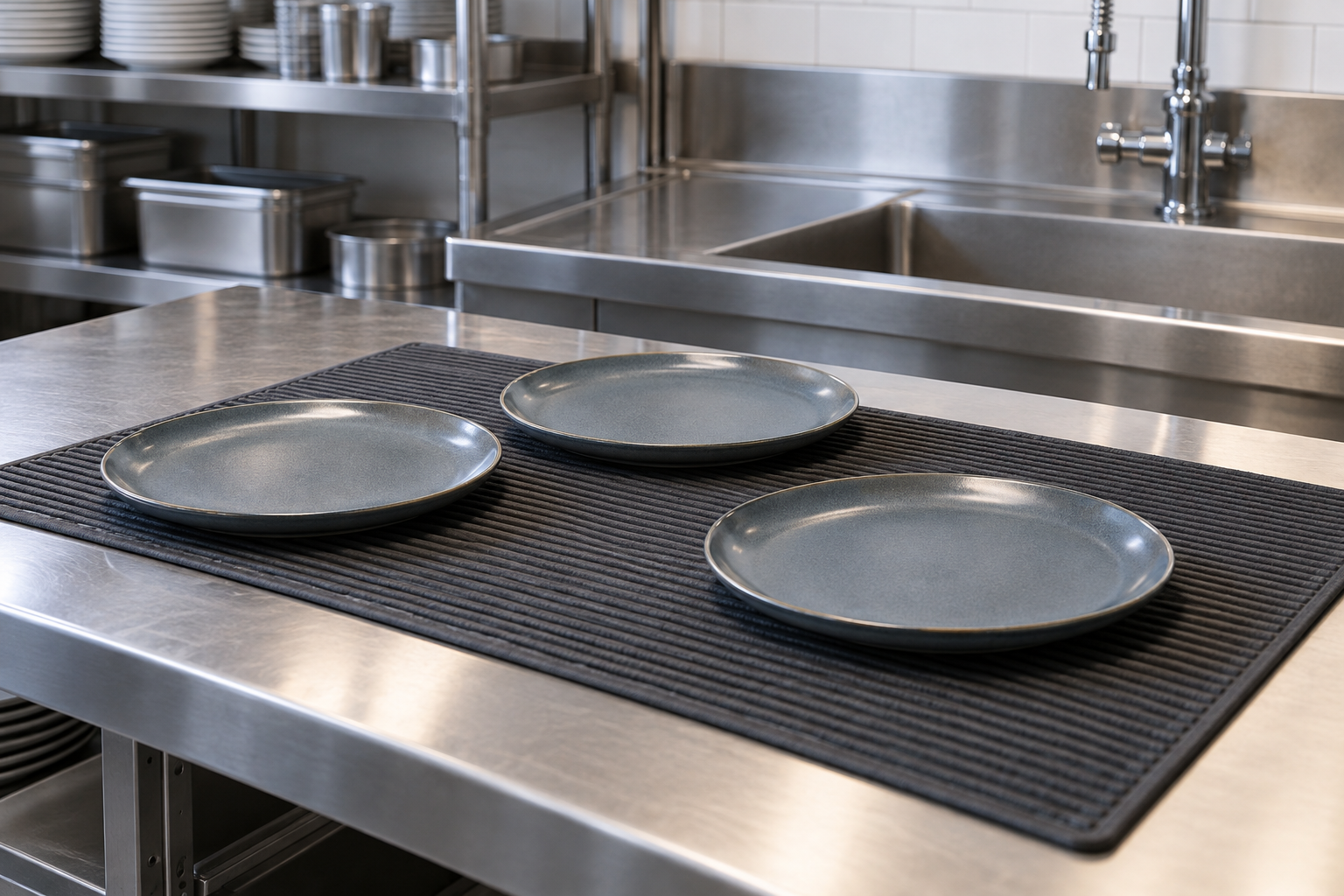
Here is the buyer tool I use for this discussion. Read across each row as a journey. These are situations to assess, not recommended experiments or approved uses.
| Starting point | Next contact or environment | What the buyer should establish |
|---|---|---|
| Chilled plate or bowl | Hot food or liquid | Whether the intended serving transition is covered by the product assessment |
| Warmed dinner plate | Cold or wet work surface | Approved warming conditions and the required landing surface |
| Hot piece after service | Wash-up or soaking | A practical cooling and handling routine consistent with product instructions |
| Frozen food in a ceramic dish | Oven or microwave | Separate evidence for that exact use; ordinary dinnerware claims are insufficient |
Add the actual operating conditions to the relevant row: equipment, food load, starting condition, transfer time, and repeated use. Do not replace missing information with a temperature copied from another brand.
Imagine a café wants one bowl for chilled desserts and hot soup. This is a planning example, not a FENN case study. The useful question is whether the same bowl will move directly between those jobs. If it will, tell the supplier and laboratory before sampling. If the two uses follow separate routines, document those routines too.
A professional response should address the transition you described. “Our clay is fired at a high temperature” does not do that. Slow kiln firing and sudden temperature changes during service are different conditions.
Why Thermal Shock in Ceramic Dinnerware Is About Uneven Change
Ceramics change size as temperature changes. Trouble can arise when one area heats or cools faster than another and the resulting stress exceeds what the piece can withstand. Digitalfire’s thermal shock explanation gives useful background on this behavior.
Think about a warm plate meeting a cold, wet surface. The contact area may cool much faster than the rest. This is why the surrounding medium and contact pattern matter alongside the temperature difference.
I would not compare two reports using only a headline temperature gap. A change in air and a change involving water can create different conditions. Exposure time, transfer, shape, and existing damage also affect the question being asked.
For buyers, the practical lesson is simple: ask for the method and conditions behind the number. A bare “withstands temperature change” statement is too vague for a purchase specification.
Read the Body, Glaze, and Shape Together
From a factory point of view, I want the supplier to review three parts of the finished product together.
The fired body: Ask which body recipe and firing route the test sample represents. A material name such as porcelain or stoneware is not a thermal rating. Maturity and water-absorption records can help describe production consistency, but one low absorption figure does not prove resistance to every temperature change.
The glaze fit: Body and glaze need compatible expansion behavior. Residual stress after firing can affect later performance. If the supplier changes the glaze or firing, ask whether the previous assessment still applies. A matching color is not enough to establish a matching glaze system.
The shape: Look at the wall, base, rim, and transitions between them. Abrupt section changes deserve review. Neither “thicker is safer” nor “thinner is safer” is a reliable buying rule on its own.
For a new soup bowl, I would send the drawing and an actual production-representative sample together. Ask the technical team to explain which design features informed sample selection. A report for a small flat saucer needs a reason before it can cover a deep bowl with a heavier base.
A FENN Plate Reference: Choose the Actual Shapes

FENN’s Irregularly Shaped Dinner Plates provide a useful visual reference for the sampling discussion. The product photograph shows two plate sizes with softly irregular outlines and brown-edged rims. I would identify each ordered size in the test brief rather than treating the shared appearance as proof of identical performance.
For that review, I would request section measurements at the rim, wall and base, plus the actual body and glaze specification. Those details cannot be read from a top-view photograph. Ask the laboratory what supports testing one size to represent another. This is an example of how to define samples, not a thermal rating or a report of a FENN product failure.
Separate Three Questions at the Laboratory Brief
A thermal discussion often becomes muddled because everyone uses the word “safe” for a different question. I separate these three jobs.
Will the glaze resist crazing under the chosen assessment?
The ASTM C554 crazing-resistance scope describes a thermal-shock method for fired glazed ceramic whitewares. Its public scope addresses crazing associated with residual stresses and distinguishes that question from moisture-expansion effects.
That makes it a useful discussion point, not an automatic test choice for every body. Ask the laboratory to confirm applicability and the current edition. Do not describe a crazing result as a general oven-use certificate.
Will the finished piece withstand the intended thermal use?
Give the lab the journey you mapped, including the actual shape, finish, and proposed claim. Ask which assessment addresses body cracking, breakage, and other relevant changes. The agreed plan should say what counts as a failure and how observations will be recorded.
I prefer that agreement before testing. If the buyer expects no body cracks but the report only discusses glaze appearance, the two sides have answered different questions.
Are other appliance claims supported separately?
The ASTM C1607 microwave-reheating scope concerns ceramicware for reheating in consumer microwave ovens. It is not a general cooking or commercial-microwave approval. Its scope also includes a thermal-shock assessment before microwave testing.
This illustrates why claims need boundaries. A microwave result should not quietly become freezer-to-oven permission. Keep oven, microwave, direct-flame, and serving claims separate in the development file. Ask the lab to identify the evidence needed for each intended claim.
Turn the Result Into a Clear Release Decision
Before bulk approval, I want a report that identifies the samples, method and edition, conditions, results, and any departures from the agreed plan. It should say which product versions the conclusion covers.
A useful release note can be short:
- Approved product: identify the shape, body, glaze, decoration, and production version.
- Approved use: name the assessed use and its limits.
- Unresolved uses: hold claims that the evidence does not cover.
- Change trigger: review new sizes, section thicknesses, glaze systems, or firing changes before carrying the result forward.
If a sample cracks, retain the result and investigate before releasing the affected claim. A replacement sample passing later is not, by itself, an explanation. Ask what changed and why the new sample represents future production.
For care wording, I prefer clear instructions that fit the evidence: avoid sudden temperature changes, follow the approved heating instructions, and use the specified handling surface. The final wording must match the product. Do not invent a universal cooling time, and do not rely on a warning to cover an unresolved defect.
My Advice as a Manufacturer
I would rather settle the serving routine while we can still adjust the design. A plate can look right in a presentation and still be the wrong choice for a customer’s kitchen route.
Bring the factory the whole sequence, including wash-up. Then keep the approved sample and care wording connected to the production specification. This gives purchasing, quality, and customer service the same reference.
For thermal shock in ceramic dinnerware, the strongest supplier answer explains what was assessed, why it represents your product, and where the conclusion stops. That is more useful than a large temperature number with no method behind it.
Questions Buyers Often Ask
Does a high firing temperature mean a plate is oven-safe?
No. Firing temperature does not establish finished-product suitability for a particular oven use. Ask for evidence covering that use and the manufacturer’s instructions.
Can a microwave-safe plate go straight from the freezer to reheating?
Do not infer that transition from a microwave-safe label alone. The cold starting condition and heating route need appropriate assessment and clear instructions.
Is glaze crazing the same as a body crack?
No. Crazing is a pattern of cracks in the glaze; a body crack involves the ceramic underneath. Both deserve review, but they should be recorded and assessed separately.
Is there one safe temperature difference for all ceramic plates?
No universal figure should be applied to every product. Material, design, condition, test method, and the heating or cooling environment all matter.
Can a buyer test this with boiling water and a freezer?
I would not improvise that trial. Breaking hot ceramic can cause injury, and an uncontrolled experiment may not answer the commercial question. Use a competent laboratory and an agreed assessment.
For a FENN project, send the plate or bowl drawing, finish, intended serving routine, target market, and proposed care wording. We can discuss which manufacturing details belong in the sample and laboratory brief. Contact FENN with that brief. Our FENN Resources hub also offers related buyer guidance on care claims and product development.