
Short Answer
Ceramic dinnerware marketplace requirements begin with one controlled source file. Before launch, confirm the exact SKU, dimensions, weight, usable capacity, set contents, care and safety claims, glaze variation, images, packaging, and customer-service answers. Each claim should match the product and target market, and each number should come from production-representative samples. Then test the packed item through its real fulfillment route.
When a buyer tells me, “The listing is nearly ready,” I ask to see the actual packed product beside the listing. This simple comparison often finds a wrong bowl capacity, an old photo, or a care claim copied from another item. A marketplace page can sell quickly, but it can also repeat one small mistake to hundreds of customers.
Simple definition: A marketplace-ready ceramic SKU is a product whose physical sample, listing data, evidence, packaging, inventory identity, and support guidance all match under one approved version.
Ceramic Dinnerware Marketplace Requirements: Your Launch File

I prefer a copy-ready launch file instead of facts spread across emails. Use one row per sellable SKU or variation.
| Launch Field | What to Record | How to Judge It |
|---|---|---|
| SKU identity | Internal SKU, marketplace SKU, color, size, set count, barcode | One physical item and pack can be traced to one row without guessing |
| Product facts | Material, fired dimensions, weight, full and usable capacity | Method, sample quantity, units, and allowed tolerance are stated |
| Set contents | Exact piece names, counts, and sizes | Listing title, bullets, images, carton label, and pack all agree |
| Claims | Food-contact, dishwasher, microwave, scratch, durability, sustainability | Evidence matches the body, glaze, decoration, market, and final wording |
| Variation | Approved glaze/color range and normal handmade features | Buyers can see what is normal before ordering; QC has the same range |
| Image set | Hero, side, top, scale, set contents, detail, packaging, variation | Images show the sale item accurately, not a similar development sample |
| Packaging | Unit pack, master carton, labels, packed weight and dimensions | Production-representative packs have been measured and route-tested |
| Support plan | Care answers, variation explanation, damage and replacement process | Customer service uses approved answers linked to the same SKU version |
Give the file an owner and version date. Lock it before inventory arrives, but keep a change log. If the supplier changes a glaze, decal, mold, pack count, insert, or carton, review every affected listing field again.
Measure What the Customer Will Receive
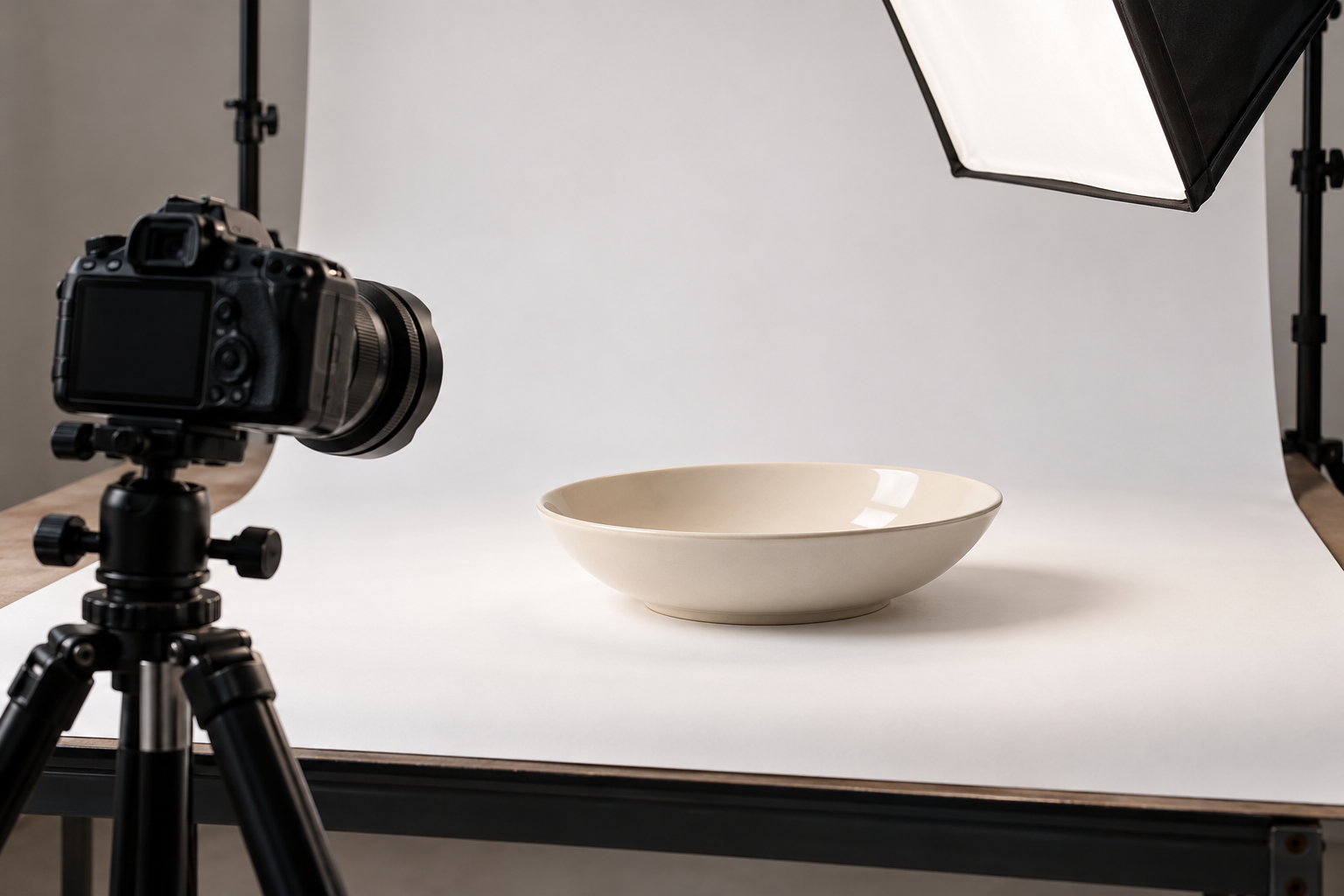
Ceramics shrink during drying and firing, so one drawing is not enough. Measure several production-representative pieces across expected kiln positions or production lots when practical. Record diameter, height, weight, and any feature customers need to understand.
For mugs and bowls, define capacity carefully. “Full to rim” volume is not the same as comfortable serving volume. State the method in the internal file, even if the customer page shows only one clear number. This prevents the factory, content team, and customer from using three different meanings.
Photograph the real set contents. A scale image can show a mug in a hand or a plate beside common table items, but do not let styling hide the rim, depth, or profile. A good tableware product listing reduces surprise; it does not only create desire.
For ceramic dinnerware Amazon requirements, review the current rules for your category and marketplace. Keep the main product image separate from supporting scale and lifestyle views. Amazon product photo guidance is a useful starting point; check Seller Central before submitting the final image set.
Turn Claims Into an Evidence Map
Marketplaces may request supporting documents, and buyers also carry responsibility for accurate claims. Start with the markets where the item will be sold. For U.S. foodware context, the FDA guidance on lead in foodwares is a useful official source. For EU planning, review the European Commission food contact materials overview and confirm the applicable rules with a qualified testing or compliance partner.
Do not accept “tested” as a complete answer. Ask:
- What exact body, glaze, color, and decoration were tested?
- Does the report identify the product or sample clearly?
- Which market, method, and limits does it address?
- Is the laboratory and report date suitable for the buyer’s program?
- Does the proposed listing wording go further than the evidence?
Dishwasher-safe and microwave-safe statements also need a defined basis. Decoration method matters. A decal may behave differently from an undecorated glaze, and metallic decoration can change microwave guidance. Keep approved care wording with the test or review record.
Show Ceramic Variation Before It Becomes a Review Problem
Reactive and handmade-look glazes can vary with glaze thickness, flow, firing atmosphere, and kiln position. This variation may be part of the design, but the phrase “each piece is unique” is not an acceptance standard.
Build a photo range with an approved light example, target example, and dark or heavily pooled example. Add unacceptable examples for pinholes, bare patches, sharp glaze, excessive warping, unstable foot rings, or other relevant defects. Use the same range for supplier QC, listing content, and customer service.
On a marketplace, customers compare pieces at home under different light. If the listing shows only one perfect studio piece, normal production variation may feel like a wrong item. Clear close-ups and simple variation language set a fair expectation without excusing real defects.
Connect the Listing to the Pack
Marketplace dinnerware packaging has two jobs: deliver the correct SKU and protect it through fulfillment. Confirm the printed item identity, set count, barcode, warnings or care information, packed dimensions, and gross weight on a finished pack—not only an artwork PDF.
Scan barcodes on the printed unit pack and any required logistics level. The GS1 barcode guidance gives an official standards starting point, while the marketplace’s current seller rules should control the exact operational setup. Rules can change, so check the applicable seller portal before launch.
Run a pack-out trial with someone who did not design the box. Give that person the written instruction and watch whether dividers, sleeves, pieces, labels, and closures can be assembled one way. If a bowl can be placed upside down or a mug handle can touch the carton wall, improve the pack or instruction.
Testing should represent the real product, pack, weight, and route. Ask the packaging laboratory to select a suitable distribution test for that route. A method name by itself is not enough; retain the pack version, conditioning, sequence, results, damage photos, and approval decision.
Prepare Answers Before Reviews Arrive

Customer service should not invent ceramic explanations while a complaint is open. Prepare short answers for:
- Why does my glaze look different from the photo?
- Is this mark normal variation or a defect?
- What is the practical mug or bowl capacity?
- Can the item go in a dishwasher or microwave?
- What should I do if one piece arrives chipped?
- Can I buy a replacement piece?
Create damage and complaint codes such as chipped rim, broken handle, color outside range, warped base, wrong set count, misleading size, and carton damage. Keep the SKU, lot or receipt date, pack version, photos, and outcome. Patterns tell you whether to change content, ceramic QC, packaging, or support guidance.
One review is a signal, not proof of a factory cause. Five similar rim chips from the same pack version deserve a focused investigation.
Use This Final Launch Gate
Before switching the listing live, place one sale-ready pack on the table and complete this gate:
1. Scan the barcode and confirm the correct SKU and variation.
2. Open the pack and compare every piece with the set-contents image.
3. Measure and weigh the products and packed unit against the approved file.
4. Check the live title, bullets, images, care wording, claims, and variation note.
5. Match each safety or performance claim to its evidence record.
6. Confirm packaging test evidence matches the current pack version.
7. Ask customer service to answer three likely questions using only the approved guide.
8. Place a small test order where possible and inspect the received parcel.
If the physical pack, file, and live page disagree, pause the listing. Correcting the source before launch is cheaper than correcting orders, reviews, and returns later.
My Advice as a Manufacturer
In ceramic dinnerware manufacturing, I treat the listing as part of product development, not a marketing task added at the end. When we review samples, I like the content owner and packaging owner to see the same approval pieces as the ceramic QC team. This closes the gap between what production makes and what customers expect.
My simple advice is to approve one “truth set”: golden product sample, glaze range, final pack, measured data, image folder, evidence map, and support answers. Every channel output should come from that set.
Questions Buyers Often Ask
Do marketplace requirements replace legal compliance checks?
No. Platform rules are operational requirements, not a complete statement of every law or buyer duty. Confirm the product, market, claim, labeling, and documentation needs separately.
Should every glaze color have its own evidence?
Not always, but never assume one result covers all colors. Pigments, glaze recipes, and decorations can affect scope. Ask a qualified laboratory or compliance adviser to define a suitable test grouping.
How should I list dimensions when ceramic sizes vary?
Use measurements from representative pieces, choose a clear customer-facing value, and keep the measurement method and acceptable tolerance internally. Do not promise false precision.
Can supplier photos be used directly?
Yes, if they show the final approved sale item, correct set, real color range, and adequate resolution, and if usage rights are clear. Rename and control files by SKU and version.
What should I monitor after launch?
Watch returns, damage codes, size and color comments, care questions, wrong-item cases, and replacement requests. Review patterns by SKU and pack version, then update the right control.
Conclusion
Ceramic dinnerware marketplace requirements are easiest to manage when one controlled launch file connects the physical product to data, evidence, images, packaging, and support. Measure real pieces, explain glaze variation honestly, validate claims, test the final pack, and learn from complaints by code rather than guesswork.
Plan Your Marketplace Dinnerware Launch
If you are preparing a marketplace ceramic line, send FENN your SKU plan, target markets, draft listings, samples, claim list, and packaging structure. We can help organize a marketplace-ready product specification before you approve bulk production.