
Short Answer
Ceramic mold ownership should identify the physical tools you own, who may use or copy them, and what happens during storage, replacement, or transfer. Before paying, request an itemized tooling record and written terms covering design files, exclusivity, maintenance, and release. A tooling fee alone does not explain which assets or rights the parties intend to provide.
When a buyer asks me, “Will the mold belong to us?” I usually ask one small question back: “Which part of the tooling?”
That sounds fussy until the second order arrives. A working mold may need replacing while the master remains usable. Or the buyer may want another factory to make the shape, but the files needed to rebuild it were never included.
I prefer to settle these details while everyone is excited about the new range. Here is how I would walk through that conversation. These are manufacturing questions to settle with your supplier; have qualified counsel turn the agreed rights into terms suited to your project and jurisdiction.
Start Ceramic Mold Ownership With the Actual Assets
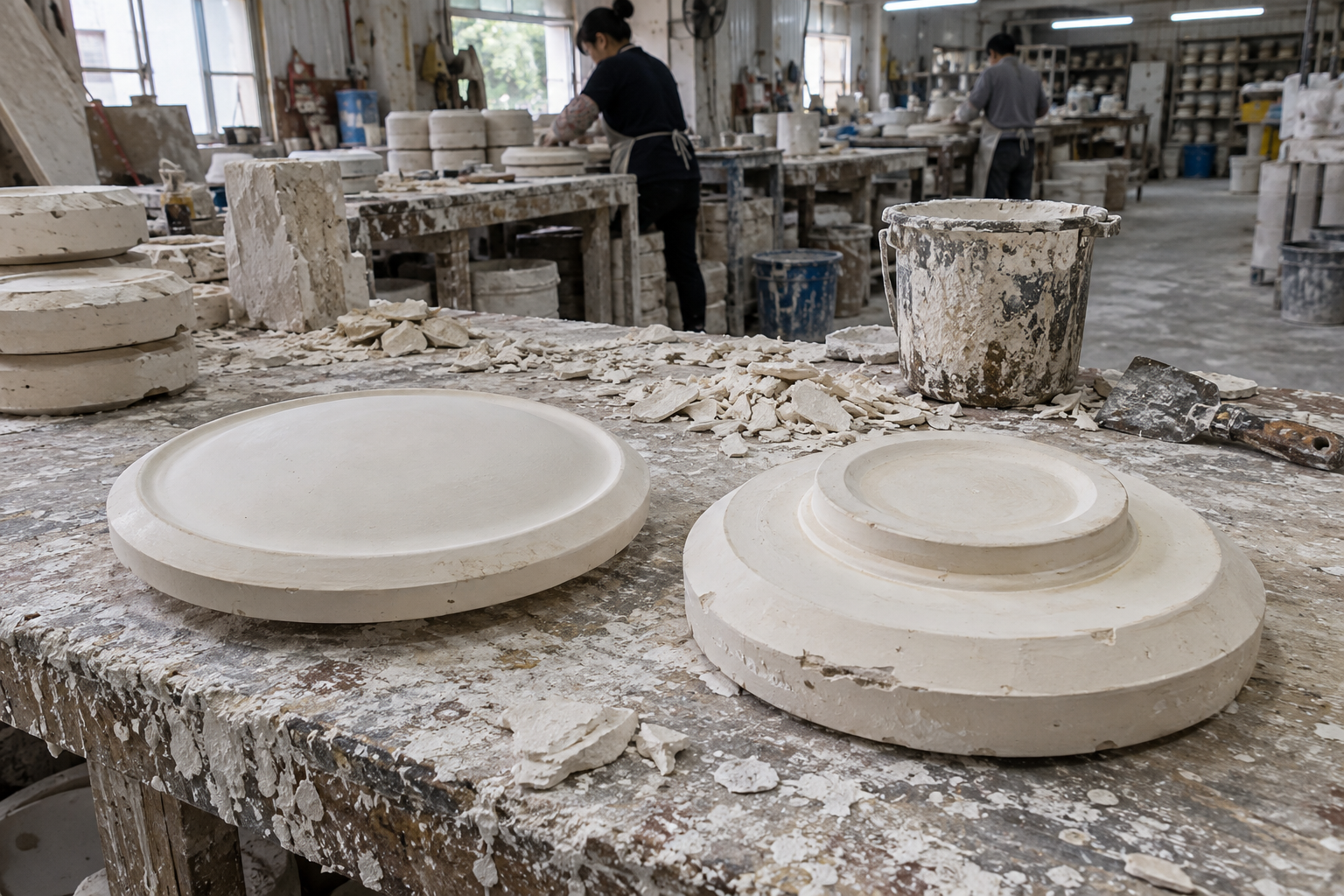
A tooling record is a list of the models, molds, files, and forming tools connected to a product revision. It should distinguish the asset owner from the factory storing or using it.
For a traditionally cast ceramic piece, the chain may include an original model, master or case tooling used to reproduce molds, and several working plaster molds. Names vary between factories. Ask the supplier to show the chain with photographs and explain each item’s job.
Other production routes use different tools. A jiggered plate may need a profile tool as well as its mold. Pressure casting can use specialized resin molds. Do not apply one plaster-mold agreement to every forming method.
My first judgment test is whether the supplier can identify what the tooling charge buys. Ask for separate lines for design work, model development, reproduction tooling, working molds, and any machine-specific fixtures. Mark excluded assets too.
A strong answer names the item, quantity, revision, location, intended owner, and payment condition. “One set of molds” leaves open whether that means one complete product family or one working mold for one bowl.
Three Moments When the Agreement Has to Work
I like to test custom dinnerware mold rights against ordinary future events. If the answer changes depending on who reads the email, there is more to settle.
Moment one: another buyer likes the same shape
Imagine you fund a shallow serving bowl with a distinctive rim. Later, the supplier receives an inquiry for the same bowl in another color.
Ask what is restricted: using the physical tool, making copies of it, reproducing the drawing, or selling the specified design. Define the covered product revisions, customers or markets, duration, and any agreed minimum-order conditions. A color-only restriction may leave the underlying shape available to others.
Existing factory shapes need a different discussion. Adding your backstamp does not explain whether the base shape remains part of the supplier’s catalog. Have the supplier identify pre-existing tooling and any third-party restrictions before promising exclusivity.
Physical tooling and industrial design protection address different questions. WIPO explains that industrial designs concern appearance, including shape and patterns, and protection varies between countries. Ask your adviser which design rights need separate attention; do not treat a mold label as proof of worldwide exclusivity.
A professional supplier response should state the permitted uses and exceptions clearly enough for its sales and production teams to follow.
Moment two: you reorder after a quiet season
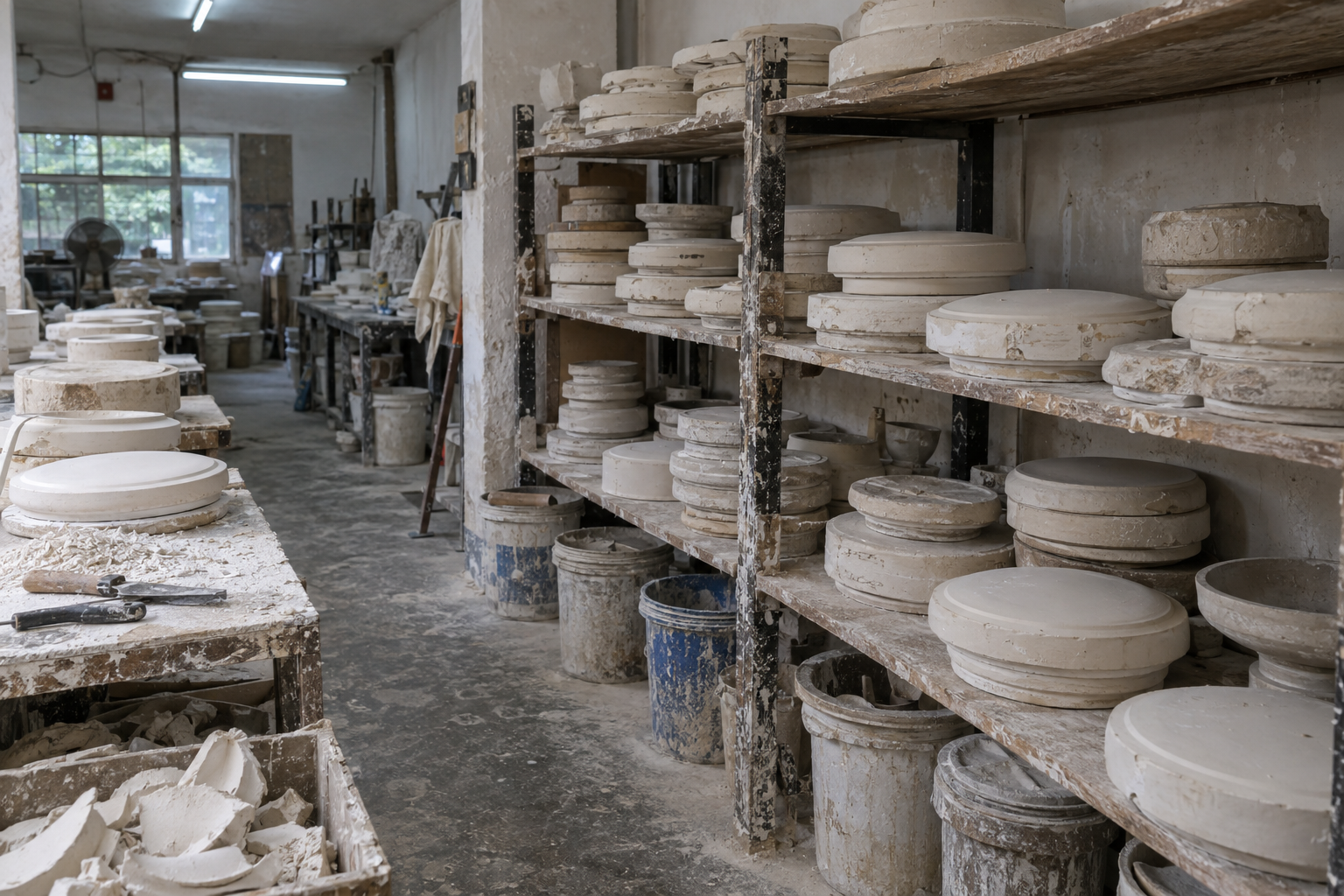
You may remember a successful launch. The factory needs to know whether the tools are still present, usable, and linked to the right product version.
In traditional slip casting, absorbent plaster removes water from the clay slurry so a wall forms against the mold. Mold condition and drying therefore matter to production. The same storage location does not guarantee the same casting behavior months later.
Ask for a storage period, review date, contact person, fees, and notice process before disposal. Agree what happens if your usual contact leaves or a notice goes unanswered. I would also record whether master tooling and working molds have different retention plans.
For replacement, separate ordinary wear from accidental damage and buyer-requested design changes. Assign inspection, approval, cost, and timing responsibilities for each. Avoid accepting a universal mold-life number without the supplier explaining the material, forming method, use conditions, and replacement criteria.
Useful evidence includes dated condition photos and results from trial pieces. Look for loss of detail, damaged edges, casting or release problems, and changes in the finished shape. A photograph of a shelf proves presence, not production readiness.
Moment three: production needs to move
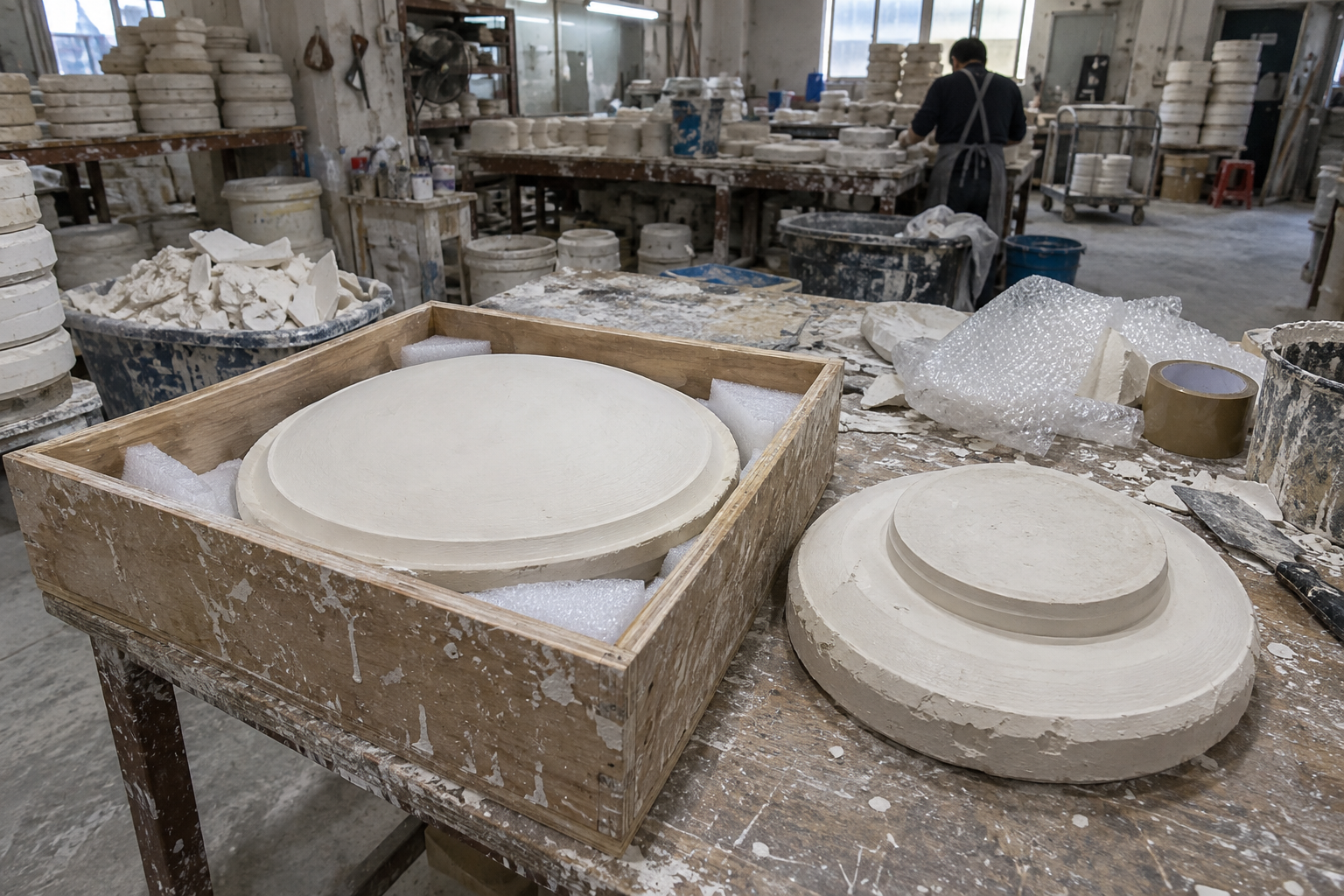
A transfer plan is easiest to agree before a move becomes urgent.
List what can be released: physical masters, reproduction tools, usable working molds, drawings, agreed digital files, and reference samples. State file formats, revisions, payment conditions, notice, packing responsibilities, collection arrangements, and the handover record. Do not leave release dependent on an undefined “reasonable fee.”
Then ask the receiving factory whether the package works with its equipment and ceramic body. A mold developed around one body’s shrinkage may produce a different fired size with another body. Glaze, firing conditions, and forming practice also affect the result.
I would plan fresh samples before committing the new site to bulk quantities. Check fired dimensions, rim and foot shape, stacking, glaze appearance, and the relevant product evidence. Owning a tool does not make it ready for every production line.
Use This Event-to-Action Tool in the Supplier Call
This table is a conversation aid, not ready-to-sign contract wording. Replace broad promises with a named decision and evidence.
| Future event | Question to settle now | Evidence or action to record |
|---|---|---|
| Tooling payment completes | Which assets and rights are included, and when do they transfer? | Itemized accepted asset list and agreed payment milestone |
| Supplier wants to make copies | Who can authorize duplication, including at subcontractors? | Written permission process and copy-location record |
| Another buyer requests the shape | What design, use, market, and time limits apply? | Defined exclusivity scope with pre-existing assets identified |
| Working mold wears out | Who approves and pays for replacement? | Condition review, replacement quote, and sample check |
| Reorder pauses | How long are assets kept and who receives notice? | Storage dates, fees, contacts, and disposal approval process |
| Tooling moves to another site | What must be released and what needs revalidation? | Handover inventory, file package, packing plan, and trial schedule |
For any unresolved row, write down who will answer and which work must wait. The purpose is to make a future decision manageable, not to fill every cell with “agreed.”
Keep the Information Needed to Rebuild the Shape
A mold can be replaced only if the agreed source assets remain available and usable. Ask which drawing or model controls the current shape and whether the digital file is editable or only a viewing copy. Confirm the file format with the team expected to use it.
Keep changes traceable. If a foot ring is widened after sampling, connect the updated model, replacement tooling, and fired reference to the same revision. A new working mold copied from an old master can bring back a problem you thought was solved.
Some information may remain the supplier’s own know-how. Separate agreed deliverables from private process recipes rather than assuming all factory knowledge comes with the tooling fee. WIPO’s trade secrets guidance explains why confidential technical information needs its own treatment.
Agree who can access buyer files, whether subcontractors may receive them, and how return, retention, or deletion will be handled. An access list and named file package are more useful than a general promise that everything is confidential.
My Advice as a Manufacturer
From a factory point of view, the most useful OEM ceramic tooling agreement supports the next production run as well as the first payment.
I would request one consolidated tooling record before approval. Then ask the supplier to walk through the three events above without changing the meaning of “your mold.” If a different department stores the master or makes replacement molds, include that team in the confirmation.
Keep the approved fired sample alongside the tooling revision record. The physical tool is an input; the finished dinnerware is what your customer receives. Tool condition, body shrinkage, glaze, and firing still need practical controls.
Questions Buyers Often Ask
Does paying a tooling fee give me exclusive rights?
The fee description alone does not tell you the agreed scope. Confirm the physical assets, design permissions, copying restrictions, and exclusivity separately in writing. Have counsel check the legal effect of the arrangement.
Should I own every working plaster mold?
That depends on your production and continuity plan. Working molds can be consumable items. Decide who owns and replaces them, while making sure the agreed source tooling and files needed for future production are covered.
Can the supplier charge for storage or replacements?
Settle the charging basis before tooling starts. Separate storage, routine replacement, damage, and design-change costs. Request approval before chargeable work and agree what happens when tooling becomes inactive.
Can I move the molds and skip sampling?
I would budget for new trials. Equipment, clay body, shrinkage, and firing can differ at the receiving factory. Confirm the transfer package first, then approve finished samples from the intended production route.
Conclusion
Good ceramic mold ownership planning makes the next reorder, replacement, or factory move easier to manage. Name the assets, define use and copying permissions, and agree storage, costs, and release while the project is still calm.
If you are developing a custom shape, share your forming plan and open tooling questions with FENN. I can help identify the manufacturing details to clarify before you approve development.