
Short Answer
Reactive glaze dinnerware can work for mass-market brands if the buyer treats variation as a controlled standard, not a surprise. Before bulk production, ask your reactive glaze dinnerware manufacturer for master samples, an approved color range, food-contact test support, photo rules, set-matching standards, and clear defect boundaries.
When buyers show me reactive glaze reference photos, I understand why they like it. The surface feels alive, with soft color movement and a handmade mood.
But from a factory point of view, reactive glaze dinnerware is not a simple “copy this photo” project. The buyer must decide what kind of variation is beautiful, what kind is risky, and what kind will make customers complain.
Best Criteria for Reactive Glaze
A mass-market reactive glaze line is ready only when it has four things: a stable shape, a glaze range, a written QC boundary, and a supplier who can explain how the glaze behaves in firing. If one of these is missing, the project may still be beautiful, but it is not yet commercially safe.
Myth vs Reality: What Buyers Should Know
| Common Belief | Practical Reality | Buyer Action |
|---|---|---|
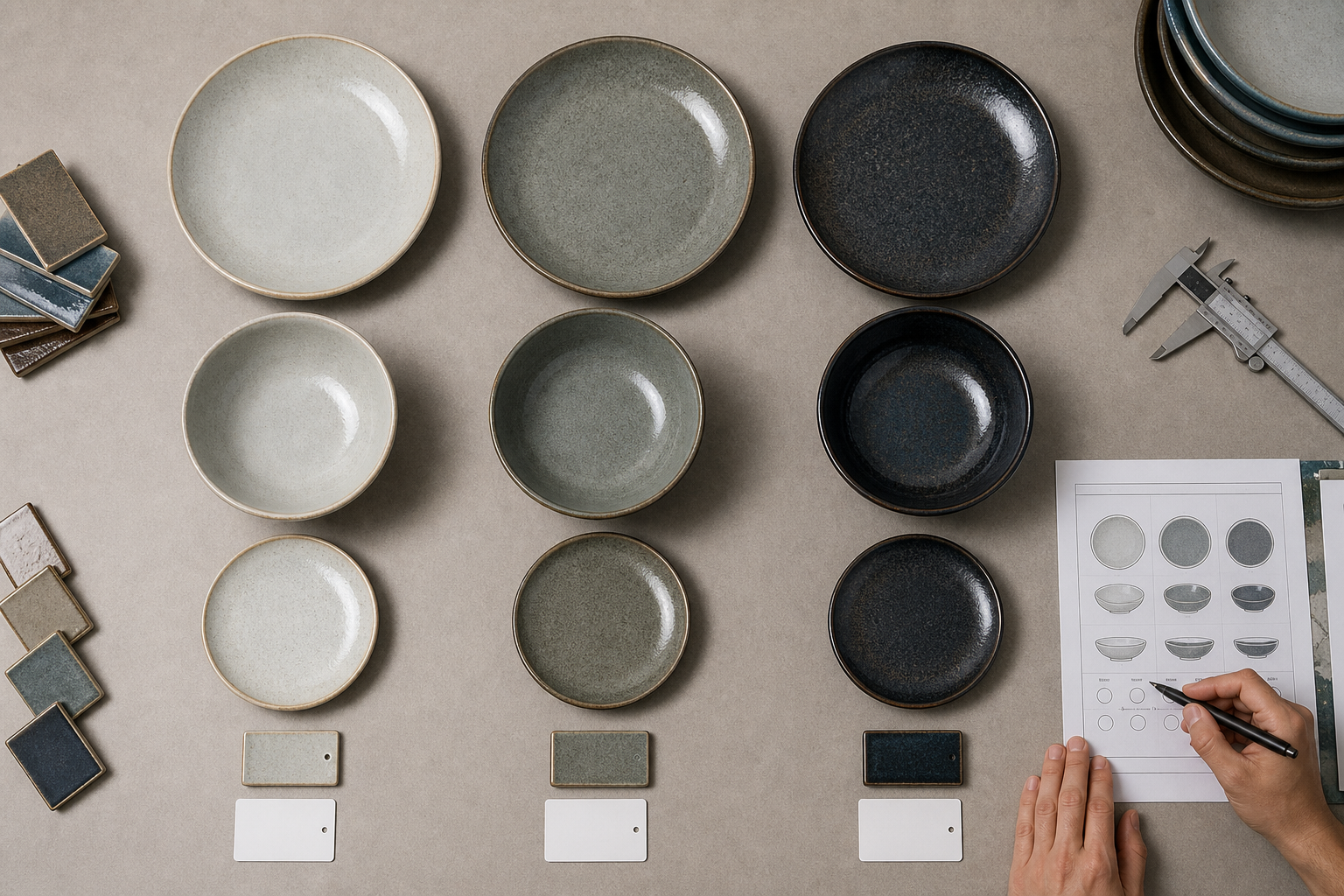
| Every piece should look unique | Yes, but every piece should still belong to the same product family | Approve a light, middle, and dark range before bulk |
| Reactive glaze hides defects | It can hide small natural movement, but not poor glaze control | Define pinholes, crawling, bare spots, and heavy pooling as defect rules |
| A photo is enough for approval | Photos change with light, camera, and screen | Use physical master samples and photo rules together |
| Mass production removes variation | Kiln position, glaze thickness, and firing curve still affect the result | Ask for batch photos and retained samples |
| Reactive glaze is always premium | It feels premium only when the range is controlled and the set looks intentional | Review full place settings, not one hero plate |
This is the gap between a sample and a sellable private label line.
Where Reactive Glaze Works and Where It Becomes Risky
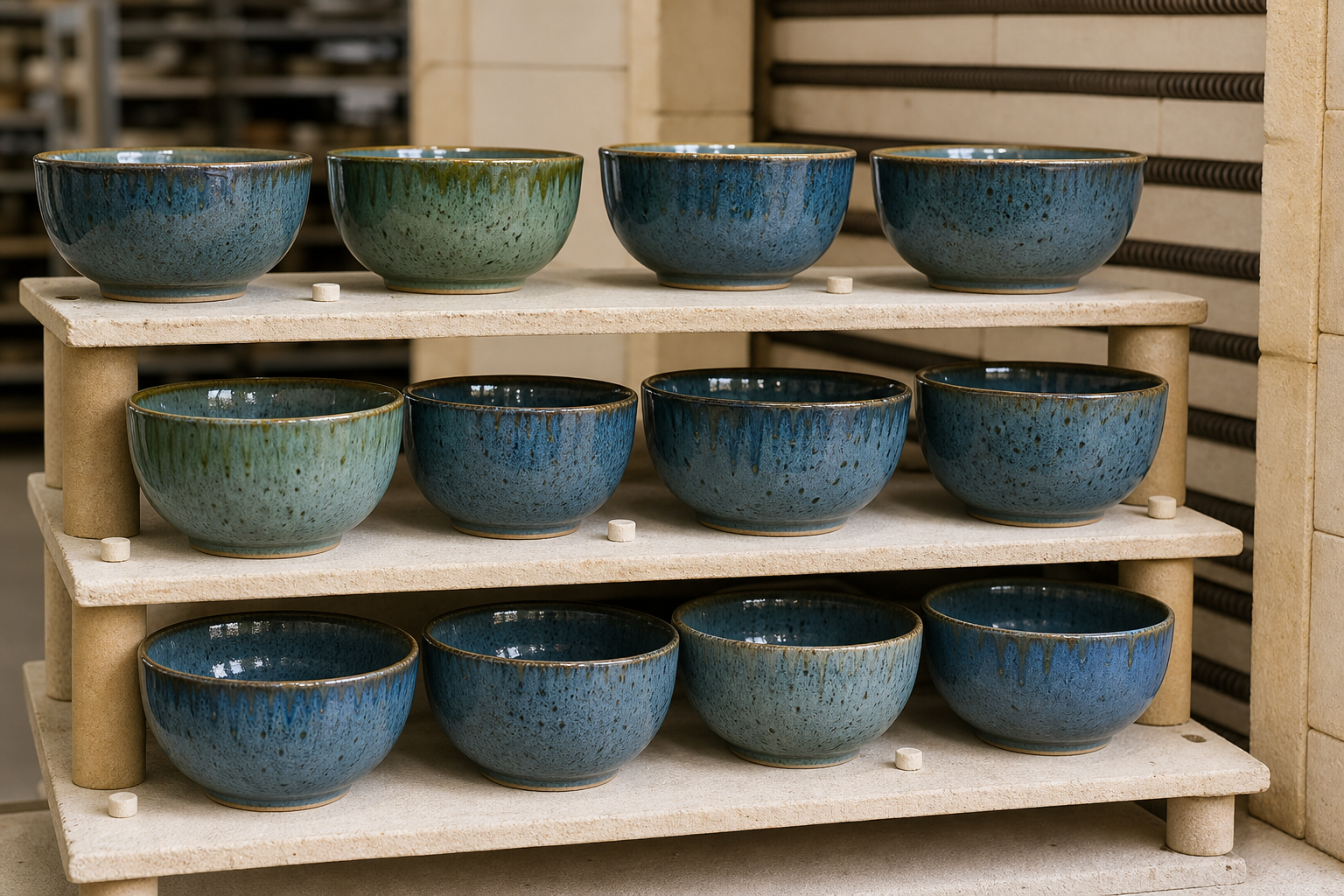
Reactive glaze works best when the brand wants warmth, craft feeling, depth of color, or a natural table setting. It is strong for stoneware bowls, coupe plates, mugs, and lifestyle collections where small differences feel acceptable. It can also help custom reactive glaze ceramics feel distinctive without a new mold.
Reactive glaze becomes risky when the buyer expects printed-color consistency, when boxed sets must match tightly, or when the sales channel has very strict visual acceptance.
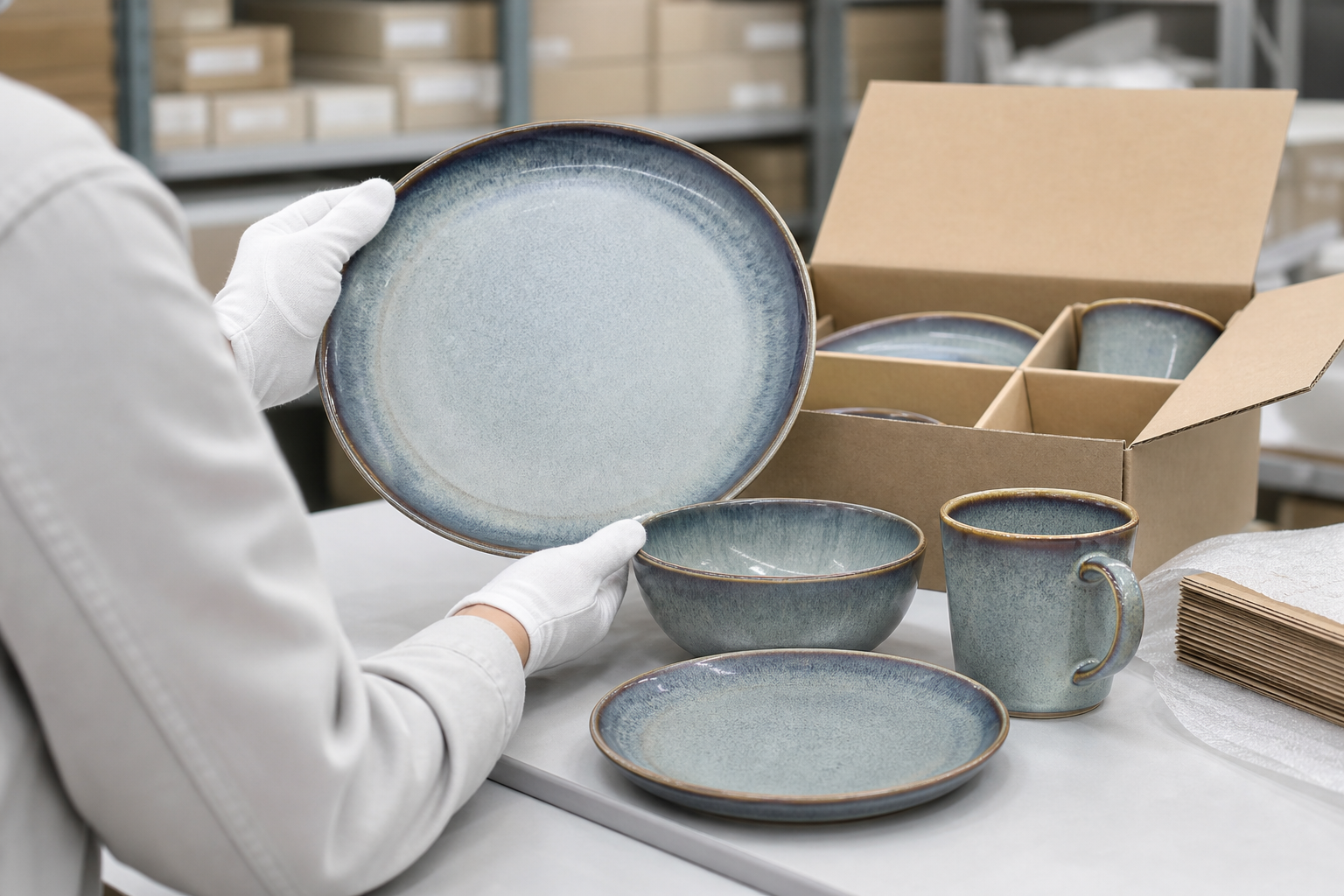
For example, a four-piece dinner set may look attractive when photographed one by one. But when the customer opens the box, the pieces must feel like one family. If one item is pale blue, one is dark green, and one has almost no reaction, the customer may call it wrong.
Bright colors, metallic-looking effects, heavy decoration, and food-contact surfaces also need more careful compliance review. Official references such as FDA guidance on lead in foodwares and European Commission food contact materials are useful starting points, but the real decision should be based on product-specific test reports for the selling market.
The Reactive Glaze Feasibility Filter
Before you request bulk pricing, use this filter with your supplier.
| Feasibility Point | Green Light | Warning Sign |
|---|---|---|
| Shape | Stable rim, simple wall, good foot ring, easy stacking | Very wide flat plate, thin rim, sharp profile, or hard-to-pack shape |
| Glaze range | Supplier can show approved range samples | Supplier only says “each piece is different” |
| Set matching | Full place setting looks related | One item in the set looks like another color story |
| Defect rules | Pinholes, bare spots, crawling, heavy flow, and black spots are defined | Buyer and supplier judge defects only by feeling |
| Food contact | Test plan matches market and decoration position | Only old or unrelated reports are offered |
| Reorder control | Retained samples and batch records will be kept | No clear way to match the next order |
If the warning signs are strong, I suggest slowing down before opening many SKUs.
How to Set an Acceptable Variation Boundary
Reactive glaze variation should be visual, written, and easy for inspectors to use. I prefer a range board with at least three levels: light acceptable, approved middle, and dark acceptable. For some glazes, we also need examples of acceptable speckles, rim flow, pooling, and color break.
Then make a small defect library with clear photos and short notes:
- Acceptable: soft color movement across the plate surface.
- Acceptable: small speckles within the approved range.
- Not acceptable: bare clay showing on the food-contact surface.
- Not acceptable: heavy glaze drip that affects stacking or hand feel.
- Not acceptable: pinholes or crawling beyond the agreed limit.
The goal is not identical pieces. The goal is fair judgment.
Photo Approval Rules Buyers Often Forget
For reactive glaze dinnerware, photos help only if the method is stable. Ask for photos in natural or agreed light, with the master range in the same frame when possible. Avoid judging from one edited beauty image.
For bulk production, ask to see:
- A group photo of several pieces from the same item.
- A full place-setting photo for boxed sets.
- Close-ups of rim flow, speckles, and pooled color.
- Photos from different cartons or kiln batches.
- A retained sample label with item code, glaze code, and date.
Compliance and Food-Contact Checks
Reactive glaze is not automatically unsafe, but colored glaze and decorated ceramics should be checked carefully. Ask whether the glaze is on the food-contact surface, whether the item will be used with acidic food, and which market the product will enter.
For US and EU sales, lead and cadmium release are common concerns in ceramic dinnerware. ISO 6486 ceramicware testing is a useful high-level reference for lead and cadmium release methods, while exact requirements should be confirmed with the buyer’s testing lab, importer, retailer, or compliance adviser.
My practical advice is simple: do not use a general certificate as proof for a new reactive glaze color. The report should match the product type, glaze risk, test item, and target market as closely as possible.
Launch Plan for Mass-Market Reactive Glaze
For a first launch, I prefer a focused assortment: best-selling shapes and one controlled glaze family. Do not launch too many colors, shapes, and pack formats at the same time.
A safer path looks like this:
1. Choose stable existing shapes or low-risk custom shapes.
2. Develop one main reactive glaze direction.
3. Approve physical range samples.
4. Test food-contact and use claims where needed.
5. Confirm set-matching rules for the selling channel.
6. Run bulk production with batch photos and retained samples.
7. Collect customer feedback before expanding colors or SKUs.
This path may feel slower, but it usually saves time after the first order.
My Advice as a Manufacturer
My advice is to let reactive glaze stay natural, but never uncontrolled. Do not ask the factory to remove all movement. That would kill the reason for choosing this finish. Ask the factory to control the range, document the approval, and protect the customer experience.
At FENN, I first look at the shape, clay body, target color, sales channel, pack format, and compliance market. Then I ask what kind of variation the brand can honestly accept.
Questions Buyers Often Ask
Can reactive glaze dinnerware be used for large retail orders?
Yes, if the supplier can make the glaze repeatable within an approved range. Large orders need clear range samples, batch control, final inspection rules, and set-matching standards.
Will every piece look different?
Each piece may have some difference, but it should not look random. The pieces should still share the same color family, surface mood, and quality level.
Is reactive glaze better on stoneware or porcelain?
Reactive glaze is often used on stoneware because the warmer body and thicker surface feeling suit the style. Porcelain can also work for some effects, but the glaze, firing, and design target must match the body.
What should I ask a reactive glaze dinnerware manufacturer before ordering?
Ask for physical master samples, accepted range samples, food-contact test support, defect rules, batch photo process, retained sample policy, and how they will handle repeat orders.
Conclusion
Reactive glaze dinnerware is practical for mass-market brands when the variation is planned, tested, photographed, inspected, and explained. It is risky when the buyer approves one beautiful sample but never defines the bulk range.
If you are developing private label dinnerware with a reactive glaze finish, send FENN your reference images, target market, shape list, pack format, and acceptable color direction. I can help you turn the glaze idea into a commercial standard before production starts.
Need help turning a reactive glaze idea into a production standard?
Send FENN your reference images, target market, shape list, pack format, and acceptable color direction. I can help you judge the glaze range, sample approval method, and QC rules before bulk production.