
Short Answer
Restaurants should choose ceramic plates by testing the complete daily service loop: plating, carrying, table use, clearing, dishwashing, stacking, and storage. The best plate is not simply the thickest or heaviest. Ask your restaurant tableware supplier for working samples, matching food-contact documents, written tolerances, packaging details, and a practical reorder plan before bulk approval.
When a restaurant buyer asks me for a “durable plate,” I do not start with a catalog. I ask what food goes on it, how many plates a server carries, which rack washes it, and where it sits after service. In more than 20 years around ceramic dinnerware, I have seen beautiful samples fail because nobody tested the ordinary working day.
Follow the Plate Through One Full Service Loop
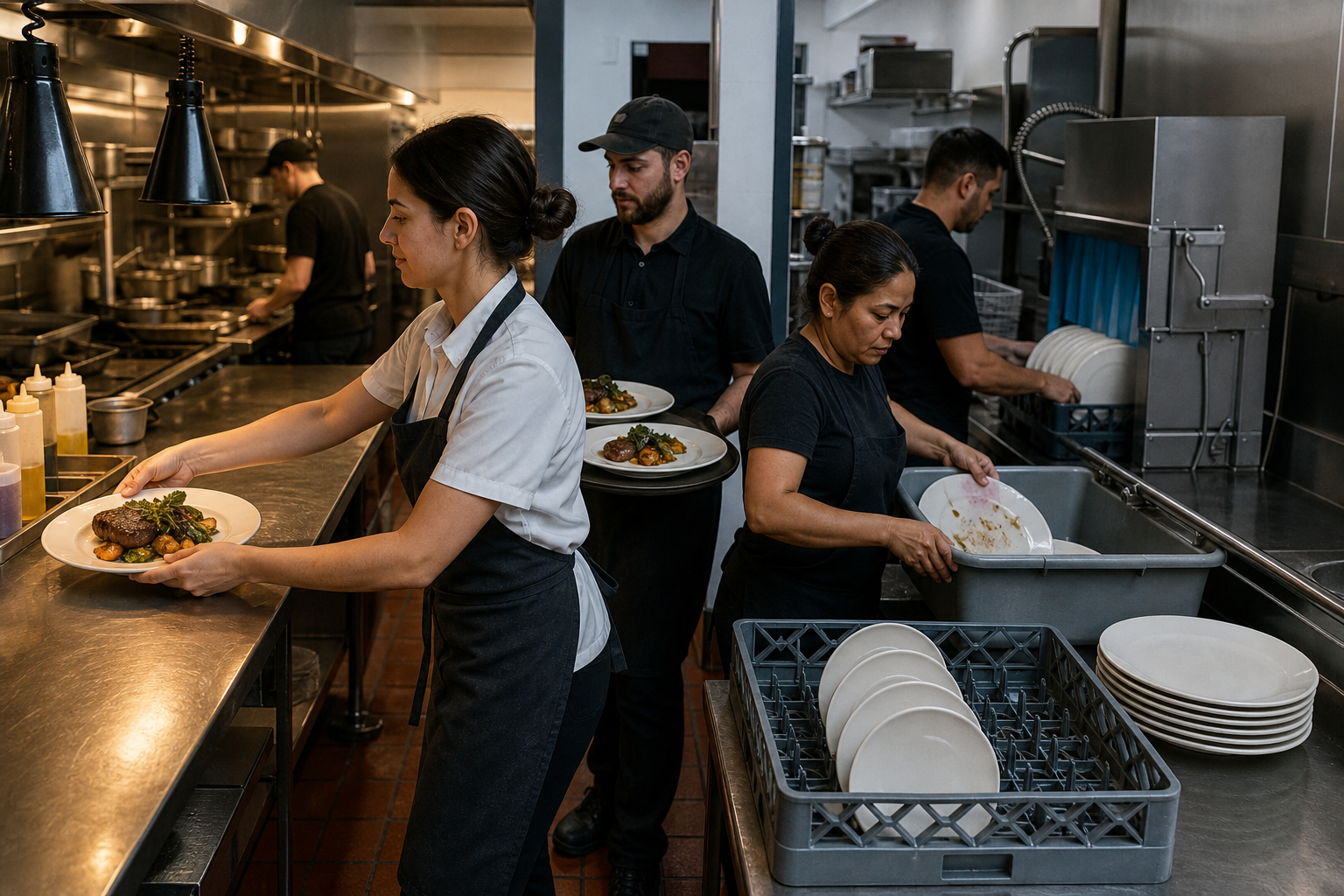
A restaurant plate moves from shelf to pass, table, clearing station, washing, and stacking. Each step creates a different risk.
I suggest walking one sample through this loop before discussing the final decoration:
1. Plate a real menu item, including sauce and garnish.
2. Carry the normal number of plates on a tray or by hand.
3. Let the plate sit under normal food heat and table use.
4. Clear it with the usual stainless-steel cutlery.
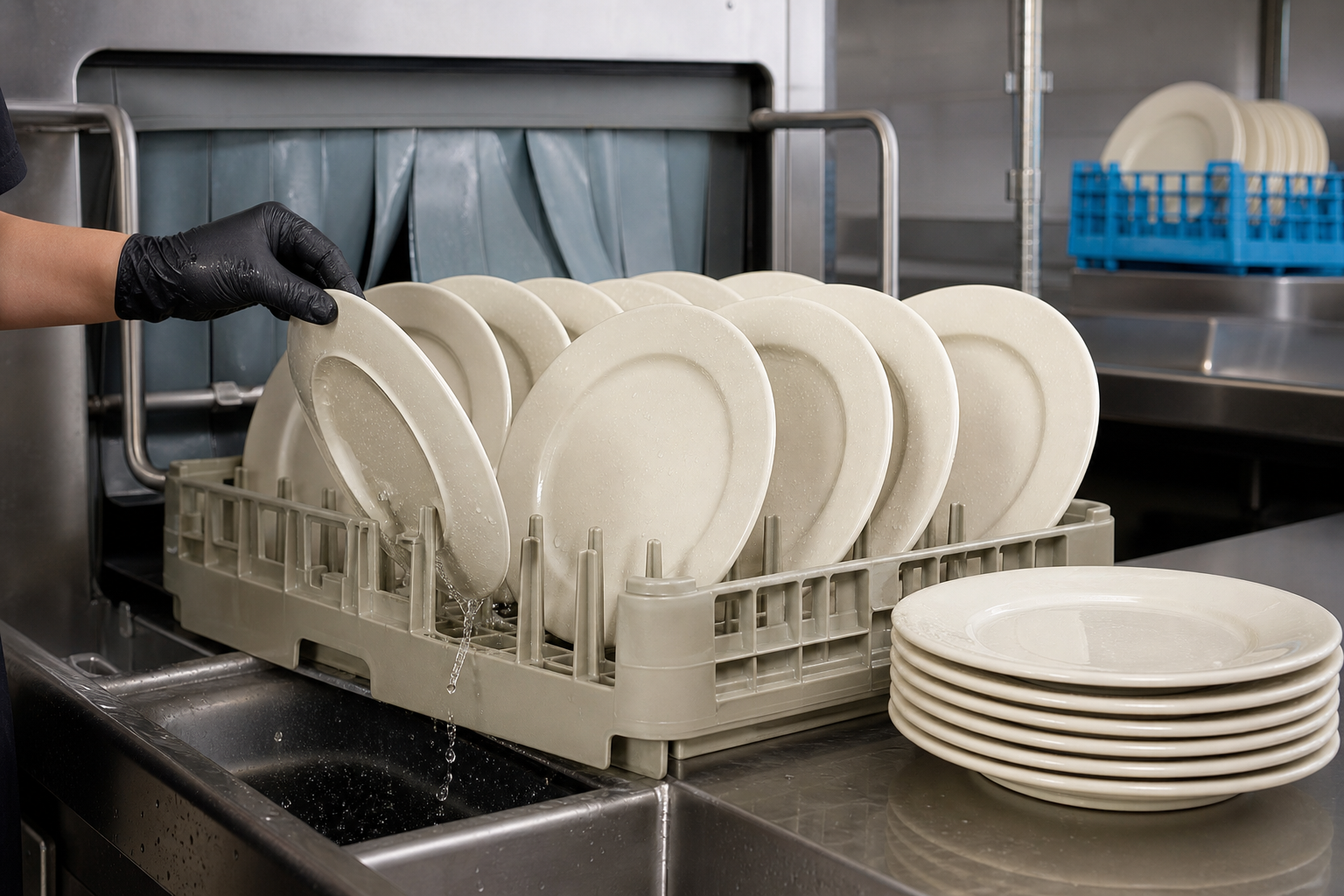
5. Scrape, rack, wash, and dry it using the restaurant’s normal system.
6. Stack it at the height used during a busy shift.
7. Move the stack to its real shelf or trolley.
This route finds problems a showroom review misses: an awkward rim, trapped water, a slippery foot, tight nesting, or visible glaze marks.
Match Each Plate to the Menu and Service Style
One plate shape should not be forced into every job. A wide coupe plate gives a modern food area, but its exposed edge may meet neighboring plates in a stack. A raised rim contains sauce and protects the edge, but reduces usable space. A deep pasta plate works for sauces, yet may hold dishwasher water.
Use this plate-by-menu tool during sample review:
| Menu or Service Need | Plate Detail to Check | Quick Working Test | Warning Sign |
|---|---|---|---|
| Fast lunch service | Moderate weight and easy grip | Carry and clear a normal server load | Staff need two hands for every piece |
| Fine plating | Flat food area and controlled glaze | Plate the real dish and wipe the rim | Food area is smaller than expected |
| Sauces or shared dishes | Raised rim or shallow well | Tilt gently with the finished dish | Sauce reaches the edge too easily |
| High-volume stacking | Protected rim and stable foot | Stack 12-20 pieces and move them | Stack leans or glazed faces touch |
| Open kitchen | Consistent color and clean foot finish | Compare several pieces under service light | Pieces look like separate glaze batches |
| Outdoor or casual use | Secure grip and sensible weight | Carry with slightly damp hands | Smooth foot or edge feels slippery |
My rule is simple: approve a plate for its hardest regular job, not for its best photograph.
How to Judge Restaurant Ceramic Plates at Key Contact Points
The word “thick” does not prove strength. Real durability comes from the clay body, firing, wall transition, rim profile, foot design, glaze fit, and production control working together.
Look closely at where plates touch during stacking. An exposed rim that knocks against the foot of the plate above can chip even when the center body is strong. A rough foot ring can scratch the glazed face below. A sudden change from a thick center to a thin edge can also concentrate stress.
When we review durable restaurant dinnerware, I prefer several samples from a trial batch, not one perfect piece. I compare diameter, height, weight, foot flatness, rim feel, and stack behavior. Ask the supplier to write the acceptable dimensional and weight ranges and explain how bulk pieces will be inspected. “Commercial grade” without a measurable standard is only a label.
Run a Busy-Shift Stress Trial
The most useful approval is a small, controlled service trial. Put enough plates into one working area for several service and washing cycles. Record what happens instead of relying on memory.
The Restaurant Plate Service Log
| Checkpoint | Record | Pass Standard to Agree |
|---|---|---|
| Plating | Food fit, sauce control, rim wiping | Chef can plate the normal portion cleanly |
| Carrying | Load, grip, heat, balance | Staff can carry the normal load comfortably |
| Table use | Cutlery marks, rocking, heat | Plate stays stable and finish remains acceptable |
| Clearing | Edge knocks and handling | Shape can be cleared without awkward contact |
| Washing | Rack fit, drainage, detergent result | Plate fits securely, drains, and dries cleanly |
| Stacking | Height, lean, sticking, contact points | Working stack stays stable and separates easily |
| End of trial | Chips, marks, stains, glaze change | Results stay within the written approval standard |
A short trial cannot predict years of service, but it can expose a poor shape-and-operation match before bulk buying.
Check Glaze, Cleaning, and Customer-Facing Wear
Glossy, satin, matte, and reactive glazes behave differently. Matte finishes may show metal transfer more clearly. Reactive glazes can bring controlled variation, which should be approved as a range rather than against one hero sample. Deep textures and relief can trap food or water if they sit in the wrong place.
Test the actual plate with the restaurant’s food, cutlery, detergent, dishwasher, and drying method. Look for visible metal marks, staining, rough food-contact areas, decoration wear, water pooling, and a change in gloss. If the supplier makes a dishwasher-safe claim, ask what product version and decoration were tested and how the result relates to repeated use.
The FDA Food Code is useful context for safe restaurant operations in the United States, including cleaning and sanitizing food-contact surfaces. Equipment buyers can also review the role of NSF food equipment standards when deciding what their kitchen or local authority expects. These sources do not replace product-specific ceramic testing, but they help buyers ask better operational questions.
Confirm Food-Contact Evidence for the Actual Plate
Food-contact evidence should match the clay body, glaze, colors, decoration, and food-contact area in the order. A report for a plain white plate may not be enough for a new colored glaze or decorated rim.
For U.S. projects, I point buyers to the official FDA guidance on lead in foodwares. EU buyers can start with the European Commission food contact materials overview and then confirm the current test plan for their market with a qualified laboratory or compliance adviser.
A useful report identifies the tested item, test method, result, laboratory, and date. Check that the sample description can be tied to your approved SKU. Generic statements such as “all our ceramics are food safe” are not a substitute for matching evidence.
Do Not Forget Weight, Storage, and Labor
Plate weight affects more than freight. It affects servers, dish room staff, shelf capacity, and the number of pieces carried per trip. A very light plate may need careful strength testing; a very heavy plate may slow service even if it feels substantial in a sample meeting.
Weigh several pieces, record the range, and measure a realistic stack against shelf clearance. Ask staff to load, turn, and unload it. Their hands find what a specification sheet misses.
Also check whether bowls or cups wedge together. Tight nesting creates delays and chips when staff pull pieces apart during a rush.
Build Reorders Into the First Approval
Restaurants replace broken and lost pieces. Before the first deposit, agree which SKUs will remain available, the reorder MOQ, likely lead time, retained sample method, and notice process if a body, glaze, mold, or firing route changes.
I like to keep an approved physical sample, a signed specification, glaze-range photos, and production records together. For natural or reactive finishes, retain several pieces that show the acceptable light-to-dark range. A single sample cannot describe variation honestly.
Keep core plates and bowls easier to reorder than seasonal presentation pieces. If every SKU has a different glaze or special decoration, replacement planning can become harder than the original launch.
A 10-Point Approval Check Before Bulk Production
- [ ] The real menu portion fits the usable food area.
- [ ] Servers can carry and clear a normal load comfortably.
- [ ] The rim, foot, and stack contact points have been checked.
- [ ] A 12-20 piece stack stays stable and separates easily.
- [ ] Plates fit the actual dishwasher rack and drain well.
- [ ] Glaze and decoration have passed a realistic service trial.
- [ ] Food-contact reports match the ordered design and market.
- [ ] Bulk tolerances and defect limits are written.
- [ ] Export packaging is designed around the final shape and count.
- [ ] Reorder MOQ, retained samples, and change control are recorded.
My Advice as a Manufacturer
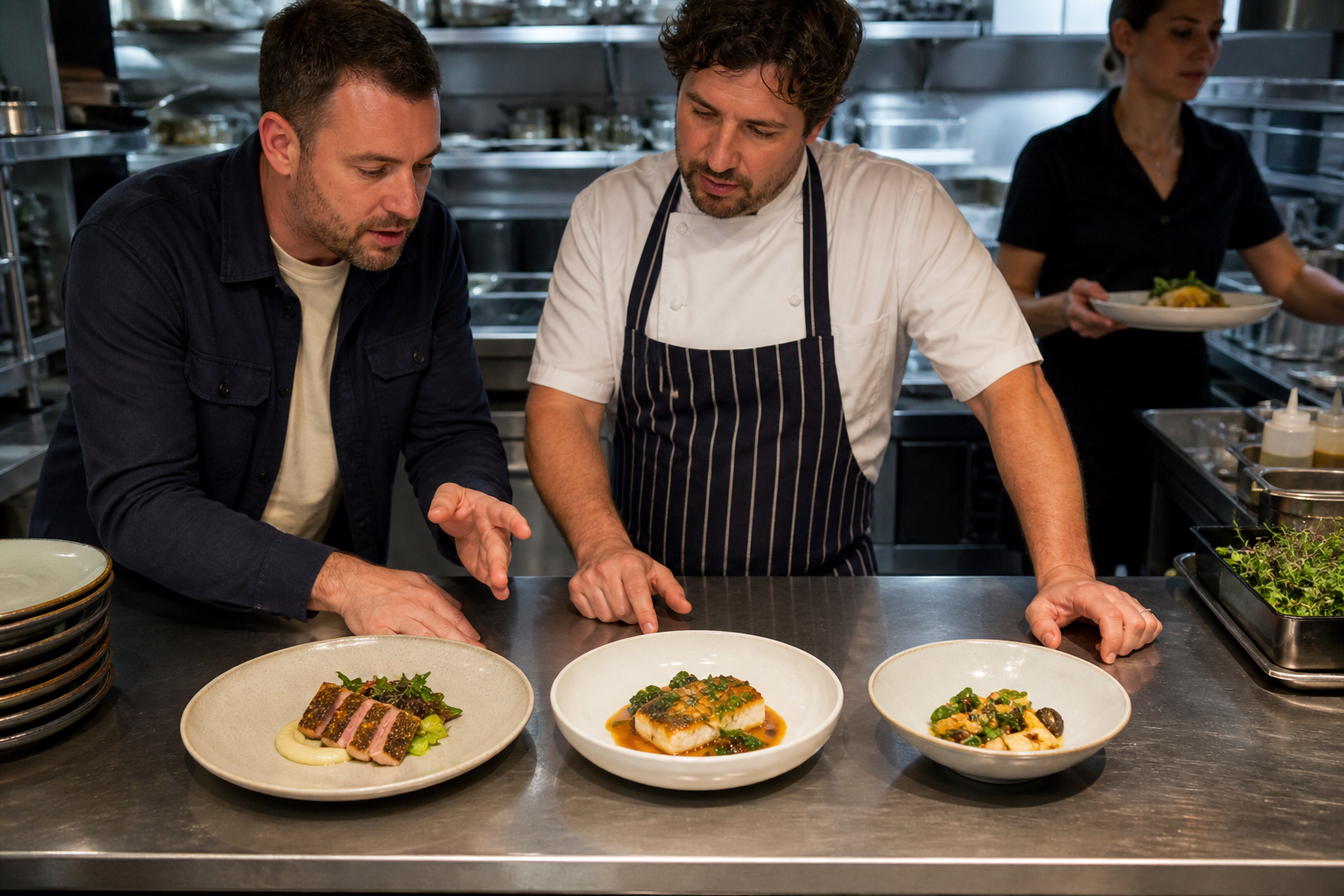
Invite the chef, service team, and dish room into sample approval. The chef judges plating. Servers judge balance and grip. Dish room staff find rack, drainage, and stacking problems. The buyer then connects those results to price, documents, packaging, and replacement supply.
I would rather change a rim or foot during sampling than hear about repeated chips during Friday dinner service. The strongest purchasing decision is usually the one built around ordinary work.
Questions Buyers Often Ask
Is porcelain always more durable than stoneware for restaurants?
No. Porcelain can offer good strength-to-weight performance, while stoneware can give a warmer, crafted look. Judge the actual body, firing, shape, glaze, and service test rather than the material name alone.
How many restaurant ceramic plates should we test?
For a key plate, 12-20 pieces let you test a realistic stack and service load. Include several firing samples so you can see normal production variation.
Are heavier plates better for commercial use?
Not automatically. Extra weight may feel solid, but it can tire staff and raise shipping and storage loads. Balance strength, shape, weight, and handling.
Can matte plates work in a busy restaurant?
Yes, when the glaze passes realistic cutlery, food, detergent, and dishwasher trials. Agree what level of visible marking is acceptable before bulk approval.
What should a restaurant tableware supplier keep for reorders?
Ask for retained approved samples, written dimensions and weight ranges, glaze-range references, decoration files, batch records, and a change-notice process.
Conclusion
Good restaurant ceramic plates survive a complete service loop, not just a showroom inspection. Match each shape to the menu, test rim and stack contact, run repeated service and washing trials, verify food-contact evidence, and plan reorders before bulk production.
If you are choosing a restaurant line, share your menu, plate sizes, service style, dishwasher rack, expected quantity, and visual direction with FENN. We can help you review shape, glaze, stackability, samples, packaging, and reorder controls before you approve production.
Planning restaurant dinnerware for daily service?
Send FENN your menu, plate sizes, service style, dishwasher rack, expected quantity, and visual direction. We can help review shape, glaze, stackability, samples, packaging, and reorder controls before production.