
Cutlery Marks on Ceramic Plates: What Brands Should Know
Short Answer
Cutlery marks on ceramic plates are often gray metal transfer from stainless steel utensils, not deep scratches through the ceramic body. But buyers should still test the glaze finish, cleaning behavior, surface hardness, and care instructions before launch. Matte and textured glazes need extra review because visible marks can quickly become customer complaints.
When a buyer asks me, “Why do customers say our plates are scratched?” I first ask for a close photo and the actual plate.
In my factory experience, the word “scratch” can mean many different things. Sometimes the glaze is really damaged. In other cases, the mark sits on top of the glaze and can be cleaned. Also, the plate may be safe and strong, but the surface still shows every knife mark after one dinner.
My simple advice is this: treat cutlery marking as a finish choice, a testing point, and a care-label decision.
What Buyers Usually See
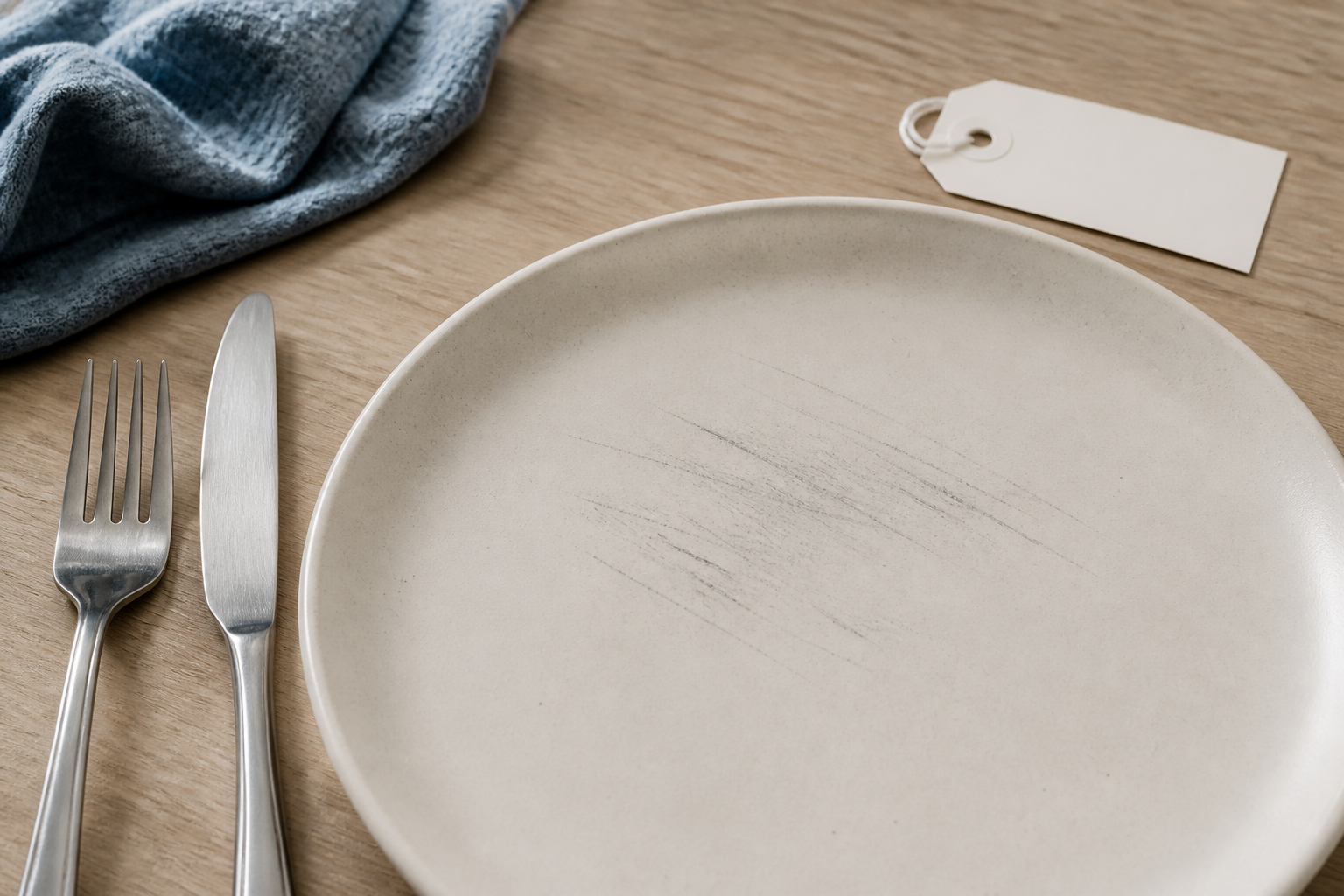
Cutlery marks usually look like gray, silver, or dark pencil-like lines on the eating surface. They are easy to notice on white, cream, matte, or lightly speckled plates. On dark glossy plates, the same marks may be harder to see.
Many customers call them scratches. That is normal language, but the factory should diagnose more carefully.
There are two common situations:
- Metal transfer sits on top of the glaze and may clean off with the right method.
- The glaze surface is abraded or polished by repeated utensil use.
Definition Box: What Are Cutlery Marks?
Cutlery marks are visible gray or dark lines left when metal utensils rub against a ceramic glaze surface. They may be metal residue, surface abrasion, or both.
For commercial dinnerware, the buyer should judge cutlery marks by visibility, cleaning result, customer expectation, finish type, and use claim. For example, a restaurant plate, a daily-use family plate, and a decorative matte plate do not carry the same risk.
Problem Diagnosis: Mark, Scratch, or Glaze Issue?
Use this table when you review samples or customer complaints.
| What You See | Likely Cause | Buyer Risk Level | What To Ask The Supplier |
|---|---|---|---|
| Gray lines appear after knife and fork use, but the glaze still feels smooth | Metal transfer on the glaze surface | Medium | Ask for cleaning test results and customer care wording. |
| Lines remain after normal cleaning and feel rough under a fingernail | Surface abrasion or weak glaze surface | High | Ask for glaze reformulation, finish change, or new test samples. |
| Matte dinnerware scratches appear after very light use | Matte glaze is too mark-sensitive for the target market | High | Ask for side-by-side matte, satin, and glossy samples. |
| Marks appear only with one type of cutlery | Utensil hardness or finish may be part of the issue | Medium | Test with common stainless steel utensils used by target customers. |
| Marks are mostly on raised centers or textured areas | Shape or texture creates more contact pressure | Medium to high | Review plate profile, center flatness, and texture depth. |
| Dark marks appear together with crazing or staining | Possible glaze integrity issue | High | Review food-contact safety, glaze fit, and test report scope. |
Because of this, the key question is not, “Can we explain it away?” The better question is, “Will the target customer accept this after normal daily use?”
Why Some Ceramic Glazes Mark More Easily
From a factory point of view, cutlery marking is about contact between metal and glaze.
Matte glaze often has a more open or micro-textured surface. That soft look is popular, but it can catch metal residue more easily than a glossy glaze. Satin finishes can be a useful middle route.
Other factors also matter:
- Glaze hardness and formulation.
- Firing maturity and kiln control.
- Surface texture, speckles, and uneven glaze flow.
- Plate shape, especially raised centers or sharp eating angles.
- Utensil type used in the test.
- Dishwasher detergent, cleaning pad, and customer habits.
I have seen a sample look beautiful in a showroom, then show gray lines after one steak dinner. That does not mean matte glaze is bad. It means the buyer must test the finish like a real customer will use it.
A Finish Testing Scorecard for Buyers
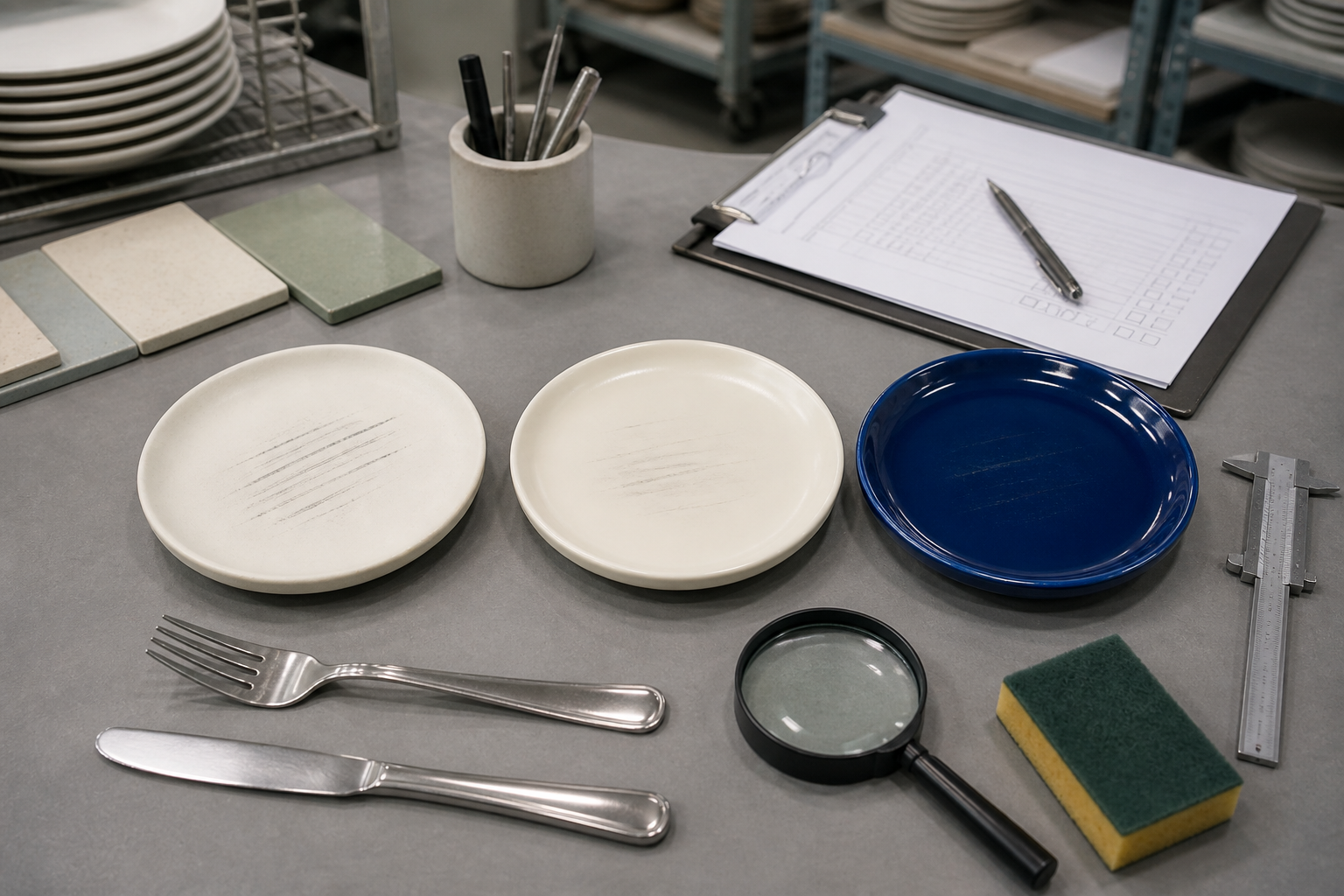
Before approving bulk production, I like buyers to compare finishes with the same food, same cutlery, and same cleaning method.
| Test Item | How To Test It | Good Result | Warning Sign |
|---|---|---|---|
| Dry cutlery rub | Rub common stainless steel fork and knife on the plate surface | Light or no visible mark | Clear gray lines after light pressure |
| Meal-use simulation | Use the plate with a real meal, not only an empty test | Marks stay acceptable for the brand position | Marks appear after one normal meal |
| Cleaning check | Wash with normal detergent and soft sponge | Marks reduce or disappear without harsh cleaning | Marks remain clearly visible |
| Finish comparison | Compare matte, satin, and glossy versions | Buyer can choose risk level knowingly | Only one finish is shown, with no alternative |
| Customer expectation review | Match the result to channel and price point | Care message fits the product | Product copy promises easy care but finish marks easily |
| Repeat sample check | Test more than one fired sample | Results are consistent across samples | One sample is fine, another marks badly |
If a finish fails here, it is better to know before packaging artwork and product photos are finished.
What To Ask Before Approving Matte Dinnerware
Matte dinnerware scratches are a common customer complaint because matte plates make marks easy to see. I do not tell buyers to avoid matte glaze. I only tell them to approve it with open eyes.
Ask the supplier:
- Is this a true matte glaze, satin matte, or only a less glossy finish?
- How does it perform after stainless steel cutlery rubbing?
- Can the marks be cleaned with normal household washing?
- Will the care label mention metal marking or avoid abrasive pads?
- Are there darker or lighter glaze colors that hide marks better?
- Can we adjust the glaze to reduce marking while keeping the look?
- Does the supplier have a metal marking resistance test reference, such as GB/T 34251-2017 for glazed ceramic tableware?
A professional answer should include fired sample plates, finish options, photos after use testing, and a clear care recommendation. “Matte is always like this” is not enough.
Safety, Care, and Customer Confidence
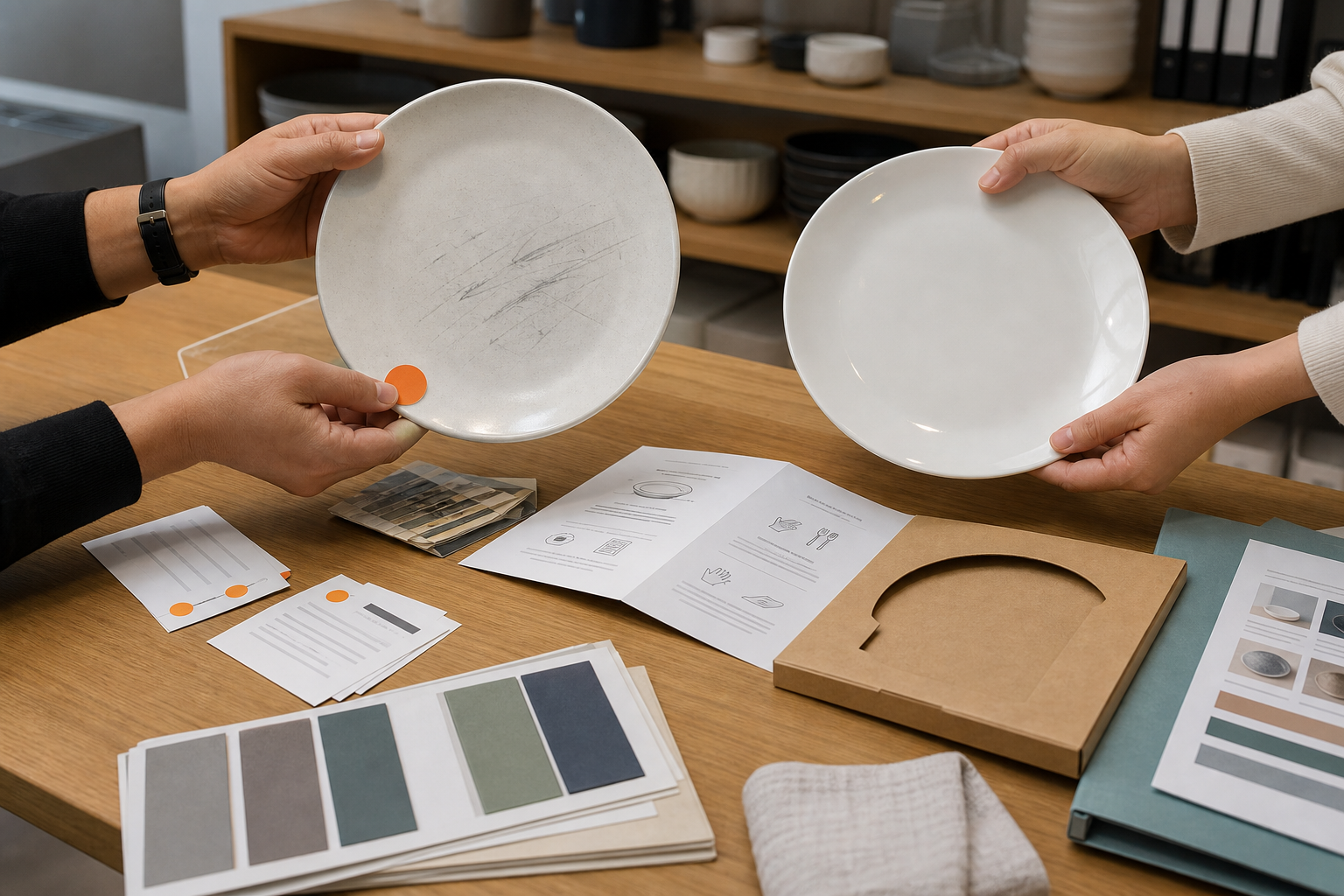
Most cutlery marks are not the same as lead or cadmium risk. But buyers should be careful when customers connect gray marks with safety questions. For food-contact products, I would still check the sales market, glaze, decoration, and test report scope. FDA lead in foodwares guidance and EU food contact materials rules are useful references when buyers review ceramic safety claims. For porcelain tableware, ISO 5644:2024 is also useful because it shows that specifications, tests, sampling, marking, and labeling belong together.
My practical rule is simple:
If the plate only has removable metal transfer, solve it through finish choice, cleaning guidance, and customer expectation. If the glaze is damaged, crazed, rough, or staining, treat it as a quality and possible compliance review.
Do not promise “scratch proof” unless you have very strong evidence. For ceramic dinnerware care, I prefer plain wording such as:
- Avoid cutting with heavy pressure on matte surfaces.
- Use normal dish detergent and a soft sponge.
- Do not use steel wool or harsh abrasive pads.
- Some metal transfer may be more visible on matte glazes.
Supplier Answers That Worry Me
Some answers sound easy but do not protect the buyer.
“It can be cleaned” is not enough unless the supplier shows the cleaning method and confirms it is reasonable for normal customers.
“All matte plates scratch” is too broad. Some matte finishes mark badly, some perform better, and satin may be a good compromise.
“The glaze is food safe” does not answer the cutlery-mark complaint. Safety, marking, cleaning, and customer perception are related, but they are not the same question.
“We will improve it in bulk” is risky unless the factory sends new samples from the revised glaze route.
I prefer answers like this: “We tested matte, satin, and glossy options with stainless steel cutlery. The satin finish shows less metal transfer and cleans better with normal detergent. We suggest changing the finish before bulk approval.”
My Advice as a Manufacturer
If your brand loves a soft matte look, keep it in the development plan, but test it early.
Ask for a finish comparison before final sample approval. Use real forks and knives. Wash the plate the way a customer will wash it. Check the result under normal kitchen light and strong inspection light.
Then decide what matters more for your line: the soft matte look, easier cleaning, lower complaint risk, or a balanced satin finish.
For many private-label dinnerware projects, I like a practical compromise. Use matte on outside walls, rims, or accent pieces, and use a smoother eating surface where the knife and fork work hardest. This can keep the visual style while reducing complaints.
If your team is choosing between matte, satin, speckled, and glossy finishes, send FENN your samples, target market, product photos, and care-copy draft.
Questions Buyers Often Ask
Are cutlery marks on ceramic plates real scratches?
Sometimes yes, but often they are metal transfer sitting on the glaze surface. Buyers should test whether the mark cleans off and whether the glaze surface feels damaged.
Are matte ceramic plates more likely to show marks?
Yes, matte and textured glazes often show ceramic glaze marks more clearly than glossy finishes. However, this does not make them unusable, but buyers should test them before launch.
Can customers clean metal marks from plates?
Some metal transfer can be reduced with normal cleaning or a recommended non-abrasive method. Do not rely on difficult cleaning as the main solution for a mass-market product.
Should a brand avoid saying scratch resistant?
I would avoid broad “scratch resistant” or “scratch proof” claims unless testing strongly supports the wording. It is safer to describe the finish and give honest care instructions.
What should be written in the QC standard?
Write the accepted mark level after defined cutlery-use testing, cleaning method, inspection light, and sample comparison. Include photos if possible, because words like “slight” or “serious” can be misunderstood.
Conclusion
Cutlery marks ceramic plates are a product-development issue, not only an after-sales issue. The best control is early finish testing, realistic customer-use checks, honest care instructions, and a clear supplier standard. A beautiful matte glaze is useful only when the buyer understands how it will behave after real meals.
Need help reducing cutlery-mark complaints?
Need help reducing complaints about matte dinnerware scratches? Send FENN your finish samples, target channel, cutlery-use test photos, and care instructions. I can help you decide whether to keep the glaze, adjust it, or choose a safer finish before bulk production.