
Short Answer
Textured ceramic dinnerware can give a collection a clear identity, but the safest design keeps strong relief away from the main food and stacking zones. Buyers should compare embossed, ribbed, and fluted options by mold detail, glaze pooling, cleaning, hand comfort, stacking, and rim strength. Approve fired samples, test them with real food and a dishwasher, and inspect a small group—not only one hero piece.
A fluted vase can be an appealing reference for a new plate. But a vase does not meet a fork or sit in a service stack. I would translate the visual idea before copying the relief.
My first question is simple: where does the texture need to work, and where should the ceramic stay quiet?
Map the Zones of Textured Ceramic Dinnerware
Before choosing the pattern, divide each item into use zones.
| Product Zone | Texture Risk | Practical Design Direction | What a Good Fired Sample Should Show |
|---|---|---|---|
| Main food well | High | Keep it smooth or use very shallow, easy-to-clean relief | Sauce wipes away without sitting in grooves; a fork moves normally |
| Eating rim | High | Avoid sharp embossing, deep flutes, or rough unglazed details | Comfortable against the mouth and fingers, with no thin glaze edges |
| Outer wall | Medium to low | A good place for ribs, flutes, or a repeated embossed pattern | Clear detail, even rhythm, comfortable grip, controlled glaze flow |
| Underside | Medium | Use shallow brand or pattern detail away from the foot ring | No rocking, trapped water, rough contact points, or unreadable relief |
| Foot and stacking ring | High | Keep contact areas stable, smooth, and easy to inspect | Pieces stack without point loading, scraping, or leaning |
| Handle area | Medium | Test grip pressure and cleaning around joins | No sharp peaks, weak thin sections, or narrow dirt traps |
Texture is not one yes-or-no choice. The answer changes by zone on the same item.
Ocean Shell: Separate Visual Texture From Physical Relief

The FENN Ocean Shell collection photograph shows blue-gray patterned borders around pale centers. I would use this view to mark the food well, rim, and outer edge on a buyer brief. It also raises an important question: does the buyer want a textured appearance, a raised surface, or both?
A photograph cannot establish groove depth or cleanability. Request a side view and a fired sample before calling a patterned surface ribbed or fluted. This distinction can save unnecessary tooling when a visual effect already meets the brief.
Choose the Texture by the Job It Must Do
Embossing: Best for a Focused Motif
Embossing raises a logo, border, leaf, geometric mark, or other selected detail from the ceramic surface. It can make a range feel custom without covering the whole form.
I like embossing for one controlled point of recognition. A shallow outer-rim border or exterior bowl motif is easier to manage than dense relief across the food well.
The mold must release the shape cleanly. Fine lines may soften through forming, drying, glazing, and firing. Deep undercuts are difficult because the clay must leave the mold without tearing. I expect a professional supplier to discuss line width, relief depth, draft, shrinkage, and glaze—not simply promise an exact copy of a drawing.
A FENN Forming Reference: Check Relief Before Glazing
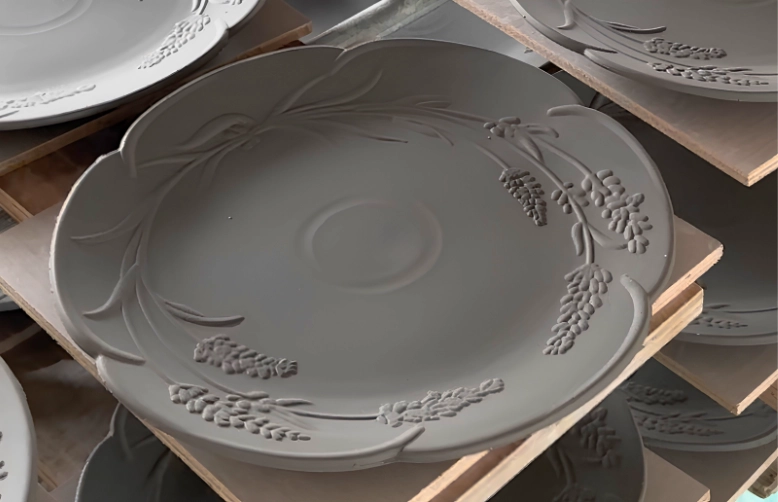
FENN’s plate-body photograph shows a raised botanical border and scalloped edge before the final decorated surface. Look at the small raised clusters and the transition into the center. These are useful points to compare again after glazing and firing: has detail softened, has glaze hidden a narrow gap, and does the border interfere with handling?
The photograph documents the visible form, not the mold-release method, cycle time, or final strength. I would request matching fired pieces rather than approve tooling from this view alone.
Ribs: Best for Grip and Repeated Rhythm
Ribs are repeated raised or recessed lines, often vertical on bowls and mugs. They can improve grip and create useful shadow without needing a printed decoration.
A spacing error or mold seam is easy to see because the eye compares every rib. On a mug, I check finger comfort and the handle join.
Ask to see the piece from several mold positions or production cycles if possible. One perfect sample does not prove that the repeated detail will stay clear in bulk.
Flutes: Best for Strong Form and Light Play
Fluted dinnerware normally uses broader channels or scalloped form changes. It can give a bowl or plate more presence, even in one solid glaze.
Flutes change wall thickness, glaze depth, drying, and stack contact. A deep outer flute may also create an uneven interior or weak rim transition.
For a first collection, I prefer a moderate flute on the outer wall with a calmer food surface. It keeps the visual effect while reducing cleaning and cutlery problems.
Run Three Real-Use Tests Before You Approve
Test 1: The Sauce-and-Sponge Test
Put a colored sauce or oily food on the intended food-contact area. Wash the piece using the normal method for the target customer. Look at groove ends, pattern corners, the underside of rims, and handle joins.
The FDA’s definition of an easily cleanable surface focuses on whether normal cleaning methods can remove soil and notes that design and use matter. The FDA Food Code is a model for retail and food-service rules, not a dinnerware design certificate, but the cleanability idea is useful for buyers. FDA research on surface texture and allergen cleaning also shows why texture should be considered in a real cleaning method, rather than judged only by sight.
For me, “the grooves look clean” is not enough. Soil should release under the planned care method, with no hidden residue after drying.
Test 2: The Glaze-and-Light Test
View several fired pieces under side light. Glaze often gathers in recessed areas and pulls thinner across raised peaks. This can be a beautiful part of the design, but it needs boundaries.
The Ceramic Arts Network note on glazes over texture shows how glaze can collect in lines and break over relief. Approve the light and dark range, with reject examples for bare peaks, heavy pools, pinholes, crawling, or blocked detail.
I check every chosen color. Glossy, matte, and moving reactive glazes can make the same mold look like different designs.
Test 3: The Service-Stack Test
Start with a safe stack that matches the intended service height; twelve pieces can be a useful internal trial when the form allows it, but it is not a universal test standard. Stack more than two samples. Rotate pieces and rebuild the stack. Watch for leaning, tight nesting, point contact, glaze scratching, and pressure on raised areas.
For hospitality use, repeat the test after dishwasher cycles and normal handling. NSF’s overview of food equipment standards gives wider context for sanitary design, construction, and performance. It is not automatic approval for a plate, but it supports a practical idea: design must work through cleaning and repeated use.
Golden Harvest: Treat a Styled Stack as a Starting Point
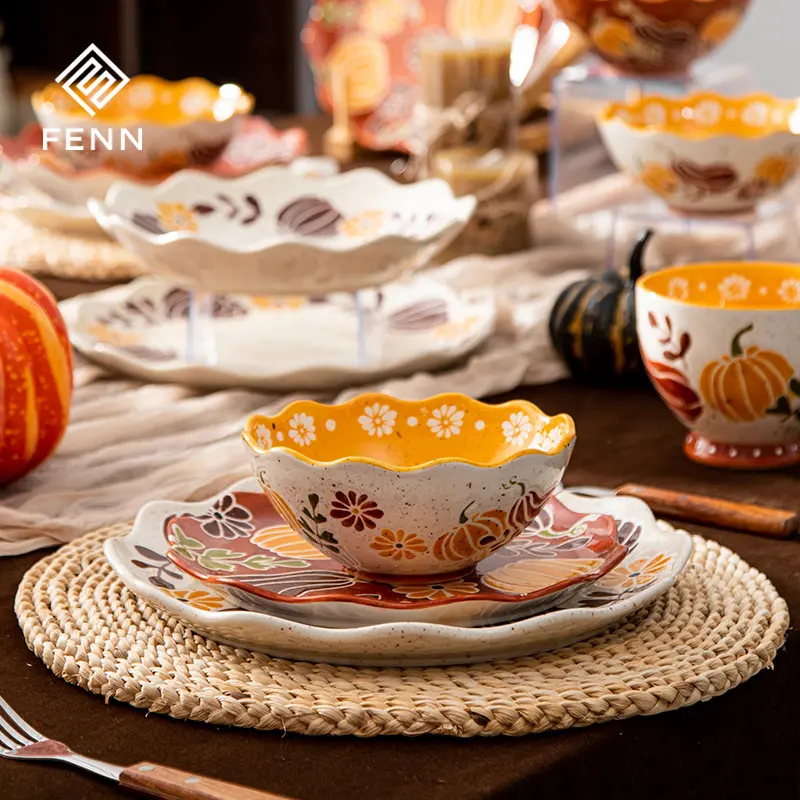
The FENN Golden Harvest collection includes a photograph of a scalloped bowl arranged over decorated plates. It helps a buyer see how edge shape and strong decoration work together. The painted motifs should not be mistaken for proof of raised relief.
I would then ask for an unstyled stack of each individual SKU. Mixed pieces in a table setting do not demonstrate repeatable nesting, safe stack height, or resistance to scraping. Inspect where each foot meets the piece below, especially near a scalloped rim.
Read the Cost Beyond the New Mold
Texture begins with tooling, but cost continues through forming, glazing, inspection, packing, and freight. Difficult release slows forming. Dense patterns take longer to inspect. Raised areas may need more separation, while poor nesting increases carton volume.
From a factory point of view, I would check whether a slightly simpler texture gives better value. Ask which cost is one-time tooling and which repeats with every order.
Build a Small Approval Set, Not One Perfect Piece
I approve a small group that represents normal production variation. The quantity depends on forming, glaze, size, and project stage, so the supplier should explain the plan.
Use the approval set to judge:
1. Detail clarity across several pieces.
2. Light and dark glaze behavior on peaks and grooves.
3. Rim comfort and hand feel.
4. Food release and cleaning after realistic use.
5. Stack height, lean, contact points, and removal.
6. Packaging contact around the relief.
7. The most visible acceptable variation and clear reject limits.
Keep fixed-light photos and physical signed samples. A front photo cannot record everything that touch and side light reveal.
Red Flags in a Supplier Review
Be cautious when texture exists only in a render, the supplier cannot explain mold release, or approval depends on one selected piece. Other red flags are untested food-area grooves, buried detail, dry raised points, untested service stacks, and “handmade variation” with no agreed limits.
My Advice as a Manufacturer
Use texture where the customer can see or feel its value, then protect the food well, rim, foot, and stacking contacts. For many projects, that means stronger detail on the outside wall and shallow or no texture on working surfaces.
I suggest developing one texture with one dependable glaze first, then extending it. Changing mold detail, glaze flow, and product form together makes problems harder to diagnose.
If you are developing embossed ceramic dinnerware or textured ceramic plates, FENN can review your drawing, target use, glaze direction, price level, and packing plan before tooling. The useful next step is a texture-zone review and a fired feasibility sample—not a promise based only on a render.
Questions Buyers Often Ask
Is textured ceramic dinnerware harder to clean?
It can be. Risk rises with deep, narrow, or rough grooves in food-contact areas. Test the fired surface with representative food and the planned care method.
Does texture always need a new mold?
Formed relief usually needs dedicated or modified tooling. Decoration or glaze can create a surface effect, but not the same depth or hand feel.
Can reactive glaze be used on fluted dinnerware?
Yes, but the glaze may pool in channels and break lighter over raised areas. Approve a range across several pieces and define when movement becomes heavy pooling, bare peaks, or lost detail.
Is embossing safe on the eating surface?
Placement matters most. Shallow, fully glazed detail may work in some areas; sharp or deep relief can affect cleaning and comfort. Review the design, use, tests, and market requirements.
How do we check whether textured pieces will stack?
Use a multi-piece stack, rotate the items, measure lean and height, and mark every contact point. Repeat after normal washing and handling. The stack should remain stable and pieces should separate without scraping or locking.
Review Your Texture Design With FENN
Send FENN your design brief with the intended food use, target market, shape list, texture references, glaze direction, and required stack height. We can discuss which details need a fired sample and which approval checks belong in your development plan.
Conclusion
The best textured ceramic dinnerware uses embossed, ribbed, or fluted detail with purpose. Map the use zones, choose the right texture job, and test cleaning, glaze behavior, stacking, strength, and packing on fired pieces. A controlled outer-wall texture often gives a brand the character it wants without making everyday use harder.