
Short Answer
Good dinnerware inventory planning tracks demand by piece and color, separates usable stock from reserved or damaged goods, and allows for the whole reorder journey. Review stock against demand through production, shipping, and receiving. Before placing ceramic dinnerware reorders, confirm the factory slot, minimum quantity, sample match, and expected date when the goods can actually be sold.
When I look at a dinnerware range, I do not start with its total stock value. I ask which piece a customer will miss first. A warehouse can be full of mugs while the dinner plate that sells the collection is nearly gone.
My simple test is this: can your team name the first SKU likely to run out, the week it may happen, and the action already agreed? If not, the reorder plan needs another look.
Start Dinnerware Inventory Planning With Pieces, Not Collections

Imagine a cream collection with a dinner plate, a cereal bowl, and a mug. The launch order gave each shape equal space. Sales did not.
Track each shape and color separately, using the same unit in your sales, stock, and supplier records. If a bundle contains four plates, its sale uses four plate units. If you sell sealed sets that cannot be split, track those separately from loose pieces available for individual orders.
I also separate stock that exists from stock that can fill the next order. Shopify’s inventory states offer useful language for available, committed, unavailable, and incoming goods.
For your planning sheet, exclude damaged pieces, quality holds, customer allocations, and any protected service reserve from free stock. If your software already subtracts these, do not subtract them again. Keep incoming orders on separate dated lines.
A returned plate awaiting inspection is not ready stock. Neither is a carton sitting in the factory before final release.
Use recent demand as a starting point, then check promotions and stockout days. Zero sales while the shelf was empty do not prove zero demand. For a new line, use a cautious launch forecast and revise it as real orders arrive.
Work Through One Plate Reorder
A reorder trigger tells you when to act. It is different from the quantity you decide to buy.
Here is a simplified weekly-review example. Every number is invented for explanation, not a FENN MOQ, lead time, or recommended buffer.
| Planning input for one plate SKU | Example |
|---|---|
| Expected new demand | 80 plates per week |
| New order to usable warehouse stock | 10 weeks |
| Time until the next planning review | 1 week |
| Extra stock buffer | 160 plates |
| Free usable stock now | 680 plates |
| Confirmed incoming stock, usable in week 4 | 240 plates |
| Other unfilled demand not already deducted | 0 plates |
For this simple review method, the protection target is demand during lead time plus the review interval, then the chosen buffer:
80 × (10 + 1) + 160 = 1,040 plates.
The planning position is 680 + 240 = 920 plates. It is 120 below that target, so the buyer needs a replenishment decision now. A monthly review would need a different interval; do not copy this weekly figure into it.
Suppose the supplier confirms a 600-plate minimum for this example. Ordering 600 instead of 120 adds 480 plates beyond the calculated gap. That is six weeks of expected demand. Check cash, storage, and the next sales period before accepting it. An order multiple or full-carton rule may also affect the final quantity.
Microsoft’s planning parameters explain why reorder timing, quantity policies, minimums, and order multiples are separate settings. Your software may calculate them differently from this small manual example.
The 160-plate buffer is a judgment input here, not a statistical service guarantee. Set your real buffer using demand changes, actual delivery reliability, and the consequence of missing sales. Revisit it after promotions, delays, or repeated shortages.
Check the Weeks Between Today and Arrival
A total stock position can look healthy while the shelf runs empty before the shipment arrives. I always ask for a dated stock projection as well.
In our example, 680 plates cover 8.5 weeks at 80 per week. The 240 incoming plates are therefore useful because they arrive in week 4. At the end of week 4, after 320 plates of demand and that receipt, projected stock is 600 plates.
Without another receipt, stock falls to 120 after week 10. A new 600-plate order usable at the end of week 10 raises it to 720. Write the actual receipt timing into the sheet; a week number alone can hide several days of shortage.
Now move the earlier 240-plate receipt to week 10. The original 680 plates would run out during week 9. The same total incoming quantity no longer protects the gap.
Build one line per week: opening free stock, new demand, confirmed usable receipts, and closing balance. List existing commitments separately or net them out once, and make sure the forecast represents additional demand. Do not count a booked wholesale order in both places.
If a week turns negative, investigate a transfer of matching free stock, an agreed partial shipment, or a revised promotion before buying faster freight. Confirm the exact SKU and available quantity; spare bowls cannot fill a plate shortage.
Ask the Factory for a Calendar, Not One Lead-Time Number
For dinnerware reorder planning, measure time until stock is accepted and available at your warehouse. A factory’s production estimate may end at packing or dispatch.
Ask the supplier to identify the production slot, material and glaze readiness, any sample approval, inspection, packing, and release dates. Add freight, clearance, delivery appointments, and receiving checks with the responsible partners.
From a factory point of view, repeating a shape does not remove every constraint. Working molds may need attention. A special glaze may wait for a suitable batch. Decoration and printed boxes can have separate minimums or delivery dates.
A professional reply names what is confirmed and what still depends on your approval. “Same as last time” is weak evidence when the holiday calendar or factory workload has changed.
Keep two dates visible: the working arrival date and a later risk case agreed for planning. Use actual past delays to inform the difference. A buffer should reflect a real uncertainty, not an unexplained extra month on every SKU.
Confirm That the Next Batch Can Join the Old One
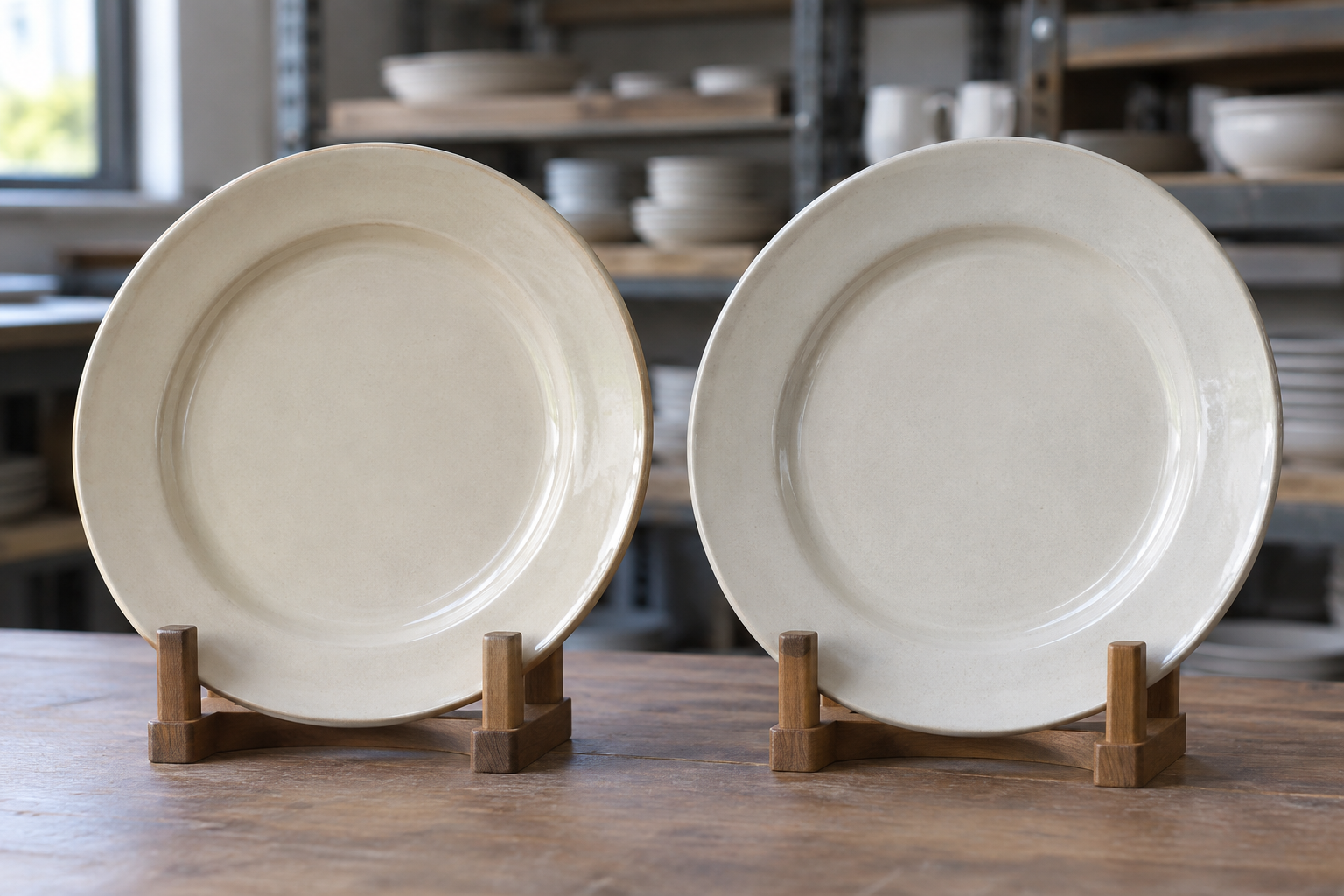
Having stock again is only helpful if you can sell it as the same product.
For ceramic dinnerware reorders, I prefer a retained fired reference, an agreed acceptable glaze range, and a current product specification. Compare the next fired sample with the reference under consistent light. A phone photo alone can hide a color shift.
Check dimensions, rim profile, foot ring, and stacking as well. Mold wear, forming differences, firing shrinkage, glaze thickness, and kiln conditions can affect how old and new pieces sit together.
If the factory proposes a body, glaze, decoration, or tooling change, request a review before confirming equivalence. Agree which sample checks and relevant testing need repeating. Do not silently treat a changed product as replacement stock for the original one.
Keep batch references through receiving. If pieces need sorting within an approved shade range, allow time for that work before making them available online.
Protect the Piece That Holds the Range Together
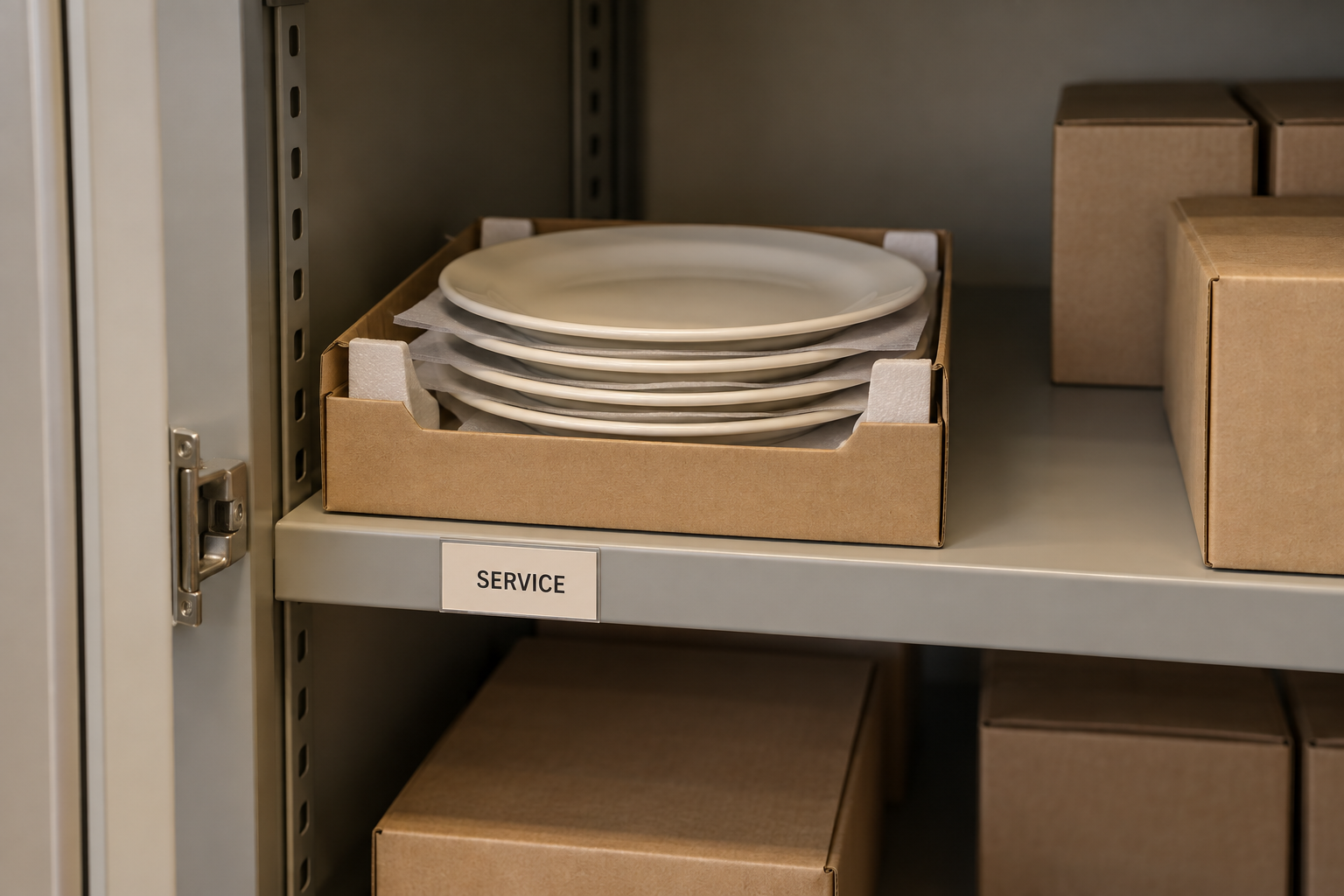
An ABC inventory analysis can help focus attention on revenue-leading products. But I also flag pieces whose absence blocks a set or a service promise. A modest-selling bowl can matter if every popular bundle needs it.
Review those critical items frequently. Give slow colors a separate buying decision rather than repeating the launch ratio. Ask whether a shared production run is feasible, but get written quantities and dates; a forecast alone does not reserve factory capacity.
For replacement plates, keep an identifiable service reserve with an owner and a release rule. Base its size on actual service requests and your stated support policy. Do not quietly sell that reserve during a promotion and leave customer service with an empty shelf.
If the required minimum buys far more than you expect to use, consider fewer active colors, a planned combined order, or a clearly communicated final reorder. Extra customization can make a slow SKU difficult to replenish economically.
My Advice as a Manufacturer
I like one shared reorder sheet with a sales owner and a supplier contact. Update demand and stock weekly for important items, and revisit supplier dates whenever something changes.
The sheet should end with a decision: order, watch, transfer, or pause. Give that decision an owner and a date. A colorful forecast that nobody acts on will not keep the dinner plate in stock.
Questions Buyers Often Ask
How often should I review stock?
Weekly is a practical starting point for core pieces. Review faster around promotions or sudden demand changes. Match the planning interval to the rhythm you can actually maintain.
Can I count goods already ordered as available stock?
Include confirmed receipts in the dated plan, but keep them separate from goods you can sell today. Check whether they arrive before the shortage, and allow for receiving approval.
Should every shape have the same buffer?
No. Demand, delivery uncertainty, set importance, and replacement obligations differ. Use those factors rather than one percentage across the range.
Is a larger reorder always cheaper?
It may reduce unit cost while increasing storage, cash tied up, and slow stock. Compare the quantity you can realistically use, including any minimum per shape or glaze.
Conclusion
Good dinnerware inventory planning connects piece-level demand with usable stock, dated receipts, and repeat-production control. Start with your most important SKU, test the weeks before its next delivery, and agree the action early.
Our dinnerware buyer resources can help you review the production and packaging questions behind that plan.