Short Answer
Useful dinnerware trends for brands are not the prettiest ideas online. They are trends that can become stable shapes, repeatable glazes, clear packaging, safe claims, and a focused SKU plan. Before adding a trend to ceramic tableware product development, ask the supplier for fired samples, cost impact, MOQ impact, testing needs, and repeat-order controls.
I enjoy looking at trends. I really do. A beautiful color, a soft rim, or a clever bowl shape can give a brand fresh energy.
But in real ceramic production, inspiration is only the first cup of coffee. The harder question is whether the idea can survive sampling, firing, packing, retail use, and repeat orders.
When a buyer sends me ten trend photos and asks, “Kitty, can we make all of these?”, I usually answer, “Maybe, but we should choose the ones that can become a business.”
Myth vs Reality: Trendy Does Not Always Mean Sellable
| Buyer Myth | Factory Reality | Buyer Action |
|---|---|---|
| “If customers like the photo, we should make it.” | A photo may hide weight, glaze risk, stackability, and price. | Ask for fired samples and a real cost review. |
| “A trend color is just a color choice.” | Ceramic color changes with clay body, glaze thickness, and firing. | Approve color chips on the real body, not only a mood board. |
| “A handmade look means lower control.” | Handmade-look products still need defect rules and repeat standards. | Define acceptable variation before bulk production. |
| “We need many trend SKUs to look fresh.” | Too many SKUs create MOQ, inventory, and packaging pressure. | Start with a narrow collection and expand after reorder data. |
| “Sustainable wording is easy marketing.” | Claims need evidence and careful wording. | Review the FTC Green Guides or local claim rules before printing packaging. |
My simple rule is this: a trend is useful only if the buyer can turn it into a controlled product promise.
Start With the Use Case, Not the Mood Board
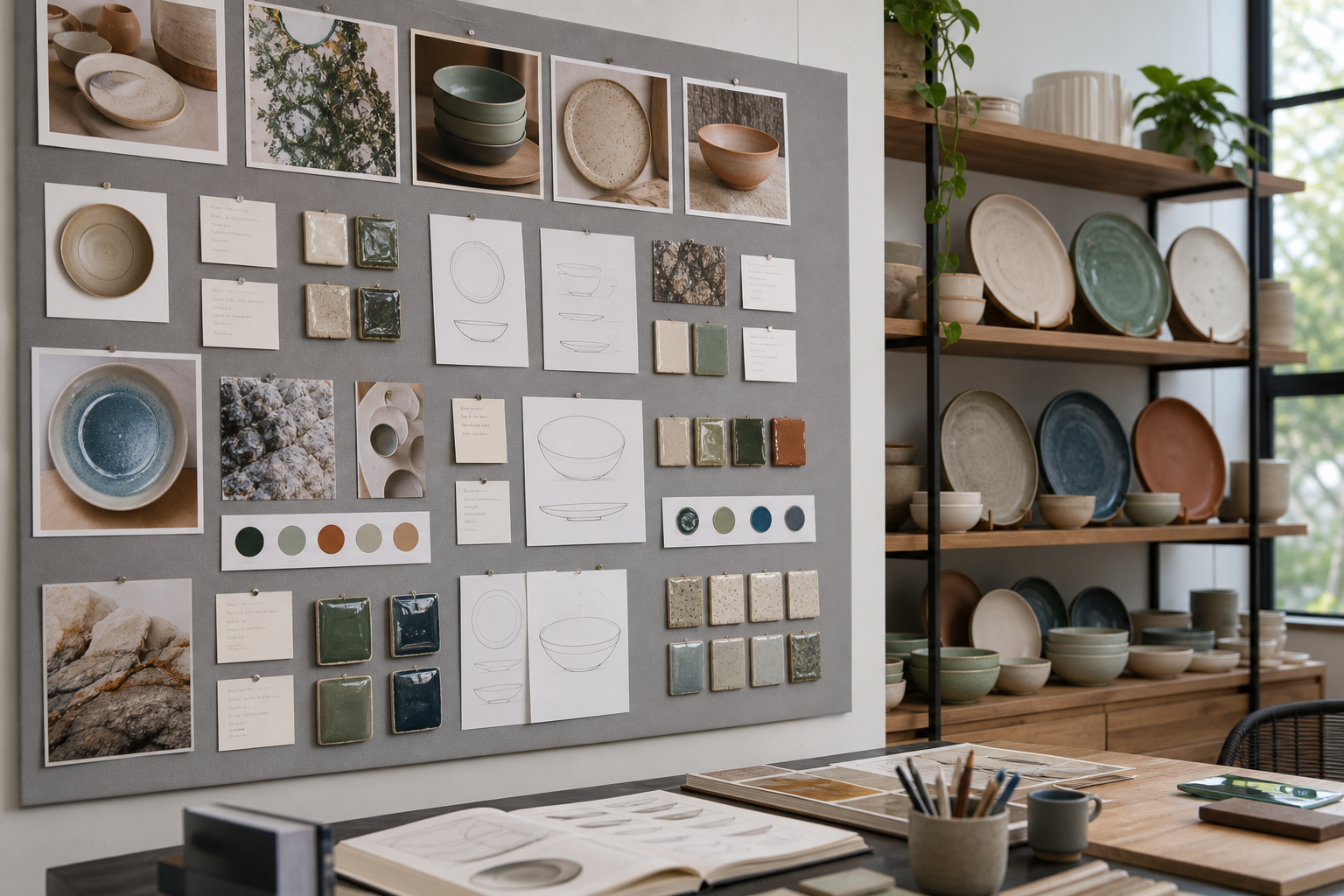
A mood board is helpful, but it should not lead the whole project. I prefer to start with the customer moment.
Will the dinnerware be used for daily family meals, cafe service, hotel breakfast, gift boxes, online lifestyle photos, or open-stock replacement sales? Each use case changes the right trend choice.
A sculptural plate may look strong in a photo but stack badly in a restaurant. A deep reactive glaze may look rich online but create set-matching complaints. A matte finish may feel modern but needs cutlery-mark and cleaning tests.
For dinnerware trends for brands, the better question is not, “Is this beautiful?” The better question is, “Can our customer use it, reorder it, clean it, and understand it?”
The Trend Feasibility Filter
Use this filter before you ask a factory to sample every idea.
| Trend Idea | Good Commercial Signal | Manufacturing Risk | Proof to Request |
|---|---|---|---|
| Soft natural colors | Fits many table settings and channels | Color drift between firings | Fired color chips and approved range board |
| Reactive or speckled glaze | Looks unique and handmade | Wide variation, set matching, customer complaints | Range board, defect limits, packing-by-shade plan |
| Thin rim or flat profile | Looks refined in photos | Warping, chipping, lower yield | Sample stack test, rim-strength review, packing check |
| Matte finish | Modern premium look | Cutlery marks, cleaning issues | Use test, dishwasher claim review, care wording |
| Textured surface | Strong touch and visual identity | Food-contact cleanability and glaze pooling | Close-up sample, glaze coverage check, test report scope |
| Giftable packaging | Higher perceived value | Breakage, carton cost, barcode complexity | Packaging structure mockup, ISTA package testing if needed |
| Sustainability claim | Better brand story | Unsupported wording risk | Evidence file and claim review before artwork |
If a trend cannot pass this filter, it may still be good for social content, but it is not ready for bulk ceramic dinnerware production.
Translate Trends Into Product Levers
Most trends can be translated into one of five product levers.
1. Color Palette
Color is often the safest way to refresh a collection, but only when it is tested on the real clay body. A green on a phone screen is not the same as a green after firing.
Ask for fired color chips, one or two plates in the chosen body, and photos under steady light. If the color must match packaging or brand guidelines, give the supplier a target and an acceptable range.
2. Shape and Stack
Shape trends are more expensive to change than color trends. A coupe plate, low bowl, tall mug, or wide serving dish can change the whole collection. It can also change mold cost, firing stability, packing, and freight efficiency.
When we review a new shape, I look at rim thickness, foot ring, stacking height, weight, and packing space. A trendy shape should still behave like dinnerware.
3. Finish and Touch
Matte, satin, glossy, speckled, and textured finishes create different feelings. They also create different care risks.
For matte or textured finishes, ask the supplier how they will check cutlery marks, dishwasher wear, stain cleaning, and glaze smoothness. A finish that looks good in launch photos but creates complaints after two months is not a good trend.
4. Set Architecture
Sometimes the trend is not one item. It is the way the set is built.
For example, a brand may use one calm dinner plate, one colored bowl, and one accent mug. This can look fresher than making every piece loud. It also helps MOQ because the buyer can limit the hardest glaze to one hero item.
5. Packaging and Claim Language
Packaging turns a trend into a retail story. But packaging also needs protection, barcodes, carton marks, and clear use instructions.
If the product uses new pack counts, color variants, or gift sets, a GS1 GTIN plan can help the buyer avoid barcode confusion. If it uses eco wording, recycled packaging, plastic reduction, or durability claims, keep an evidence file. Vague claims can create risk. Specific claims are easier to support.
What I Would Not Copy Blindly From Social Media
Social platforms are useful because they show what people notice. Google Trends data can also help buyers see search interest over time. But these signals should guide questions, not replace product judgment.
I would be careful with very sharp rims, extremely flat plates, heavy reactive pooling, untested matte dark colors, huge oversized bowls, metallic decoration on food-contact areas, and complex mixed-color sets.
Some ideas are perfect for a photo shoot and weak for daily use. Some are beautiful but too costly for the target price. Some can work, but only after a narrower standard is approved.
From a factory point of view, the best trend is not the loudest one. It is the one the factory can repeat and the customer can love after many meals.
Build a Small Pilot Collection
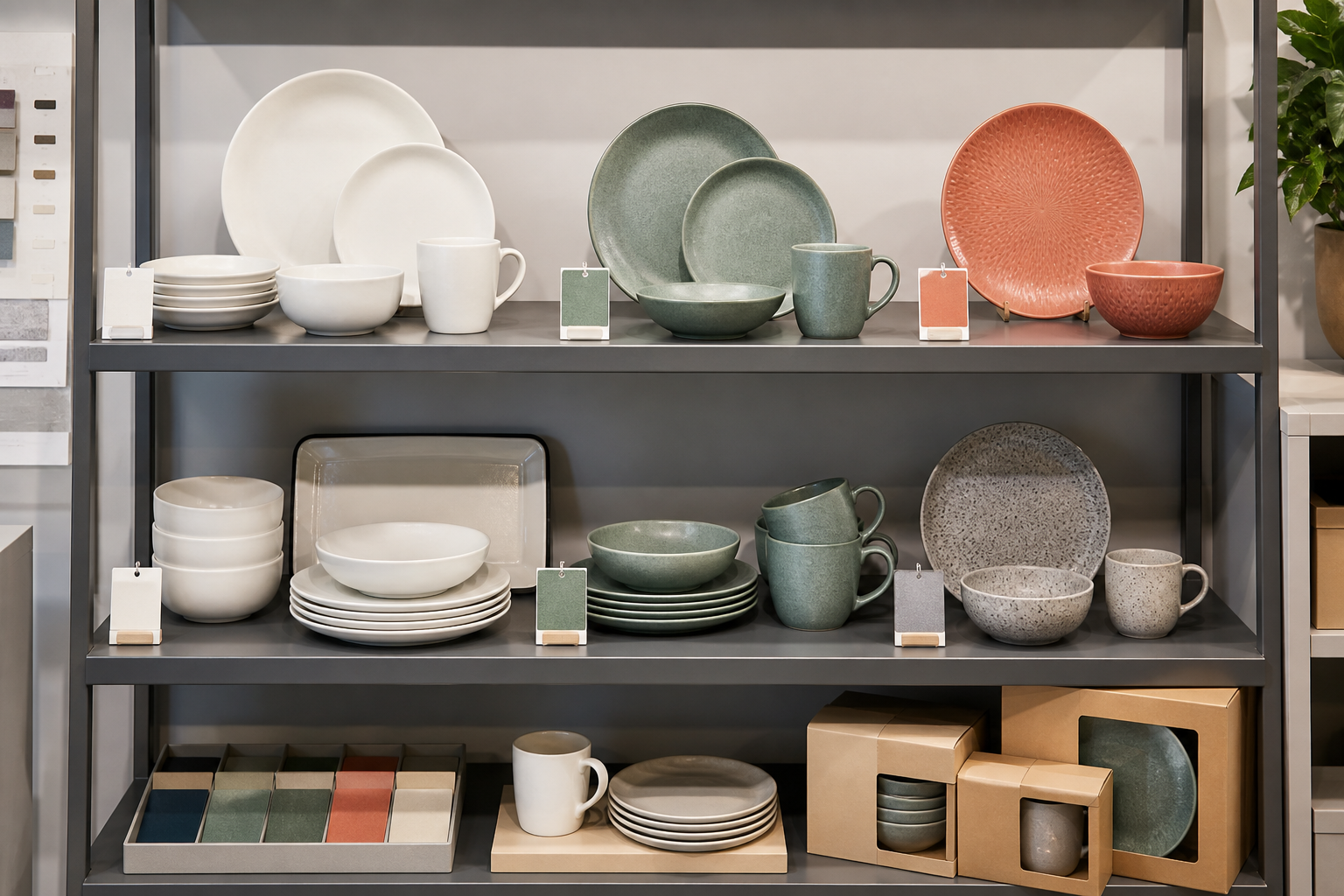
For first orders, I like a small pilot collection. It gives the brand enough freshness without making production too complicated.
| Pilot Role | Example Choice | Why It Works |
|---|---|---|
| Core item | White or soft neutral dinner plate | Easy to use, easy to reorder, broad customer fit |
| Trend item | Colored bowl or mug | Adds personality without changing every SKU |
| Accent item | Speckled side plate or serving piece | Creates photo interest with controlled risk |
| Packaging story | Simple gift box or sleeve | Supports channel needs without overbuilding |
| Repeat standard | Color range, defect limit, packing spec | Protects the second order before the first ships |
This is a practical tableware product development route. It lets the buyer test the trend in the market, then add more colors, shapes, or gift formats after sales data is clear.
Supplier Proof to Request Before Sampling
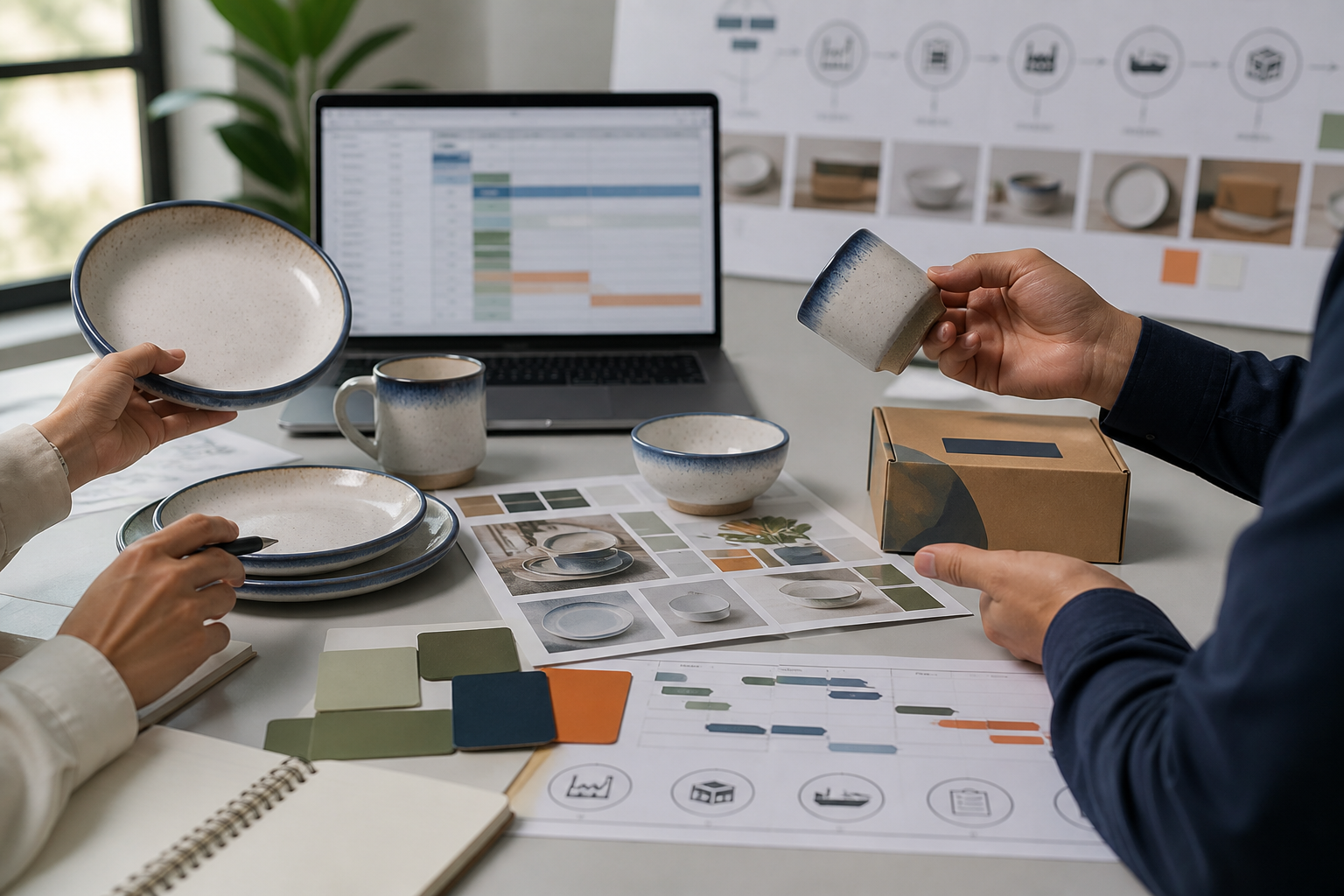
Before sampling, ask the supplier for similar production examples, available shape families, glaze samples on the chosen body, MOQ impact by color, packaging options, food-contact testing route, lead time risk, and repeat-order control plan.
A professional supplier should explain what is easy, what is risky, and what should wait. A weak supplier says yes to every trend without talking about yield, packing, testing, or reorder stability.
If the trend includes a unique shape, also ask about design ownership and protection. WIPO industrial designs can help buyers understand the basic idea of protecting product appearance, but legal advice should come from a qualified adviser in the target market.
My Advice as a Manufacturer
My advice is to choose trends with discipline. Pick one main trend signal, support it with stable shapes, and build a proof file before bulk production.
When we develop ceramic dinnerware design trends at FENN, I like to turn inspiration into a short working standard: target customer, use case, shape family, glaze range, finish test, packaging plan, MOQ plan, and reorder rule.
If the trend cannot be written into a standard, it is not ready for production yet.
Questions Buyers Often Ask
How many trend colors should I launch first?
For many first collections, I prefer one core neutral and one or two trend colors. More colors can look exciting, but MOQ, inventory, and repeat-order control become harder.
Yes, but use them as signals. Social media can show visual interest and customer language. It cannot prove manufacturability, safety, packaging strength, or repeat quality.
Should a brand use a new mold for every trend?
No. Many trends can be expressed through glaze, finish, assortment, or packaging. Use a new mold only when the shape is central to the brand and the sales plan can support tooling.
What is the biggest mistake when following dinnerware trends?
The biggest mistake is copying a look without checking the production route. Buyers should test color, shape, finish, packaging, claim wording, and reorder control before bulk production.
How do I know if a trend is too risky?
It is too risky if the supplier cannot explain the yield risk, quality standard, test needs, packing method, MOQ impact, or repeat-order plan in clear terms.
Conclusion
Good dinnerware trends for brands are practical, repeatable, and clear to the customer. Use trend research, but translate it into ceramic rules: stable shape, tested glaze, suitable finish, focused SKU plan, safe claim language, strong packaging, and repeat-order proof.