
Short Answer
Choose family ceramic dinnerware by intended user, stable shape, manageable weight, smooth rims, tested decoration, and clear care limits. Decide whether you are developing general household tableware or a product aimed primarily at children. Ask for finished samples and market-specific evidence before approving safety, washing, or durability claims. Ceramic can suit everyday meals, but it can still chip or break.
I like family collections that make an ordinary breakfast easier. A bowl should stay settled while someone scoops the last spoonful. A plate should fit beside the other dishes. These small details matter more to me than a cheerful pattern on its own.
From a factory point of view, “family use” is a starting idea, not a finished specification. Here are five assumptions I would challenge before a buyer commits to the range.
Myth 1: Family Ceramic Dinnerware and Children’s Dinnerware Are the Same Brief
Reality: the intended user changes the development questions.
A small cereal bowl may be useful to adults and children alike. A feeding bowl designed and marketed mainly for young children deserves a separate review. I would settle that distinction before approving a character, package, or product name.
For the U.S., CPSC children’s product guidance explains that children’s products are designed or intended primarily for children aged 12 or younger. Classification considers intended use, marketing, consumer recognition, and age guidance. An age label alone does not settle it.
Give the reviewer the proposed product, intended ages, packaging, and listing images together. If it is a children’s product, identify applicable rules, third-party testing, and Children’s Product Certificate obligations. Food-contact evidence does not answer every children’s-product question.
My practical standard is simple: the supplier and buyer should be working from the same written user description. “Suitable for everyone” is not enough to build a test plan around.
Myth 2: Smaller and Heavier Automatically Means Easier to Use
Reality: stability and handling have to work together.
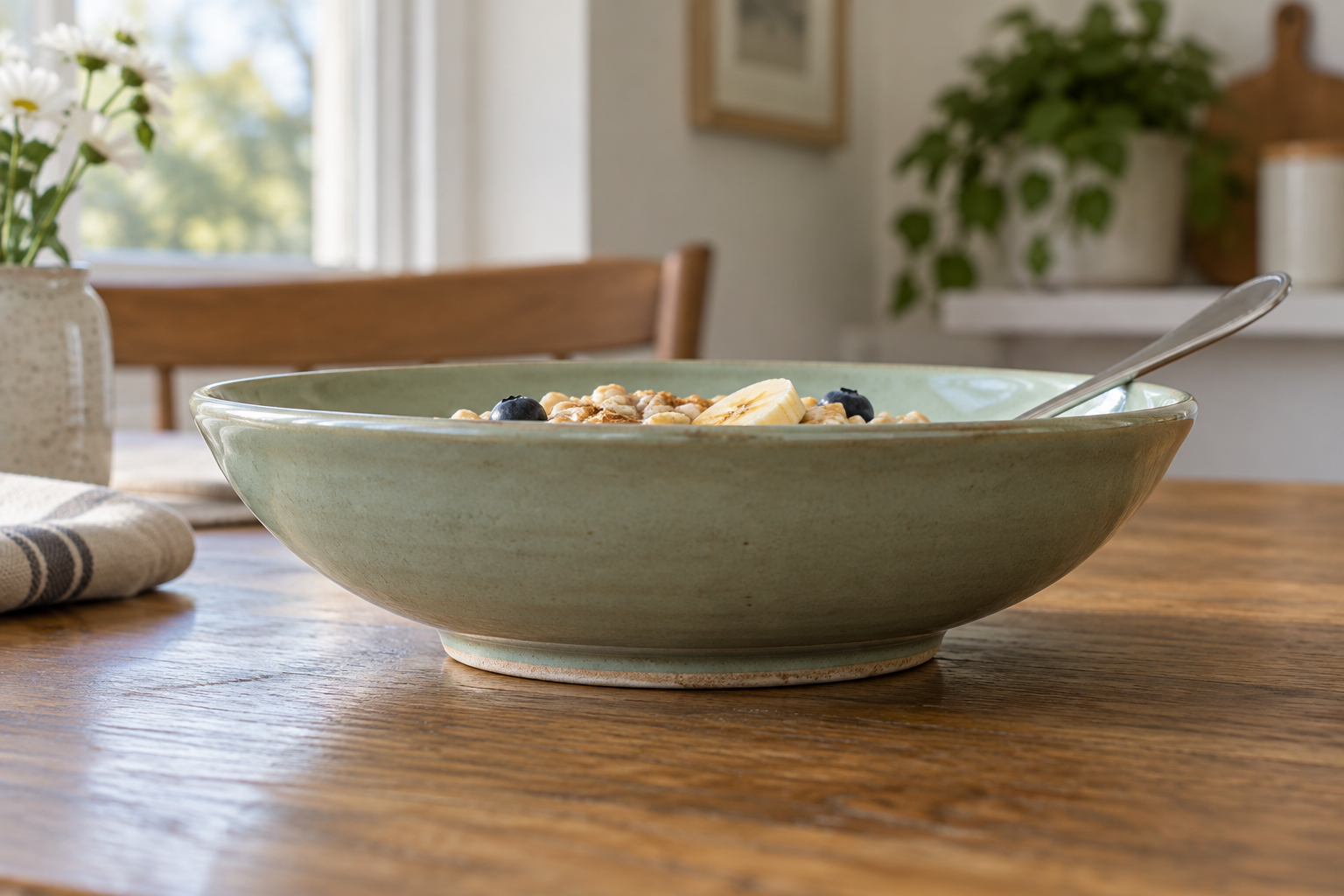
A heavy bowl may resist movement, yet be awkward to lift. A very small bowl may leave too little room for the spoon. A wide opening can help access, but a tall profile on a narrow foot may still tip under pressure near the edge.
I start with the food and the table surface. Try a normal portion, then move the spoon around the inside wall. Watch whether the bowl slides, rocks, or lifts at the opposite edge. Use an adult-led sample check; a child should not be the person discovering that a prototype tips with hot food.
Check more than one fired sample. Firing shrinkage and distortion can change foot contact, so one perfectly stable showroom piece tells only part of the story. On a flat reference surface, the foot should sit without an obvious wobble. On the intended placemat or tabletop, the loaded piece should behave as agreed in the trial.
For plates, I prefer enough rim to grip without using the food area. Rounded edges are a useful design direction, but thickness alone does not prove chip resistance. Ask the factory to explain the rim section, body, and firing controls together.
Here is the assumption check I would use at the sample meeting:
| Assumption on the brief | Reality to check | Decision before approval |
|---|---|---|
| Small means child-friendly | Portion, spoon access, grip, and intended user may not match | Keep or revise the dimensions after a loaded trial |
| Heavy means stable | Extra weight can make lifting harder without fixing a narrow base | Review base width and loaded balance together |
| A pale glaze needs no safety review | Color does not establish food-contact suitability | Match the evidence to the finished product |
| A cheerful motif belongs anywhere | Rim and interior decoration change the contact map | Approve artwork position and testing scope together |
| Dishwasher safe means tough in every situation | Washing performance does not establish impact or thermal-shock resistance | Separate the claims and their supporting evidence |
This is a development tool, not a certification test. Its value is making the next sample revision specific.
Myth 3: Plain White Is Proven Safe, While Color Is the Problem
Reality: appearance cannot replace relevant evidence.
I would not approve a white bowl on looks alone, and I would not reject a colored bowl simply because it is colorful. The body, glaze, decoration, firing process, and finished surface all belong in the review.
The FDA guidance on lead in food and foodwares explains that lead used in pottery may leach into food. That is why a broad claim such as “natural ceramic” tells a buyer very little about the finished article.
For a U.S. launch, ask the testing partner to identify the relevant ceramic lead and cadmium release requirements for the product. For an EU launch, use the European Commission food-contact materials guidance as the starting point for the framework and material-specific rules. Have the applicable ceramic requirements and documentation confirmed for the destination.
My document check connects the report to a product code, sample photo, body and glaze version, decoration, test method, results, and date. A report for a different undecorated bowl does not automatically support the new decorated range. Ask the lab to explain any proposed grouping of variants.
Keep the approved sample and the production specification linked. If a glaze recipe, decal, or firing route changes, review whether the existing evidence still covers the product before release.
Myth 4: A Cute Detail Cannot Change How the Bowl Works
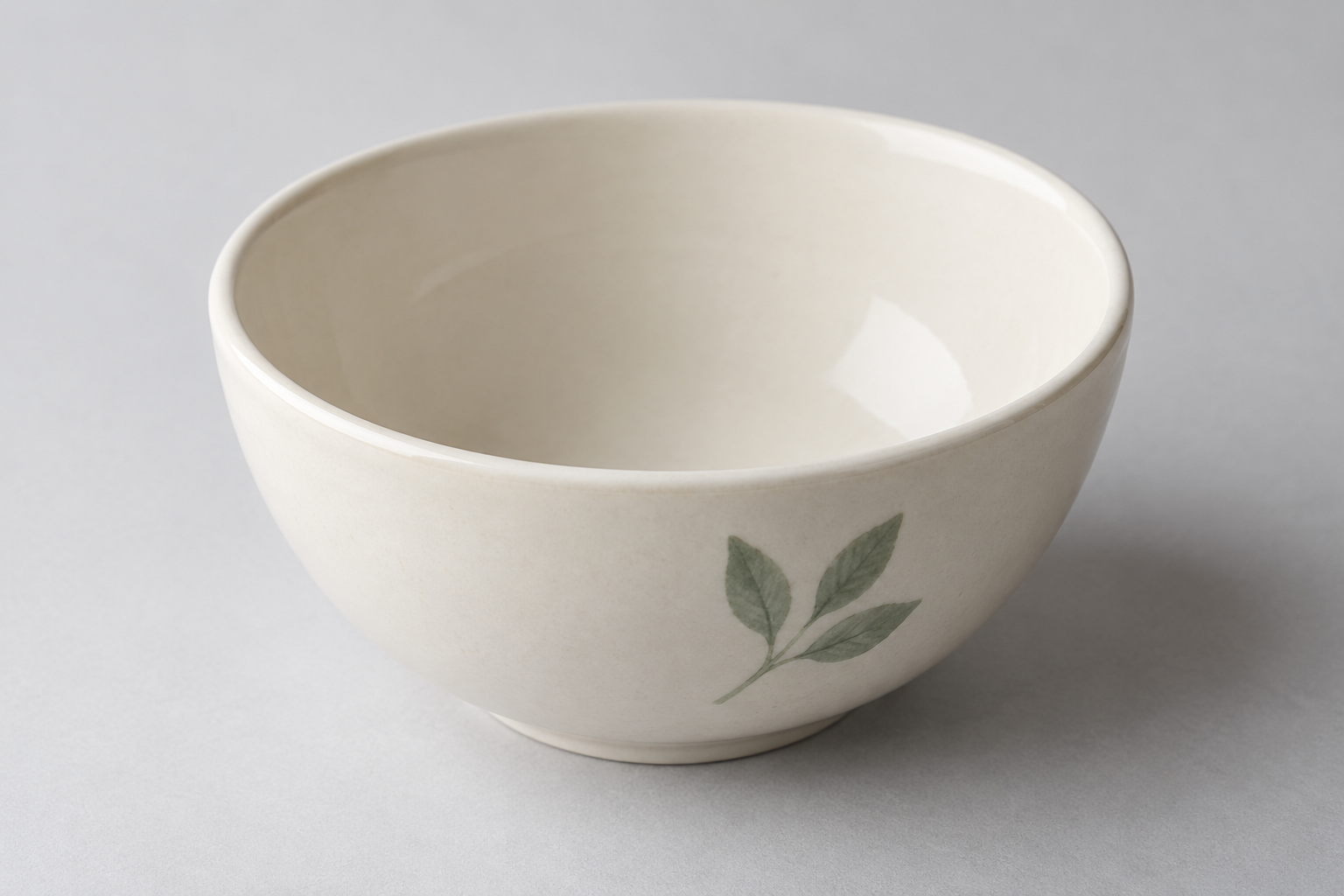
Reality: decoration has both a contact position and a physical shape.
A printed motif and a projecting ceramic ear are different development choices. The ear may create an impact point, complicate packing, or make the piece harder to clean. A deep embossed pattern inside the bowl may catch food where the spoon needs to travel.
For an everyday range, I often prefer a smooth eating surface and a simple outer silhouette. This leaves room for color or artwork without adding fragile projections. It is a design preference, not proof of safety.
Mark the food area, lip-contact edge, exterior wall, and base on the decoration drawing. Record the decoration method as well as its location. Moving a motif to the outside can simplify the contact layout, but does not remove the need to review applicable requirements.
Imagine a proposed cereal bowl with raised ears and an interior pattern. My first revision would be a rounded silhouette with the motif on the exterior. Then I would check the final printed sample, loaded handling, packing clearance, and evidence again. This is an illustrative development example, not a claim about a completed FENN project.
Myth 5: Durability Claims Replace Care Instructions
Reality: durable family dinnerware still needs clear limits.
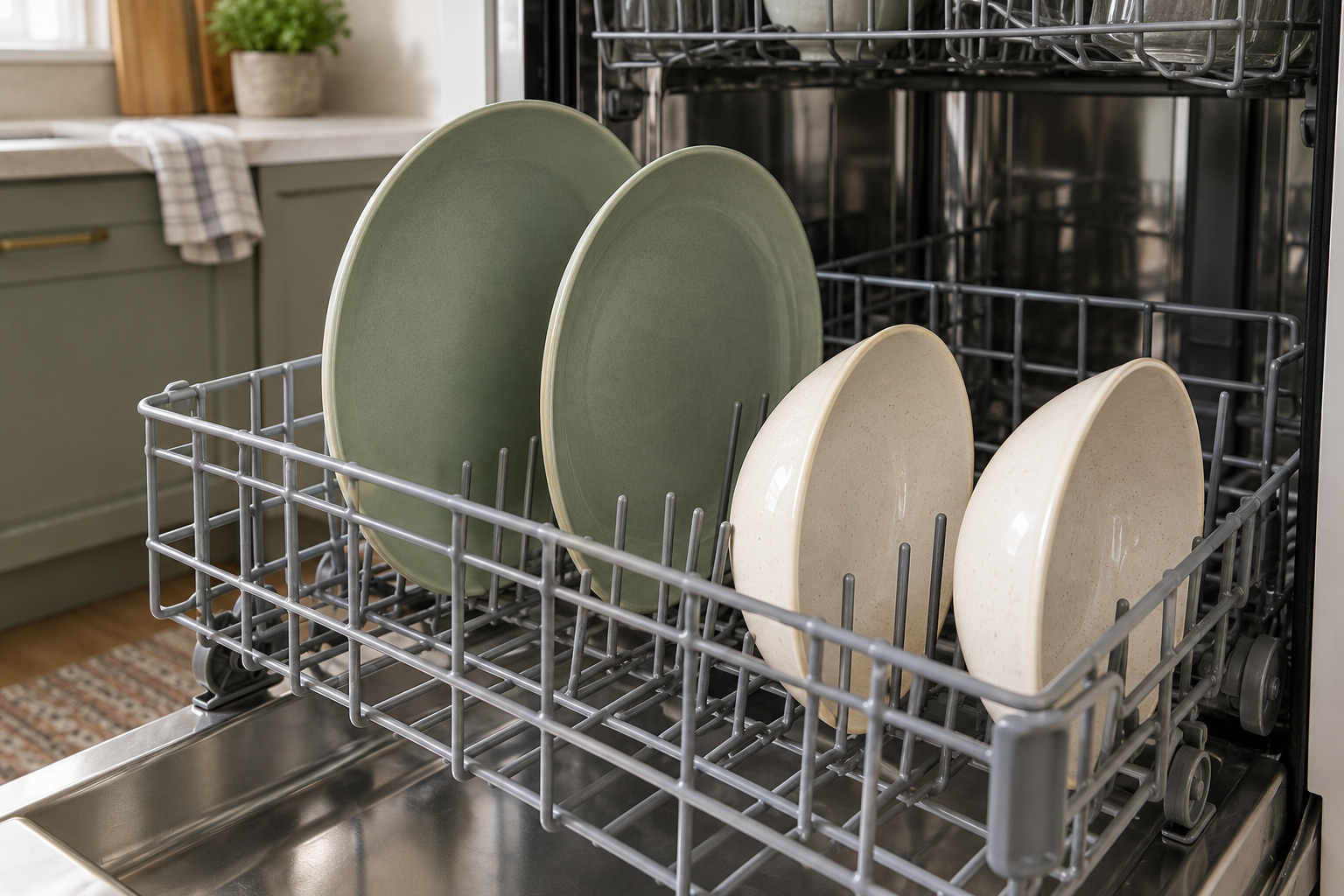
I separate washing, microwave use, impact, and sudden temperature change. Evidence for one does not establish the others. A microwave claim, for example, needs review of the actual body, glaze, and decoration; a wash result cannot supply that answer.
Ask for the conditions behind each claim. For washing, what machine, detergent, cycle, and number of cycles were used? What happened to the finish and decoration? For other intended uses, ask the testing partner to define the method and acceptance criteria before testing. A supplier’s “no problem” is not a usable record.
Care copy should follow those results. Keep it short enough to read on the box, and consistent with the product page. Include clear instructions to stop using chipped or cracked pieces. Do not describe ceramic as unbreakable or drop-proof.
Replacement also belongs in the family-use brief. If a household breaks one breakfast bowl, can it buy that piece again? Agree on the core shapes, glaze references, and replacement sales format before offering open-stock availability. Do not promise permanent supply without an agreed plan.
My Advice as a Manufacturer
I would begin with a small, useful group of shapes and review them as a family: a plate, a shallow bowl, and a smaller bowl if the menu needs it. They should share a visual language without forcing every piece into the same proportions.
Keep three approvals separate: who the range is for, how the fired pieces work, and what the evidence supports. A good result in one should not hide a gap in another.
When we review samples, I want a clear next action: widen the foot, simplify the projection, move the motif, or narrow the claim. That is more useful than asking the factory to make everything “more family-friendly.”
Questions Buyers Often Ask
Is ceramic suitable for every stage of a child’s development?
I would not make that promise. Match the product to the intended age, use, and foreseeable handling. If routine throwing or dropping is central to the use case, reconsider whether breakable ceramic fits the brief at all.
Is porcelain always better than stoneware for family use?
No material name settles the decision. Compare finished weight, rim design, stability, glaze condition, and relevant test results. A well-developed shape matters more than a label on a catalog page.
Does an exterior motif remove food-contact concerns?
No. It changes the contact layout, but the finished product still needs review. Check the decoration position, the lip-contact area, the production method, and the intended use with the testing partner.
What should a buyer asking about kids ceramic dinnerware safety send first?
Send the intended user and market, product drawing, decoration map, proposed claims, and package artwork. These help the reviewer define the questions before a sample is treated as approved.
Build the Range Around a Real Breakfast
Good family ceramic dinnerware should make daily handling clear and comfortable, with claims that match the product. I would rather approve a simple bowl with a stable foot and a clear evidence record than a clever shape with unanswered questions.
For more practical buying guides, visit our Resources.