
Short Answer
Glaze pooling in ceramic dinnerware can be a design feature when it stays within an agreed area, leaves a sound surface, and fits the collection’s approved appearance. I treat it as a problem when it creates roughness, cracks, unwanted buildup, or poor set matching. Approve physical boundary samples and check actual use before accepting it as handmade glaze variation.
A dark band inside a bowl can be the detail that makes a buyer love it. Put that bowl beside five much lighter ones, though, and the conversation changes.
In my ceramic work, I prefer to settle that conversation before the order. “Each piece is different” gives a collection character. It does not tell an inspector where to draw the line.
Start With the Effect You Actually Want
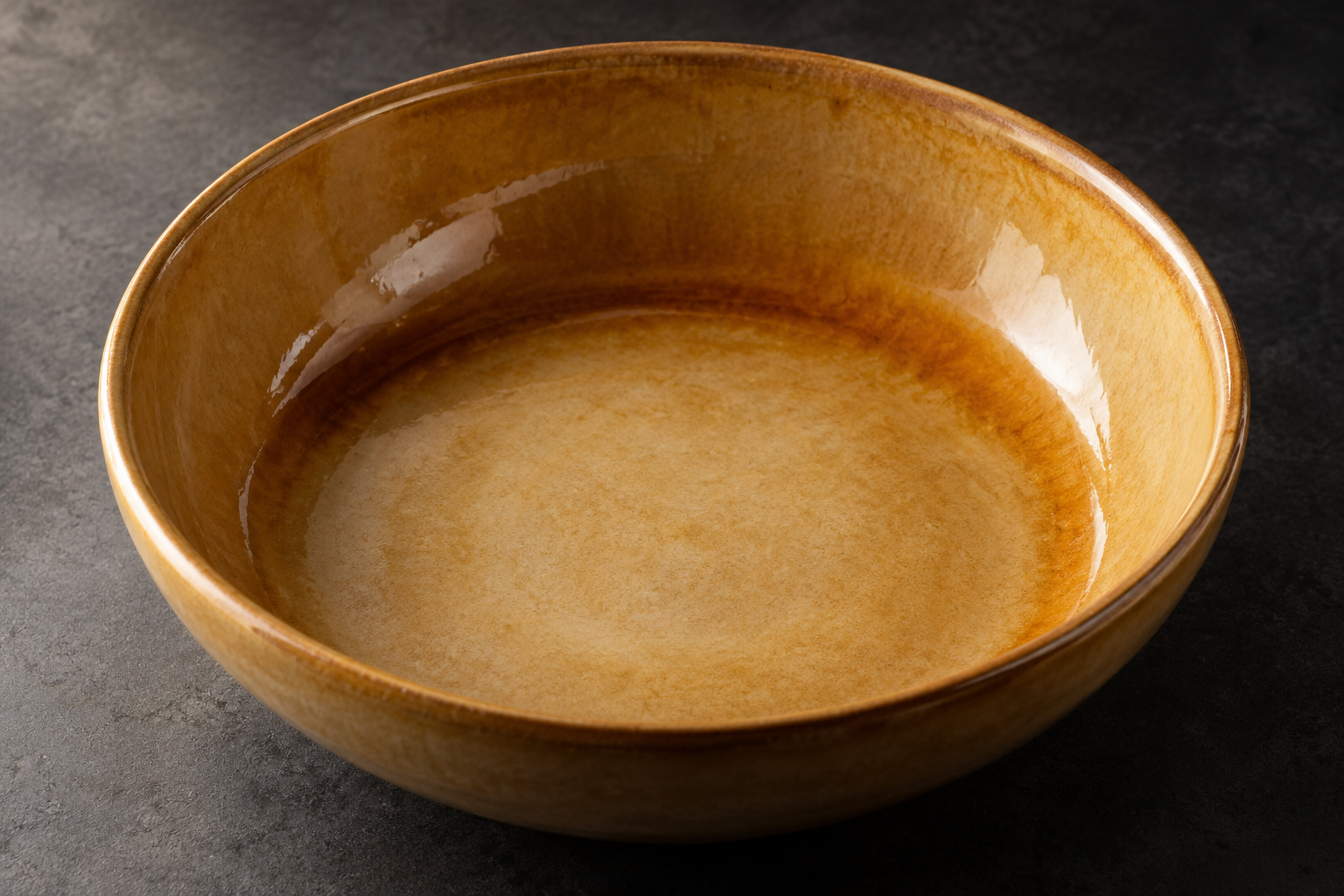
Glaze pooling means a local buildup of glaze, often in a low area or recess. Depending on the glaze, this can deepen the color or change its appearance. A dark area alone does not prove that the glaze is thicker; color effects can have other causes.
Imagine a shallow amber serving bowl with a soft darker band where its wall meets the base. This is a design example, not a customer case. The buyer likes that band because it frames the food. The same buyer may dislike a dark patch covering most of the center.
Write down the intended effect in plain words: “A gentle darker band at the inner curve, with a lighter center.” Then point to real samples that show what those words mean. “Reactive finish” is too broad to do this job.
Digitalfire’s glaze thickness explanation describes how application thickness can change fired appearance. For buyers, the useful lesson is to approve the effect on the finished shape. A flat color tile cannot show how the glaze will behave inside a deep bowl.
A Three-Gate Glaze Acceptance Guide
I use three gates, in this order. A piece must pass all three; a lovely color does not cancel a failed use check.
| Gate | Question to settle | Move forward when | Hold or reject when |
|---|---|---|---|
| Surface and use | Does the finished surface work for its intended role? | It meets the agreed surface, cleaning, handling, and relevant performance requirements | There are cracks, sharp projections, loose glaze, open pits, or unresolved interference with use |
| Location and extent | Is the buildup where the design allows it? | The band or patch stays within the approved physical range for that zone | It spreads beyond the range, fills details unexpectedly, or runs toward the foot outside the agreed clearance |
| Collection appearance | Does the piece belong with the rest of the order? | A representative group looks consistent with the approved set presentation | Individually attractive pieces create an unapproved mix when packed together |
“Hold” means that a question still needs an answer. It is useful during development, when we may adjust the finish. For a shipment, the contract should define the final disposition and who can approve any exception.
Gate one: follow the surface, not just the color
Review the inner curve, center, rim, outer wall, and foot separately. A smooth color band is a different condition from a raised bead, a rough patch, or a cracked glaze layer. Name the actual ceramic glaze defect rather than calling every unwanted mark pooling.
Use suitable light and retain the actual piece. Do not run a bare finger over a suspected sharp area. If the surface looks damaged, stop the handling check and let the quality team examine it safely.
For a bowl, try the intended spoon and normal cleaning routine on sound samples under agreed conditions. Does the spoon catch on a buildup? Does residue remain around a raised edge? Record the observation rather than simply writing “passed kitchen test.” This practical review supports product development; it does not replace relevant laboratory assessment.
Gate two: give each shape its own boundary
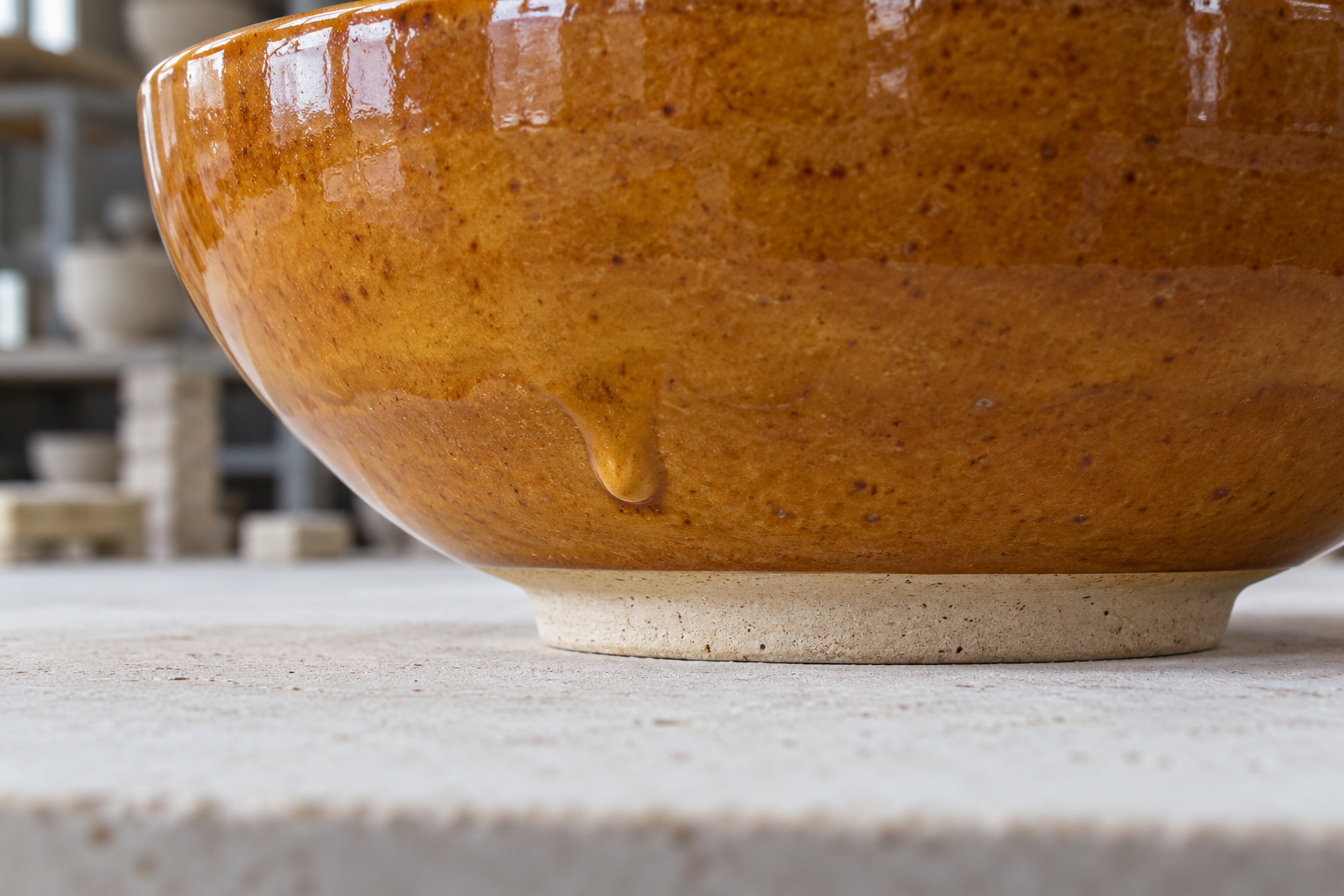
A narrow band in a cereal bowl may become a broad pool in a flatter pasta bowl. The two shapes should not inherit one approval just because they share a glaze name.
Agree which zones may show pooling and which should remain clear. For an exterior flowing finish, define the boundary above the unglazed foot using physical references and an agreed measurement method. There is no universal clearance that suits every glaze and shape.
Digitalfire’s fluid melt glaze discussion explains the movement that produces some decorative effects and the need to control running. Pooling within a recess and running down an outside wall are related observations, but they should have separate acceptance rules.
Gate three: judge the set your customer will open
Lay out the intended retail set, or a realistic restaurant place setting. Include light, typical, and stronger examples from a production-representative trial. Do not ask the factory to select only its prettiest pieces.
For our amber bowl example, one strong band may look lovely alone. Six bowls with sharply different centers may look like two collections mixed together. The decision depends on the brand’s intended range, not on a universal rule that variation is good or bad.
Ask whether packing requires shade grouping. If it does, agree how groups are identified, how replacements will be supplied, and how the extra sorting affects cost and timing. A promise to “match everything later” needs an operating plan behind it.
When Glaze Pooling in Ceramic Dinnerware Needs a Design Change
Sometimes the approved look has too little room for normal production variation. Repeated sorting then becomes an expensive way to protect an unstable design.
From a factory point of view, I would review three things together: the shape, the glaze application, and the firing route. A deep groove can collect glaze. Application overlaps can leave more material in one place. Melt behavior and firing conditions can change how far it moves.
A useful supplier response connects the proposed change to the observed problem. For example: “We will compare a shallower inner curve with the current shape, using the same finish.” That is clearer than “We will improve quality.” It also lets the buyer see whether the cure changes the design they wanted.
Do not prescribe a thinner coating or lower firing temperature from a photograph. Either change may affect other properties. Ask the technical team to explain the trial, show the resulting pieces, and assess any effects on surface quality and intended use.
A FENN Sample Reference
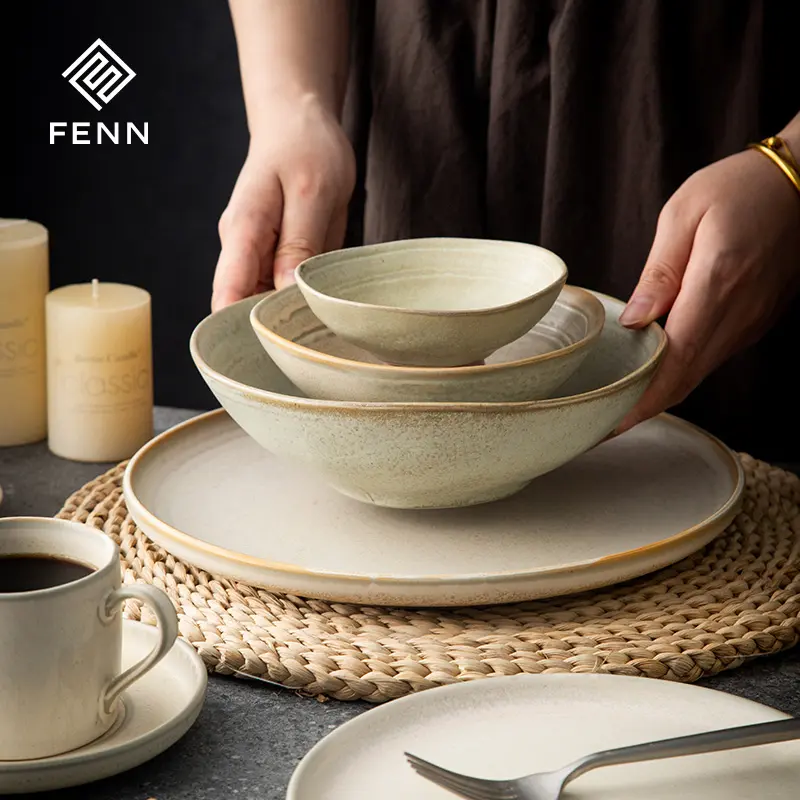
The FENN Moss Mist collection photograph shows several bowl shapes and sizes together. I would use a group like this to mark the zones each shape needs checked: the inner curve, the center, the rim, and the foot. Inspect each finish on the finished shape before choosing the physical limits for production. Color in a photo cannot establish glaze thickness or confirm pooling.
Put the Boundary Into Production, Not Just the Mood Board
Once the range works, retain a small set of physical references: the intended appearance, acceptable limits, and clearly unacceptable examples. Label each with the SKU, finish revision, date, and decision. Photographs should support those pieces under consistent viewing conditions.
Then run a trial that represents the planned production process. Ask where the reviewed pieces came from, how many were examined, and whether different relevant production conditions were represented. A hand-finished development sample may not represent the bulk application method.
Agree how inspectors will classify an out-of-range piece before choosing the shipment sampling plan. Cosmetic mismatch, a rough foot, and loose glaze should not be hidden under one vague “pooling” code. The lot decision needs agreed rules as well as an agreed sample size.
I also want a change trigger: a new shape, glaze revision, application method, or firing adjustment should prompt a review of the approval. Keeping the old sample on a shelf is useful only if the current production still relates to it.
Appearance Approval Is Only One Approval
Pooling is a visual and manufacturing observation, not a food-contact test result. The FDA’s lead in food and foodwares guidance explains that lead in some pottery can leach into food. Neither a smooth dark band nor a pale even surface establishes suitability.
Request evidence relevant to the destination market and finished product. Ask the responsible laboratory or technical team whether the approved glaze range and any process changes are covered. A report for an unrelated white plate does not settle the question for a new amber bowl.
Keep the conclusions separate: appearance accepted, use requirements met, and applicable food-contact evidence reviewed. None should silently stand in for the others.
My Advice as a Manufacturer
I would rather adjust one curve during sampling than argue about thousands of bowls after firing. Bring the designer, buyer, and quality reviewer into the same sample discussion while changes are still possible.
For glaze pooling in ceramic dinnerware, my simplest rule is this: approve where the effect belongs, how far it can go, and how the finished set should look. Then ask the factory to demonstrate that range on representative pieces. That gives handmade glaze variation a clear commercial meaning.
Questions Buyers Often Ask
Is a darker area always glaze pooling?
No. Color can change for several reasons. Ask the supplier to confirm the cause on actual samples before writing a defect rule based only on a photo.
Can pooling be acceptable inside a food-contact bowl?
It can be part of an approved design, but location alone does not settle acceptance. Check the finished surface, intended use, agreed appearance, and relevant food-contact evidence separately.
How many millimeters of pooling should buyers allow?
There is no useful universal number. Define the measured feature, product zone, viewing method, and physical boundary samples for the particular shape and glaze.
Does “handmade look” allow unlimited variation?
No. It describes a style. Buyers still need agreed limits for appearance, surface condition, and the way pieces are combined into sets.
Can a factory grind away an unwanted glaze run?
Do not approve grinding as an automatic repair. Review the proposed rework, the resulting surface and geometry, and any relevant reassessment before deciding whether those pieces can be supplied.
Bring the Whole Set to the Sample Review
For a FENN project, share the shape drawings, finish references, intended set, sales channel, and areas where pooling concerns you. We can discuss a practical sample brief and approval boundary before bulk production. Contact FENN with your brief. The FENN Resources hub offers related guidance on glaze variation and quality planning.