
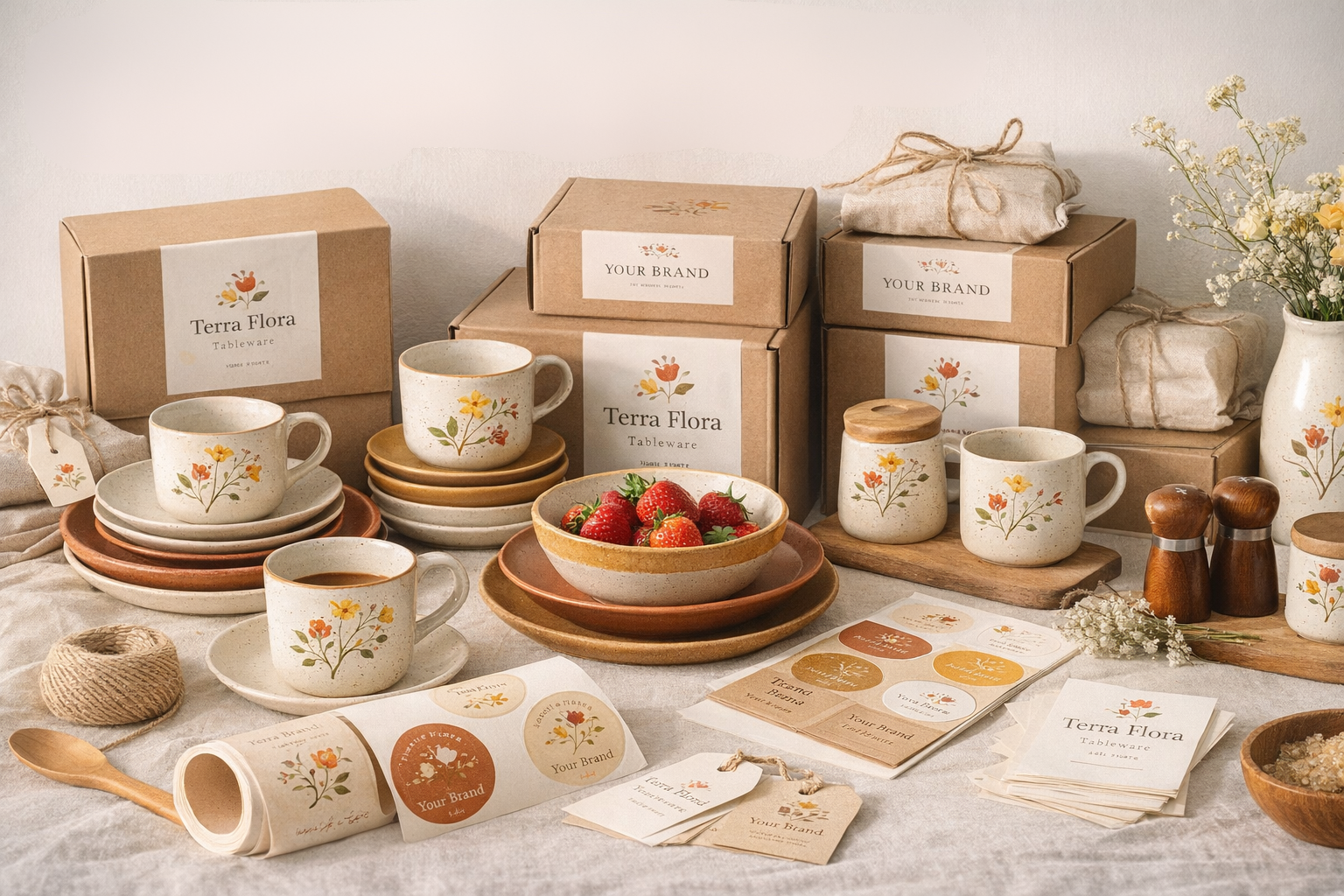
When I develop a private label tableware collection, I do not start with style. I start with buyer demand, factory limits, and margin logic.
To develop a private label tableware collection, I follow a practical sequence: define the target market, choose private label, OEM, or ODM, build a tight SKU plan, select the right material and finish, confirm MOQ and lead time, review food-safe compliance, approve samples with clear tolerances, and work with a manufacturer that can repeat quality. That sequence reduces cost, shortens revisions, and makes the collection easier to sell.
A beautiful collection matters. A repeatable one matters more.
What is the best process for developing a private label tableware collection?
I keep the process simple because disorder at the start usually becomes expensive later.
The best process for developing a private label tableware collection is to define the buyer, set the range, choose the development model, select material and finish, confirm packaging, review compliance, approve samples, and lock production terms. Buyers who skip this order usually pay for it in delays, rework, or weak sell-through.

Most collection problems start before production.
They start when the range is too broad, the price point is vague, or the finish is chosen for looks instead of use. That is why I build the commercial structure first and the styling second.
Here is the process I use:
| Stage | What I confirm | Why it matters |
|---|---|---|
| Market definition | buyer type, channel, price point | keeps the line commercially focused |
| Range planning | core SKUs, sets, support items | prevents bloated assortment |
| Development model | private label, OEM, ODM | shapes cost, speed, and control |
| Material and finish | porcelain, stoneware, glaze, decal | affects look, weight, and durability |
| Packaging | retail box, bulk pack, carton plan | controls shipping and presentation |
| Compliance | food-contact and market needs | reduces legal and launch risk |
| Sample approval | shape, glaze, logo, packing | catches issues before mass production |
| Production terms | MOQ, lead time, QC, capacity | protects reorders and supply stability |
I also separate two questions that people often mix together.
First: what does the buyer want?
Second: what can the factory repeat well?
That gap matters. A finish can look premium and still fail in use. A shape can look distinctive and still create tooling cost that the order cannot support. A gift box can look strong and still damage margin or carton efficiency.
So I use one hard rule: if a design choice cannot survive production, packing, and reorder conditions, it is not the right choice.
That is not a creative limit. It is product discipline.
What is the difference between private label, OEM, and ODM tableware?
I define this early because buyers often use these terms loosely, and that creates bad decisions fast.
Private label tableware usually means I brand an existing product. OEM tableware usually means I ask the factory to produce to my design or technical requirements. ODM tableware usually means I start from the supplier’s existing design and customize parts such as glaze, decal, logo, or packaging. Private label is usually faster, OEM is usually more distinctive, and ODM usually sits in the middle.
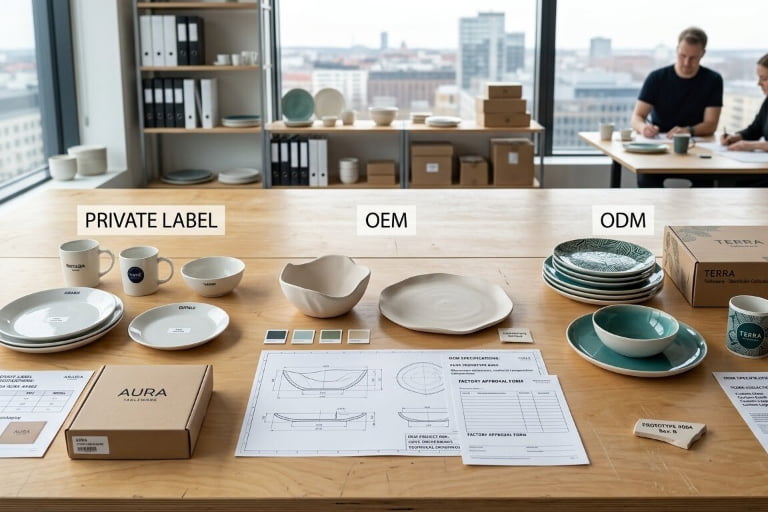
These models are not interchangeable.
Private label is usually the best choice when speed, lower setup risk, and faster quoting matter most. I start from a proven product and focus on branding, packaging, color direction, or light adjustments.
OEM is usually the best choice when shape differentiation is central to the brand. It gives me more control, but it also brings more sample rounds, more technical review, more tooling pressure, and often a longer timeline.
ODM is often the most practical middle path. I use the factory’s proven structure, then customize enough to give the line a brand identity without carrying full custom development weight.
| Model | Best for | Main advantage | Main limit |
|---|---|---|---|
| Private label | fast launch, lower development risk | quickest path to market | less unique product base |
| OEM | shape-led differentiation | highest design control | more cost and longer lead time |
| ODM | balanced customization | proven production base | narrower design freedom |
I ask three direct questions before choosing.
1. Does launch speed matter more than uniqueness?
If yes, private label or ODM usually wins.
2. Is the shape itself the brand story?
If yes, OEM may be worth the extra work.
3. Can the order support development cost?
If not, full OEM is often the wrong move.
A lot of buyers say they want full custom. What they really want is a line that looks distinctive, lands on time, and can be reordered without problems. In many cases, that is a strong ODM or private label solution.
Which products should I include in a private label tableware collection?
I start with the pieces that carry the business, not the pieces that only look good in a presentation.
A strong private label tableware collection usually begins with dinner plates, side plates, bowls, and mugs. These core pieces define the range fast, support set building, and usually carry the most practical reorder value. Extra SKUs should only be added when the channel, margin, and buyer use case clearly justify them.
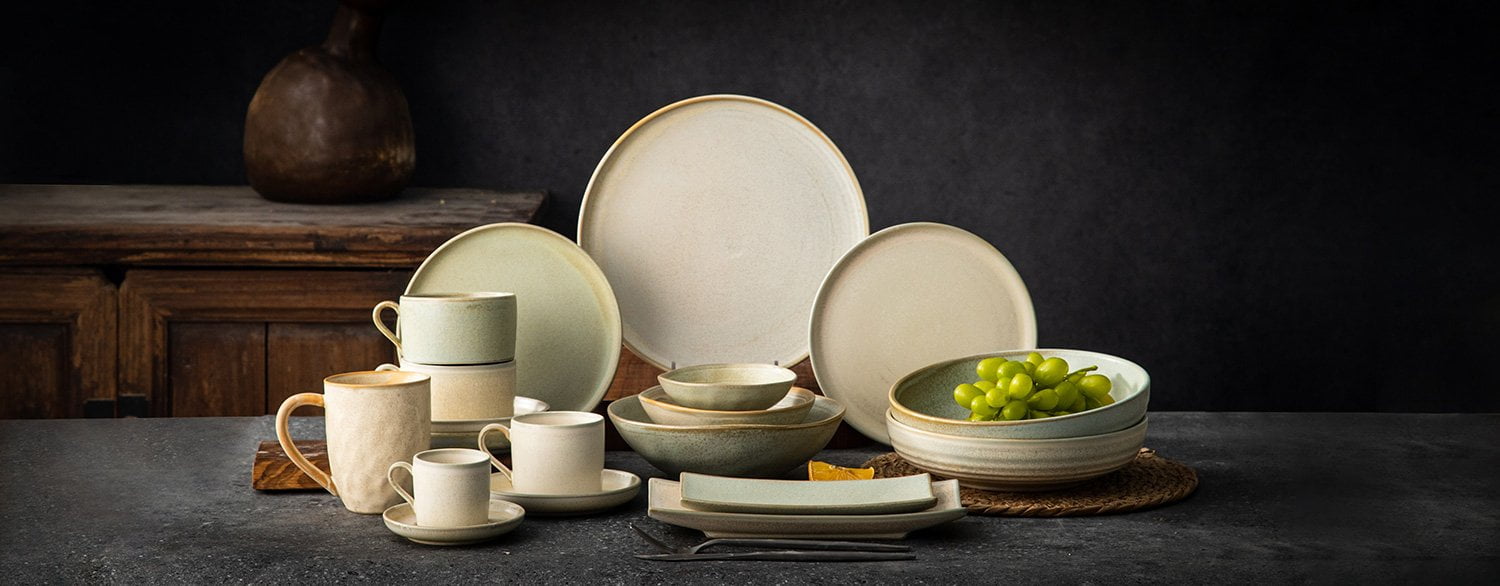
The fastest way to weaken a collection is to add too many pieces too early.
A broad range can look impressive, but it often hides a weak core. More SKUs mean more sampling, more carton decisions, more inventory pressure, and more chances for the line to lose focus.
So I build from hero items first:
| Priority | Product | Why I include it |
|---|---|---|
| Core | dinner plate | defines the collection immediately |
| Core | side plate | supports place setting and upsell |
| Core | bowl | high daily-use value |
| Core | mug or cup | strong reorder and gifting value |
| Secondary | pasta bowl | useful for casual retail and dining |
| Secondary | serving bowl or platter | adds lifestyle depth |
| Optional | cup and saucer | useful for premium or hospitality lines |
Then I test the range against the channel.
For e-commerce, I care about breakage risk, pack efficiency, and photo appeal.
For restaurant tableware or hospitality tableware, I care about stackability, replacement demand, weight control, and repeat production consistency.
That is why one assortment does not fit every buyer.
I also decide early whether the line is built for singles, sets, or both. Set-based selling can lift order value, but it also demands tighter color consistency and smarter packing. Single-item selling is often easier for market testing and reorder tracking.
One question keeps me honest: what will reorder first?
If the answer is not clear, the range is not clear either.
How do I choose between porcelain, stoneware, and other tableware materials?
I choose material by use case, not by mood board.
Porcelain is usually the better choice for a refined look, lighter feel, and cleaner finish. Stoneware is usually the better choice for warmth, texture, and a casual-premium position. Decorative ceramic options can also work well, but the correct choice depends on brand position, shipping weight, durability needs, and finish control.
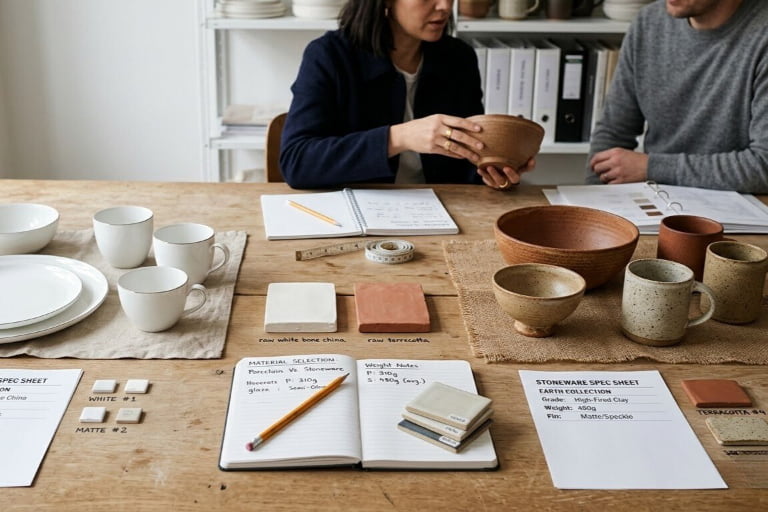
Material choice affects more than appearance. It affects freight, handling, perceived value, and long-term product performance.
Here is the simple version:
| Material | Best for | Pros | Watch-outs |
|---|---|---|---|
| Porcelain | premium retail, hotel, refined lines | lighter feel, crisp finish, cleaner look | may raise cost depending on spec |
| Stoneware | lifestyle retail, casual-premium collections | warm feel, visual texture, stronger handmade mood | heavier for shipping |
| Ceramic with decal | logo work, pattern-led ranges | repeatable graphic control | decoration must be tested |
| Reactive glaze line | crafted visual effect | rich depth and natural variation | tolerance must be agreed clearly |
Then I look at finish.
Glossy is usually easier to style and easier to explain. Matte can feel modern, but matte should be checked for knife marking before approval. Reactive glaze adds character, but reactive glaze should never be approved without a clear variation tolerance. Decal works well for custom logo dinnerware, but decal placement and durability need real review, not guesswork.
That is the difference between styling and product development.
I once liked a dark matte sample because it looked calm and premium. In testing, it marked too easily. At that point the finish stopped being a design success and became a commercial risk. That is why I do not approve materials based on showroom effect alone.
My rule is simple: if the material and finish cannot survive daily use, they do not belong in the collection.
What MOQ, lead time, and tooling details matter for custom tableware?
I discuss these early because they decide what is actually realistic.
MOQ, lead time, and tooling for custom tableware usually depend on mold choice, shape complexity, glaze or decoration method, packaging type, and factory scheduling. Existing molds are usually the best choice for lower development risk and faster launches. Custom molds usually only make sense when shape differentiation is important enough to justify extra cost and time.
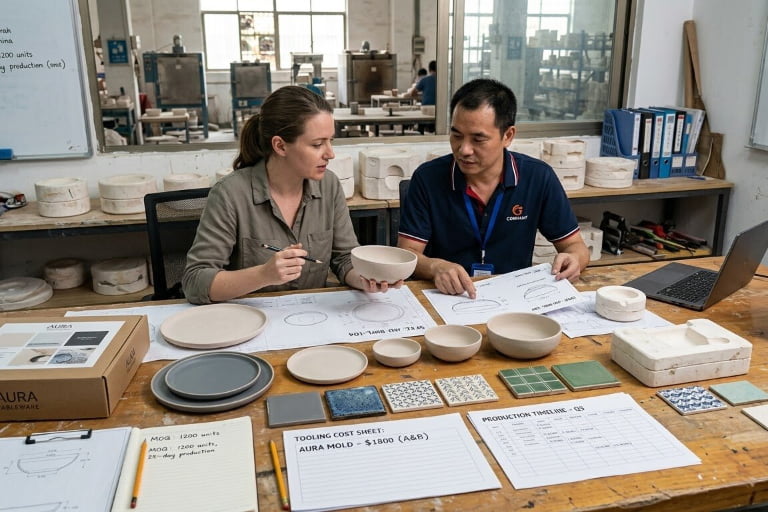
This is where many buyers either protect the project or overbuild it.
If I use an existing mold, I usually move faster, sample faster, and control risk better. That route is often the smartest choice for first launches or price-sensitive programs.
If I open a new mold, I get more shape control, but I also add technical review, tooling cost, more sample rounds, and more chances for delay. That is worth it only when the shape itself is doing real brand work.
| Decision area | Existing mold route | Custom mold route |
|---|---|---|
| Launch speed | usually faster | usually slower |
| Development risk | lower | higher |
| Product uniqueness | more limited | stronger |
| Sample rounds | fewer | more |
| Tooling cost | lower | higher |
| MOQ pressure | often easier | often stricter |
Packaging and decoration also shift the timeline.
A stock glaze moves differently from a tightly controlled reactive finish. A standard carton moves differently from a full gift box. A clean logo decal moves differently from a complex decorative program.
So I never ask, “Can this be fast?” I ask, “Fast under which development model?”
I also map lead time into milestones:
- first sample
- revised sample
- packaging approval
- compliance review
- production window
- inspection
- shipment
That gives me a working schedule instead of vague optimism.
My practical rule is this: use existing molds unless a new mold gives a clear commercial advantage, not just a prettier presentation.
What compliance and testing does food-safe private label tableware need?
I treat compliance as part of development, not paperwork after the fact.
Food-safe private label tableware may require food-contact review, heavy metal migration testing, use-claim review for microwave or dishwasher suitability, packaging statement checks, and market-specific documentation. Products with more complex decoration usually need more careful compliance review.

A sample that looks correct is not always a product that is ready to sell.
That is why I review compliance early, especially when the line includes decals, metallic details, special glazes, or market-specific claims.
| Area | What I review | Why it matters |
|---|---|---|
| Food contact | body and decoration safety | protects users and market access |
| Heavy metal migration | especially for decorated pieces | reduces regulatory risk |
| Use claims | microwave, dishwasher, oven statements | avoids inaccurate selling claims |
| Packaging review | labels, care notes, warnings | improves clarity and reduces claim risk |
| Market documents | buyer or country requirements | prevents avoidable delays |
I also avoid loose language.
“Food safe” should be supported.
“Dishwasher safe” should be supported.
“Microwave safe” should be supported.
If the claim matters enough to print, it matters enough to verify.
The most common mistakes are predictable:
| Mistake | Why it hurts |
|---|---|
| checking compliance too late | creates redesign and delay risk |
| using decoration without review | may trigger testing problems |
| adding claims too early | can create inaccurate packaging |
| assuming all markets are the same | causes document gaps |
| approving samples without test scope | weakens production control |
My rule is simple: compliance is not a finishing step. It is part of product definition.
How do I choose the right private label tableware manufacturer or supplier?
I judge suppliers by repeatability, not by one attractive sample.
To choose the right private label tableware manufacturer, I look at product fit, mold capability, glaze control, compliance support, packaging experience, communication quality, and repeat-order stability. A good supplier is not just able to make a sample. A good supplier can keep making the same product well.
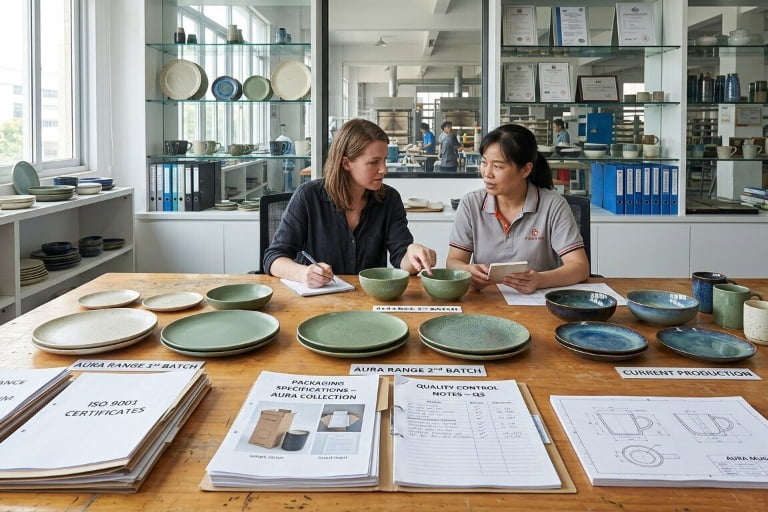
This is where many projects quietly succeed or fail.
A low quote does not help if the glaze drifts, the carton underperforms, or the lead time keeps moving. A strong supplier may cost more upfront and still save money across the life of the collection.
So I look at the factory in a more disciplined way:
| Supplier factor | What I want to see |
|---|---|
| Product experience | similar lines already made well |
| Technical fit | body, glaze, decal, packaging capability |
| Sample quality | good detail and finish control |
| Communication | clear, realistic answers |
| Compliance support | testing awareness and documents |
| Production stability | repeat-order consistency |
I also pay attention to something simple: do they tell me when my idea is weak?
A supplier who says yes to everything can become expensive later. A supplier who explains limits early is often more valuable. Maybe the reactive glaze tolerance is too loose. Maybe the custom handle needs tooling change. Maybe the gift box damages carton efficiency. Clear pushback protects the project.
So I do not choose a supplier on price alone. I choose based on fit, control, and whether they can support the collection after the first order.
What questions do buyers ask before launching a private label tableware collection?
I answer these directly because direct answers are easier to rank and easier to trust.
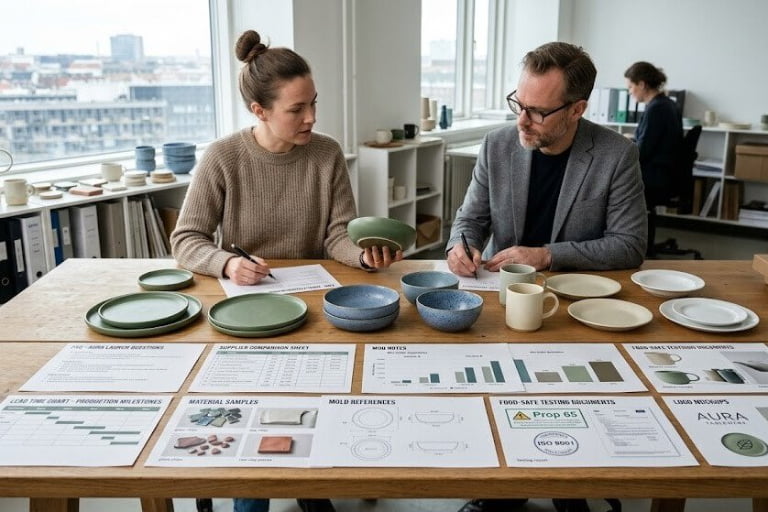
Before launching a private label tableware collection, buyers usually ask about MOQ, production lead time, material choice, mold options, food-safe testing, custom logo options, and how to choose the right manufacturer. These questions matter because they shape the cost, risk, and speed of the whole project.
How do I find a private label tableware manufacturer?
I look for a manufacturer with relevant product experience, clear communication, compliance awareness, and repeat-order stability. Factories that can only make a good first sample are not enough.
What is the MOQ for custom ceramic dinnerware?
MOQ depends on the mold route, shape complexity, finish, packaging, and supplier setup. Existing molds usually offer a lower-risk starting point than new molds.
Is stoneware or porcelain better for restaurant tableware?
Porcelain is often better when lighter weight, a cleaner finish, and a more refined look matter most. Stoneware can work well too, but weight, stacking, and replacement needs should be checked carefully.
Can I add my logo to existing tableware molds?
Yes, and in many cases that is the smartest route. Existing molds can still support strong branding through decal, glaze, packaging, and assortment design while reducing development risk.
What testing is needed for food-safe tableware?
That depends on the market, material, decoration, and product claims. I usually review food contact safety, migration concerns, use claims, and packaging statements before mass production starts.
These are not side questions. They are the core buying questions.
Conclusion
I believe the best private label tableware collections come from hard product choices, clear commercial logic, and manufacturing decisions that hold up after launch.