
Short Answer
Start a Prop 65 ceramic dinnerware review when California sales enter your plan, before you approve decoration or packaging. Give your reviewer the finished product details, intended use, sales channels, and relevant test reports. Food-contact results alone do not settle a warning decision. Ask for a written exposure review and a clear owner for any required warning information.
If a buyer asks me, “Can you send a Prop 65 certificate?”, I want to understand what decision they need to make. Are they selecting a glaze, answering a retailer, or about to print boxes?
Those questions need different information. My job as a manufacturer is to make the ceramic facts clear, so the buyer’s qualified reviewer can reach a useful answer. A certificate-shaped page with no link to the actual mug does very little for either of us.
Copy This Prop 65 Ceramic Dinnerware Review Brief
I would send this brief to the supplier, laboratory, and compliance adviser together. Fill the gaps before requesting a price for testing.
| Field to complete | What I would write or attach |
|---|---|
| Product identity | SKU, drawing revision, fired-sample photographs, dimensions, body, glaze, and decoration references |
| Intended use | What the piece holds, how it is used, and any accessories supplied with it |
| California sales route | Own website, marketplace, retailer, distributor, and any loose-piece or replacement sales |
| Manufacturing facts | Decoration location and firing stage; relevant material declarations and known changes |
| Existing evidence | Full reports, sample IDs, tested surfaces, methods, results, units, and reporting limits |
| Decision requested | Which evidence supports the exposure assessment, what is missing, and whether a warning is needed |
| People and dates | Named reviewer, factory contact, artwork owner, retail-listing owner, and decision date before printing |
| Change control | Changes that must reopen the review; where the approved specification and decision will be stored |
The strongest reply connects its conclusion to named products and explains any exclusions. “All our ceramics pass” is not a finished response to this brief.
OEHHA’s Proposition 65 business resources explain that businesses determine whether their products need warnings. They also describe circumstances in which warnings are not required. That is why I ask for a decision with a basis, rather than assuming every ceramic piece needs a label.
Fill the Brief Around the Finished Piece
A glaze name is a useful starting point, but it is not a full product description. I would identify the clay body, glaze reference, color, decoration material, and where the decoration sits.
For a mug, show the inside, outside, lip area, handle, and base. For a plate, show the eating surface, rim, and underside. Include components such as lids where they form part of the offer. Let the reviewer decide which exposure routes and substances need attention; do not quietly leave a component out.
In real ceramic production, an onglaze decal is applied over the glazed surface and fired again. It is a different configuration from the same shape with no decal. A picture of the plain mug cannot fully describe the decorated version.
Glaze application and firing conditions can also affect the finished surface. I want the test sample linked to the production specification, with later substitutions recorded. Appearance alone cannot establish whether a chemical is present or released. A white glaze is not automatic proof, and a bright glaze is not automatic failure.
A practical supplier answer names the exact sample being sent and the production version it represents. If several colors are grouped, ask the laboratory for the reason that grouping is suitable. “Same collection” is a marketing category, not a technical explanation.
A FENN Reference: Identify the Cup and Saucer Separately

The Butterfly Whisper collection gives us a real product reference. The FENN photograph shows a green cup and saucer with raised butterfly details. If those pieces are supplied together, I would identify each article and its intended use in the brief, with photographs of its surfaces.
This photograph establishes appearance, not chemical content or a warning decision. I would still ask for the exact finish references and relevant evidence for the ordered version. The collection name alone cannot tell a reviewer whether several pieces can share one assessment.
Ask What Each Number Actually Means
Buyers searching for lead cadmium Prop 65 information often have a laboratory report already. Before buying another test, I would ask what the existing one can answer.
Content, release, and exposure are different questions. Content concerns what is in the material. Release concerns what comes out under specified test conditions. Exposure concerns what reaches a person through an assessed route and use pattern.
A laboratory result may contribute to an exposure assessment, but the connection must be explained. Do not compare a result expressed as a concentration directly with a daily exposure value and call it a pass. The units and assumptions need to fit.
The FDA foodware guidance is useful for understanding lead concerns in foodware. Keep that food-contact review in the file. Then identify separately what supports the California warning decision, rather than relabeling the same report “Prop 65 approved.”
OEHHA’s plain-language Prop 65 explanation describes exposure-based safe harbor levels and the need for a defensible assessment when relying on low exposure. I would leave those calculations to a qualified toxicologist or adviser familiar with the product.
For the factory handoff, I want a short answer to three questions: which samples are needed, what the laboratory will measure, and who will interpret the results. A testing quote without the last point can leave a buyer with numbers and no decision.
Try the Brief on a Decorated Mug Launch
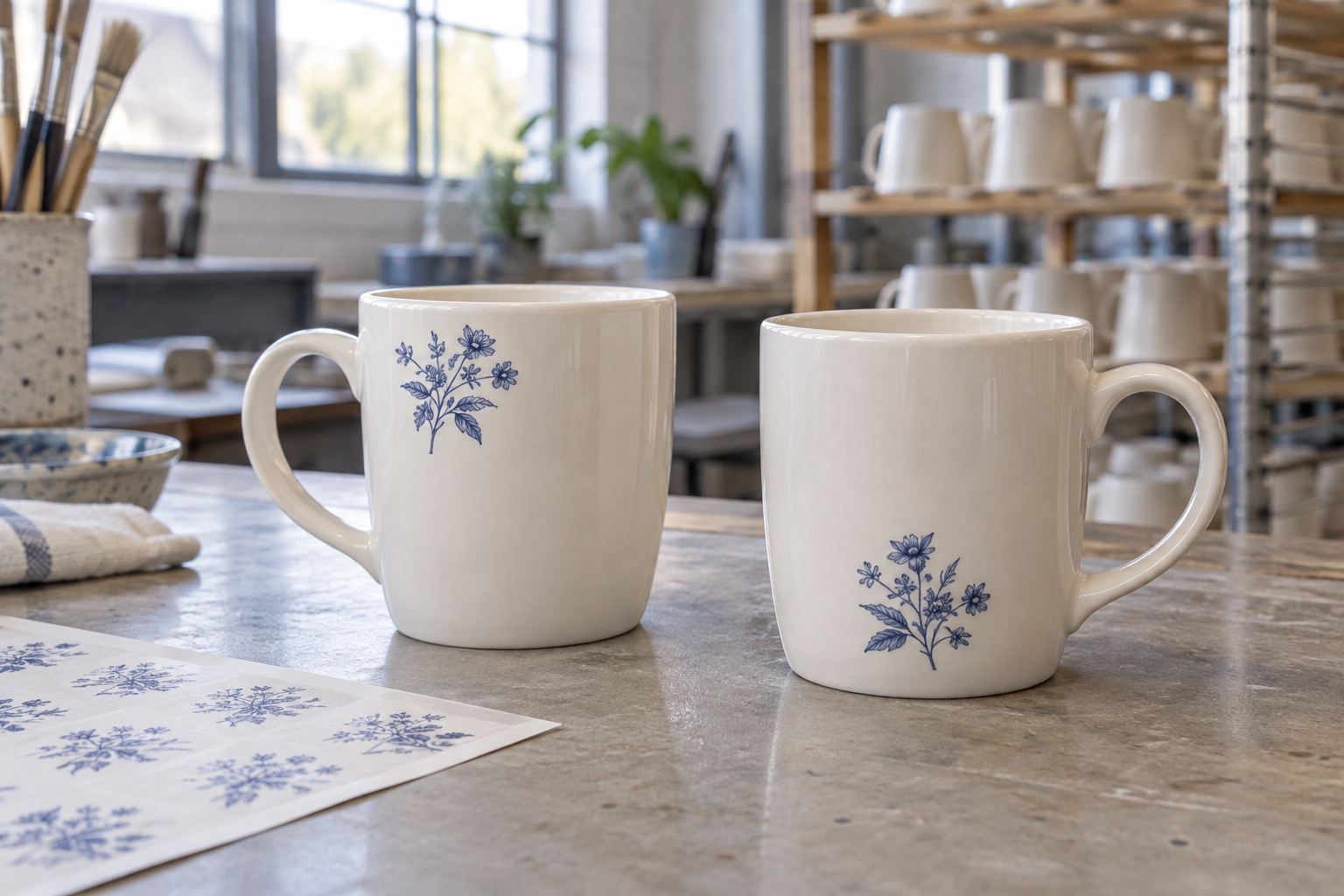
Here is a hypothetical example. A brand has evidence for a plain cream mug and wants to add a floral decal near the upper outside wall. It will sell the mug individually online and in a two-piece retail box.
A weak request says: “Same mug, just add the flowers and send the old report.”
My stronger request would say: “Review SKU M2, decoration revision B. The attachment shows the fired decal position relative to the lip. Compare this finished version with the previously tested plain version, identify evidence gaps, and confirm the next steps for California sales.”
The buyer sends both the previous report and the new sample details. The reviewer decides whether existing evidence can be used and what additional work is needed. I would not promise that moving a decal a little lower removes every concern.
If the design changes again, the buyer updates the brief before ordering bulk decoration. If the reviewer needs a fired sample, a digital artwork proof is not a substitute. This is a good reason to reserve time for review between sample approval and printing thousands of boxes.
Turn the Decision Into a Usable Handoff
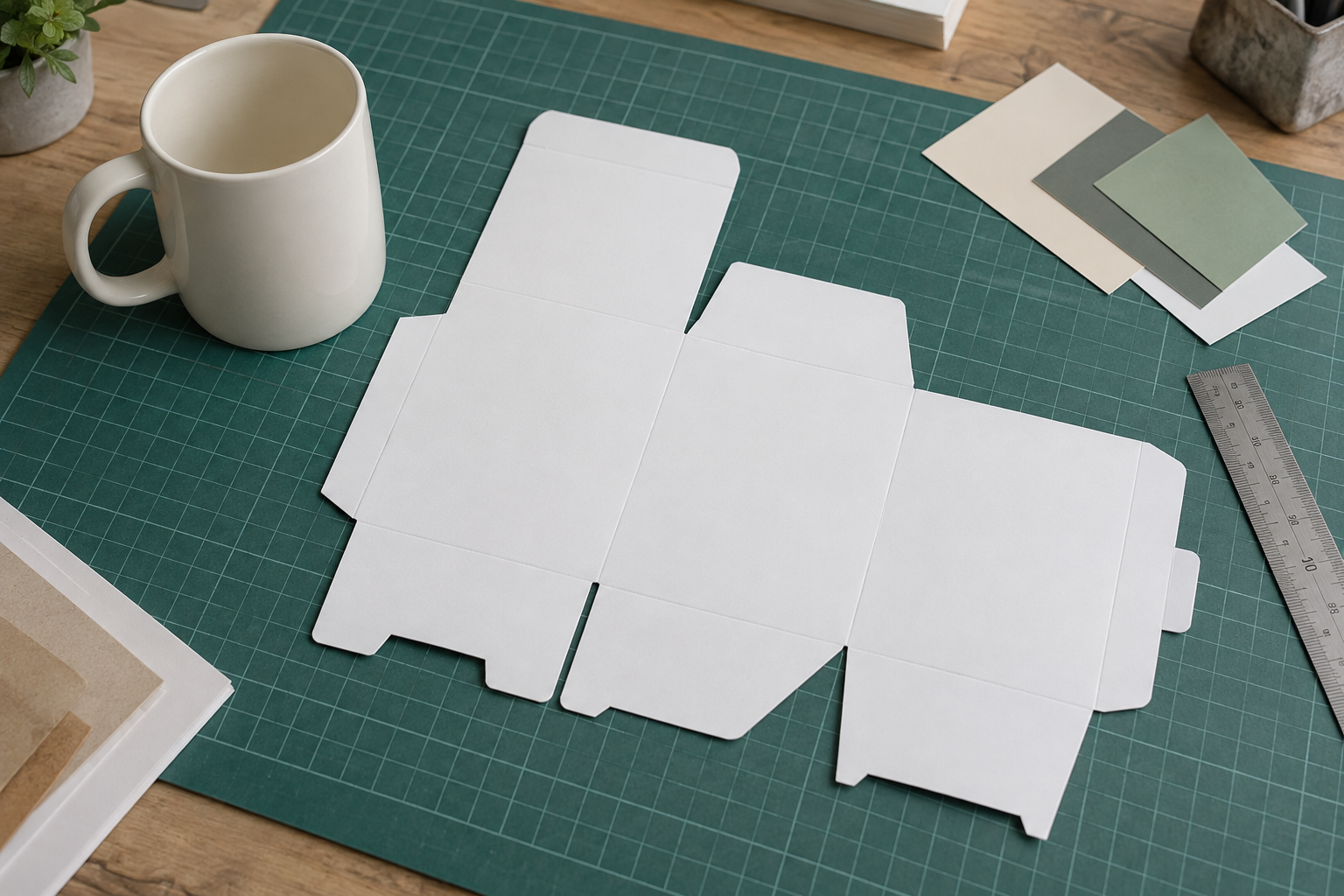
Once the review is complete, keep its conclusion beside the approved SKU list. Record any limitations, unresolved items, and changes that would invalidate the decision.
If a warning is needed, assign responsibility for its wording, placement, and delivery across the sales chain. The packaging designer should receive approved copy and an artwork reference, rather than being asked to improvise a California ceramic tableware warning.
OEHHA’s business warning FAQ covers supply-chain responsibilities, internet sales, and warning formats. Use it with your adviser to check the current rules for your sales date. Do not copy a short warning from an old pack or a competitor’s page.
For the mug example, I would review the individual sale and the boxed pair as separate customer journeys. Ask the adviser how the approved warning should reach a buyer in each channel, then give the factory and website team their own clear instructions.
My practical check is to compare the approved file with a printed packaging proof and a draft product page. Can the team identify the correct SKU, wording version, and approval date in each? The legal review and the production check are different jobs; both need an owner.
Keep retailer requirements in a separate column. A retailer’s preferred report or warning policy may go beyond the legal question. Ask them to state their requirement clearly before the order, so the factory is not trying to resolve a new listing condition on packing day.
My Advice as a Manufacturer
I prefer to settle evidence gaps while the design is still easy to change.
Ask the factory to keep a retained sample and control the body, glaze, decal, and firing specification used for the approved version. A new decoration supplier, glaze substitution, or changed use claim should trigger a documented review of what evidence still applies.
That does not mean every small change automatically requires a full new test program. It means someone qualified makes the decision instead of the packing team guessing.
I can help organise manufacturing facts and representative samples. The warning conclusion should come from the responsible business with suitable scientific and legal support, not from a sales promise that a whole catalogue is “California certified.”
Questions Buyers Often Ask
Does every ceramic mug sold in California need a warning?
No. The decision depends on the applicable obligations and exposure assessment. OEHHA explains situations in which warnings are not required. Keep the reason for your product’s decision, rather than judging it by the material name alone.
Does a food-contact pass settle Prop 65?
Do not assume it does. Ask what the report measures and how it supports the separate warning assessment. A familiar pass statement is only meaningful within the report’s scope.
Is a new laboratory test always required?
OEHHA’s business FAQ says Prop 65 does not itself require testing. Testing can support a decision, but the reviewer should explain what evidence is needed for your particular product and use.
Can we add a warning just to avoid reviewing the product?
I would not use a label as a shortcut. OEHHA discourages unnecessary warnings. A warning also does not replace the separate work needed to meet food-contact requirements or agreed retailer conditions.
What should we do when a glaze or decal changes?
Send the change details to the reviewer and ask what needs to be reassessed. Record the answer against the new revision before reusing the previous decision or artwork.
Bring the Review Into Product Development
A useful Prop 65 ceramic dinnerware review starts with a clear product brief and ends with a decision the factory, buyer, and sales team can follow.
Send FENN your SKU list, California sales channels, decoration drawings, and existing reports. I can help prepare the manufacturing information and sample plan for your reviewer. You can also use our FENN Resources hub to plan related sampling and quality checks.