
Short Answer
Yes, replacement dinnerware pieces can be a useful service for an everyday collection, if you can identify the right piece, repeat its shape and finish, and deliver small orders reliably. Start with core plates and bowls. Before promising availability, ask your supplier for repeat-production conditions, approved variation limits, and a packing plan for individual pieces.
I like the idea of helping someone keep using a set they already love. But from a factory point of view, that friendly offer needs a few firm decisions behind it. A customer wants one bowl. The factory may need a production batch. Your brand has to connect those two needs.
Replacement pieces are individual items offered to restore or extend an existing set. They may be sold, supplied as a goodwill gesture, or used to resolve a complaint. Those are different service routes.
Choose the Promise Before Choosing the Stock
I would begin with the words customers will see. “Sold individually” is a clear sales format. “Always replaceable” is a much larger promise.
Open stock ceramic dinnerware lets customers buy separate pieces. A replacement program also needs a way to find an older version and explain whether today’s piece will work with it. A new plate listing alone does not solve that problem.
Here is how I would choose the scope:
| Your collection | Sensible replacement route | What must be true before launch |
|---|---|---|
| Continuing everyday range | Sell core plates and bowls individually | Repeat production, piece identification, and parcel packing are workable |
| Small brand testing demand | Offer a limited selection through customer service | Staff can check versions and see real available stock |
| Seasonal glaze or limited decoration | Hold a defined service reserve | Availability wording reflects that production may not repeat |
| Retired shape with no dependable supply | Explain that an identical piece is unavailable; offer a clearly described alternative | Customers understand any difference before accepting it |
This is a choice about service depth, not brand size. A small, honest offer can be more useful than a long replacement menu full of unavailable items.
Keep paid additions separate from complaint handling. Buying another bowl after accidental damage is a different case from receiving a damaged order. Your customer-service policy should route those requests separately, with market-specific obligations reviewed before publication.
Start With the Piece That Rescues the Set
Imagine a customer with five dinner plates and six bowls. Selling one dinner plate restores a useful place setting. Adding an unusual serving dish does not solve the same need.
I would shortlist replacement plates and bowls using actual requests, the number of pieces originally sold, and how important each shape is to a complete setting. With no history, begin with a small pilot and record what customers ask for. Do not assume bowls break more often simply because they look deeper or heavier.
Consider a hypothetical collection with four shapes in three colors. Offering every combination creates twelve service lines before you add sizes or design revisions. A core plate and bowl in one continuing color gives you two lines to manage first.
Ask the factory to quote repeat orders by shape and glaze, not just a mixed collection total. Glaze preparation, decoration setup, kiln loading, and packing quantities may each affect the practical batch size. A useful answer shows which items can share a run and which need their own setup.
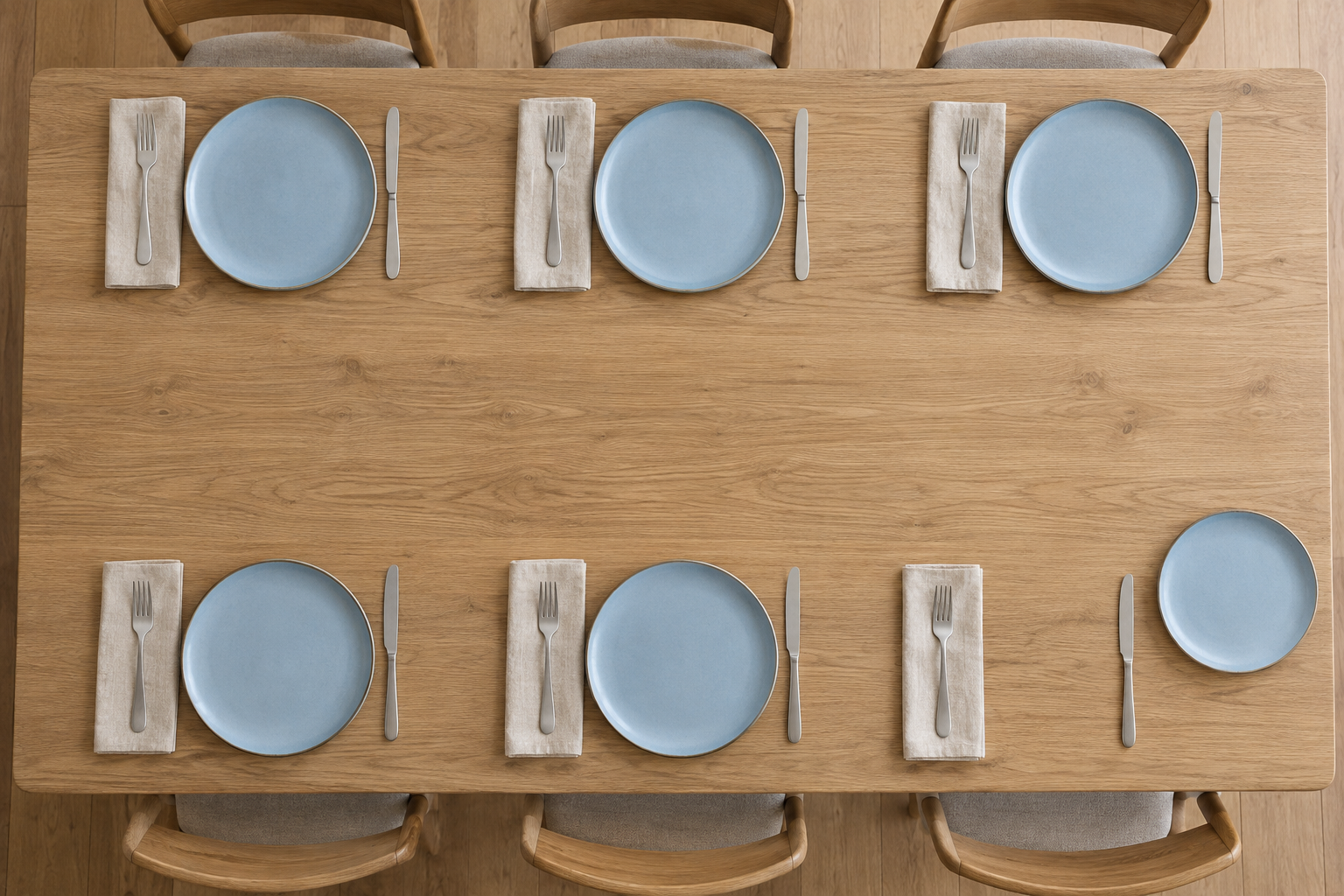
One available core piece can restore a complete place setting.
Decide What “Matching” Really Means
The same product name does not prove that two pieces will sit comfortably together.
In ceramic production, firing shrinkage affects finished dimensions. Mold wear or a tooling revision can alter a rim or foot. Glaze thickness and firing conditions can change the appearance of the same nominal color. Keeping a mold is helpful, but it is not the whole replacement plan.
I separate the matching decision into three parts:
- Shape: Does the replacement have the agreed diameter, height, rim profile, and foot position?
- Use: Does it sit steadily, stack without catching, and work with the customer’s existing storage?
- Appearance: Is the color and surface within the range the brand has agreed to accept and explain?
For a bowl, check the nesting contact as well as the top diameter. A revised foot may make it sit higher in an older stack. For a plate, a slightly different rim slope may be visible across a laid table even when the outside diameter looks right.
Keep an unused reference from the earlier version, dimensional records, and approved variation samples. Then inspect mixed stacks and a complete place setting using old and new pieces. A supplier’s photograph of only the new batch cannot show compatibility.
A customer’s older pieces may also have wear. Avoid promising an invisible match to years of use. For reactive glaze, show an honest range of appearances, and keep functional checks separate from decorative variation.
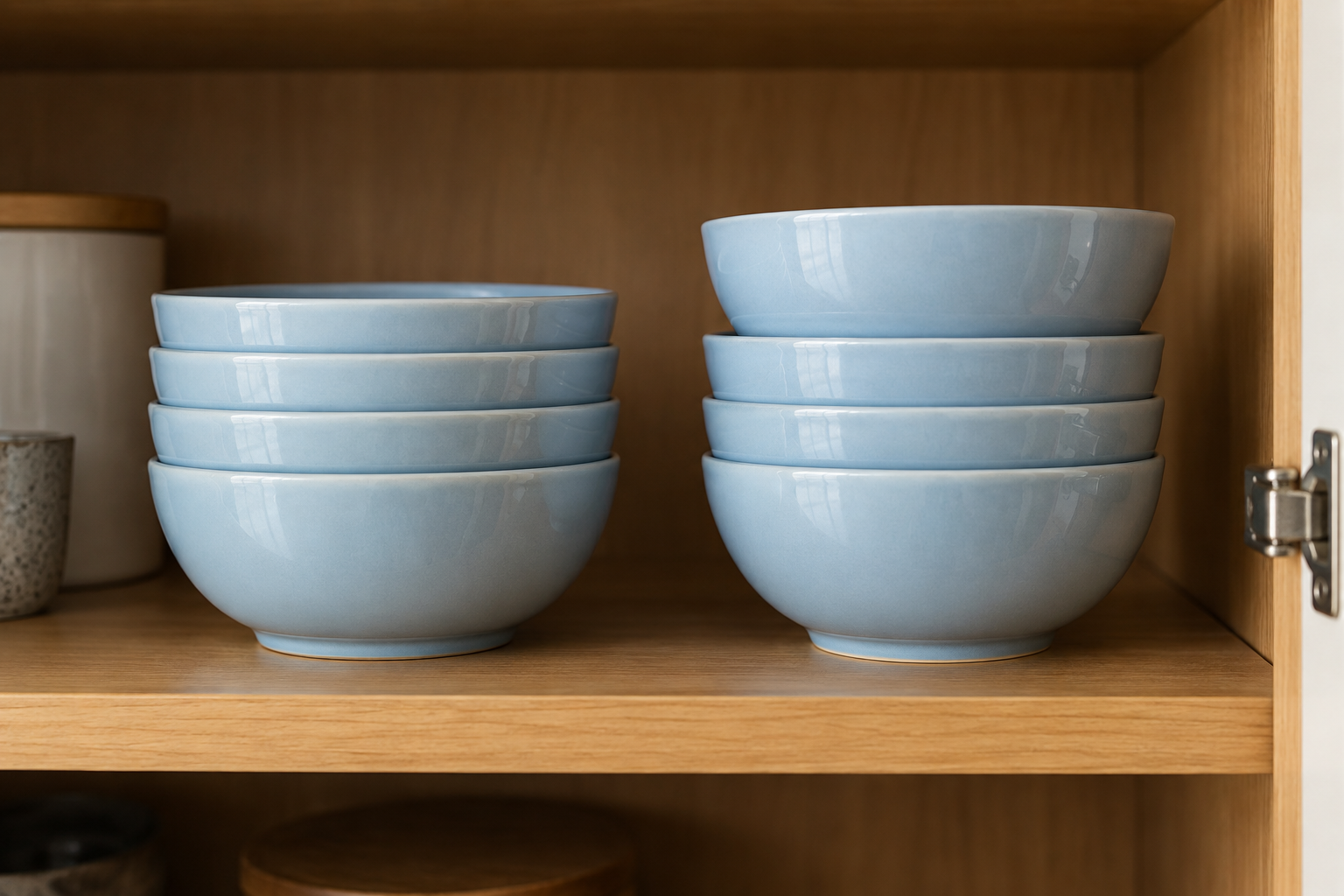
Check how a replacement bowl nests with pieces from the earlier version.
Price the Journey of One Bowl
The manufacturing price is only one part of a dinnerware replacement program. Someone must identify the request, find the correct version, pick it, pack it, and send it.
Here is a purely illustrative calculation in US dollars. These are planning assumptions, not FENN prices or a margin forecast:
$12 selling price − $3 landed piece cost − $1.50 pack and picking − $0.50 transaction cost − $4 shipping subsidy = $3 remaining.
That $3 still has to help cover service time, storage, damage, returns, and general overhead. If the shipping subsidy rises to $7, nothing remains for those costs.
I would test a single piece, a two-piece order, and an order added to another purchase. The pack and shipping cost may change differently in each case. Choose charges your customers can understand rather than hiding the cost inside a promise you cannot support.
Check the parcel pack itself. An insert designed for a full set may leave a single bowl loose. Review the actual piece, cushioning, clearance, and outer box together. Use the ISTA test procedure guidance with a packaging specialist to select an appropriate test for the distribution route. An export-carton result does not automatically validate a new single-piece parcel.
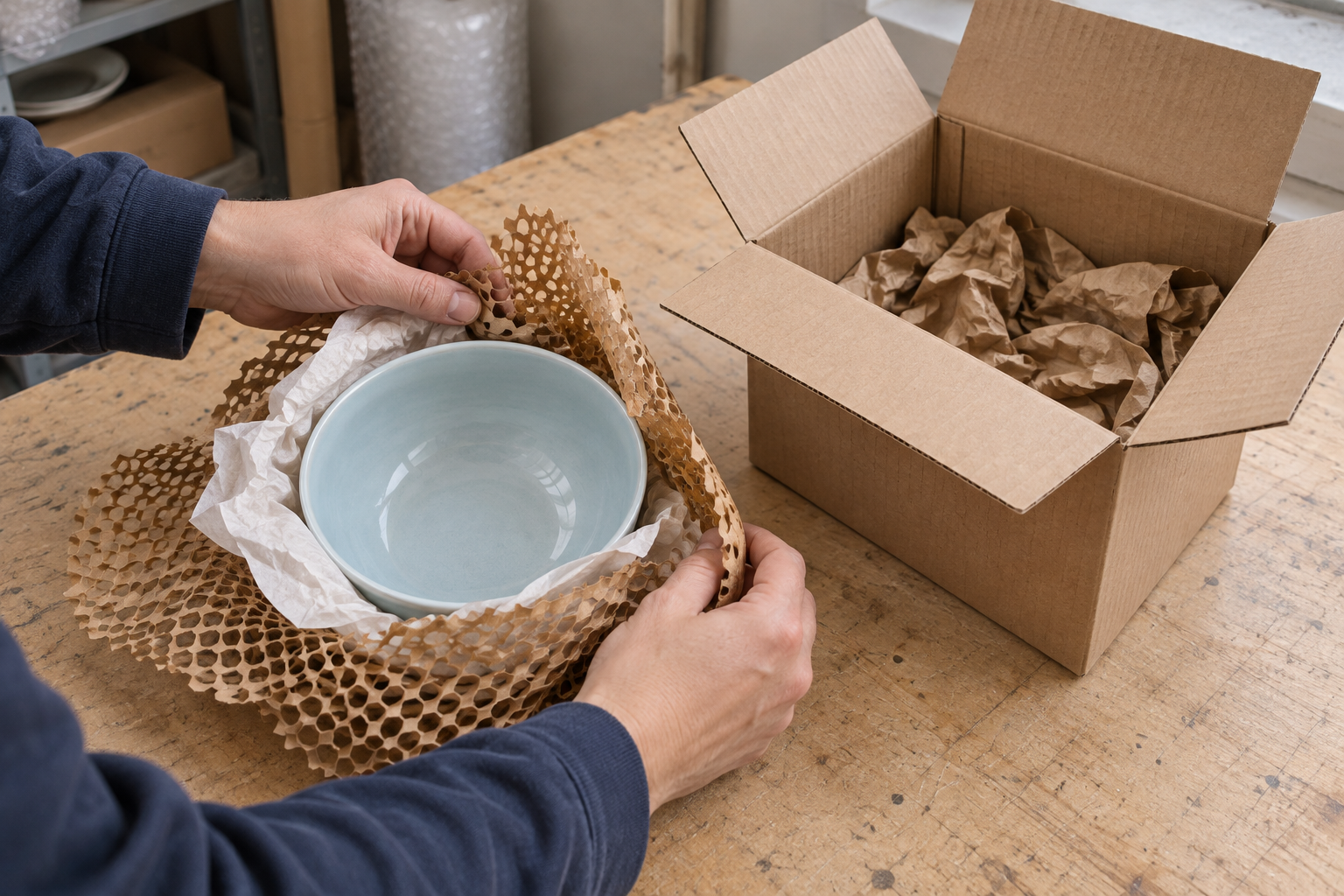
Wrap each replacement piece before packing; this scene shows preparation, not a finished parcel.
Make the Right Piece Easy to Find
A service team should not have to identify every bowl from a photograph taken under a kitchen lamp.
Connect the original order to the collection, shape, color, and version. If the customer has no order record, request a photo of the underside, a side view, and basic measurements. A backstamp can be a clue, but it may not identify every production revision.
Shopify’s product variant guidance explains how options such as size and color become variants. Whatever store system you use, check that the chosen option points to the correct service SKU and inventory record. Keep a separate version record where an old and new piece share a public color name but differ in shape.
Where your sales channel uses product identifiers, GS1’s GTIN explanation describes identification of trade items. Check the applicable allocation rules and channel requirements for an individual item and a boxed set. A GTIN does not, by itself, prove that two ceramic batches match.
I also want a clear retirement step. Record when repeat production stops, what service stock remains, and which alternatives have actually been checked. Give customer service approved wording before removing the old listing. Never silently send a new shape under an old description.
My Advice as a Manufacturer
I prefer a replacement offer that passes one small rehearsal before it goes live.
Choose an earlier set and ask someone outside the product team to request one bowl. Can service identify it? Can the warehouse pick the correct version? Does the piece fit the older stack? Can packing send it using the intended parcel materials? Does the final charge make sense?
Write down every point where someone has to guess. Those gaps matter more than a polished promise on the product page.
Before a supplier approves the plan, I would expect written repeat-order quantities, tooling responsibility, retained-reference details, variation limits, and notice of relevant material or design changes. “We can make the same one later” is a starting conversation, not enough evidence to launch the service.
Questions Buyers Often Ask
Should replacement pieces be free?
Not automatically. Paid additions, accidental damage requests, goodwill, and order complaints need separate routes. Set commercial terms clearly and review the obligations that apply in your selling market.
Can we guarantee an exact color match?
I would avoid that blanket promise. Define acceptable variation against retained references and assess new batches. Customer wear and reactive glaze can make a visually identical match unrealistic.
How much replacement stock should we hold?
There is no useful universal percentage. Use demand by piece, your service promise, replenishment time, and retirement plans. Review the assumptions after the pilot; keep service allocation visible so ordinary sales do not consume it unnoticed.
Can a factory make just one replacement bowl?
Individual service usually relies on stock from a larger production run. Ask whether your supplier holds finished stock or needs a new batch, and confirm its minimum quantity and timing before promising a customer delivery.
What happens when a collection ends?
Explain remaining availability clearly. An alternative color or shape may be acceptable if the customer chooses it after seeing the difference. Do not describe an untested substitute as a matching replacement.
Conclusion
Replacement dinnerware pieces work best when the promise is small enough to keep and useful enough to matter. Start with essential shapes, check old-to-new compatibility, and understand the cost of sending one piece. Then expand from evidence rather than hope.
Explore the FENN Resources for related sourcing guidance.